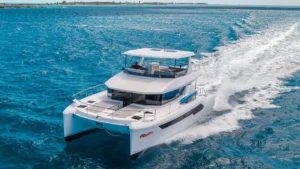
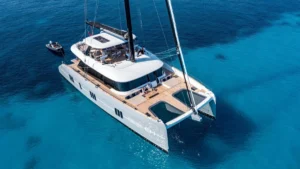
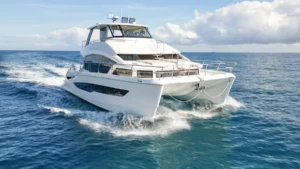
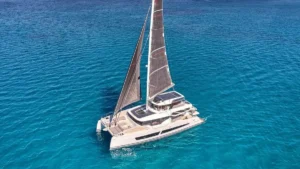
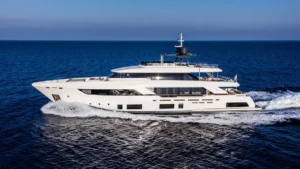
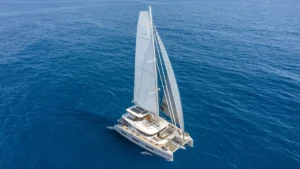
A catamaran boat is a watercraft with two parallel hulls connected by a structure called a bridge deck. This design makes it wider than a traditional single-hull boat, which creates more deck space and a different kind of stability. Catamarans come in sailing and power versions, with models built for recreation, fishing, family trips, coastal cruising and longer voyages.
Choosing the right one depends on how you plan to use it, how many people will travel with you, your budget and the water conditions you expect. Some models focus on sailing performance, while others offer larger living areas, powerful engines and comfortable cruising facilities.
This guide explains how catamarans work, how they compare with monohulls and what to check before buying one.
What Is a Catamaran Boat?

A catamaran is a multihull vessel with two separate hulls joined by a deck or supporting structure. A monohull has one main hull, while a catamaran spreads its weight across two.
The space between the hulls holds the bridge deck and cockpit and, on larger models, a saloon and other living areas. The two hulls also form a wide base, which generally gives the boat greater initial stability and reduces leaning during normal sailing.
Sizes vary widely. Small models are used for recreational sailing, while larger versions can include several cabins, kitchens, bathrooms and outdoor seating. The two main categories are:
- Sailing catamarans: Use sails as the main propulsion, with engines for manoeuvring and other situations.
- Power catamarans: Use engines for propulsion and suit cruising, fishing, transport and recreational boating.
The best type depends on your preferred activities, travel distance and onboard requirements.
How a Catamaran Works
A catamaran moves through the water on two hulls, with the weight shared between them. The connecting structure holds the hulls together and adds usable space. Four design elements explain most of how it performs.
Twin Hulls
The two hulls support the boat and move it through the water. Their shape affects speed, resistance, stability and handling. Many sailing catamarans have narrow hulls to reduce water resistance, although the complete design determines final performance.
Bridge Deck
The bridge deck connects the hulls and supports the main deck. It may contain living areas, seating and storage. On larger cruising catamarans it often includes a saloon that opens onto the outdoor cockpit.
Beam and Draft
Beam is the overall width of the boat at its widest point. Draft is the distance from the waterline to the lowest part of the boat.
A wide beam provides more usable space, but it can make narrow marina berths and storage harder to find. Many catamarans have a shallower draft than monohulls of similar length, although this depends on the hull design, keels, rudders and other underwater equipment.
Bridge Deck Clearance
Bridge deck clearance is the vertical distance between the waterline and the underside of the bridge deck. In rough water, waves can strike that underside, an effect known as bridge deck slamming.
Clearance, underside shape, loading and sea conditions all influence this behaviour. Check the design and loading specifications rather than judging clearance by eye.
Types of Catamaran Boats

Each type serves different boating needs.
Sailing catamarans use sails for propulsion. Their two hulls provide a wide platform, and many models have a large cockpit and living area. They suit recreational sailing, coastal trips and longer cruising, and larger models may include several cabins, a galley and bathrooms.
Power catamarans rely on engines, which may sit between or behind the hulls depending on the design. They are used for family cruising, fishing, day trips and longer powered journeys, with wide deck areas and comfortable seating. Fuel use and speed vary with engine power, hull shape, weight and conditions.
Cruising catamarans are built for longer periods on the water and usually offer more accommodation and storage than recreational models. Common features include:
- Multiple sleeping cabins
- Bathrooms and showers
- A galley
- Indoor and outdoor dining areas
- Freshwater and fuel storage
- Navigation and communication equipment
Both sailing and power catamarans can be built for cruising.
Sport and recreational catamarans are smaller boats for recreational sailing, day trips and watersports. Some are lightweight sailing boats with basic seating, while others are powered models with more equipment. Layouts and performance vary considerably.
Commercial catamarans carry passengers or support marine services. Ferries and sightseeing vessels are common examples, and the exact design depends on the vessel’s operating requirements.
Catamaran vs Monohull

The main difference is hull design: a catamaran has two hulls, a monohull has one. That affects stability, space, draft, handling and ownership requirements.
| Feature | Catamaran | Monohull |
|---|---|---|
| Hull design | Two hulls | One hull |
| Initial stability | Generally higher | Generally lower |
| Heeling under sail | Usually less | Usually more |
| Deck space | Often more | Usually less at a similar length |
| Interior layout | Space split between two hulls and a connecting area | Accommodation within one hull |
| Draft | Often shallower | Depends on keel and hull design |
| Marina berth | Wider berth may be needed | Usually narrower |
| Handling | Needs multihull-specific knowledge | Different characteristics |
Stability. Catamarans generally have greater initial stability because their hulls are spaced apart, so they lean less than many monohulls under sail. That does not make them immune to capsizing. Wind, waves, excessive sail, poor loading and operating decisions can all create dangerous conditions.
Living space. The wider design often provides more usable deck space, and larger models can have spacious cockpits, saloons and a sleeping area in each hull. Monohull accommodation is arranged within one narrower hull.
Sailing. Neither type is better in every situation. Catamarans can offer speed and reduced heeling in suitable conditions, while monohulls handle differently and may suit sailors who prefer their motion. The right choice depends on the design, weather, crew experience and intended journey.
Cost. Price and running costs depend on size, age, equipment and condition rather than hull type alone. Catamarans may need wider berths and suitable lifting facilities, while monohulls have different maintenance and storage needs. Compare full ownership costs, not just the purchase price.
Advantages of Catamaran Boats
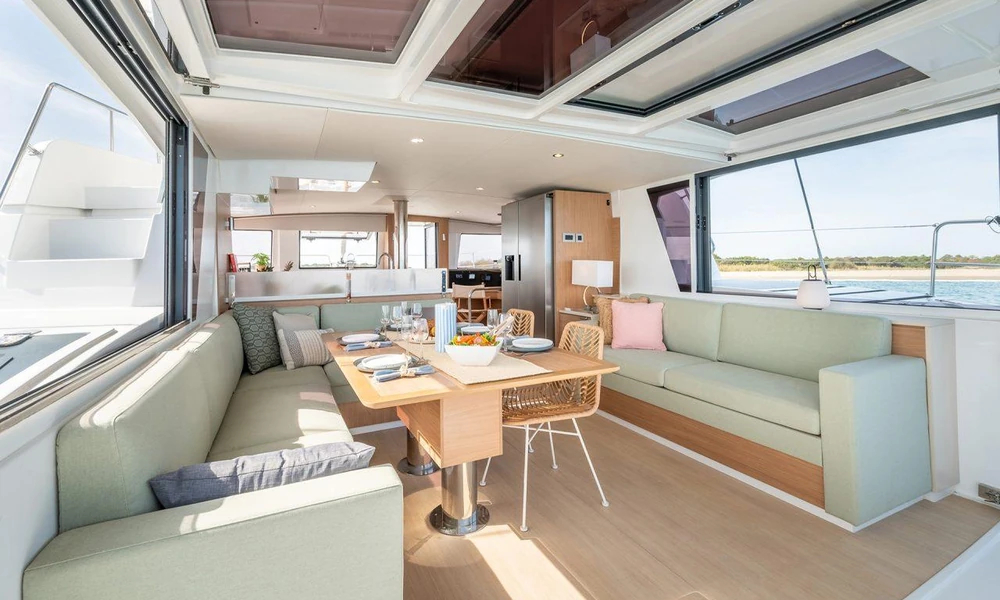
Greater initial stability. The wide base generally reduces heeling and gives a more level platform in normal operation. This suits passengers who dislike side-to-side movement, although comfort also depends on sea conditions and vessel design.
More deck and living space. The wider beam allows larger outdoor areas and varied interior layouts. On cruising models, the saloon, cockpit and cabins give separate spaces for relaxing, dining and sleeping.
Shallow draft on many models. A shallower draft can make some shallow-water areas easier to reach. Actual draft varies by model, so check the specifications before planning a route.
Comfortable cruising. Wide seating areas, spacious accommodation and a stable platform make many cruising catamarans well suited to family trips and longer journeys. Comfort still depends on hull design, loading, speed and weather.
Two-engine redundancy on some models. Many power catamarans have two engines, so if one fails the other may provide limited propulsion. This is not a guarantee, because fuel, electrical, steering and other shared systems can also fail.
Disadvantages of Catamaran Boats
Marina and storage requirements. A catamaran’s beam can be much wider than that of a monohull of similar length. That limits the berths available and can raise docking costs. Transport and lifting may also need specialised facilities.
Higher purchase cost on some models. Large catamarans can be expensive because of their size, construction and equipment. Not every catamaran costs more than a comparable monohull, though, so prices depend on the model, condition and market.
Bridge deck slamming. Waves can hit the underside of the bridge deck, especially where clearance is limited or conditions are rough. This causes uncomfortable impacts and extra structural loads, so pay attention to bridge deck design and loading.
Different handling. Wide beam, wind exposure and the twin-hull layout affect manoeuvring, docking and sailing technique. New owners should learn the handling requirements of their particular vessel.
Two hulls and more systems to maintain. Catamarans have two hulls to inspect, and many have two engines to service. The actual workload depends on the boat’s equipment and design.
What Are Catamaran Boats Used For?
| Use | Suitable type | Main purpose |
|---|---|---|
| Recreational sailing | Small sailing catamaran | Day sailing and leisure |
| Family cruising | Sailing or power cruising catamaran | Family trips and accommodation |
| Fishing | Power catamaran | Fishing and deck space |
| Coastal cruising | Sailing or power catamaran | Shorter coastal journeys |
| Longer voyages | Ocean-capable cruising catamaran | Extended travel |
| Passenger transport | Commercial catamaran | Ferry and tour operations |
| Watersports | Sport or power catamaran | Recreational activities |
Not every catamaran is suitable for offshore travel. Check the manufacturer’s design category, operating limits, equipment and safety requirements before planning a longer trip.
Features and Specifications to Compare
These figures describe a boat’s size, capacity, performance and facilities.
| Specification | Meaning |
|---|---|
| Length overall (LOA) | Total length of the boat |
| Beam | Overall width |
| Draft | Depth below the waterline |
| Displacement | Weight of the vessel under its stated loading condition |
| Fuel capacity | Total fuel the tanks can hold |
| Water capacity | Freshwater storage |
| Engine power | Power from the installed engines |
| Passenger capacity | Manufacturer-rated carrying capacity |
| Cabin layout | Number and arrangement of sleeping areas |
| Bridge deck clearance | Distance from the waterline to the underside of the bridge deck |
Size and layout. Small recreational catamarans usually have basic seating and limited storage, while larger cruising models offer cabins, bathrooms, kitchens and more living space. Bigger is not automatically better. Consider how many people will travel, how much storage you need and where you will operate the boat.
Sail and engine setups. Sailing catamarans use sails as the main propulsion, with engines for manoeuvring and support. Power catamarans rely on engines and may use outboard or inboard systems. Check the manufacturer’s figures for engine power, fuel capacity, range and recommended operating conditions.
How Much Does a Catamaran Boat Cost?
There is no single price. Small recreational models, used cruising boats and large luxury catamarans sit in very different categories. The main factors are:
- Size: Larger boats need more materials and equipment.
- Type: Sailing and power models have different designs and propulsion.
- Construction: Fibreglass, aluminium and composite materials affect cost.
- Age and condition: New and used boats have different market values, and maintenance history affects resale value.
- Manufacturer: Brand, design and features influence pricing.
Check whether an advertised price includes taxes, delivery, equipment and other charges.
Additional Costs of Ownership
The purchase price is only one part of the budget.
| Expense | What to consider |
|---|---|
| Insurance | Boat value, coverage and operating area |
| Marina fees | Boat length, beam and location |
| Fuel | Engine type, speed and usage |
| Maintenance | Hulls, engines, rigging and equipment |
| Repairs | Damage and replacement parts |
| Storage | Marina, dry storage or other facilities |
| Haul-out | Lifting and maintenance access |
| Registration | Local laws and vessel requirements |
A wider catamaran may need a special berth or lifting arrangement, so check these costs before buying rather than assuming a standard marina can take it.
How to Choose the Right Catamaran
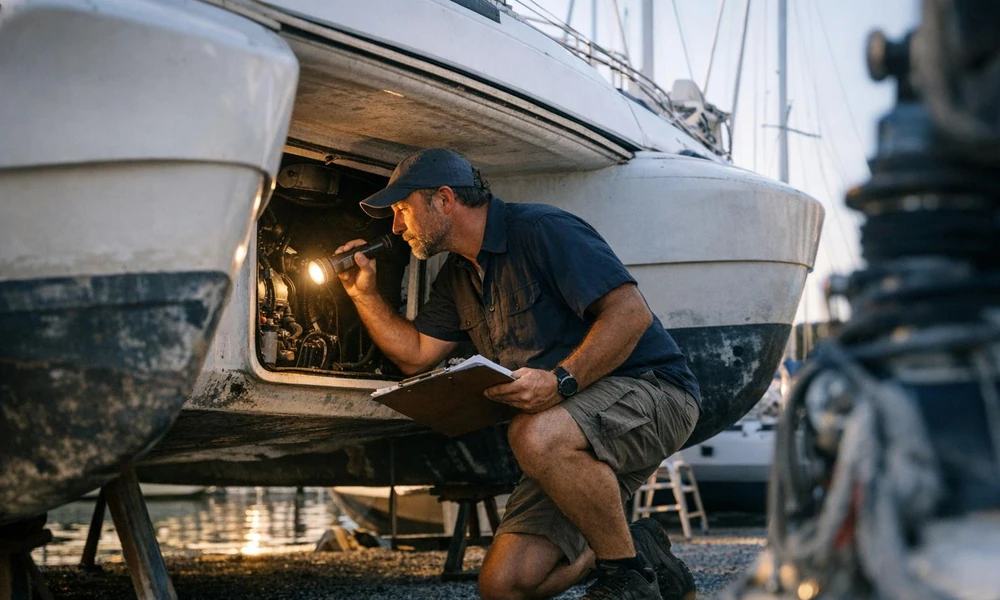
Decide how you will use it. Day trips, fishing, family cruising and longer voyages call for different boats. A small recreational model may suit occasional sailing, while extended trips need more accommodation, storage, water capacity and safety equipment.
Choose the size. Consider passenger numbers, sleeping arrangements and storage. Check the overall beam too, since it affects marina access, transport and lifting.
Compare sailing and power. Choose a sailing catamaran if you want sails as your main propulsion. A power catamaran may suit you better if you prefer engine-powered travel and don’t want to rely on sails.
Check construction. Hulls may be fibreglass, aluminium or composite, each with different repair and maintenance needs. Check the manufacturer’s information and the condition of the specific boat.
Review performance. Compare engine power, fuel capacity, displacement, draft and expected range. Don’t judge fuel efficiency from engine power alone, because consumption depends on speed, loading, hull condition and sea conditions.
Check marina compatibility. Confirm that your intended marina can take the boat’s full beam and length, and ask about lifting equipment, dry storage and maintenance access.
What to Check Before Buying a Used Catamaran
A used catamaran can offer good value, but condition matters more than appearance. Inspect the following:
- Hull condition: Look for cracks, damage, repairs and signs of water intrusion in both hulls.
- Bridge deck and crossbeams: Check for structural damage, unusual movement and previous repairs.
- Engines: Review service records, condition and maintenance history.
- Sails and rigging: On sailing models, inspect the sails, mast, standing rigging and running rigging.
- Steering: Check controls, rudders and related equipment.
- Electrical systems: Inspect batteries, wiring, charging systems and navigation equipment.
- Plumbing: Check water tanks, pumps, toilets and drainage.
- Safety equipment: Confirm that required items are present and working.
- Documents: Review ownership records, registration and maintenance history.
Arrange an independent marine survey and a sea trial before completing the purchase. A professional inspection can find problems that a normal viewing will not.
Safety and Maintenance
Safety Before You Sail
- Check the weather and expected sea conditions.
- Follow the manufacturer’s loading limits and distribute passengers and equipment properly.
- Secure loose items.
- Carry suitable life-saving and emergency equipment.
- Make sure everyone understands basic safety procedures.
- Ensure the skipper has the skills the boat and operating area require.
Never assume that a catamaran’s wide design makes it safe in every condition.
Regular Maintenance
Regular upkeep keeps a catamaran in good working order. Important tasks include:
- Inspecting and cleaning both hulls
- Checking engines and propulsion systems
- Inspecting sails and rigging
- Checking steering and rudders
- Maintaining batteries and electrical systems
- Inspecting plumbing and water tanks
- Checking through-hull fittings and bilge systems
- Following the manufacturer’s service schedule
Needs differ between sailing and power models, so follow the owner’s manual for your specific boat.
Can a Catamaran Capsize?
Yes. The two-hull design gives strong initial stability, but excessive wind, unsuitable sail settings, waves, poor loading and incorrect operation can still cause a capsize. Many sailing multihulls are not designed to return upright after a complete inversion, so skippers should understand the vessel’s stability information, follow safe sailing practice and avoid operating beyond its limits.
Frequently Asked Questions
Can a catamaran fit in a regular boat slip?
Not always. Catamarans are wider than many monohulls of similar length, so a standard slip may not have enough space. Check the berth’s width and the marina’s rules before booking.
Does a catamaran need a special trailer?
Smaller recreational catamarans can often use purpose-built trailers, depending on their width, weight and local transport rules. Larger cruising catamarans are usually lifted or transported by specialist carriers instead.
Can you anchor a catamaran in shallow water?
Some can reach shallower areas thanks to a relatively shallow draft. Check the boat’s actual draft, underwater equipment, tides and local water depth before anchoring.
Why do some catamarans have two engines?
Two engines give better low-speed manoeuvring and independent control of each side. They may also provide limited propulsion if one engine stops, depending on the condition of the remaining systems.
Can a catamaran run on one engine?
Some twin-engine power catamarans can move on one engine, but performance and steering will be affected. Whether it is safe depends on the model, conditions and manufacturer’s guidance, so don’t assume normal operation.
Is a catamaran suitable for living aboard all year?
Some cruising catamarans are designed for extended stays. Check cabin space, ventilation, freshwater capacity, power systems, storage and whether the design suits your climate and conditions.
Does extra weight affect performance?
Yes. More passengers, fuel, water and equipment raise displacement, which can reduce performance, affect handling and lower bridge deck clearance. Stay within the approved loading limits.
Conclusion
A catamaran boat offers a different experience through its two hulls, wide beam and generous deck space. Sailing catamarans suit people who enjoy wind-powered travel, while power catamarans provide engine-driven options for cruising, fishing and recreation.
The right choice involves more than size and looks. Consider stability, bridge deck clearance, draft, engine setup, fuel capacity, marina requirements and long-term maintenance costs. Whether you buy new or used, compare the manufacturer’s specifications, inspect the boat’s condition and arrange a professional survey before deciding.