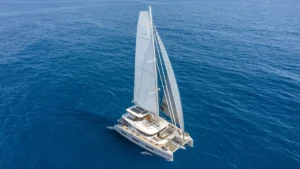
Finding the right sailing catamaran for sale involves more than comparing prices and picking an attractive design. You need to consider the boat’s size, sailing performance, cabin layout, equipment and overall condition. Sailing catamarans range from compact models for coastal trips to larger yachts built for extended cruising and life aboard.
You can buy a new boat from a manufacturer or dealer, or compare used models through brokers, marketplaces and private sellers. Each route has different benefits, costs and requirements, so it helps to know what you need from your boat and what you can spend on owning it.
This guide covers popular brands, price factors, specifications, layouts, inspections and the steps involved in buying a catamaran.
Key Takeaways
- Sailing catamarans are sold new and used, in many sizes and configurations.
- Popular manufacturers include Lagoon, Fountaine Pajot, Bali, Leopard and Outremer.
- Compare length, beam, draft, displacement and sail area.
- Owner and charter layouts offer very different accommodation.
- The purchase price is only part of the budget. Insurance, maintenance, marina fees and repairs matter too.
- Arrange a professional survey, check ownership documents and do a sea trial before you complete a purchase.
Sailing Catamarans for Sale: What Are Your Options?
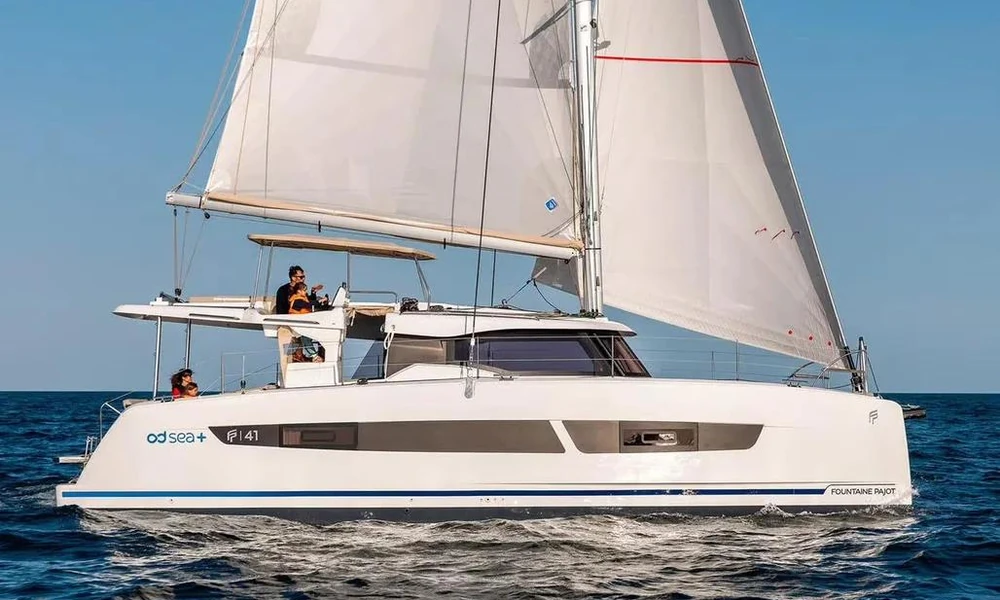
A sailing catamaran has two hulls joined by a central structure, which gives a wide platform with living space across the boat. Different models suit different sailing plans, budgets and accommodation needs.
New Sailing Catamarans
A new boat comes from a manufacturer or authorized dealer. Depending on the model and production stage, you may be able to choose cabin arrangements, interior finishes, navigation equipment and other features.
Advantages: new equipment and systems, a manufacturer warranty (subject to its terms), a choice of layouts and options, and no previous owner or charter history.
Things to consider: a higher purchase cost in many cases, possible waiting time for construction and delivery, optional extras that raise the final price, and commissioning and delivery expenses.
Used Sailing Catamarans
A used catamaran may cost less than a comparable new one, and you may find boats with upgraded interiors, extra sails and installed navigation equipment. But age alone doesn’t tell you the condition. Check maintenance records, engine hours, past repairs, sail condition and ownership history, and commission a professional survey.
Cruising and Luxury Sailing Catamarans
Cruising catamarans are built for recreational sailing, family trips and longer journeys, with multiple cabins, freshwater storage, a galley and comfortable living areas. Luxury sailing catamarans generally add more space, premium interiors, extra equipment and more customization, with considerably higher prices and running costs. The two descriptions overlap: a luxury catamaran can also be a cruising catamaran.
Popular Sailing Catamaran Brands

Several manufacturers offer sailing catamarans at different budgets. Model ranges change, so check each builder’s current lineup and the exact specification of any boat you are considering.
Lagoon is a French builder known for cruising catamarans built around accommodation, onboard comfort and recreational sailing. The Lagoon 42 is a well-known model, with a published length overall of about 13.22 m and a beam of about 7.68 m. When comparing a used Lagoon, check the model year and exact equipment, since options vary.
Fountaine Pajot offers sailing catamarans in several sizes, with configurations for comfortable family and guest cruising. The FP41 and FP44 are popular examples in the mid-size range.
Bali Catamarans is known for layouts that connect indoor and outdoor living areas. When comparing a Bali for sale, check the exact version, engine package, sail plan and installed equipment.
Leopard Catamarans offers both sailing and power models. Be careful when browsing listings and confirm that the boat is a sailing model before you go further.
Outremer specializes in performance-oriented cruising catamarans for sailors who value sailing performance alongside long-distance cruising. Their weight and sail plans differ from many comfort-focused cruisers, so compare them against your experience and intended use.
Sailing Catamaran Prices
There is no single price for a sailing catamaran. The cost depends on manufacturer, size, model year, condition, equipment and location, and new boats are generally more expensive than comparable used ones, although the actual gap varies from boat to boat. Ask sellers for current asking prices and an itemized list of what’s included.
| Price factor | How it affects the price |
|---|---|
| Manufacturer and model | Brands and models hold different market values |
| Length and size | Larger boats generally need a bigger budget |
| Age | Model year and condition influence value |
| Construction | Materials and methods can affect cost |
| Equipment | Electronics, sails and onboard systems add value |
| Cabin layout | Owner and charter configurations differ |
| Maintenance history | Documented upkeep and recent repairs matter |
| Location | Local supply and demand, taxes and delivery costs |
New boats are priced by the manufacturer’s specification, selected options and delivery arrangements, and the advertised starting price may not include every feature you want. Used prices depend more heavily on condition and history. A well-maintained older boat with recent upgrades can be a better buy than a newer one that needs major repairs. In either case, check whether the price includes sails, safety equipment, navigation electronics, a tender and other onboard systems.
Specifications to Compare
Specifications show whether a boat fits your sailing plans and the marinas you will use.
| Specification | Meaning | Why it matters |
|---|---|---|
| Length overall (LOA) | Total length of the boat | Size and berth requirements |
| Beam | Maximum width | Marina access and storage |
| Draft | Depth below the waterline | Access to shallow water |
| Air draft | Height above the waterline | Bridge clearance |
| Displacement | Weight of the boat | Loading and performance |
| Sail area | Total area of the specified sails | Comparing sail plans |
| Engine power | Power from the engines | Auxiliary propulsion |
Check advertised dimensions against the manufacturer’s specification for the exact model and version. Also look at bridgedeck clearance, the space between the water and the underside of the structure joining the hulls, which can influence how the boat behaves in waves. Don’t compare engine power or sail area in isolation, because weight, hull design, loading and conditions also affect performance.
How to Choose the Right Sailing Catamaran
Family sailing. Compare cabin arrangements, safety equipment, storage and access between living areas. The layout should give enough sleeping space without making everyday movement difficult. Consider freshwater capacity, refrigeration and shaded outdoor areas.
Coastal cruising. For shorter trips, look for a manageable size, suitable draft, comfortable accommodation and reliable auxiliary engines. Match navigation equipment and storage to the conditions you expect.
Offshore sailing. Pay close attention to structural condition, rigging, sails, safety equipment and navigation system, plus water and fuel capacity, battery systems and loading limits. Size and appearance alone don’t show that a boat is suitable offshore.
Living aboard. Look for comfortable sleeping arrangements, a practical galley, suitable bathrooms, freshwater storage, ventilation and natural light, reliable electrical systems and room for personal belongings.
Performance sailing. Compare displacement, hull design, sail area, rig configuration and daggerboard or keel arrangements. Some catamarans prioritize speed and sailing response, while others favor interior space and comfort.
Layouts and Features
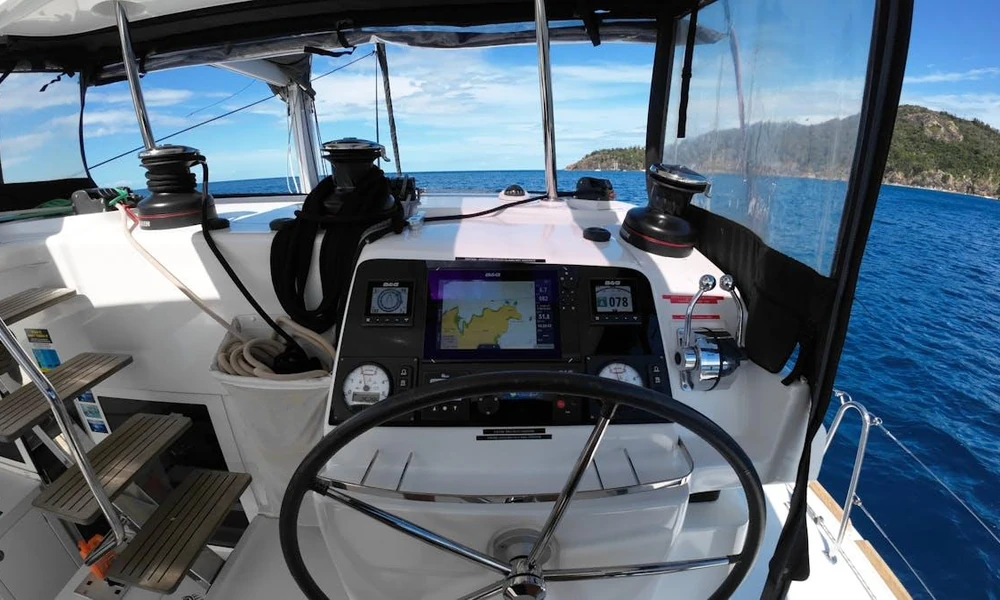
The interior arrangement affects comfort, privacy and how many people the boat can accommodate.
Owner’s version. Usually gives the owner more private space, with one hull dedicated mainly to the owner’s cabin, bathroom and storage. It suits couples or families who want more personal room.
Charter version. Offers several guest cabins and bathrooms to carry more people. A charter layout doesn’t automatically mean poor condition, but check its previous use, maintenance and repair history.
Saloon, galley and cockpit. The saloon is the main indoor living area, the galley is for food preparation and the cockpit is the outdoor space. Compare how they connect, plus ventilation, visibility and access to the helm.
Onboard equipment. Depending on the model, a boat may have navigation and communication equipment, solar panels and batteries, a generator, a watermaker, refrigeration, autopilot and safety gear. None of these is standard on every boat, so confirm what the listing includes.
New vs Used Sailing Catamarans
| Factor | New | Used |
|---|---|---|
| Condition | New from the manufacturer | Depends on age and maintenance |
| Equipment | Selected factory options | Existing equipment and upgrades |
| Warranty | Manufacturer warranty may apply | Depends on seller and remaining coverage |
| Customization | Options may be available | Usually limited to the existing layout |
| Availability | May require a build period | Existing boats may be available now |
| Maintenance history | Starts with you | Previous records should be reviewed |
| Purchase budget | Generally higher | Varies by boat and condition |
A new boat suits buyers who want a specific layout and factory equipment. A used one suits buyers who want an existing boat and are comfortable checking its condition and history. Neither is automatically better, so compare total purchase and ownership costs.
Where to Find Sailing Catamarans for Sale
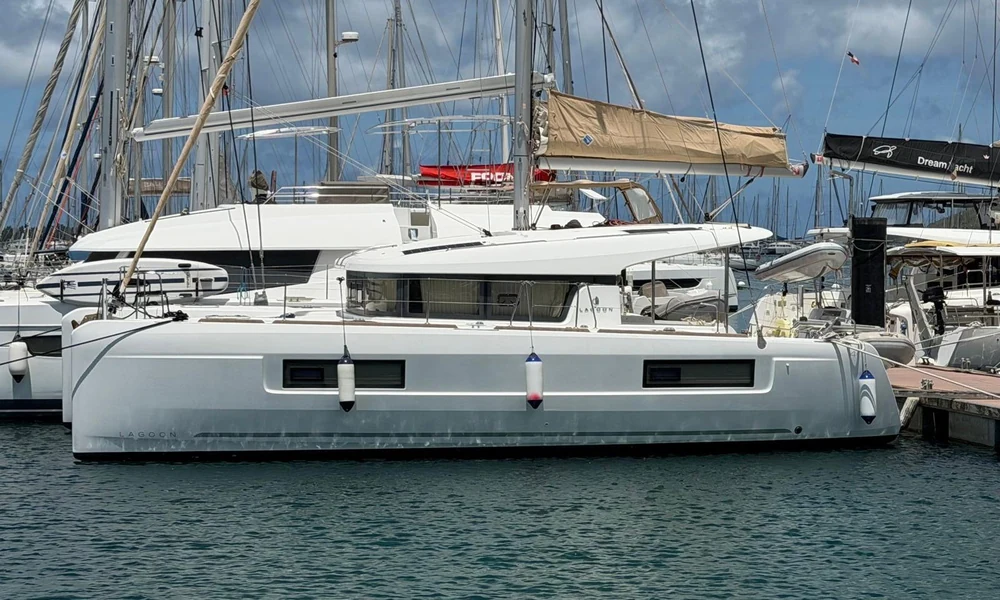
Online marketplaces such as YachtWorld, Boats.com and Boat Trader let you compare listings. Filter by type, manufacturer and model, price, year, length, location and whether the boat is new or used, and verify listing details with the seller, since availability and prices change.
Yacht brokers and dealers can help you find boats, arrange viewings and handle parts of the purchase. Ask about their role, fees, the sale agreement and the documents they can provide, and confirm who the broker represents in the transaction.
Private sellers let you discuss maintenance and ownership history directly. You must independently verify the seller’s right to sell, review the documents and arrange professional checks.
What to Check Before Buying a Used Sailing Catamaran
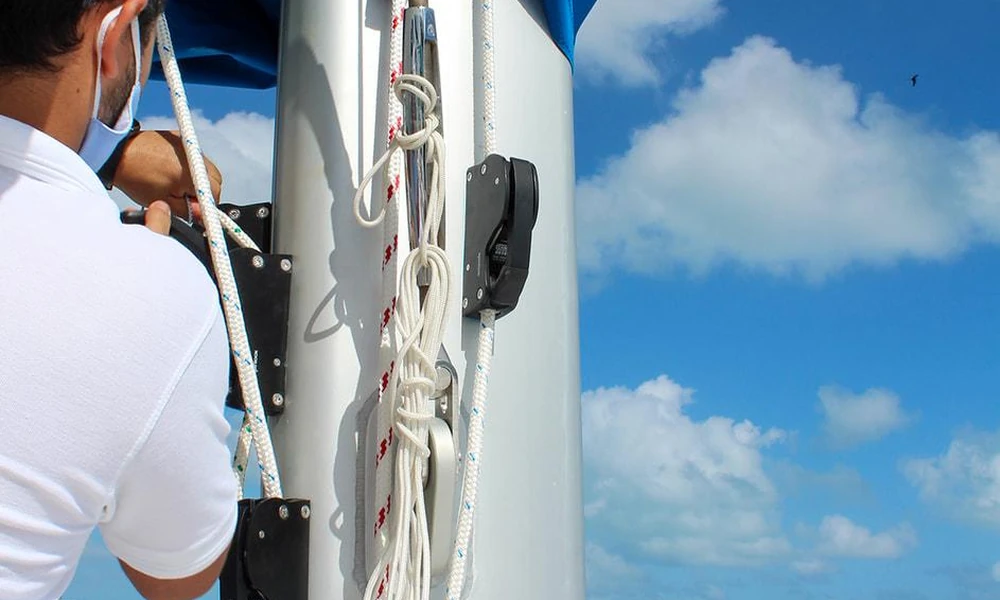
A careful inspection can reveal problems before you commit.
Hulls and structure. Inspect both hulls for damage, cracks, previous repairs and possible water intrusion, and check hull-to-deck joints and accessible structural areas. Any movement, cracking or failed bonding in bulkheads or the structures connecting the hulls should be assessed by a qualified surveyor.
Bridgedeck and crossbeams. Check these and their connection points for damage or repairs. They link the two hulls, so don’t rely on a visual check alone if you see signs of structural trouble.
Engines and saildrives. Many cruising catamarans have two auxiliary engines. Check engine hours and service records, oil and coolant condition, leaks and corrosion, cooling systems, saildrive condition and seals where fitted, and propellers and steering components. Ask for a cold start and have the engines assessed during the survey and sea trial.
Sails and rigging. Examine the mainsail, headsail, mast, boom, and standing and running rigging. Ask when they were last replaced or professionally inspected. Replacement can be costly, so use their condition when negotiating.
Electrical and navigation systems. Test batteries, charging systems, instruments and lights, and ask whether wiring has been modified and whether records exist.
Interior and equipment. Look for water stains, dampness, odors, damaged fittings and poor ventilation, and test plumbing, toilets, refrigeration and freshwater pumps.
Repairs and charter history. Ask whether the boat has been used privately, for charter or both. Request maintenance records, invoices and details of past groundings, collisions, structural repairs and major equipment replacements.
Survey and Sea Trial
A pre-purchase survey shows the condition of a boat before you complete the purchase. Choose a qualified marine surveyor with multihull experience, because catamarans have two hulls and connecting structures that need attention beyond the usual monohull checks. A survey may cover the hulls, structure, engines, rigging, electrical systems and equipment, and you should agree the scope with the surveyor.
A sea trial lets you see how the boat operates in the water. Depending on conditions and the agreed arrangements, you can check engine operation, steering response, gear operation, instruments, sailing controls, vibration and noise, and general handling under sail. A sea trial doesn’t replace a survey, because each provides different information.
After the survey report arrives, review the findings and get repair estimates where needed. You can then proceed, negotiate the price or withdraw according to the sale agreement.
Ownership Costs
The purchase price is only one part of owning a sailing catamaran. Running costs vary with size, age, condition, location and how often you sail.
| Expense | What to budget for |
|---|---|
| Insurance | Premiums and required coverage |
| Marina fees | Berthing and electricity |
| Maintenance | Routine servicing and repairs |
| Engines | Servicing, parts and mechanical work |
| Sails and rigging | Inspection, repairs and replacement |
| Haul-out | Lifting, storage and launching |
| Equipment | Navigation and safety upgrades |
| Registration and taxes | Applicable local charges |
A catamaran’s wide beam can limit the berths and haul-out facilities available. Before buying, contact marinas and boatyards in your intended area and confirm they can handle the boat’s length, beam, draft and weight.
Documents to Check
Requirements vary by country, flag and intended use, but review the following where applicable.
| Document | Why it matters |
|---|---|
| Bill of sale | Records the transfer of ownership |
| Registration certificate | Shows registration details |
| Builder’s certificate | Gives original construction information |
| VAT or tax evidence | Helps establish tax status |
| Maintenance records | Shows servicing and repair history |
| Compliance documents | Helps verify regulatory requirements |
| Equipment manuals | Operating and maintenance information |
Also check the ownership history and whether any mortgage, debt or legal claim affects the boat. For an international purchase, investigate import, tax, registration and safety requirements in the country where you will register or use it, and don’t assume paperwork accepted in one country will satisfy another.
Steps to Buy a Sailing Catamaran
- Decide your sailing plans: Coastal cruising, offshore journeys, family sailing or living aboard.
- Set your budget: Include the purchase price and expected ownership costs.
- Choose size and layout: Compare length, beam, draft, cabins and equipment.
- Search listings: Explore new and used boats from reliable sellers.
- Contact the seller: Ask about condition, maintenance, previous use and included equipment.
- Arrange a viewing: Compare the boat’s actual condition with the listing.
- Make a written offer: Agree the price, deposit and conditions.
- Arrange a survey and sea trial: Use suitable professionals.
- Review documents: Check ownership, registration and tax or compliance records.
- Complete the purchase: Finalize the agreement, payment and ownership transfer according to the applicable requirements.
Frequently Asked Questions
How much does a sailing catamaran cost?
It depends on the manufacturer, size, age, condition and equipment, so there is no single figure. Ask sellers for current asking prices and an itemized list of what’s included, and budget for ownership costs on top.
Is a new or used sailing catamaran better?
Neither is automatically better. A new boat offers a warranty and a choice of layout and equipment, usually at a higher price. A used boat can cost less but needs a careful check of its condition and history.
Do I need a survey if the boat is new?
A survey is most important for used boats, but many buyers also arrange an inspection of a new boat before accepting delivery, to compare it with the signed specification.
Will a catamaran fit my marina berth?
Not always. Catamarans are wider than monohulls of similar length. Confirm the marina’s maximum beam, length and draft, and ask about haul-out facilities, before buying.
Can a sailing catamaran be used for living aboard?
Many cruising models are suited to it. Check cabin space, storage, freshwater capacity, ventilation and electrical systems against how you plan to live on the boat.
Is a former charter catamaran a bad buy?
Not necessarily. Charter use means heavier wear, so review maintenance records, engine hours and repair history, and have a surveyor inspect it closely.
What documents do I need when buying?
Typically a bill of sale, registration certificate, builder’s certificate, tax or VAT evidence and maintenance records. Requirements vary by country and flag, so confirm what applies to your purchase.
Conclusion
The right sailing catamaran depends on your sailing plans, budget and tolerance for maintenance. Compare new and used boats, check specifications against the manufacturer’s data, and budget for ownership costs as well as the purchase price. Whatever you choose, a professional survey, a sea trial and careful document checks will protect you before you commit.