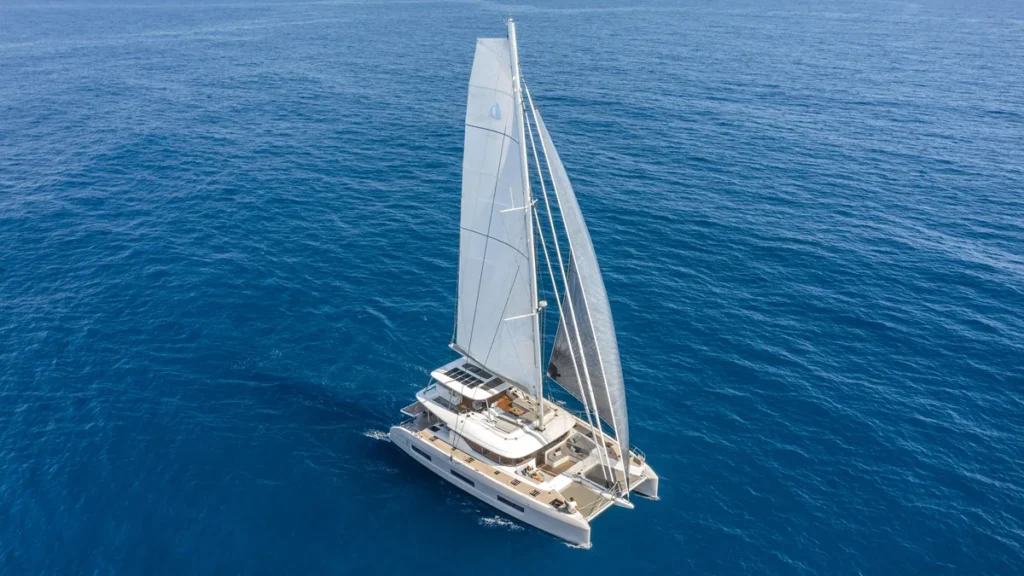
Finding the right new catamaran for sale starts with knowing how you plan to use it. Catamarans come in sailing and power versions, in sizes from compact day boats to large luxury yachts, and with layouts built for weekend trips or long-term cruising.
Before you choose a model, compare its length, beam, cabins, propulsion system, fuel capacity and equipment. Also look at the total cost, including delivery, warranty and ownership expenses.
This guide covers the main types of new catamarans, leading manufacturers, key specifications, pricing factors and the steps involved in buying one.
What Is a New Catamaran?

A catamaran is a boat with two parallel hulls joined by a central structure. This design creates a wide, stable platform with room for cabins, seating areas and outdoor living space.
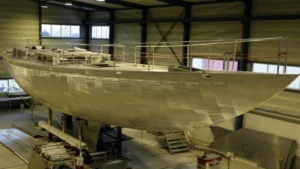
A new catamaran is a newly built, unused vessel. You can order one directly from the manufacturer, buy through an authorised dealer, or purchase from dealer inventory. Most new catamarans are either sailing or power models. Both use the twin-hull design, but they differ in propulsion and typical use.
Types of New Catamarans for Sale
Sailing Catamarans

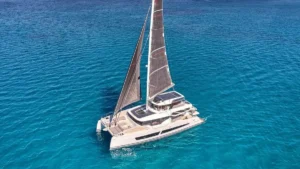
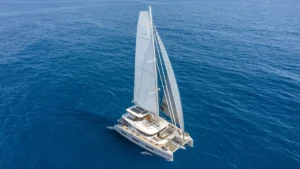
A sailing catamaran uses sails as its main propulsion and has engines for manoeuvring and for times when sailing isn’t practical. The hulls hold cabins, bathrooms and the galley, while the wide deck provides seating and dining space.
These boats suit sailing holidays, coastal cruising and longer passages. Performance depends on wind, sea conditions, sail design, weight and crew experience.
Power Catamarans

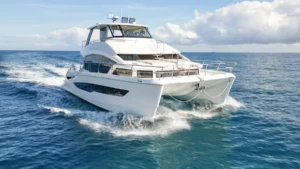
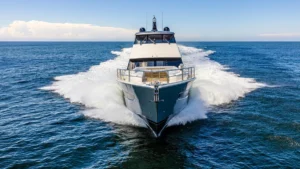
A power catamaran relies on engines, either outboard or inboard, and has no sailing rig. Sizes range from small day boats to large cruising vessels with cabins, kitchens and indoor lounges.
They suit buyers who prefer motor travel for coastal trips, family outings or extended cruising. When comparing models, look at engine power, fuel capacity, cruising speed and the manufacturer’s stated range.
Luxury Catamarans
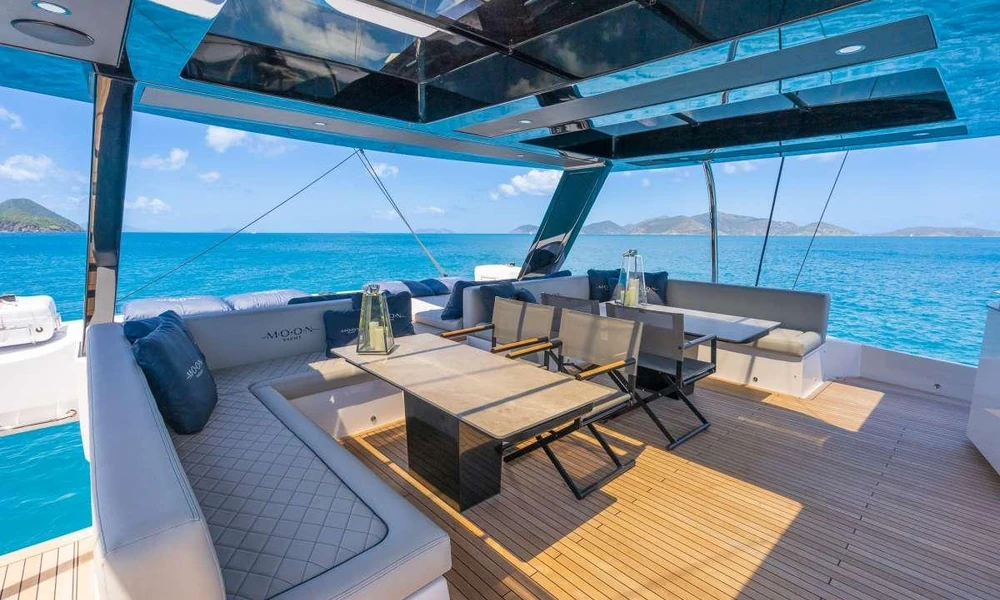
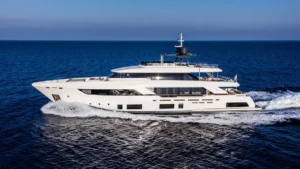
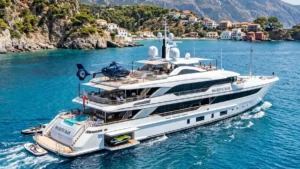
Luxury catamarans focus on space and comfort. Features can include large owner suites, guest cabins, flybridges, upgraded entertainment systems and customised interiors. They are built in both sailing and power versions, and prices depend on size, materials, equipment and the level of customisation.
Sport and Fishing Catamarans
These models are designed for day trips and fishing. Typical features include open decks, rod holders, storage and sometimes a small cabin for weather protection. Their layouts differ from cruising catamarans, so compare deck space, passenger capacity and storage.
New Catamaran Manufacturers

Several established builders offer new sailing and power catamarans. Ranges change often, so check each manufacturer’s current lineup before you compare prices.
Lagoon builds sailing catamarans in a wide range of sizes, plus larger power models such as the Lagoon Sixty 7 and Eighty 3. Its boats emphasise living space, multiple cabins and outdoor areas.
Aquila specialises in power catamarans, including yacht, coupe, sport and fishing-focused designs. Its yacht range includes the Aquila 42, 46, 50 and 54, and it also lists smaller Molokai models and larger luxury options.
Leopard offers both sailing and power models. Examples include the Leopard 43 and 46 sailing catamarans and the Leopard 40, 46 and 53 Powercats. Layouts range from coastal cruising to extended living aboard.
Fountaine Pajot builds sailing catamarans and larger luxury multihull yachts. Some models offer additional accommodation, and selected models are available with hybrid propulsion.
Sunreef Yachts focuses on luxury sailing and power catamarans, known for large living spaces and extensive customisation of interiors and outdoor areas.
Don’t assume that every model from a builder offers the same equipment. Compare each configuration individually.
Popular New Catamarans to Compare
The table below gives approximate lengths based on published manufacturer information. Confirm exact specifications for the model year and configuration you are considering.
| Model | Manufacturer | Type | Approx. length |
|---|---|---|---|
| Lagoon 43 | Lagoon | Sailing | 13.0 m |
| FP41 | Fountaine Pajot | Sailing | 12.1 m |
| FP44 | Fountaine Pajot | Sailing | 13.3 m |
| Leopard 43 | Leopard | Sailing | 13.0 m |
| Leopard 46 | Leopard | Sailing | 13.9 m |
| Aquila 42 Yacht | Aquila | Power | 12.8 m |
| Leopard 40 Powercat | Leopard | Power | 12.2 m |
| Leopard 46 Powercat | Leopard | Power | 14.1 m |
Length alone doesn’t tell you much. Two boats of similar length can differ in beam, cabin layout, propulsion and equipment, so a proper comparison should cover:
- Length, beam, draft and displacement
- Number of cabins, berths and bathrooms
- Engine or sail configuration
- Fuel and freshwater capacity
- Standard and optional equipment
- Intended cruising use
New Catamaran Prices
There is no single price for a new catamaran. The cost depends on size, builder, type, equipment and customisation, and a compact recreational model sits in a very different budget range from a large luxury yacht. Some manufacturers publish starting prices, while others quote only after you choose a configuration.
Size and Design
Larger boats need more materials and construction work, and they usually offer more cabins, bathrooms and living space. A sailing model and a power model of similar length also differ in engine systems, rigging and equipment, which affects cost.
Standard and Optional Equipment
An advertised price often covers only the standard package. Navigation electronics, upgraded engines, air conditioning, generators, watermakers and solar panels may cost extra. Ask for an itemised quotation that shows exactly what is included.
Customisation
Special layouts, upgraded materials and custom interiors raise the price. The final amount depends on the options the builder offers and how much bespoke work you request.
Delivery, Commissioning and Taxes
Transport from the shipyard, commissioning and preparation add to the budget, as do local taxes, VAT or import duties. Include these in your total from the start.
Specifications to Compare
Length, Beam and Draft
Beam is the boat’s overall width, and it matters because a catamaran’s width affects marina and berth availability. Draft is the depth below the waterline, which determines whether you can reach shallow anchorages. Check your intended marina’s maximum berth dimensions before choosing a model.
Engines and Propulsion
Sailing catamarans have auxiliary engines, while power catamarans depend on theirs. Compare engine type, horsepower, fuel requirements and maintenance needs, and confirm the engines are included in the quoted price.
Cabins, Berths and Bathrooms
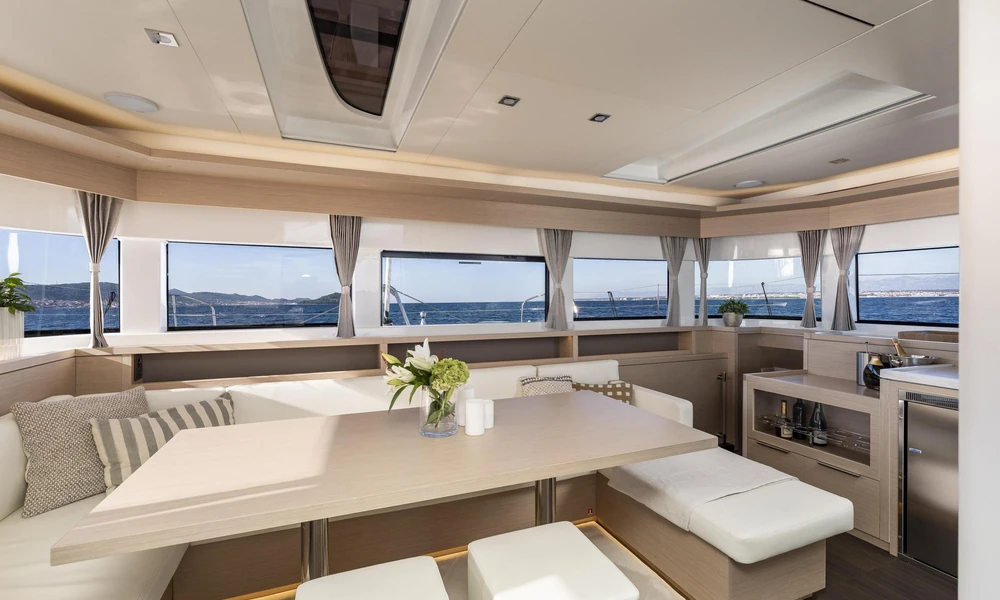
Cabin count and sleeping berths are not the same thing, so check actual berths and layouts. Look at bathroom arrangements, storage and whether the boat has a separate owner suite.
Fuel and Water Capacity
Fuel capacity matters for power catamarans and for the engines on sailing models. Freshwater capacity determines how long you can stay aboard between refills. For longer trips, consider a watermaker and your expected consumption.
Performance and Range
Speed and range depend on design, weight, weather and operating conditions. Ask the manufacturer how figures were measured, and don’t treat maximum speed as normal cruising speed.
Safety and Navigation Equipment
Review navigation, communication and safety equipment, and confirm what is standard and what you must buy separately. Requirements depend on the vessel, your operating area and local regulations.
Sailing Catamaran vs Power Catamaran
| Feature | Sailing catamaran | Power catamaran |
|---|---|---|
| Main propulsion | Sails, with auxiliary engines | Engines |
| Fuel use | Lower when sailing; engines used in calm or tight spaces | Higher; engines are used throughout |
| Equipment to maintain | Sails, rigging and engines | Engines and propulsion systems |
| Skills needed | Sailing and engine handling | Engine operation and boat handling |
| Typical use | Sailing holidays, long-distance cruising | Motor cruising, day trips, fishing |
A sailing catamaran suits buyers who enjoy sailing and want to travel on wind power. A power catamaran suits those who prefer engine-driven trips and don’t want to manage sails. Neither is automatically better. Consider your experience, planned routes, fuel budget and the places you want to visit.
New vs Used Catamaran
| Factor | New | Used |
|---|---|---|
| Condition | Unused | Previously operated |
| Configuration | Factory options may be available | Existing layout and equipment |
| Warranty | Manufacturer warranty may apply | Depends on remaining coverage |
| Service history | None | Records may exist |
| Price | Often higher for comparable models | May be lower |
| Availability | Depends on stock or production slot | Depends on seller and location |
A new catamaran lets you choose certain equipment and interior options and may come with a manufacturer’s warranty, subject to its terms. A used boat can cost less upfront, but its condition and maintenance history need careful review. The right choice depends on your budget, preferred model and willingness to handle repairs.
Where to Buy a New Catamaran
Authorised dealers can help you compare models, discuss configurations and arrange delivery, commissioning and after-sales support. Before paying, confirm the dealer’s relationship with the manufacturer and the services included.
Directly from manufacturers may give you more say in factory orders and customisation. Ask about the production schedule, payment stages, delivery location and warranty.
Online yacht marketplaces let you compare listings from many dealers and brokers. Filter by manufacturer, price, length, location and condition, and confirm that the listing is genuinely new and which model year it is. A marketplace listing is not proof that a seller is an authorised dealer.
What to Check Before You Buy

- Build quality: Inspect the hull and deck finish, fittings, doors, windows and interior workmanship for damage or incomplete work.
- Specification match: Compare the boat with your signed specification and quotation, including engines, cabins, materials and options.
- Systems: Check the engine installation, electrics, plumbing and navigation equipment, and ask for manuals.
- Sea trial: Assess handling, engine performance, noise, vibration and onboard systems in suitable conditions.
- Warranty: Get it in writing and review its duration, exclusions, claim process and transferability.
- Documents: Review the purchase agreement, builder’s documentation, ownership papers and registration requirements. For craft placed on the European Union market, check CE marking and conformity documents. Rules vary by market, so confirm what applies where you will register and use the boat.
Additional Ownership Costs
The purchase price is only part of the budget.
| Expense | What it covers |
|---|---|
| Delivery | Transport from builder or dealer |
| Commissioning | Preparing the vessel for use |
| Insurance | Cover under your chosen policy |
| Registration | Applicable charges |
| Marina fees | Berthing and docking |
| Maintenance | Servicing and repairs |
| Taxes | Sales tax, VAT or import duties |
| Storage | Haul-out and storage |
Marina charges vary by location and berth size, and maintenance depends on the boat’s systems and how you use it. Get itemised estimates for delivery and commissioning, plus insurance and marina quotes, before fixing your final budget.
How to Buy a New Catamaran: Step by Step
- Choose the type: Decide between a sailing and a power catamaran.
- Set your budget: Include equipment, delivery, taxes and ownership costs.
- Select the size: Consider crew numbers, cabins, storage and cruising area.
- Compare manufacturers: Review models and published specifications.
- Contact the dealer: Ask about availability, factory orders and configurations.
- Review the quotation: Confirm price, standard equipment, extras and delivery terms.
- Read the contract: Check payment stages, delivery dates, warranty and how defects are resolved.
- Inspect and test: Arrange checks and a sea trial before accepting delivery.
- Complete paperwork: Review ownership, registration and conformity documents.
- Prepare for handover: Collect manuals, equipment lists and warranty information.
If you order a factory-built boat, ask for written updates on the production schedule and any changes to the agreed specification.
Is a New Catamaran Worth Buying?
A new catamaran suits buyers who want unused equipment, a choice of layouts and options, and manufacturer support under warranty. The trade-offs are a higher initial investment, possible production delays, extra equipment costs, delivery charges and depreciation. It is worth considering if the design, size and equipment fit your needs and the full ownership cost fits your budget.
Frequently Asked Questions
Can I buy a new catamaran that is already in stock?
Yes. Some manufacturers and authorised dealers hold completed boats. Ask whether the vessel is physically in stock, what equipment it includes and when it can be delivered.
Can I change the interior layout after ordering?
Some builders offer layout and interior options, but changes depend on the model and production stage. Confirm all customisation options before signing.
Should I choose three or four cabins?
A three-cabin layout can offer larger private spaces, while four cabins provide more sleeping areas for families or guests. Compare the actual floor plans and berths.
Does the advertised price include all equipment?
Not always. Advertised prices often cover a standard configuration, so request an itemised quotation.
Can a new catamaran be delivered to another country?
Often, yes, depending on the manufacturer and dealer. Confirm transport costs, import duties, taxes, registration and local compliance first.
What happens if there are defects at handover?
Report them in writing and record them in the handover documents. Ask how and when they will be corrected, and follow the terms of the purchase agreement and warranty.
Can I live aboard year-round?
Some cruising catamarans are designed for extended stays, but suitability depends on layout, storage, freshwater capacity, power systems and climate equipment.
How do I know if it will fit my marina berth?
Compare the boat’s overall beam and length with the berth’s maximum dimensions. Ask about draft, access and any restrictions on multihulls.
Conclusion
Choosing a new catamaran takes more than comparing prices and looks. Consider the type of vessel, its size, cabin layout, propulsion and intended use. Compare models from established manufacturers, review the full equipment list, and include delivery, commissioning, taxes and ownership costs in your budget. Before accepting the boat, check its condition, documents and warranty. Taking the time to compare these details will help you choose a catamaran that fits your plans.