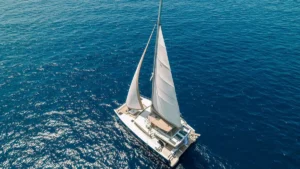
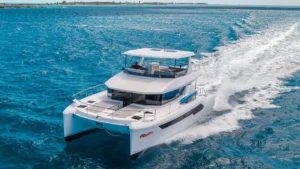
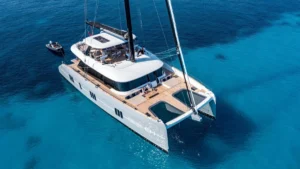
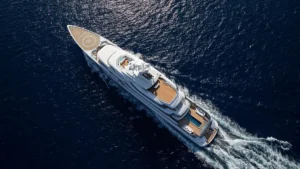
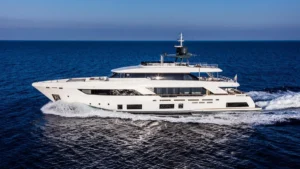
A big catamaran is a large vessel built on two parallel hulls joined by a bridging deck. That layout gives it a broad platform, generous living space and a choice of sail or engine power. Owners use large catamarans for family cruising, long passages, luxury holidays and charter work.
Some designs are tuned for sailing, while others rely on powerful engines. High-end models can add big guest cabins, outdoor lounges, swim platforms and sophisticated onboard systems. This guide explains the main types, features, performance points and costs so you can judge which boat fits your plans.
What Is a Big Catamaran?
A big catamaran is a large twin-hull boat made for leisure cruising, private ownership or luxury travel. A monohull has a single main hull. A catamaran splits its volume across two slim hulls and carries the deck and cabins on a structure between them.
This arrangement gives designers a wide platform and lets them use the space between the hulls for extra accommodation and facilities.
Large catamarans come as sailing, power, hybrid and electric versions. Sailing models draw mainly on wind, power models depend on engines, and some modern yachts add batteries and solar panels.
Size matters when using the word “superyacht.” A big catamaran is not automatically one. The term superyacht is generally used for luxury yachts of roughly 24 metres and above that offer extensive accommodation and crewed service.
How Big Can a Catamaran Be?
Catamarans range from small leisure boats to enormous custom yachts. Three measurements matter most:
- Length overall (LOA): the distance from the foremost to the aftermost point.
- Beam: the maximum width.
- Draft: how deep the boat sits below the waterline.
Beam deserves special attention on a catamaran, because two hulls with a deck between them produce a much wider boat than a monohull of the same length.
| Size category | General description | Typical use |
|---|---|---|
| Recreational catamarans | Smaller twin-hull boats | Day trips and short getaways |
| Large cruising catamarans | Bigger boats with several cabins | Family and extended cruising |
| Luxury catamarans | Upmarket finish and equipment | Private use and charter |
| Catamaran superyachts | Large, often custom-built yachts | Long-distance and luxury travel |
These categories are informal. No worldwide rule fixes the length at which a catamaran becomes “big.” When comparing boats, look at length and beam together, because a wide yacht can create problems with marina space, transport and berthing fees.
Types of Big Catamarans
The main difference between large catamarans is how they are propelled and what they are built to do.
Large Sailing Catamarans

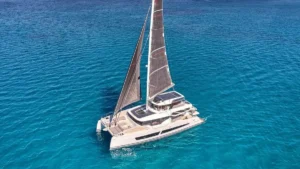
A large sailing catamaran moves mainly under sail. It also carries engines for harbour manoeuvring and for days with too little wind.
Typical layouts include several cabins, a central saloon, an open-air dining area and sometimes a flybridge. These boats suit people who enjoy sailing but want far more living room than a monohull offers. Speed depends on sail area, hull shape, displacement, wind and the load on board.
Large Power Catamarans

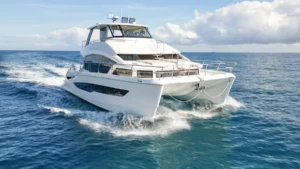
A large power catamaran relies on engines rather than sails. The twin-hull platform allows wide decks and well-separated cabins. Many have big fuel tanks, modern navigation equipment and spacious social areas.
They are popular for private island cruising and luxury charters. Fuel use and range hinge on engine output, speed, weight, hull form and sea state. Bigger engines do not guarantee better efficiency or performance.
Luxury Catamaran Superyachts

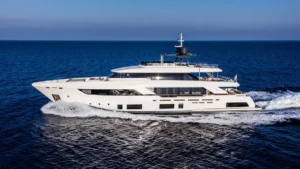
These yachts pair twin-hull engineering with top-tier accommodation. Common features include:
- A large owner’s suite
- Several guest cabins
- Separate crew quarters
- Generous dining and lounge spaces
- Swim platforms and beach clubs
- Storage for tenders and water toys
- Bespoke interiors
The broad structure gives designers freedom in arranging space, though the final plan depends on the yacht’s dimensions and build specification. Custom projects can also include specialised navigation, communication and entertainment systems.
Hybrid and Electric Catamarans

These boats use electric motors, batteries or a mix of electric and conventional drive. Some add solar panels to power onboard equipment, recharge batteries or assist propulsion. The Sunreef 43M Eco is one example of a design built around solar and electric technology.
Solar energy is not a limitless supply. Real-world results depend on sunshine, panel area, battery capacity, energy demand and operating conditions.
Key Features of a Big Catamaran

Twin Hulls and Wide Beam
The two hulls and the connecting deck are the defining feature. This shape often gives better stability at rest than a comparable monohull, although actual behaviour depends on hull design, load and sea conditions. The width also frees up room for outdoor areas and equipment.
Generous Interiors
Large catamarans can offer:
- An owner’s suite with a private bathroom
- Guest cabins
- A central saloon and dining area
- A fully equipped galley
- Crew cabins
- Plenty of storage
Some luxury designs include a full-beam owner’s suite that spans the width of the boat. Because the guest cabins can sit in separate hulls, they often feel more private.
Outdoor Living Spaces
Outdoor areas are a major selling point. Look for a flybridge with seating and sunbeds, an aft cockpit for dining, a foredeck lounge, swim platforms, a beach club and outdoor bars.
Storage and Water Toys
Many large catamarans have room for tenders, jet skis and diving gear. Some superyacht-scale models include tender garages and purpose-built aft platforms that make launching and recovery easier.
Navigation and Onboard Technology
Depending on the model, expect GPS, radar, autopilot, electronic charts, communication equipment, engine monitoring and automated lighting and climate control. The exact package depends on the builder and the owner’s requirements.
Advantages and Disadvantages
Advantages
- More living space. The wide beam creates large interior and exterior areas, which suits families, guests and long trips.
- Good static stability. The distance between the hulls resists side-to-side motion when the boat is stationary.
- Flexible layouts. Hulls can hold separate cabins, storage and technical spaces.
- Shallow-draft options. Some designs draw less water than similar monohulls, which can open up shallow anchorages.
- Choice of propulsion. Sail, power, hybrid and electric versions all exist.
Disadvantages
- Wide berth needed. Some marinas have limited space for wide boats.
- High purchase price. More material, engineering and equipment mean higher costs, especially for custom builds.
- Maintenance demands. Engines, electrics, plumbing and electronics all need regular attention.
- Different handling. Twin hulls behave differently from a monohull, so operators must learn how the boat responds in various weather conditions.
- Motion in rough seas. Width does not guarantee comfort. Wave height and direction, bridge-deck clearance, hull shape and speed all affect the ride.
Big Catamaran vs Monohull Yacht
| Feature | Big catamaran | Monohull yacht |
|---|---|---|
| Hull design | Two parallel hulls | One main hull |
| Living space | Often wider at similar length | Depends on hull shape and layout |
| Static stability | Generally high | Different stability profile |
| Heel under sail | Usually minimal | Usually heels |
| Draft | Some designs are shallower | Depends on keel and hull |
| Berthing width | Needs more | Often needs less |
| Interior layout | Split between two hulls | Arranged within one hull |
Neither type is automatically better. A catamaran suits owners who want wide living areas, separate accommodation and reduced heel. A monohull may appeal to those who prefer traditional sailing feel, a narrower beam and easier marina access. Compare real specifications and, where possible, take a sea trial before deciding.
Performance, Speed and Range
No single speed or range applies to every large catamaran, so compare each model on its own figures.
Speed
A sailing catamaran’s speed varies with wind strength, sail area, hull shape and load. A power catamaran’s speed depends on engine capacity, hull resistance, displacement and conditions. Compare cruising speed (the pace intended for regular travel) separately from maximum speed (the highest figure under stated conditions).
What Affects Performance
- Hull design: influences water resistance and movement.
- Weight: passengers, fuel and gear all add load.
- Engine power: sets the available thrust on motor yachts.
- Sail area: governs sailing performance.
- Sea conditions: waves, wind and current change the result.
- Maintenance: a clean hull and serviced engines perform better.
Weigh these together rather than judging a yacht by engine size or advertised speed alone.
Range
Range depends on fuel or battery capacity, type, speed and energy use. Power catamarans with large tanks can be designed for long passages. Sailing models use wind but still need engines and fuel. For hybrid and electric boats, battery capacity and onboard energy generation also matter.
Always ask the builder for the stated range and the conditions behind that figure. Real distances can fall short when the boat is heavily loaded or driven fast.
Notable Big Catamaran Examples
These two projects show how different large catamarans can be. Figures below are as published by the manufacturer, so confirm them against current specifications.
Sunreef 43M Eco

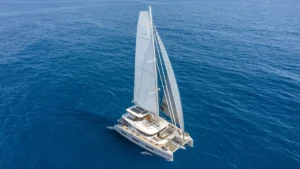
This large sailing catamaran project from Sunreef Yachts has published dimensions of 42.7 metres in length and 15.4 metres in beam. It features electric propulsion, integrated solar technology, large indoor and outdoor living areas, an owner’s suite and space for water toys. Equipment and design details can change during construction, so check the latest project information.
49m Sunreef Power
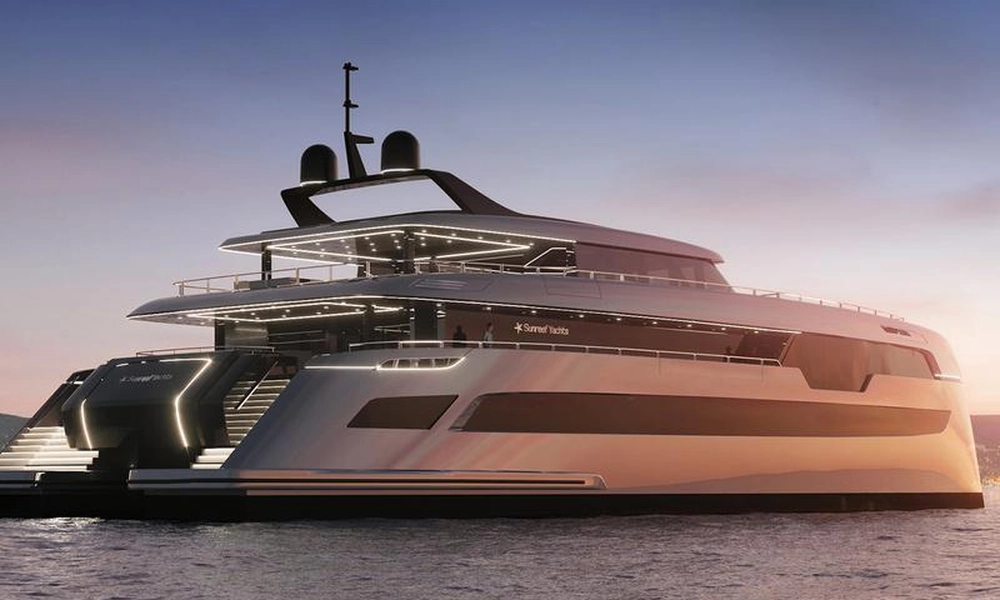
This large motor catamaran is aimed at luxury cruising. Published details include:
- Length overall of 49 metres
- Beam of 16.85 metres
- Twin 3,400 HP engines in the classic version
- Fuel capacity of 118,000 litres
- Space for up to 10 guests and 17 crew
Its tri-deck layout provides extensive outdoor areas and room for tenders and toys. Sunreef states an autonomy of more than 5,000 nautical miles, which is a manufacturer’s estimate rather than a guarantee for all conditions.
| Specification | Sunreef 43M Eco | 49m Sunreef Power |
|---|---|---|
| Length | 42.7 m | 49 m |
| Beam | 15.4 m | 16.85 m |
| Type | Sailing catamaran | Power catamaran |
| Propulsion | Electric and sail | Twin engines |
| Focus | Solar and electric technology | Luxury motor cruising |
These boats serve different purposes, so do not treat the table as a performance contest.
How Much Does a Big Catamaran Cost?
There is no single price. Smaller production catamarans cost far less than custom luxury yachts, and catamaran superyachts demand a substantial investment because of their size, systems and bespoke finish. Builders often publish prices for standard models, while custom projects are quoted case by case.
| Price factor | Effect on cost |
|---|---|
| Length and beam | Larger boats need more material and labour |
| Construction material | Different materials cost different amounts |
| Engines and propulsion | Diesel, hybrid and electric systems vary in price |
| Interior design | Custom furniture and finishes raise the total |
| Navigation equipment | Advanced electronics add to the budget |
| Customisation | Special layouts and extra facilities increase the price |
Also separate a builder’s starting price, a seller’s asking price and the final agreed price. They are rarely the same.
Ownership and Running Costs
The purchase is only the beginning. Budget for these ongoing expenses:
- Crew: large luxury catamarans may need a captain, engineer and other staff.
- Fuel and energy: power boats burn fuel, and hybrid or electric models have battery and charging needs.
- Insurance: premiums depend on value, cruising area, usage and cover.
- Marina fees: wide beams can limit berth choice and raise costs.
- Maintenance: hulls, engines, electrics, plumbing and electronics need regular servicing.
- Refits and repairs: interiors, equipment and worn parts eventually need replacing.
A commonly cited rule of thumb is that yearly running costs can reach a notable percentage of the yacht’s value, but this varies widely. Build a separate operating budget based on the boat’s specification, location and use.
How to Choose the Right Big Catamaran
- Define your use. Decide whether you want family holidays, long-distance cruising, private use or charter income.
- Pick sail or power. Choose sailing if you enjoy wind-driven travel, or power if you prefer engine cruising.
- Check size and accommodation. Compare cabins, bathrooms, crew areas, storage and outdoor spaces, and always check the actual beam.
- Review performance and range. Ask for cruising speed, maximum speed, fuel capacity and range under realistic loads.
- Inspect condition and construction. For a used boat, review the hull, engines, electrics, electronics and service history, and arrange an independent marine survey plus an engine inspection. For a new build, study the construction specification, warranty, delivery schedule and contract terms.
- Confirm marina requirements. Check beam, draft, air draft, local restrictions and crew rules for the places you plan to visit.
Frequently Asked Questions
What counts as a big catamaran?
It is a large twin-hull vessel for cruising, private use or luxury travel. No global size limit defines it, so length, beam, accommodation and purpose together describe the category.
What is the largest catamaran in the world?
It depends on the category: sailing or power, delivered or still under construction. Compare each separately, and remember that planned dimensions do not make a yacht the largest one actually delivered. Check current builder announcements for the latest record holders.
Can a big catamaran cross an ocean?
Some can. Suitability depends on construction, design category, fuel or energy capacity, weather, equipment and crew experience. Confirm the boat’s offshore rating before planning a long passage.
Does a bigger catamaran always ride more smoothly?
No. Hull shape, bridge-deck clearance, wave direction, load, speed and sea state all shape comfort, and a large boat can still pitch and slam in rough water.
Why does beam matter so much?
Beam affects interior space, stability, marina access, transport and berthing cost. Some marinas lack berths wide enough for very broad catamarans.
What should I check on a used big catamaran?
Review the hull structure, engines, rigging (if fitted), electrical systems, navigation gear, maintenance records and past repairs. An independent survey and mechanical inspection are essential before you complete the purchase.
Conclusion
A big catamaran pairs two hulls with a broad deck to deliver space for accommodation, cruising and onboard activities. Large models come as sailing, power, hybrid and electric boats, up to full luxury superyachts. Their strengths are spacious layouts, flexible propulsion and good static stability. Their drawbacks are wide berthing needs, high prices and significant running costs.
The best choice depends on how you plan to use the boat, which facilities matter most and what you can afford long term. Verify specifications, inspect the vessel and, where possible, sea-trial it before committing.