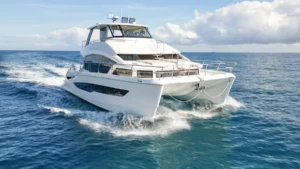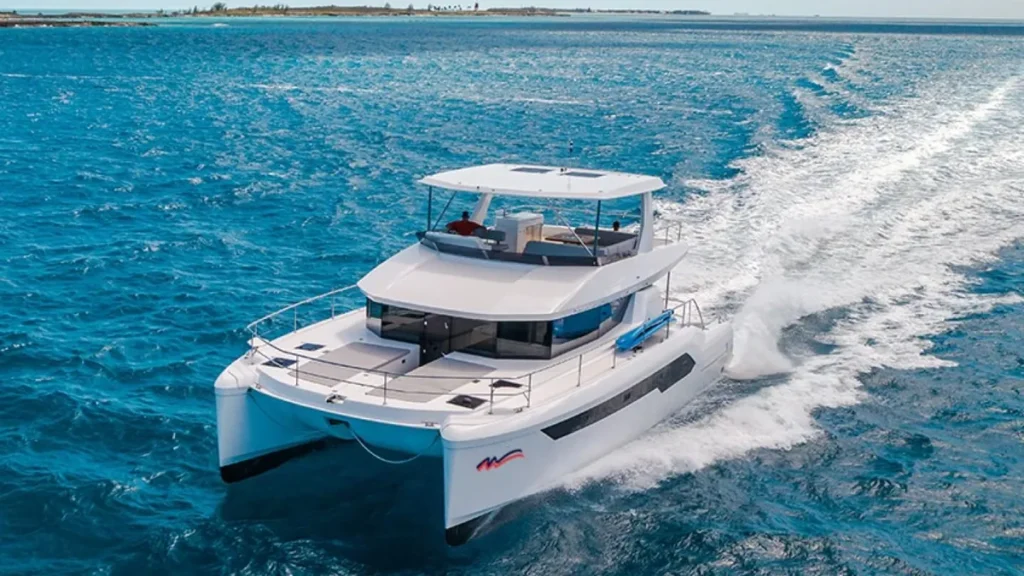
A power cat boat is a motorized vessel with two parallel hulls joined by a bridge deck. Its wide layout, steadiness at rest, and flexible design make it popular for fishing, family outings, and coastal cruising. This guide explains how power catamarans work, the main types, their strengths and weaknesses, running costs, and what to check before you buy.
What Is a Power Cat Boat?
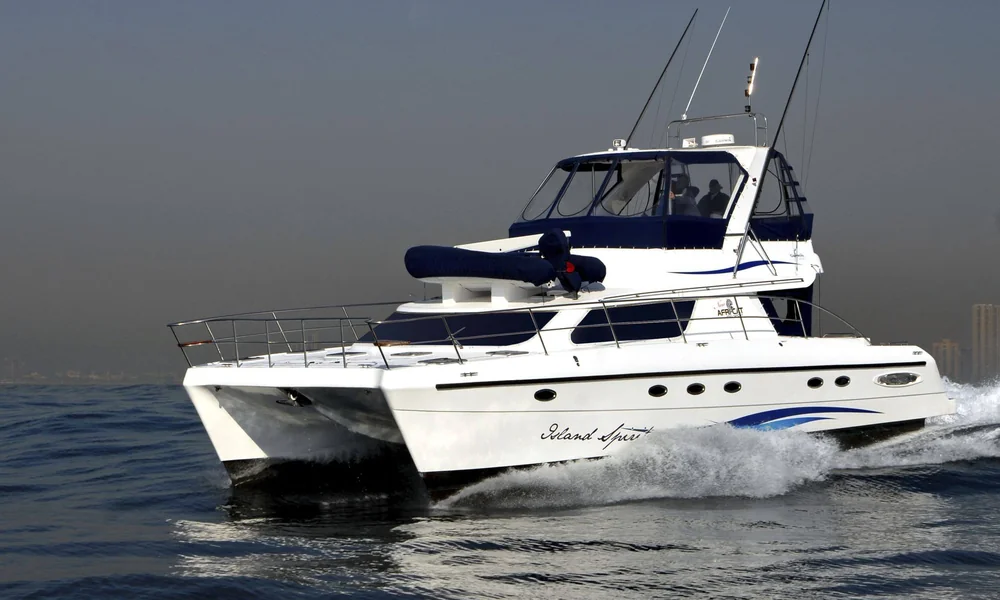
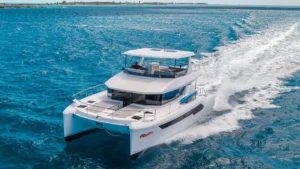
A power cat boat, also called a power catamaran, is a motor-driven vessel built on two separate hulls connected by a central structure. A traditional monohull has a single main hull. A power cat spreads its weight across two narrower hulls with open space between them.
That open space is called the tunnel. It runs beneath the bridge deck and gives the boat a broad platform for passengers, gear, seating, and onboard facilities.
Power cats come in many sizes. Compact models suit fishing and day trips, while larger vessels offer cabins, galleys, bathrooms, and living areas for longer journeys. Most recreational power cats use twin outboard engines, while larger cruisers often use inboard diesel engines.
The main components are:
- Twin hulls: Two parallel structures that provide buoyancy and support.
- Bridge deck: The structure connecting the hulls.
- Tunnel: The gap beneath the bridge deck through which water passes.
- Engines: The propulsion units that move the boat.
- Helm: The station used for steering, navigation, and engine control.
How Does a Power Catamaran Work?
Two hulls carry the boat’s weight, and one or more engines supply thrust. Because the hulls sit far apart, the boat has a wide base that resists rolling when stationary or when passengers move about.
Hull shape strongly affects performance. Planing hulls generate lift and ride higher at speed. Displacement hulls move through the water at lower speeds and suit steady cruising. Semi-displacement hulls fall between the two.
The tunnel also shapes the ride. If waves reach the underside of the bridge deck, they can cause noise and jarring impacts, often called bridge deck slap or tunnel slap. This is most noticeable in short, steep waves or when the boat is heavily loaded. Before buying, look at hull geometry, bridge deck clearance, and the manufacturer’s recommended operating conditions.
What Are the Different Types of Power Cat Boats?
Fishing Power Cats
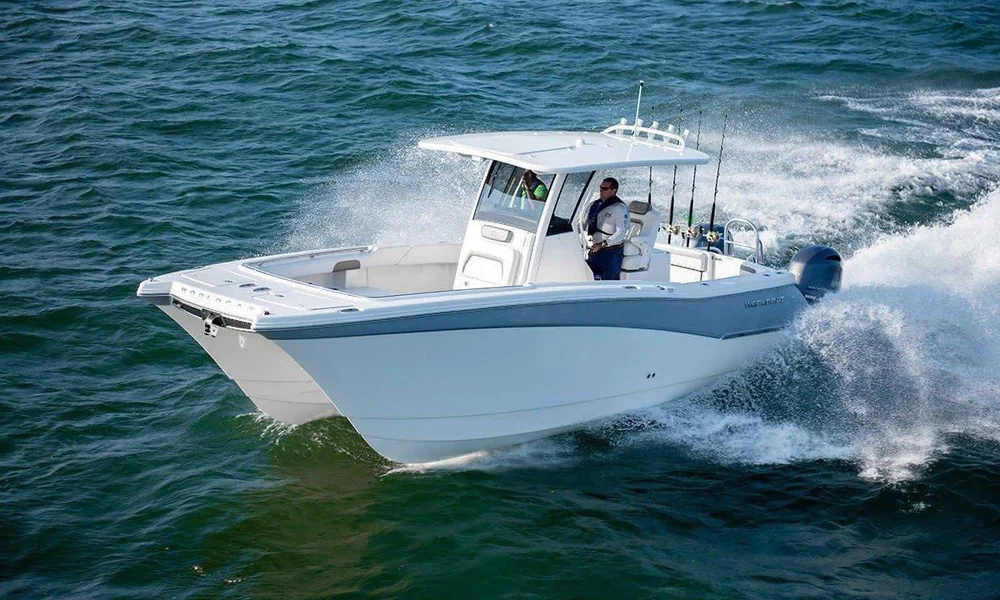
Fishing cats have open decks, rod holders, livewells, fish boxes, and strong outboard engines. Many use a center-console layout so anglers can walk around the entire boat. Larger versions add covered seating, small cabins, and advanced electronics. When choosing one, consider deck drainage, storage capacity, fuel range, engine performance, and the waters where you plan to fish.
Recreational Power Cats
These boats are built for sightseeing, swimming, water sports, and relaxed day trips. Typical features include comfortable seating, swim platforms, storage compartments, and open deck areas. Some have a small cabin or sheltered seating for longer outings.
Family Power Cats

Family models focus on comfort and convenience. Depending on size, they may include dining areas, shaded seating, cabins, and bathrooms. The wide platform makes moving around easier, but passenger and weight limits must always be observed. Look at safety rails, swim access, seating layout, and shade.
Cruisers and Luxury Power Cats
Cruisers are designed for coastal passages and extended stays aboard. Common features include private cabins, bathrooms and showers, fully equipped galleys, lounge and dining areas, navigation and communication equipment, and generous fuel and water tanks. Luxury models add multiple cabins, large saloons, flybridges, and customized interiors, with correspondingly larger budgets for purchase, insurance, maintenance, fuel, and berthing.
Power Catamaran Hull Designs
| Hull Design | How It Works | Main Purpose |
|---|---|---|
| Planing hull | Generates lift and rides higher at speed | Faster recreational boating |
| Displacement hull | Moves through the water without climbing onto a plane | Steady, lower-speed cruising |
| Semi-displacement hull | Combines traits of both designs | Flexible cruising performance |
Planing hulls are common on fishing and recreational cats where speed and quick access to destinations matter.
Displacement hulls are usually slender, which reduces wave-making resistance at suitable speeds. They are chosen for long passages where range and steady progress matter more than top speed.
Semi-displacement hulls balance cruising efficiency with higher-speed capability. Real-world results depend on hull shape, weight, engine installation, propellers, and conditions.
Advantages of Power Cat Boats
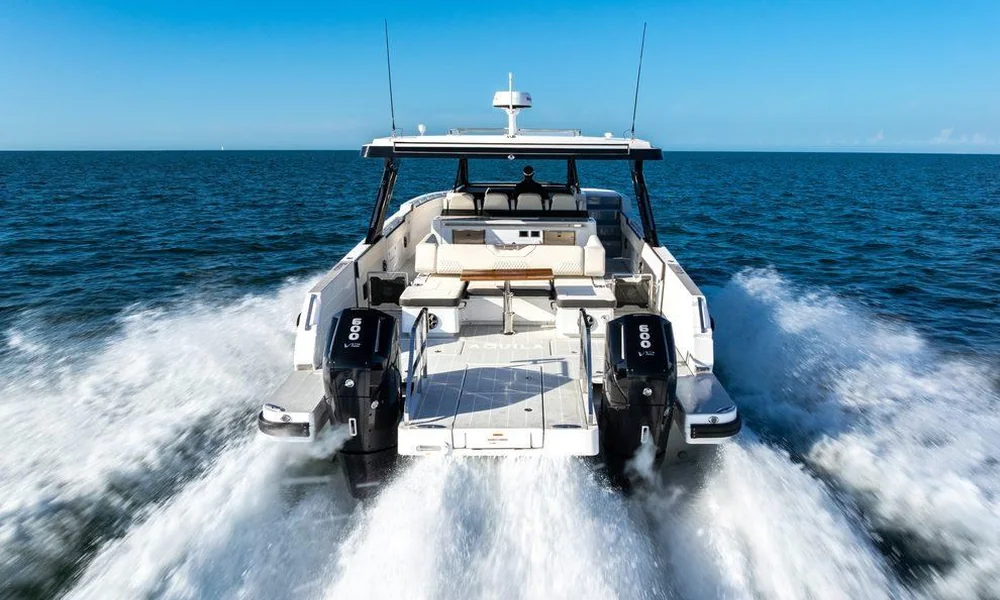
The benefits below vary by model and operating conditions.
1. Better Stability at Rest
The distance between the hulls creates a wide base, so many power cats roll less than comparable monohulls when stationary. This makes fishing, entertaining, and walking around the deck more comfortable. Stability underway, however, depends on hull design, loading, speed, and wave direction.
2. More Usable Space
The wide beam allows larger deck areas and flexible layouts for seating, storage, cabins, and dining. Larger cruisers can offer separate sleeping areas while keeping a spacious central living space.
3. Twin-Engine Configurations
Two engines allow independent throttle control, which can improve maneuverability at the dock. Having two engines may also give you a way to return to port if one fails, but running on a single engine is not automatically safe in every situation and can affect steering and speed.
4. Potential Fuel Efficiency
Some power cats are designed to reduce resistance at certain cruising speeds, which can make them efficient compared with some monohulls. This is not guaranteed. Fuel consumption depends on hull design, engines, load, speed, maintenance, and sea conditions.
5. Versatility
Buyers can choose anything from a compact open-deck fishing boat to a large vessel with full accommodation.
Disadvantages of Power Cat Boats
- Wide beam: Larger berths, storage spaces, and special transport arrangements may be needed.
- Maintenance costs: Two engines can increase servicing and repair expenses.
- Purchase price: Some power cats cost more than comparable monohulls.
- Wave slap: Waves can strike the bridge deck underside, depending on clearance and sea conditions.
- Different handling: Turning and docking feel different from a monohull.
- Limited marina access: Some marinas lack suitable berths for wider vessels.
- Interior layout: Cabins inside narrow hulls have different shapes and dimensions from conventional yacht cabins.
How much these matter depends on boat size, construction, location, and use.
Power Cat Boat vs. Monohull
| Feature | Power Cat Boat | Monohull Boat |
|---|---|---|
| Hull structure | Two hulls | One hull |
| Stability at rest | Often less rolling | Depends on hull design |
| Beam | Generally wider | Often narrower |
| Interior layout | Space across two hulls and bridge deck | Space within one hull |
| Docking | May require wider berths | Often fits narrower spaces |
| Engine setup | Frequently twin engines | Single or multiple engines |
| Handling | Twin-hull characteristics | Single-hull characteristics |
A power cat suits buyers who want a wide deck, extra usable space, and less rolling at rest. A monohull may be more practical for those with limited marina space or a preference for traditional handling. Neither is automatically better.
Popular Power Catamaran Manufacturers and Models
- Aquila: Sport, fishing, and luxury power catamarans, including its Sport, Molokai, and Yacht ranges.
- World Cat: A power catamaran specialist offering center-console and dual-console boats.
- Twin Vee: Recreational and commercial power cats for fishing, diving, and other uses.
- Leopard Catamarans: Cruising power catamarans for extended journeys.
- Fountaine Pajot: Builds sailing and motor catamarans, including larger cruising vessels.
- Sunreef Yachts: Known for luxury catamarans, including custom power models.
| Model | Manufacturer | Main Use |
|---|---|---|
| Aquila 32 Sport | Aquila | Recreational boating |
| Aquila 36 Sport | Aquila | Family recreation |
| Aquila 36 Molokai | Aquila | Offshore fishing |
| Aquila 54 Yacht | Aquila | Luxury cruising |
| Leopard 40 Powercat | Leopard | Extended cruising |
| Leopard 46 Powercat | Leopard | Luxury cruising |
| Leopard 53 Powercat | Leopard | Long-distance cruising |
Model lineups change, so verify details with the manufacturer for the exact model year.
Engines and Propulsion Systems
Outboard engines are mounted externally at the stern. They are common on small and mid-size boats, are easy to service and replace, and can be tilted up in shallow water. Always stay within the manufacturer’s approved horsepower rating.
Inboard engines sit inside the hull and drive the boat through a propulsion system. They are typical on larger cruisers and may be diesel or gasoline.
The best choice depends on boat size, intended use, fuel availability, service access, and long-term costs.
Speed, Fuel Efficiency, and Range
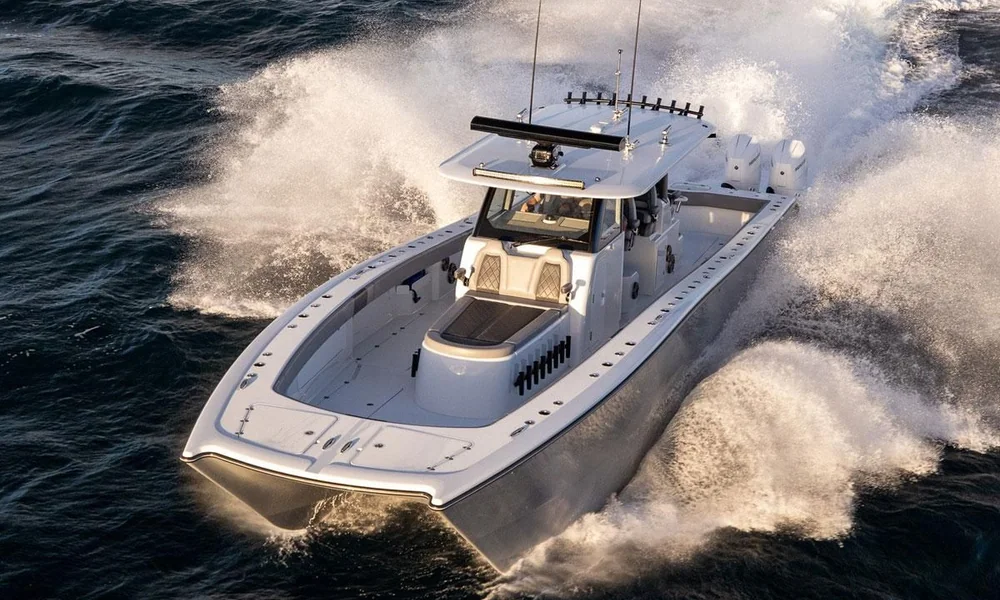
Performance varies widely. A compact fishing cat and a large cruiser have very different speeds, fuel needs, and ranges. Key factors include engine power and configuration, hull shape and condition, vessel weight, passenger and gear load, cruising speed, weather, propellers, and engine maintenance.
Maximum speed is not the same as economical cruising speed. Running at full throttle for long periods raises fuel consumption and engine wear.
A basic theoretical range formula is:
Range = (Usable Fuel ÷ Fuel Burn per Hour) × Speed
For example, a boat with 200 gallons of usable fuel burning 20 gallons per hour at 15 knots can run for 10 hours (200 ÷ 20), covering 150 nautical miles (10 × 15). Real planning should allow for fuel reserves, changing weather, extra load, and variations in consumption. Use the manufacturer’s consumption data and follow standard reserve guidelines, such as keeping a margin of fuel in hand.
How Much Does a Power Cat Boat Cost?
Prices depend on length, manufacturer, build quality, engines, onboard facilities, and equipment. Small outboard-powered cats cost far less than large cruising yachts, and luxury vessels with several cabins and custom interiors sit at the top of the market. Because prices change and vary by region, ask dealers for current quotes rather than relying on a single figure.
Check whether a quoted price includes engines, electronics, delivery, taxes, and optional equipment. Also look beyond the purchase price: fuel, insurance, servicing, marina fees, storage, and repairs all add to the total cost of ownership. For used boats, condition and maintenance history often matter more than age.
Maintenance and Ownership Costs
Budget for these regular expenses:
- Engine servicing: Oil changes, filters, cooling systems, belts, and inspections.
- Hull maintenance: Cleaning, structural inspections, and antifouling where needed.
- Propulsion: Propeller checks, steering maintenance, and related repairs.
- Electrical systems: Batteries, wiring, and electronics.
- Insurance: Premiums depend on vessel value, location, use, and coverage.
- Docking and storage: Fees based on boat size and location.
- Unexpected repairs: Damage, equipment failures, and replacement parts.
Twin engines mean double the servicing. Follow the manufacturer’s schedule for inspecting the hulls, bridge deck, fuel system, and electrical equipment, and keep accurate records, which also help resale value.
How to Choose the Right Power Cat Boat
- Identify your main activity: Fishing, day trips, or longer cruising.
- Check passenger capacity: Make sure approved passenger and weight limits fit your needs.
- Compare dimensions: Length, beam, draft, transport needs, and marina access.
- Evaluate engines: Horsepower, fuel type, service availability, and costs.
- Understand range: Review usable fuel capacity and verified consumption at realistic speeds.
- Inspect onboard facilities: Cabins, seating, bathrooms, storage, electronics, and safety gear.
- Calculate the full budget: Purchase price, insurance, fuel, maintenance, docking, and surprises.
- Check local support: Make sure technicians and parts are available for your engines and equipment.
- Arrange a sea trial: Test handling, visibility, comfort, and performance in suitable conditions.
A boat that looks impressive at the marina may not suit your needs, so compare practical features and ownership demands before deciding.
What to Check Before Buying a Used Power Catamaran
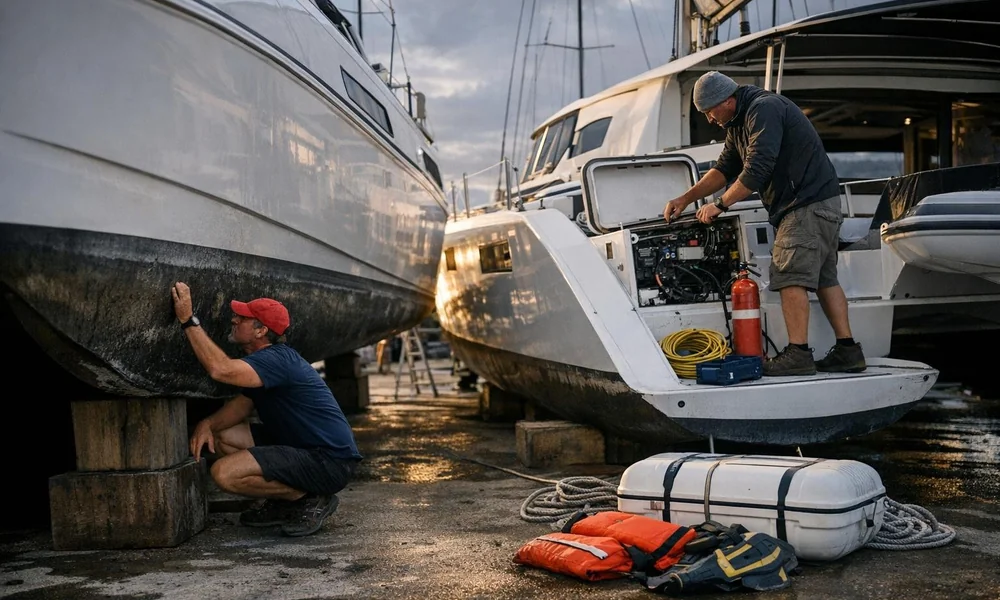
A used power cat can offer good value, but a professional inspection is essential. Check:
- Hull condition: Cracks, damage, previous repairs, blistering, and signs of water intrusion.
- Bridge deck: Structural damage, impact marks, and evidence of repeated wave strikes.
- Engines: Service records, engine hours, and diagnostic information.
- Propellers: Dents, cracks, corrosion, and past repairs.
- Electrical systems: Batteries, wiring, navigation equipment, and controls.
- Fuel systems: Tanks, hoses, connections, and leaks.
- Steering: Response and condition of components.
- Safety equipment: Required items are present, serviceable, and appropriate.
- Paperwork: Ownership and registration documents, maintenance records, and damage history.
- Interior: Moisture, damaged fittings, leaking windows, and unusual odors.
Arrange an independent marine survey and a sea trial before completing the purchase. A qualified surveyor can find structural and equipment problems that a basic inspection may miss.
Are Power Cat Boats Safe?
Power cats offer good stability in many conditions, but no boat is safe in every environment. Safety depends on construction, loading, maintenance, weather, sea conditions, and operator skill.
Follow the manufacturer’s passenger and weight limits, distribute people and gear sensibly, secure loose items, and avoid placing heavy weight high above the deck. Before departure, check the forecast, fuel, navigation and communication equipment, and emergency gear. Carry life jackets and all legally required safety equipment.
Skippers used to monohulls should learn the handling of a twin-hull boat, and a boating safety course with practical training helps new owners build confidence before longer trips.
Frequently Asked Questions
Can a power cat boat run on one engine?
Some twin-engine power cats can, depending on design, load, engine setup, and conditions. Running on one engine can affect steering, speed, and maneuverability. Follow the manufacturer’s instructions.
Does the space between the hulls affect the ride?
Yes. The tunnel’s dimensions and clearance influence wave slap, noise, and comfort, especially in rough water.
Can a power cat go on a normal trailer?
Some smaller models can be trailered, but their wider beams may need specialized trailers and transport arrangements. Check the boat’s dimensions and local road rules.
Is a power cat suitable for long-distance travel?
Some larger models are designed for extended cruising. Suitability depends on fuel capacity, real range, construction, onboard systems, weather, and approved operating limits.
Why does bridge deck clearance matter?
It is the distance between the underside of the connecting deck and the water. If waves strike this area underway, they cause noise and uncomfortable impacts.
Which documents should I request when buying a used power cat?
Ask for ownership and registration documents, engine service records, maintenance and repair history, and equipment information. A marine survey and sea trial add further confidence.
What is the most important feature to check when buying a power cat?
No single feature decides it. Evaluate hull condition, bridge deck clearance, engine health, passenger capacity, and intended operating conditions together.
Conclusion
A power cat boat offers a distinctive boating experience through its twin hulls, wide platform, and versatile designs. Whether you want offshore fishing, family recreation, coastal cruising, or luxury travel, there is a power catamaran for different needs and budgets.
Choosing well means weighing hull design, engines, fuel consumption, passenger capacity, maintenance, and docking limits. Compare manufacturers, review specifications, and commission a professional inspection before buying a used vessel.