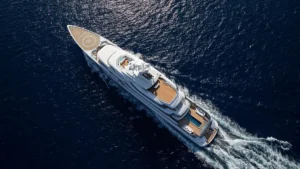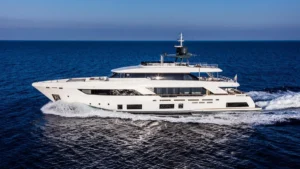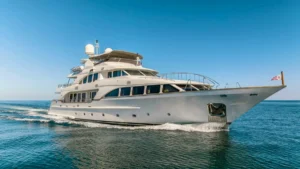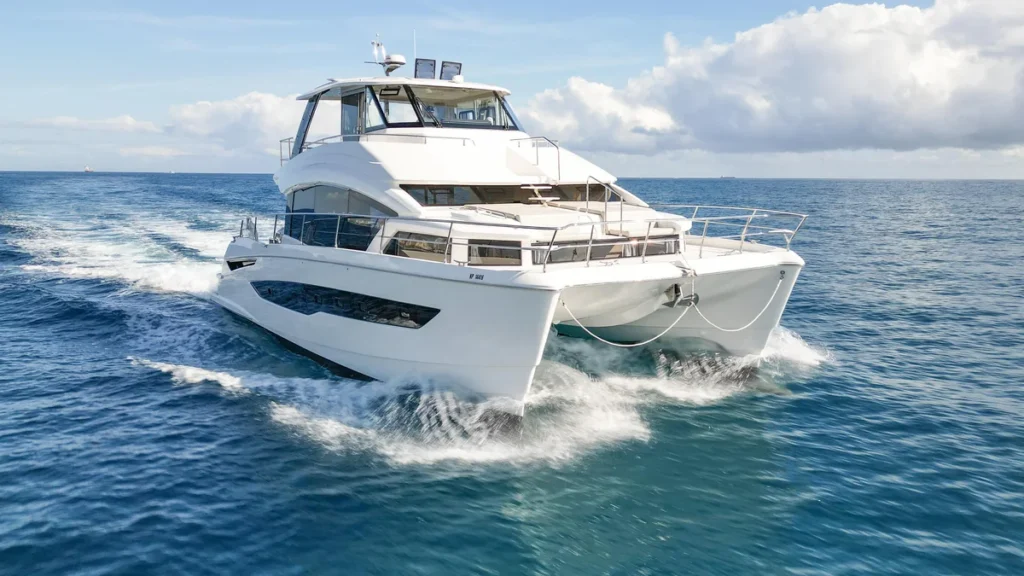
A catamaran can cost a few thousand dollars for a small recreational model or several million for a large luxury yacht. The exact price depends on size, type, manufacturer, age, condition and equipment, and sailing, power and luxury models sit at very different price levels.
Buying a catamaran also involves more than paying the advertised price. You need to allow for taxes, delivery, insurance, maintenance, marina fees and repairs. This guide explains catamaran prices, compares types and sizes, and covers the extra costs so you can plan your budget.
How Much Does a Catamaran Cost?
Prices vary widely because catamarans are built for different purposes. A small recreational catamaran costs very differently from a large sailing yacht or a custom-built power catamaran.
As one example, a Lagoon dealer’s price guide lists an indicative starting price of €347,100 excluding VAT for the Lagoon 38, and €1,604,300 and €2,259,900 for the larger Lagoon 55 and Lagoon 60. These figures show how strongly size, design and equipment drive the price.
A used catamaran may cost less than a new one, but its condition, maintenance history and included equipment can change its real value.
| Catamaran type | Main purpose | What affects its price |
|---|---|---|
| Recreational | Day sailing and leisure | Size, materials and equipment |
| Sailing | Cruising and longer trips | Length, sails, layout and construction |
| Power | Motor-powered cruising | Engines, fuel capacity and onboard systems |
| Luxury | Premium private use | Size, interior design and customization |
| Custom | Built to an owner’s brief | Materials, design, specification and shipyard |
No single price applies to every category, so compare boats of similar size, purpose, equipment and condition.
Catamaran Price by Type
Sailing Catamarans

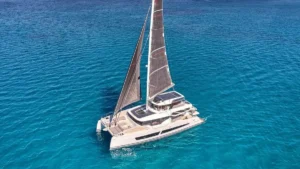
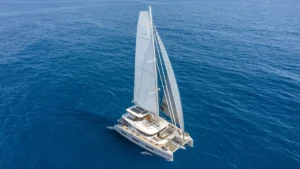
A sailing catamaran uses sails as its main propulsion, and many models also have engines for harbors and calm conditions. These boats suit family trips, coastal cruising and longer passages. Price depends on length, sail systems, interior space, construction and equipment. Smaller models generally cost less than large cruising yachts, and a boat with several cabins, advanced navigation and upgraded systems costs more than a basic configuration.
Power Catamarans

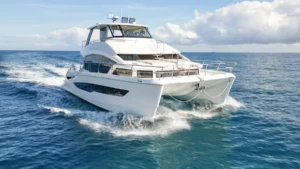
A power catamaran relies on engines for motor-powered trips, leisure cruising and longer journeys, depending on its specification. Price depends on:
- Engine type and power
- Length and width
- Fuel capacity and expected range
- Cabin layout and living space
- Navigation and entertainment systems
- Construction and equipment quality
Power catamarans come in recreational and luxury designs, and larger models with powerful engines and extensive facilities need a bigger budget.
Luxury Catamarans

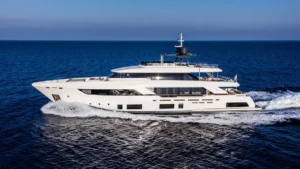
Luxury catamarans offer more living space, comfort and premium equipment, such as large cabins, spacious lounges and outdoor dining areas. Builders such as Sunreef offer luxury sailing and power models, and some are built to individual requirements, so price depends heavily on design, materials, equipment and interior. Large custom catamarans can cost several million dollars. Ask for a detailed quotation, because a general starting price may not reflect the final cost of a customized vessel.
Recreational and Beach Catamarans

Small recreational catamarans are for leisure sailing and day trips, and they differ from cabin-equipped cruisers. Prices depend on hull material, size, sail equipment and included accessories. Some are simple boats, while others have extra features for more demanding sailing. Don’t compare them directly with 40- or 50-foot cruising yachts, which serve a different purpose.
Catamaran Prices by Size
Length is one of the biggest influences on price, because larger boats usually have more living space, cabins, engines and equipment. Length alone doesn’t set the price, though. Two catamarans of similar size can differ widely because of brand, age, condition and specification.
Small catamarans suit recreational sailing and shorter trips, with simpler layouts and fewer facilities. Price depends on whether the boat is a basic beach model or a larger recreational boat with cabins and extra equipment.
30 to 40 feet covers compact cruising catamarans for couples or families. The 11.6 m Lagoon 38, for example, is a sailing catamaran with three- or four-cabin options and the lowest indicative price in the table below.
40 to 45 feet offers more accommodation and living space, suited to family cruising and longer stays aboard. Prices depend on the model, number of cabins, engine configuration and equipment.
45 to 50 feet brings more cabin space, storage and onboard facilities, but also higher berthing, maintenance and equipment costs.
50 to 60 feet suits buyers who need additional space and cruising facilities, and may include larger engines, advanced navigation and bigger living areas. The Lagoon 55 and Lagoon 60 fall in this band.
Above 60 feet is usually the luxury or custom yacht market. Prices depend on the shipyard, construction materials, interior design, equipment and owner requirements. Some large models have published starting prices, while custom projects need individual quotations.
Price Examples
The examples below come from a Lagoon dealer’s A2027 price guide. They are indicative figures, not universal prices for catamarans of the same length.
| Model | Length | Indicative starting price |
|---|---|---|
| Lagoon 38 | 11.6 m | €347,100 |
| Lagoon 42 Millenium | 12.8 m | €506,500 |
| Lagoon 43 | 13.1 m | €506,500 |
| Lagoon 46 Iconic | 14.0 m | €704,100 |
| Lagoon 55 | 16.8 m | €1,604,300 |
| Lagoon 60 | 18.3 m | €2,259,900 |
| Lagoon Sixty 5 | 19.8 m | €3,014,900 |
| Lagoon Eighty 2 | 25.0 m | €7,055,100 |
All prices are in euros and exclude VAT. They are indicative, subject to change and dependent on the dealer’s market and configuration.
These examples show why you should compare specific models instead of relying on general price ranges.
Catamaran Prices by Brand
Manufacturers build catamarans for recreation, family cruising, long-distance sailing and luxury travel, and prices depend on size, construction, standard equipment and available options.
| Manufacturer | Main offerings |
|---|---|
| Lagoon | Sailing and power catamarans |
| Leopard | Sailing and power catamarans |
| Fountaine Pajot | Sailing and power catamarans |
| Bali | Sailing catamarans |
| Aquila | Power catamarans |
| Sunreef | Luxury sailing and power catamarans |
| Excess | Sailing catamarans |
| Nautitech | Sailing catamarans |
For a meaningful comparison, look at similar models from different brands. Compare length, cabin arrangements, engines, included equipment and final quotations rather than judging a brand by its starting price.
New vs Used Catamaran Prices
New Catamarans

A new catamaran lets you choose from available layouts, equipment packages and options, and the manufacturer or dealer quotes for your configuration. The advertised starting price may not include everything you need, so ask whether it covers:
- Standard engines and equipment
- Navigation and communication systems
- Sails and safety equipment
- Air conditioning and generators, if selected
- Delivery and commissioning
- Taxes and other charges
Used Catamarans

Used catamarans often have lower asking prices than comparable new ones, but condition makes a major difference. Before buying, check:
- Hull condition and structural repairs
- Engine hours and service records
- Sails, rigging and deck equipment
- Electrical and navigation systems
- Water and fuel systems
- Previous charter use
- Evidence of major repairs or upgrades
A low asking price isn’t always a better deal, because a boat needing extensive repairs can cost more overall than a well-maintained one.
| Factor | New | Used |
|---|---|---|
| Purchase price | Generally higher | Often lower |
| Equipment | Selected configuration | Depends on existing equipment |
| Condition | New | Varies by age and maintenance |
| Warranty | Manufacturer’s terms | Depends on seller and remaining cover |
| Customization | More choice when ordering | Limited to existing setup |
| Inspection | Still important | Particularly important |
What Affects Catamaran Prices?
- Size and length: Larger boats need more materials and equipment, and often have more cabins, bigger engines and extra systems.
- Sailing or power design: Sails, engines, fuel systems and related components all add cost differently.
- Manufacturer and construction quality: Designs, materials, methods, brand reputation and production standards all influence price.
- Age and condition: A newer boat in good condition usually asks more, but maintenance history and the quality of past repairs matter too.
- Engines and equipment: Engine power, navigation, generators, batteries, watermakers and air conditioning add to the price.
- Interior layout: The number of cabins, bathrooms, storage areas and living spaces shapes the design and cost.
- Customization: Custom interiors, upgraded materials, extra equipment and special layouts raise the final price.
- Location and taxes: VAT, sales taxes, import duties, transport and local market conditions make prices differ between countries.
Additional Costs of Buying a Catamaran
The advertised price is rarely the full amount you pay before taking ownership.
| Expense | What it includes |
|---|---|
| Marine survey | Inspection of the boat’s condition |
| Sea trial | Testing the boat in the water |
| Transportation | Moving the catamaran to its destination |
| Commissioning | Preparing the boat for use |
| Taxes and duties | Charges based on the purchase and location |
| Registration | Required documentation and fees |
| Equipment upgrades | Additional systems and accessories |
For a used catamaran, arrange an independent survey and sea trial before completing the purchase. They can reveal problems that affect the price or your decision to buy.
How Much Does It Cost to Own a Catamaran Per Year?

Ownership brings regular costs beyond the purchase price. The annual total depends on the boat’s size, age, location, use and condition.
| Expense | Main cost factors |
|---|---|
| Maintenance | Age, size and condition |
| Insurance | Boat value and coverage |
| Marina fees | Location, length and beam |
| Fuel | Engine type and usage |
| Haul-out | Boat size and boatyard |
| Antifouling | Hull condition and coating |
| Sails and rigging | Usage and replacement needs |
| Repairs | Equipment condition and unexpected damage |
Maintenance and repairs include engine servicing, electrical checks, hull cleaning, antifouling and repairs to onboard systems. A catamaran has two hulls, and many cruising models have two engines, which means more components to inspect and service.
Insurance depends on the boat’s value, age, location, intended use and coverage. Some marinas, lenders and charter arrangements require it.
Marina and docking fees depend on location and the space needed. A catamaran’s wider beam can make a suitable berth more expensive or harder to find than for a similar-length monohull.
Fuel and engine servicing matter most on power catamarans, but sailing catamarans use their engines too. Consumption depends on engine type, weight, speed and distance.
Haul-out and antifouling need suitable lifting facilities, and the cost depends on boat size and the boatyard’s services.
Sails, rigging and equipment need inspection and eventual replacement, and batteries, generators and navigation systems may need servicing or upgrades.
No reliable annual figure applies to every catamaran. Ask local marinas, insurers and service providers for estimates based on the exact model you plan to buy.
Catamaran vs Monohull: Which Costs More?
A catamaran has two hulls and a monohull has one, which affects construction, space, maintenance and marina requirements. Catamarans generally offer more living space across their beam and move differently from monohulls, but their width can make berthing more expensive in some locations.
| Factor | Catamaran | Monohull |
|---|---|---|
| Hull design | Two hulls | One hull |
| Living space | Usually wider accommodation | Depends on hull design |
| Engines | Often two on cruising models | Often one, depending on model |
| Marina space | Wider berth may be needed | Usually narrower |
| Maintenance | Two hulls and associated systems | One hull |
Neither type is always cheaper, so compare boats of similar length, age, equipment and intended use.
How to Choose a Catamaran Within Your Budget
- Decide how you will use it. Day sailing, family holidays, coastal cruising or longer journeys point to different types and sizes.
- Set a complete budget. Include the purchase price, survey, taxes, delivery, commissioning and upgrades, with a separate budget for annual ownership costs.
- Compare similar models. Match length, cabin layout, engines and equipment so price differences are easier to understand.
- Check maintenance history. For a used boat, review engine service records, previous repairs, equipment condition and ownership documents.
- Arrange a professional survey. An independent survey can find structural, mechanical and equipment problems before you commit.
- Complete a sea trial. It shows how the boat performs, including engines, steering and other key systems under operating conditions.
- Review the purchase documents. Confirm ownership, outstanding finance, tax status, registration and included equipment, and use a written agreement that sets out survey and sea-trial conditions.
Is a Catamaran Worth the Price?
A catamaran can be worth the price if its design and features match your needs. The two-hull layout offers a wide platform and generous living space, and sailing and power models give different ways to enjoy cruising.
But the purchase price is only one part of ownership, since marina fees, maintenance, insurance, fuel and repairs can add up. A catamaran may suit families, experienced sailors and buyers who want more onboard space, and the best choice depends on your budget, intended use and willingness to manage ongoing costs.
Frequently Asked Questions
How much should I budget beyond the advertised price?
There is no fixed amount, because taxes, delivery, equipment and commissioning vary by boat and location. Request a written quotation that lists what is included and excluded.
Does a catamaran’s beam affect ownership cost?
Yes. A wider beam can affect the cost and availability of berths, transport, lifting and storage, so check these before buying a larger model.
Is a former charter catamaran a bad purchase?
Not necessarily. Charter boats can have useful equipment and established maintenance records, but frequent use can increase wear on engines, interiors, sails and systems. Review service records and arrange an independent survey.
Can I spread the cost of equipment when buying?
Some manufacturers and dealers offer equipment packages and optional upgrades, but financing and build contracts vary. Ask for a clear list of standard equipment, optional extras and payment terms.
Why do two catamarans of the same length cost different amounts?
Manufacturer, age, construction, engines, interior layout, equipment and condition all affect price, and a customized model can cost considerably more than a standard one.
Should I buy abroad if the asking price is lower?
A lower asking price doesn’t always mean a lower total cost. Consider transport, taxes, import duties, registration, currency exchange and any required inspections before comparing international offers.
Conclusion
Catamaran prices range from affordable recreational boats to luxury yachts worth several million dollars, depending on type, size, manufacturer, condition and equipment. Compare similar models, check exactly what the advertised price includes, and factor in surveys, taxes, delivery, insurance, maintenance and marina fees. Understanding the complete cost will help you choose a catamaran that suits both your intended use and your budget.