
Imagine cruising through the remote islands of the South Pacific without a single worry about running out of fresh water. On a modern superyacht, this independence is completely normal. Large luxury vessels do not rely on shore water connections because they carry advanced onboard treatment factories.
A modern yacht watermaker solves the freshwater problem by using high pressure to convert raw, salty ocean water into pure, delicious drinking water. This process of marine desalination provides a constant supply of clean water for drinking, cooking, showers, and washing down the vessel.
Furthermore, these units remove over 99 percent of dissolved salts, minerals, and impurities by using specialized filtration systems. Consequently, this comprehensive guide breaks down the engineering behind these marine marvels and explores how they integrate into a larger yacht water system.
What is a Yacht Watermaker?
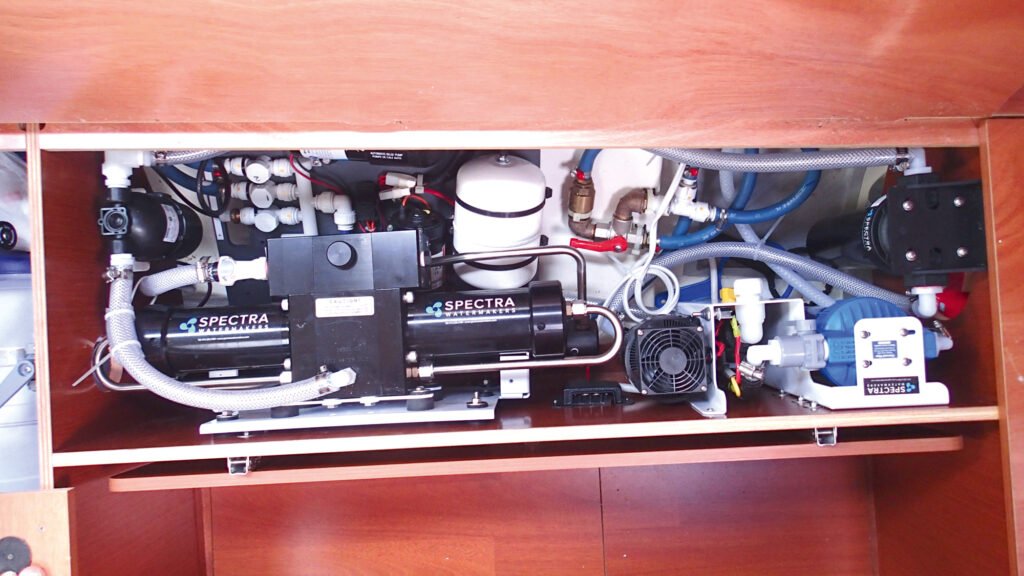
At its core, a yacht watermaker is a specialized desalination system that manufacturers build specifically for the harsh conditions of the ocean environment. Unlike residential filtration systems that handle relatively clean tap water, a marine system processes highly concentrated saltwater.
The system relies heavily on heavy duty components like 316 grade stainless steel, duplex alloys, and robust composite plastics. These materials resist the aggressive corrosive nature of seawater. Without a reliable water production unit, a large yacht would have to limit its travel distance or carry massive, heavy water tanks that slow the vessel down.
This level of self-sufficiency is exactly what defines the current generation of elite vessels, as showcased in our roundup of the top 10 superyachts of 2026, where extended range and independence from shore infrastructure have become defining engineering priorities.
The Core Technology: Marine Desalination via Reverse Osmosis
To understand how watermakers work, you first need to understand the natural process called osmosis. In nature, water naturally flows toward the saltier side when two solutions with different salt concentrations exist on opposite sides of a semipermeable barrier. Eventually, this process reaches an equal concentration on both sides.
A reverse osmosis boat system turns this natural phenomenon completely upside down. Engineers apply immense mechanical pressure to the salty side, which forces water molecules backward through the semipermeable membrane.
The microscopic pores in these advanced membranes measure roughly 0.1 nanometers. Consequently, this size allows pure water molecules to pass through easily, but it completely blocks larger dissolved ions, heavy metals, bacteria, and microplastics.
The system channels the pure water, called permeate, directly into the ship tanks. Conversely, the system safely discharges the remaining highly concentrated saltwater, known as brine, back into the open sea.
Step-by-Step Breakdown: How Watermakers Work Onboard
The journey from a salty ocean wave to a clean glass of drinking water involves several distinct operational stages. Each step protects the delicate components located further down the line.
1. Seawater Intake and Sea Chest
The process begins beneath the waterline. The vessel draws seawater through a dedicated thru hull fitting or a shared sea chest. Then, a low pressure booster pump pulls this raw water into the initial stage of the system.
2. Coarse Pre-Filtration
Raw ocean water contains sand, seaweed, shell fragments, and small marine organisms. First, the water passes through a coarse sea strainer that catches large debris. Next, it moves through a series of pleated sediment filters, typically rated at 20 microns and then 5 microns, to clear out smaller suspended particles.
3. High-Pressure Pressurization
Once the water is free of physical sediments, it enters the heart of the machine. A specialized high pressure pump accelerates the water pressure up to 800 or 900 pounds per square inch (psi). The system requires this extreme pressure to overcome the natural osmotic pressure of the ocean.
4. Membrane Separation
The pump pushes the highly pressurized saltwater into fiberglass pressure vessels that house the reverse osmosis membranes. As the water rushes over the membrane sheets, pure water flows into a central core pipe. Meanwhile, the system routes the leftover hyper salty brine away.
5. Post-Treatment and Storage
Before entering the freshwater tanks, the freshly made water passes through an automatic salinity probe. If the mineral level is too high, the system rejects the batch and diverts it overboard. If the water remains pure, the system routes it through a carbon filter to improve taste, a neutralizer to balance pH, and sometimes an ultraviolet sterilizer to kill any residual microbes.
Key Components of a Yacht Water System
A high capacity desalinator does not work in total isolation. Instead, it integrates flawlessly with the entire plumbing framework of the vessel to ensure safety and efficiency.
The Sea Strainer: This rugged metal or plastic basket traps large organic material before it reaches the sensitive booster pumps.
The Fresh Water Flush Valves: After every use, the system rinses the components with fresh, unchlorinated water to prevent salt crystallization and biological growth on the membranes.
The Salinity Monitor: This digital sensor constantly measures total dissolved solids (TDS) in parts per million (ppm) to guarantee absolute water safety.
The Product Water Diversion Valve: This automated multi way valve acts as a gatekeeper, sending good water to the tanks and bad water out of the boat.
Comparing the Best Yacht Watermaker Brands
Choosing the right brand depends heavily on the size of your vessel, your daily water requirements, and the available electrical power. Large yachts generally choose between fully automated systems or simple, heavy duty manual setups.
The following table provides an estimated comparison of the leading marine desalination systems available on the market.
| Brand and Model | Average Output Capacity | Power Consumption Type | Key Special Feature |
| Schenker Zen 50 | 50 Liters per hour | 12V / 24V DC Low Power | Patented Energy Recovery System |
| Idromar Mini Compact | 130 to 210 Liters per hour | 230V / 400V AC Heavy | Highly modular space saving frame |
| Stella Evolution AC | 70 to 210 Liters per hour | 240V AC Generator | Simple manual controls with zero electronics |
| Sea Recovery Aqua Matic | 1,000 to 3,400 Liters per day | Multi voltage AC Power | One touch fully automated touch screen |
| Spectra Newport 400 | 64 Liters per hour | 12V / 24V Highly Efficient | Intelligent automated speed control |
Crucial Selection Factors for Large Vessels
When identifying the best yacht watermaker for a vessel, marine engineers evaluate several operational variables beyond simple water output.
Power Availability and Infrastructure
Superyachts usually run large diesel generators that provide clean AC power, which allows them to operate industrial grade water systems. Conversely, smaller explorer vessels might prefer highly efficient DC systems that run directly off battery banks or solar arrays.
Geographic Cruising Grounds
The salinity and temperature of the ocean vary significantly across the globe. For instance, the Atlantic Ocean requires roughly 55 bar of pressure due to its typical salinity levels. Because cold northern waters reduce membrane permeability, a unit rated for the warm Caribbean produces less water in Alaska.
Automation vs. Mechanical Simplicity
Fully automated systems feature digital touchscreens, automatic fresh water flushing, and remote monitoring capabilities. Alternatively, manual systems eliminate advanced circuit boards entirely, relying instead on mechanical valves that any engineer can service quickly in remote locations.
Just as onboard water systems run on dedicated automated infrastructure, modern vessels increasingly rely on integrated technology stacks for protection as well, with our breakdown of superyacht anti drone systems explaining how similar sensor-driven automation secures the vessel’s airspace and digital network.
Maintenance and Troubleshooting for a Reverse Osmosis Boat System
To keep a yacht water system operating reliably, the crew must perform regular preventative maintenance. Neglect quickly leads to ruined membranes and costly repair bills.
Buyers evaluating a pre-owned vessel should pay close attention to onboard mechanical systems like the watermaker during survey, since our analysis of used superyacht prices dropping in 2026 confirms that deferred maintenance on critical equipment remains one of the biggest red flags for marine surveyors.
Regular Pre-Filter Replacements
The crew must replace the 5 micron and 20 micron pleated elements whenever the system displays a pressure drop. Running a system with clogged filters starves the high pressure pump, which causes permanent mechanical damage.
The Fresh Water Flush Routine
If saltwater sits stagnant inside a membrane housing for more than a few days, biological fouling occurs. Anaerobic bacteria multiply quickly, creating a rotten egg smell and destroying the delicate membrane material. Therefore, an automatic flush cycle prints fresh water through the core every few days to keep everything clean.
Chemical Preservation or Pickling
If the owner lays up a yacht for the winter season, the crew must preserve the watermaker using a specialized chemical solution. This process is commonly called pickling. The chemical mixture inhibits all bacterial growth and keeps the membrane sheets moist for up to a year.
Conclusion
Modern marine desalination technology has completely transformed ocean travel, turning remote island cruising into a comfortable reality. By understanding how high pressure pumps and semipermeable membranes work together, yacht owners can easily maintain a self sufficient floating oasis. Investing in the proper equipment ensures that your vessel always has an endless supply of pure freshwater, regardless of how far you travel from port. For more expert insights into luxury yacht mechanics, marine systems, and luxury vessel maintenance guides, explore the technical articles at Turboocruiser.
Frequently Asked Questions
Can you drink water straight from a yacht watermaker?
Yes, the water produced by a high quality system is completely safe to drink straight from the machine. Furthermore, it often passes through carbon filters and mineralizers to ensure it tastes exactly like premium bottled water.
How much power does a marine desalination system use?
Power consumption varies widely based on design. While traditional high pressure systems require a generator to run, modern units equipped with energy recovery systems run efficiently on 12 volt or 24 volt battery setups.
What is total dissolved solids (TDS) and why does it matter?
TDS measures the concentration of dissolved minerals and salts in the water. Clean drinking water typically measures below 500 ppm, and top tier marine desalinators routinely produce water with a TDS value well under 100 ppm.
Why can you not run a watermaker in a crowded harbor?
Harbor water contains high levels of fuel residue, oil, street runoff, and concentrated bacteria. These contaminants instantly ruin the expensive reverse osmosis membranes and create serious health hazards.