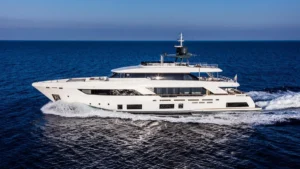
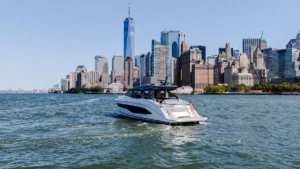
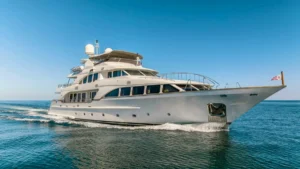
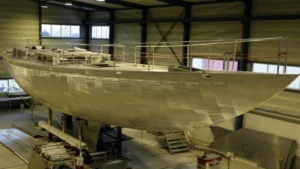
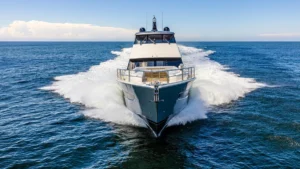
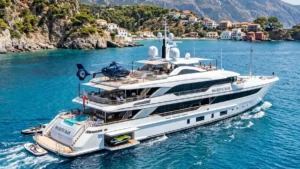
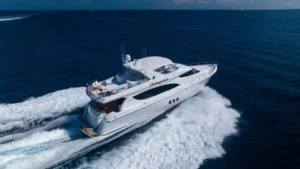
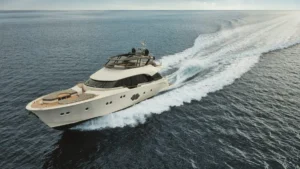
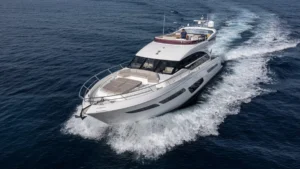
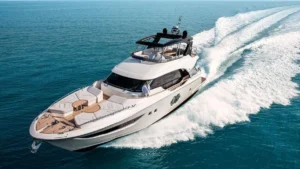
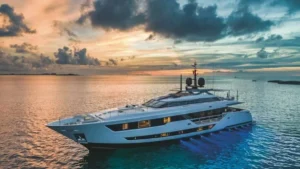
An 80 foot yacht offers a rare mix of space, comfort and performance. These yachts suit buyers who want private cruising, family trips, entertaining or longer journeys. But not every 80-foot yacht has the same layout, speed, range or onboard features, so comparing real specifications matters more than comparing length.
This guide covers popular 80-foot-class models, the factors that set prices, key specifications, interior layouts, ownership costs and the checks to make before you buy.
What Is an 80-Foot Yacht?
An 80-foot yacht is a recreational vessel of roughly 24.38 metres. It may be a motor yacht or a sailing yacht, depending on its propulsion and intended use. Most motor yachts of this size have indoor and outdoor living areas, several guest cabins, a helm area and facilities for longer trips. Some models prioritize speed, while others favor interior space, comfort and range.
Advertised length and length overall (LOA) can differ. Some builders include the bow pulpit in published LOA, while others give figures with and without it. Always check the official dimensions rather than relying on a model name.
Main Types of 80-Foot Yachts
- Motor yachts: Use engines for propulsion and are designed for cruising and onboard comfort.
- Flybridge yachts: Add an upper deck with a helm, seating and outdoor entertaining space.
- Sport yachts: Focus on speed, performance and sporty styling.
- Sailing yachts: Use sails as the main propulsion, usually with an engine for maneuvering and backup.
These categories overlap. A motor yacht can also have a flybridge or a sport-oriented design.
80 Foot Yacht for Sale: Popular Models and Brands
Several established builders offer models close to 80 feet. The three below measure a little over 80 feet, which shows why you should compare actual dimensions.
1. Princess Y80

The Princess Y80 is a flybridge motor yacht from British builder Princess Yachts. It measures 25.50 metres (83 ft 8 in) including the pulpit, with a maximum beam of 6.07 metres. Its main features include:
- Four guest cabins and accommodation for eight guests
- Separate crew accommodation
- A large flybridge with seating and dining areas
- An indoor salon and main dining space
- A choice of twin MAN V12 engines
Princess lists maximum speeds of about 30 to 33 knots, depending on engine configuration and conditions, and a fuel capacity of 7,000 litres. It suits buyers who want a big flybridge and distinct indoor and outdoor living areas. Buyers comparing different budgets can also explore these affordable yachts for sale to discover more accessible options.
2. Azimut S8
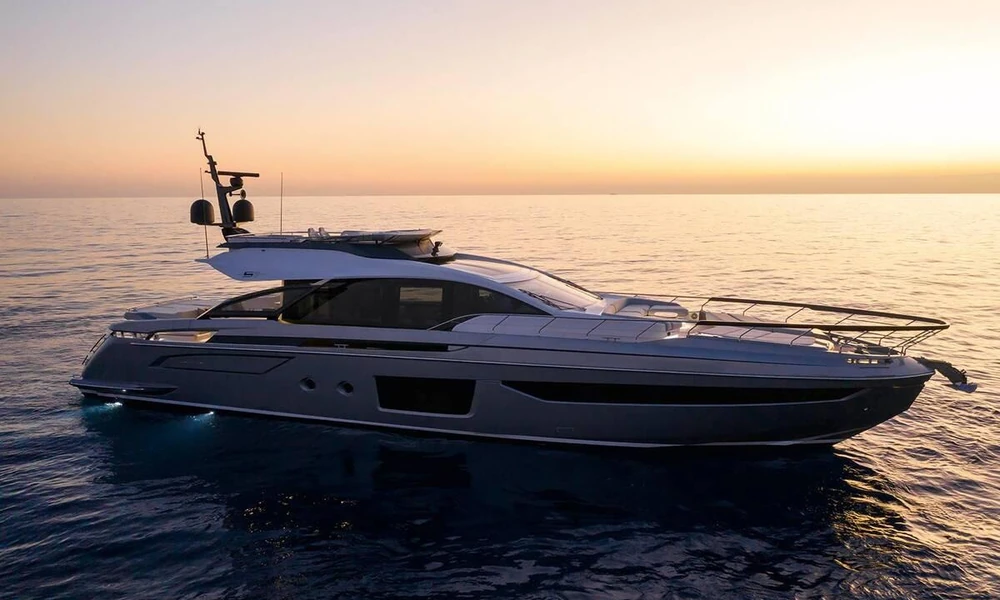
The Azimut S8 is an Italian sport yacht with an LOA of 24.63 metres (80 ft 10 in) including the pulpit. Published specifications include:
- Maximum beam: 5.55 metres; draft: 1.75 metres
- Four guest cabins and two crew cabins, for eight guests and two crew
- Three Volvo Penta IPS 1350 engines
- Maximum speed up to 34 knots; cruising speed up to 28 knots
- Fuel capacity: 4,000 litres
The S8 combines GRP and carbon fibre in its construction and may interest buyers who want a modern, sport-oriented yacht with several cabins.
3. Pershing 8X

The Pershing 8X is a high-performance motor yacht with an LOA of 25.55 metres (83 ft 10 in). The manufacturer lists:
- Maximum beam: 5.86 metres; draft: 1.40 metres
- Four guest cabins in the standard layout, plus two crew cabins
- Twin MTU 16V 2000 M96L engines
- Maximum speed up to 48 knots; cruising speed up to 41 knots
- Fuel capacity: 6,200 litres; published range of 310 nautical miles at cruising speed
These are manufacturer figures, not guaranteed results. Load, sea conditions and equipment all affect performance.
Comparison of Popular 80-Foot-Class Yachts
| Specification | Princess Y80 | Azimut S8 | Pershing 8X |
|---|---|---|---|
| Length overall | 25.50 m | 24.63 m | 25.55 m |
| Maximum beam | 6.07 m | 5.55 m | 5.86 m |
| Guest cabins | 4 | 4 | 4 |
| Crew accommodation | Separate crew quarters | 2 cabins | 2 cabins |
| Engines | Twin MAN V12 | Three Volvo Penta IPS | Twin MTU |
| Published max speed | 30–33 knots | Up to 34 knots | Up to 48 knots |
| Fuel capacity | 7,000 L | 4,000 L | 6,200 L |
Specifications come from manufacturer information. Engine options, layouts, measurement methods and equipment vary by version and production year.
80 Foot Yacht Prices: How Much Does an 80-Foot Yacht Cost?
No single price applies to every 80-foot yacht. Two vessels of similar length can carry very different asking prices because of builder, age, equipment, condition and maintenance history. For current figures, check live brokerage listings and ask builders or dealers for written quotations.
New 80-Foot Yacht Prices
New yachts are priced by design, engine package, interior finishes and chosen equipment. The final figure may also include options such as:
- Advanced navigation equipment
- Stabilization systems
- Upgraded engines
- Custom interior materials
- Entertainment systems
- Tender and water-toy equipment
Request a detailed quotation that separates standard features from optional ones.
Used 80-Foot Yacht Prices
A used yacht suits buyers who want an established model without ordering a new build. But the asking price should never be the only factor, because a cheaper yacht may need engine repairs, new electronics or interior work. Check the manufacturing year, engine hours and service records, hull and structural condition, past refits, generator and electrical systems, safety equipment, and the yacht’s location and tax status.
What Affects an 80-Foot Yacht’s Price?
| Price factor | How it affects value |
|---|---|
| Manufacturer | Brand reputation and build quality influence asking prices. |
| Age | Older yachts may need more maintenance or upgrades. |
| Condition | Structural and mechanical condition strongly affects value. |
| Engine hours | Operating history helps buyers assess engine use. |
| Equipment | Upgraded systems and features can raise the price. |
| Maintenance | Documented servicing supports buyer confidence. |
| Location | Demand, delivery costs and tax status affect the purchase. |
An asking price is not necessarily the selling price. Compare similar yachts and review their condition before deciding whether an offer is reasonable.
80-Foot Yacht Specifications and Features

Length alone cannot tell you how a yacht will perform or whether it suits you.
Length, Beam and Draft
Beam is the maximum width; a wider beam can mean more interior and deck space, although the layout matters too. Draft is how deep the yacht sits below the waterline, which is crucial for shallow harbours and marinas. Compare both with the limits of your preferred berths and destinations.
Engines, Speed and Performance
Engine configuration affects acceleration, cruising speed, maintenance and fuel consumption. Many motor yachts use twin diesel engines, while some sport models use three. Compare the engine maker, power, service history and operating hours.
Maximum speed and cruising speed are different. A higher top speed does not automatically make a better yacht, and buyers planning longer trips may value fuel use, range and comfort more.
Fuel Capacity and Cruising Range
Fuel capacity is how much fuel the yacht carries; range is how far it can travel under stated conditions. Actual range depends on cruising speed, engine condition, fuel load, passenger and equipment weight, weather and hull cleanliness. Do not calculate range from tank size alone. Ask the manufacturer or seller for performance data.
Navigation and Safety Equipment
Common systems include GPS, chartplotters, radar, autopilot, depth sounders and VHF radio, depending on model, year and options. Also check life-saving gear, fire protection, bilge pumps and emergency communications. Requirements depend on registration, use and operating area.
Interior Layout and Accommodation

Guest cabins. Many yachts this size have several guest cabins, typically an owner’s cabin plus guest rooms with private bathrooms. The Princess Y80 and Azimut S8 both offer four in their published configurations. Cabin size, storage and privacy matter as much as the count.
Crew quarters. Some models have separate crew cabins and bathrooms so crew can stay aboard without using guest areas. Check the number of crew berths and whether the space fits your intended operation.
Salon, dining and galley. The salon is usually the central living space, with seating, tables, entertainment equipment and large windows. The galley may include refrigeration, cooking equipment, work surfaces and storage. When viewing, check appliance condition, ventilation and plumbing.
Outdoor spaces. Depending on the model, these include flybridge seating and dining, foredeck sunpads, aft cockpit seating, swimming platforms, wet bars and tender storage. Match the deck layout to how you plan to use the yacht: large entertaining areas suit social trips, while others may prefer private spaces.
How Much Does It Cost to Own and Maintain an 80-Foot Yacht?
The purchase is only the first commitment. Actual costs depend on the yacht, its condition, location, annual use and crew needs.
- Maintenance: Engine and generator servicing, hull cleaning, antifouling, electrical checks, air-conditioning maintenance and equipment repairs. Base the budget on the yacht’s real service requirements, not a general estimate.
- Fuel: Depends on engine type, cruising speed, operating hours and local fuel prices. Ask for consumption figures at different engine speeds.
- Marina fees: An 80-foot yacht needs a berth with enough length, width, depth and access. Fees vary by location and size, and electricity or water may be charged separately.
- Insurance: Premiums depend on value, age, operating area, intended use and claims history. Get quotations before purchase.
- Captain and crew: Depending on the yacht, its use and operating area, you may need a professional captain and crew. Costs include salaries, accommodation, training and travel.
- Repairs: Older yachts or those with incomplete records may need work on engines, generators, stabilizers, electronics or structure. A professional inspection helps reveal problems before you buy.
New vs. Used 80-Foot Yachts: Which Should You Buy?
| Comparison | New yacht | Used yacht |
|---|---|---|
| Condition | New equipment and systems | Depends on maintenance and use |
| Customization | More choices during the build | Existing layout and features |
| Availability | May require a build period | Depends on current listings |
| Maintenance history | New service history | Requires careful review |
| Purchase price | Generally higher | Varies widely |
| Inspection | Still important | Especially important |
A new yacht suits buyers who want a current design, chosen finishes and a particular equipment package. Confirm the delivery schedule, warranty terms, included equipment and total price. A used yacht suits buyers who want a specific model that is available now. A well-maintained used yacht with detailed service records can be a better purchase than a cheaper one with major maintenance needs.
What to Check Before Buying an 80-Foot Yacht

A yacht can look attractive in photographs and still have mechanical or structural problems.
Hull and exterior. Look for visible damage, cracks, corrosion, previous repairs and signs of water intrusion. An out-of-water inspection helps assess the hull and underwater equipment.
Engines and systems. Review engine hours, service records and invoices, and check for leaks, unusual smoke and corrosion. Hours alone are not enough: a low-hour engine can still have problems if it was poorly maintained or left unused for long periods.
Documents. Ask for proof of ownership, registration, service records, previous survey reports, an equipment inventory, details of any loans or liens, and VAT or import documentation. Requirements depend on the flag, location and transaction.
Marine survey. Hire an independent surveyor experienced with yachts of similar size and type. A general survey does not necessarily cover every mechanical system, so a separate engine or machinery inspection is often useful on a large motor yacht.
Sea trial. A sea trial lets you assess engine performance, steering, handling, vibration, navigation equipment and onboard systems underway. A survey and sea trial are essential, but neither guarantees that every problem will be found.
How to Buy an 80-Foot Yacht
- Set your budget: Include the price, taxes, insurance, maintenance, fuel and marina costs.
- Choose a yacht type: Flybridge, sport, motor or sailing.
- Compare listings: Review dimensions, engines, layouts, equipment and asking prices.
- Contact the broker: Request documents, service records and information on condition, then arrange a viewing.
- Make a written offer: State the conditions clearly in a purchase agreement.
- Arrange the survey and sea trial: Use independent professionals.
- Review legal documents: Confirm ownership, registration, title and tax status.
- Complete the purchase and prepare for ownership: Arrange insurance, registration, a berth and any crew.
Deposits, contract terms, taxes and registration differ between countries, so obtain legal and professional advice for your transaction.
Where Can You Find an 80-Foot Yacht for Sale?
Search yacht marketplaces, established brokerages and builder websites. Good starting points include YachtWorld, YATCO, Allied Marine, Burgess and Northrop & Johnson. Compare the model year, asking price, location, dimensions, equipment and maintenance information. Always confirm that a yacht is still available before traveling or making an offer, because a listing does not guarantee current availability or accurate specifications.
Is an 80-Foot Yacht Right for You?
An 80-foot yacht provides substantial living space for cruising, entertaining and time with family and guests, but its size brings responsibilities. Consider:
- Intended use: Private cruising, family trips, entertaining or charter
- Budget: Purchase price and ongoing operating costs
- Destinations: Water depth, marina access and cruising range
- Accommodation: Guest cabins and crew berths
- Operating requirements: Whether you need a professional captain and crew
- Maintenance: Your ability to manage servicing and repairs
Choose a yacht that matches your plans rather than one picked for appearance or length alone.
Frequently Asked Questions About 80-Foot Yachts
Is an 80-foot yacht large enough for a family to live on?
It can offer several cabins, bathrooms, a salon, a galley and outdoor areas, which suits extended stays. Living aboard also depends on storage, privacy, freshwater capacity, waste systems and crew arrangements.
Can an 80-foot yacht fit in a standard marina berth?
Not every marina can take one. Check the berth’s length, width, depth and access restrictions against the yacht’s actual LOA and beam.
Does an 80-foot yacht need two engines?
No. Many motor yachts this size have twin engines, while some sport models have three. Check the manufacturer’s specifications for the exact model and year.
How far can an 80-foot yacht travel without refuelling?
There is no single range. It depends on fuel capacity, engines, cruising speed, load and sea conditions, so request manufacturer performance data for the specific yacht.
Are engine hours more important than the yacht’s age?
Neither should be judged alone. Maintenance records, oil analysis where appropriate and a professional engine inspection give a better picture of mechanical condition.
Can an 80-foot yacht be transported by road?
That depends on its dimensions, weight, route restrictions and transport equipment. It may need specialist arrangements, so get a feasibility assessment and quotation before buying.
What documents should I request before making an offer?
Useful documents include proof of ownership, registration details, maintenance records, an equipment inventory, previous survey reports and tax documents. Also check for mortgages or other claims. Requirements vary by jurisdiction.
Is an 80-foot yacht suitable for charter?
Some are, but it depends on layout, passenger capacity, equipment, insurance, registration and local commercial-vessel rules. A yacht built for private use cannot automatically be chartered.
Conclusion
An 80 foot yacht for sale can offer space, comfort and performance for buyers who want private cruising or to entertain guests. Models such as the Princess Y80, Azimut S8 and Pershing 8X show how differently builders approach this size.
Before buying, compare actual dimensions, engine specifications, accommodation, fuel capacity and condition, and budget for maintenance, fuel, insurance, marina fees and crew. Whether you choose new or used, arrange an independent marine survey, review the ownership documents and complete a sea trial before you commit.