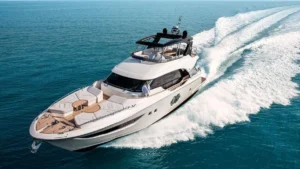
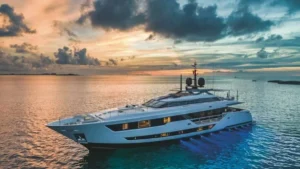
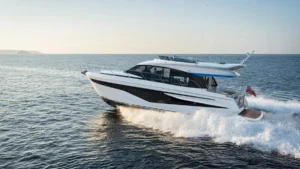
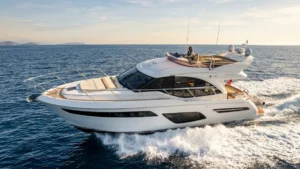
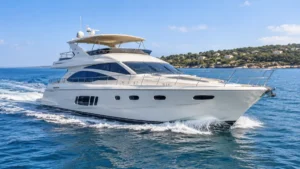
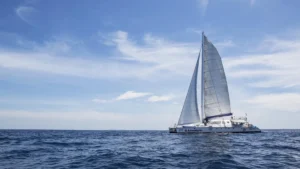
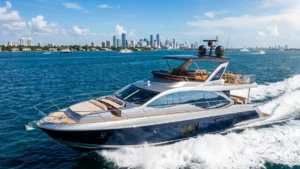
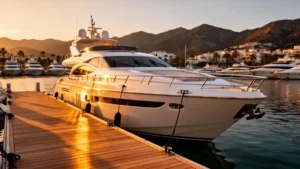
Searching for a 60 foot yacht for sale turns up several options, including flybridge motor yachts, sport yachts, sportfishing yachts, and sailing yachts. These vessels offer space for overnight stays, outdoor entertaining, and comfortable cruising, but prices, layouts, engine systems, and running costs vary considerably.
A yacht in this class is about 18.3 meters long. Some models marketed as 60-footers are slightly shorter or longer, so always check the actual length overall (LOA) when comparing boats.
Buyers can choose between new and used yachts from builders such as Azimut, Absolute, Ferretti, and Oyster. The right choice depends on your intended use, budget, accommodation needs, and preferred cruising style. This guide covers asking-price examples, popular models, specifications, ownership costs, and the checks to complete before you buy.
60 Foot Yachts for Sale: Available Options
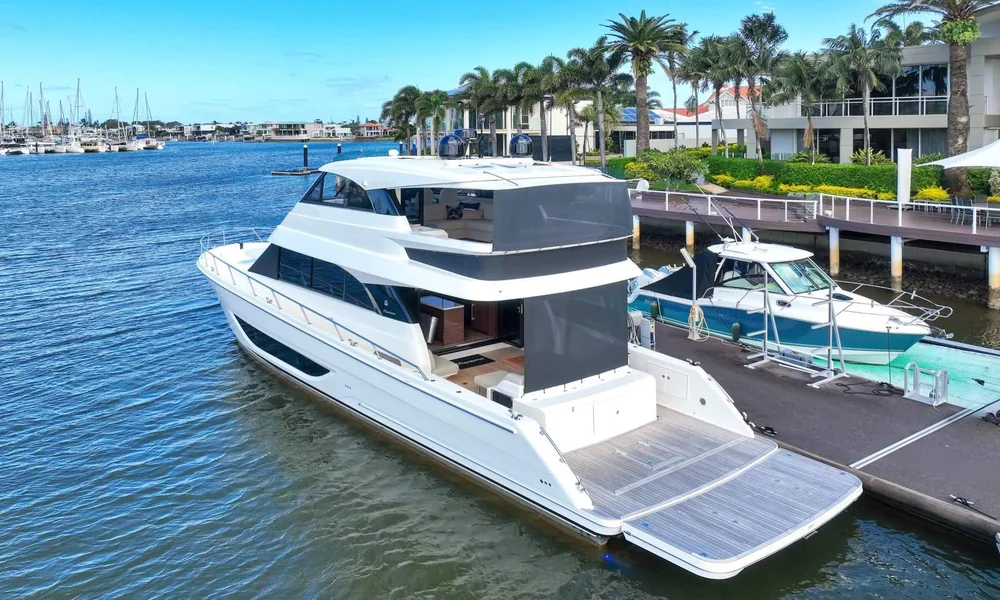
The market includes new and pre-owned yachts in many configurations. Some focus on outdoor living, while others are built for sailing, fishing, or longer passages.
When comparing listings, note the manufacturer and model, year, length overall and beam, asking price and currency, location, engine type and hours, number of guest and crew cabins, fuel and water capacity, refit history, and included equipment.
| Option | Main advantage | Key consideration |
|---|---|---|
| New yacht | New equipment, customization | Higher price, possible delivery wait |
| Used yacht | More price options, available now | Needs a detailed inspection |
| Recently refitted yacht | May have newly replaced equipment | Check quality and records of the work |
| Custom-equipped yacht | Equipment chosen for specific needs | Confirm which upgrades are in the price |
Listings change regularly, so confirm the price, location, and viewing arrangements with the seller or broker.
How Much Does a 60 Foot Yacht Cost?
Price depends on manufacturer, age, condition, equipment, engine configuration, and location. New models generally cost more than older pre-owned vessels. Actual listings are a better starting point than a general estimate.
Real Asking Prices
These are advertised prices from brokerage listings checked on November 18, 2026. They are not confirmed sale prices.
| Model and year | Location | Asking price |
|---|---|---|
| 2016 Azimut Fly 60 | San Diego, USA | $899,000 |
| 2020 Azimut Fly 60 | Fort Lauderdale, USA | $1,399,000 |
| 2023 Azimut Fly 60 | Catawba Island, USA | $1,725,000 |
| 2024 Azimut Fly 60 | Mississauga, Canada | $2,099,000 |
Prices differ widely even within one model family. These examples are not a market average or a guaranteed current offer.
New and Used Prices
New yacht pricing depends on the model, standard equipment, options, and delivery arrangements. Options can include upgraded engines, advanced navigation, gyro stabilizers, custom interior finishes, and entertainment systems. Ask the builder or dealer for a written quotation that separates the base price, options, delivery, and commissioning costs.
Used 60-footers span a wide range of ages and conditions. Older boats usually have lower asking prices, while newer vessels with updated equipment command more. Review engine hours, service records, hull condition, and past repairs, because a low price is no bargain if the boat needs major work.
| Factor | Effect on price |
|---|---|
| Manufacturer and model | Different models hold different values |
| Year | Newer vessels generally cost more |
| Engine condition | Hours, maintenance, and repairs matter |
| Hull condition | Damage and repairs reduce value |
| Equipment | Navigation, stabilization, and systems add value |
| Refit history | Recent improvements can raise value |
| Location | Demand, taxes, and transport costs differ |
The asking price is not the full purchase cost. Taxes, registration, insurance, transport, and transaction fees add to what you need.
Types of 60 Foot Yachts
Motor yachts use engines as their primary propulsion, while sailing yachts rely mainly on wind.
Flybridge yachts have an upper deck with a helm and outdoor seating, adding space for relaxing, dining, and sunbathing.
Sport yachts are more performance-focused, often with a lower profile, streamlined styling, and large cockpits. Compare engine power, cruising speed, fuel consumption, and accommodation.
Sportfishing yachts feature a large cockpit, rod holders, fish storage, and specialized electronics. They suit buyers who plan to fish more than entertain.
Sailing yachts use sails as their main propulsion, with an auxiliary engine for maneuvering. Inspect the sails, rigging, mast, winches, and engine.
Popular 60 Foot Yacht Models
Azimut Fly 60
A flybridge motor yacht measuring 18.25 meters (59 ft 10 in) overall. Manufacturer specifications include:
- Beam: 5.05 m (16 ft 7 in); draft: 1.46 m (4 ft 9 in)
- Engines: two Volvo Penta D13 at 900 hp each
- Speed: up to 31 knots maximum, up to 26 knots cruising
- Fuel: 2,800 liters (740 US gal); water: 750 liters (198 US gal)
- Accommodation: three guest cabins and one crew cabin, for six guests and two crew
Speed figures are manufacturer test results. Real performance varies with load, sea conditions, and vessel condition.
Absolute 60 Fly
Measures 18.66 meters (61 ft 3 in) overall, with a 4.94 m (16 ft 2 in) beam. Fuel capacity is 2,800 liters (740 US gal) and freshwater is 730 liters (193 US gal). Engine options are two Volvo Penta D11-IPS950 or two D13-IPS1200. The layout has a forward owner’s cabin on an intermediate level, a VIP cabin, a twin cabin, and a separate crew cabin, sleeping six guests and two crew.
Ferretti Yachts 580
At 18.24 meters (59 ft 10 in), it is slightly under 60 feet but in the same class.
- Beam: 5 m (16 ft 5 in); draft: 1.5 m (4 ft 11 in)
- Standard engines: two Volvo Penta D13 900; options include D13 1000 or Baudouin 6F21
- Fuel: 3,250 liters (859 US gal); water: 700 liters (185 US gal)
- Accommodation: three guest cabins
Performance figures differ by engine option, so confirm what is fitted to the boat you are considering.
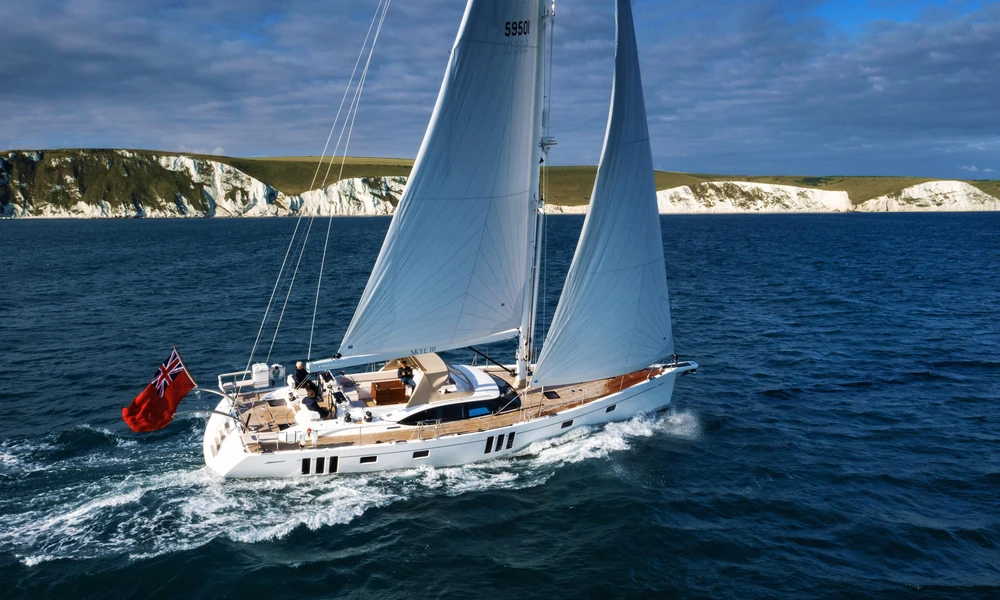
Oyster 595
A sailing yacht marketed as a 60-foot bluewater cruiser. Overall length including pulpit is 19.05 m (62 ft 6 in), with a hull length of 18.14 m (59 ft 6 in).
- Beam: 5.36 m (17 ft 7 in)
- Draft: 2.68 m standard; 1.79 m centreboard up; 4.06 m centreboard down
- Typical engine: Volvo Penta D3-150, 150 hp
- Fuel: 1,345 liters (355 US gal); water: 1,004 liters (265 US gal)
The centreboard gives flexibility for different cruising areas.
| Model | Type | LOA | Beam | Fuel |
|---|---|---|---|---|
| Azimut Fly 60 | Flybridge motor yacht | 59 ft 10 in | 16 ft 7 in | 740 US gal |
| Absolute 60 Fly | Flybridge motor yacht | 61 ft 3 in | 16 ft 2 in | 740 US gal |
| Ferretti 580 | Flybridge motor yacht | 59 ft 10 in | 16 ft 5 in | 859 US gal |
| Oyster 595 | Sailing yacht | 62 ft 6 in | 17 ft 7 in | 355 US gal |
These figures come from manufacturer specifications. The boats differ in size, design, and equipment, and vary by configuration and production year.
Key Specifications to Compare
Length, beam, and draft affect marina access, berth requirements, and cruising locations. Explore the world’s best marinas to understand what different destinations offer. Also check air draft, the height above the waterline, which matters when passing under bridges.
Engines and performance: compare make, model, horsepower, hours, and service history. Maximum speed and cruising speed are different measures, and real performance depends on load, hull cleanliness, engine condition, and weather.
Fuel capacity and range: capacity alone does not establish range. Ask for consumption figures at several speeds and check the fuel reserve.
Cabins and accommodation: compare guest cabins, bathrooms, sleeping spaces, and crew quarters. The owner’s cabin is normally counted within the guest cabin total.
Navigation and safety equipment: check GPS and chartplotters, radar, autopilot, VHF radio, navigation lights, fire systems, life-saving gear, bilge pumps, and emergency communications.
Interior and Exterior Features
Interiors typically include a main salon, galley, owner’s cabin, guest cabins, bathrooms, storage, and air conditioning. Exteriors may include a flybridge, cockpit seating, sunpads, outdoor dining, a swim platform, and tender storage. Confirm what is included in the asking price, since tenders and accessories are sometimes sold separately.
New vs. Used 60 Foot Yachts
| Consideration | New | Used |
|---|---|---|
| Price | Generally higher | Often lower |
| Customization | Available when ordering | Limited to existing setup |
| Maintenance history | Starts fresh | Must be reviewed |
| Warranty | Builder’s terms | Depends on remaining coverage |
| Availability | May need a build period | Often available sooner |
A new yacht lets you choose layouts, finishes, and options, with warranty coverage under the manufacturer’s conditions. Confirm delivery times, included equipment, and warranty limits in writing.
A used yacht may cost less, be available sooner, and include upgrades from earlier owners. The main concern is condition, so review service records, engine hours, past repairs, and the survey.
How Much Does It Cost to Own a 60 Foot Yacht?
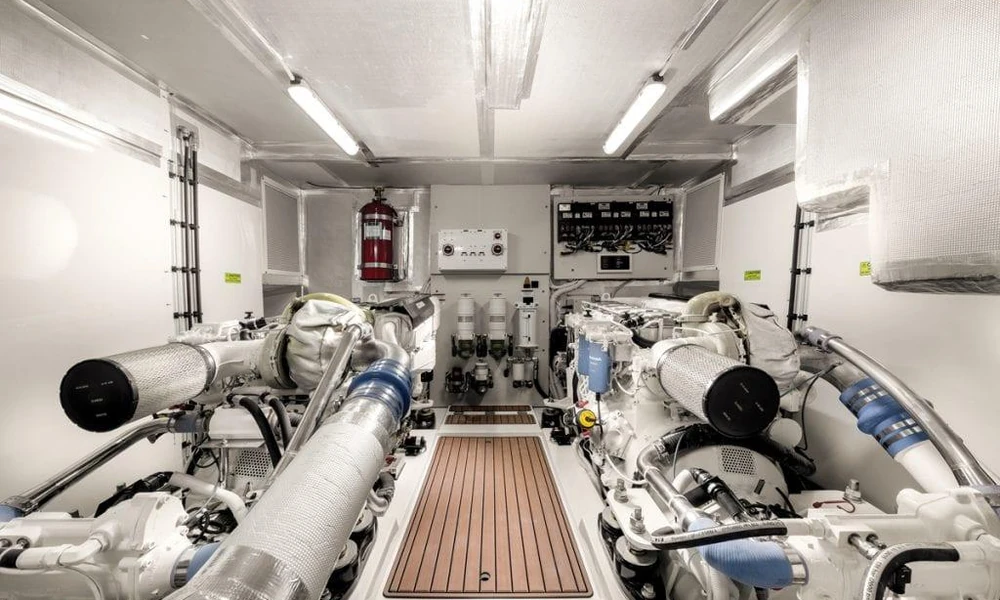
Purchase price is only one part of the budget. Plan for these recurring costs:
| Expense | What it covers |
|---|---|
| Maintenance | Engine and generator servicing, hull cleaning, parts, repairs |
| Fuel | Depends on distance, speed, and engine consumption |
| Marina | Berth fees, often based on length and sometimes beam |
| Insurance | Vessel and liability coverage, based on value, age, and cruising area |
| Crew | Captain and crew wages, if employed |
| Storage | Seasonal storage and winterization |
| Equipment | Repairs, replacements, and upgrades |
There is no fixed annual cost for every 60-footer. Get marina, insurance, maintenance, and fuel estimates for the specific vessel, and request vessel-specific fuel figures rather than general estimates. Crew needs depend on the yacht, your experience, insurance conditions, and local regulations.
Financing, Taxes, and Other Buying Costs
Financing: some lenders offer marine loans for eligible new and used yachts. Approval depends on your finances and on the vessel’s value, age, and location. Compare rates, terms, deposits, and extra charges.
VAT, sales tax, and duties: treatment depends on the country, your status, the yacht’s location, its intended use, and how the deal is structured. For international purchases, check VAT or sales tax, import duties, customs, and registration rules. A yacht advertised as tax-paid in one country may not be tax-free in another.
Broker commission and other costs: confirm in writing who pays the commission and how it is calculated. Budget also for legal help, surveys, haul-out, sea trials, documentation, transport, and registration.
How to Inspect a 60 Foot Yacht
A yacht can look excellent in photos and still have hidden problems.
- Hull and structure: look for cracks, damage, water intrusion, past repairs, and problems around underwater fittings. A qualified marine surveyor should assess the hull.
- Engines and mechanical systems: review hours, service records, oil leaks, cooling, exhaust, generators, and propulsion. Low hours alone do not prove good condition.
- Electrical and navigation: test batteries, charging, panels, instruments, communications, and lighting.
- Records: request proof of ownership, registration, bills of sale, maintenance invoices, engine records, and details of any mortgage or lien, plus tax and VAT documentation.
Marine Survey and Sea Trial
A pre-purchase survey is an inspection by a qualified marine surveyor that assesses the vessel within an agreed scope and flags defects. For a yacht this size, a haul-out is usually recommended to examine the underwater hull, running gear, and fittings.
An engine survey by a specialist goes deeper into service history, diagnostics, operating conditions, cooling systems, and signs of leaks or damage.
During the sea trial, observe engine starting and operation, steering and handling, acceleration and cruising performance, temperatures, noise and vibration, navigation equipment, thrusters and stabilizers, and electrical systems. Then use the findings to proceed, negotiate, or withdraw under the terms of your purchase agreement.
How to Buy a 60 Foot Yacht
- Set your budget: include price, taxes, insurance, fuel, maintenance, and docking.
- Choose the type: flybridge, sport, sportfishing, or sailing.
- Compare models: review dimensions, engines, layouts, and equipment.
- Find listings: contact established brokers, sellers, and authorized dealers.
- Arrange a viewing: inspect the yacht and confirm what is included.
- Review documents: check ownership, registration, service records, and tax status.
- Make a written offer: include conditions for survey, sea trial, and financing.
- Arrange inspections: use an independent surveyor and an engine specialist.
- Review the findings: negotiate repairs or price adjustments where appropriate.
- Complete the purchase: arrange payment, legal transfer, registration, and insurance.
International buyers should also check import rules, duties, and tax requirements before arranging transport.
Is a 60 Foot Yacht Right for You?
A 60-footer offers substantial accommodation, but it demands a suitable budget and proper operating arrangements. Consider your intended use, the number of cabins you need, your operating budget, marina access for the yacht’s length, beam, and draft, your operating experience or need for a professional captain, and the time and money available for servicing. The right yacht matches your cruising plans, finances, and ability to maintain it.
Conclusion
Finding the right 60 foot yacht for sale means comparing more than asking prices and exterior styling. Consider actual dimensions, engine performance, cabin layouts, equipment, maintenance history, and total costs. Read our yacht ownership guide to better understand the responsibilities and expenses involved. The Azimut Fly 60, Absolute 60 Fly, Ferretti 580, and Oyster 595 offer different layouts and cruising styles within or close to this size.
Before you buy, review the documents, arrange a professional survey and sea trial, and confirm all additional costs. Careful research will help you choose a yacht that fits your budget and plans.
Frequently Asked Questions
What is the actual length of a 60-foot yacht?
60 feet is 18.288 meters, but models marketed in this class vary. The Azimut Fly 60 is 59 ft 10 in, while the Absolute 60 Fly is 61 ft 3 in overall.
How much does a 60-foot yacht cost?
It varies by builder, age, condition, and equipment. Brokerage examples from November 2026 showed used Azimut Fly 60 listings from $899,000 to $2,099,000. These are individual asking prices, not a market range.
How many people can sleep aboard?
It depends on the layout. A three-guest-cabin model may sleep six guests, with separate crew berths where fitted.
Can a 60-foot yacht fit in a private marina?
Only if the berth has enough length, width, and depth, and meets the yacht’s draft, air-draft, and utility needs.
Is engine replacement more expensive than a typical refit?
It can be a major expense, covering new engines, installation, and supporting systems. Get specialist quotes before buying a yacht that needs new engines.
How much fuel does a 60-foot yacht use per hour?
There is no single figure. Consumption depends on engine type, speed, load, and sea conditions, so ask for figures at different speeds.
Is a recent yacht refit always better?
No. Check what work was done, the parts used, the contractor, and the invoices, and still arrange a survey.
Should a 60-foot yacht be inspected out of the water?
Yes, a haul-out is usually recommended so the surveyor can examine the hull, propellers, shafts, rudders, and underwater fittings.
Does the asking price include a tender?
Not always. Tenders, water toys, and spares may be excluded, so request a written inventory.
What if the yacht dimensions don’t match the listing?
Ask the seller to clarify and provide official documentation. Differences can come from hull length versus overall length. Confirm before arranging transport or a berth.
Can I finance a used 60-foot yacht?
Possibly. Approval depends on the lender, vessel value, age, condition, and your finances.
What documents should I receive when buying a yacht?
They depend on the registration country, but commonly include a bill of sale, proof of ownership, registration or deletion documents, tax evidence where applicable, and maintenance records.