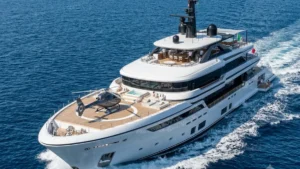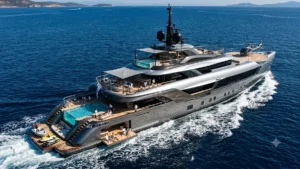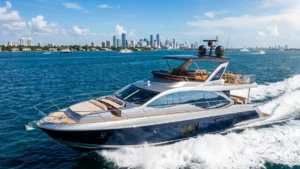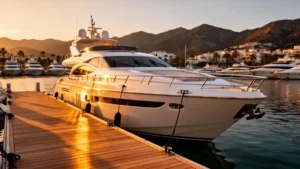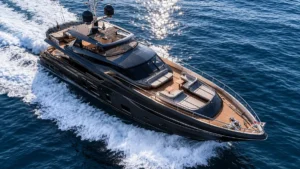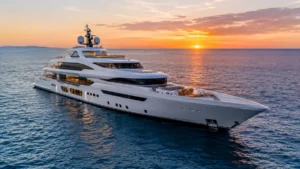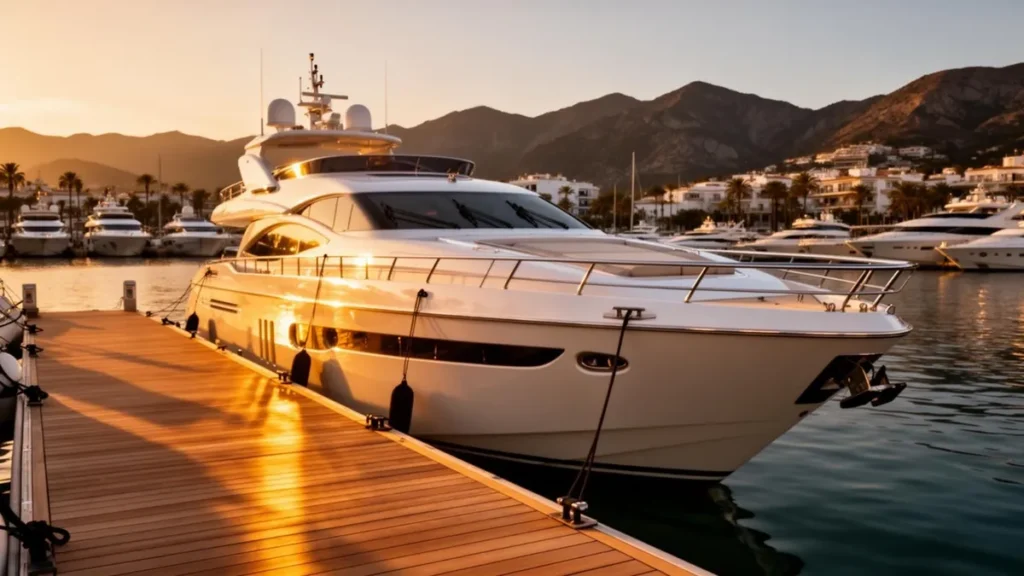
A $2 million budget can put a buyer in the market for a range of pre-owned motor yachts, flybridge yachts, sport yachts and, depending on the model and market, some newer or larger vessels. The budget does not guarantee a particular length or level of equipment. Age, condition, location, engine hours, maintenance history and optional features all influence asking prices.
Ownership also involves insurance, fuel, maintenance, dockage, taxes, repairs and possibly crew. This guide covers yacht types, models to research and the checks buyers should make.
What Can You Buy for $2 Million?
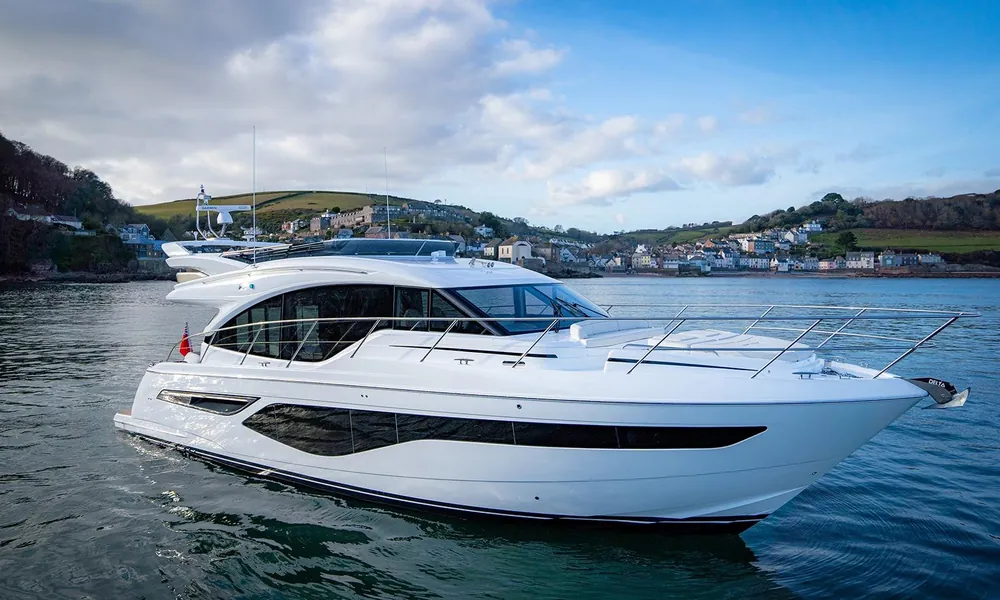
There is no fixed yacht size associated with a $2 million budget. In the pre-owned market, buyers may encounter motor yachts in the 50- to 70-foot range, but the available choice changes with location, age, condition and market demand. A smaller, newer yacht may cost as much as a larger, older vessel.
Length alone is not a reliable measure of value. A well-maintained 55-foot yacht with documented servicing may be a better purchase than a 65-foot yacht with neglected engines or costly structural issues.
Compare age and condition, builder support and parts availability, installed equipment, cabin layout, and expected use. Navigation electronics, generators, air conditioning and stabilisation systems can affect both value and future costs. A fast coastal yacht may also have different fuel needs from a vessel used for slower passages.
Treat $2 million as a budget, not proof that a particular model is available at that price. Check current listings and the condition of each yacht.
Types of Yachts to Consider
Choose a design based on how you plan to use the yacht.
Motor Yachts
Motor yachts use engines for propulsion and may offer a salon, galley, cabins, bathrooms and outdoor seating. They suit buyers who prioritise powered cruising and onboard comfort.
Flybridge Yachts
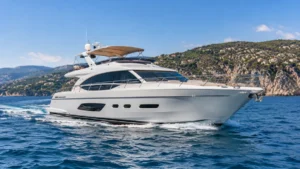
A flybridge yacht has an upper deck, often with a second helm and seating. Check its height and dimensions against bridge clearances and marina access.
Sport Yachts
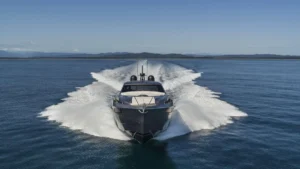
Sport yachts emphasise performance and styling. Higher cruising speeds can increase fuel use, so compare consumption at your expected speed rather than relying on maximum-speed claims.
Sailing Yachts
Sailing yachts rely mainly on sails, usually with an auxiliary engine. Inspect the sails, mast, rigging and engine, and consider the experience or crew needed to operate the vessel safely.
Catamarans
Catamarans have two hulls joined by a connecting structure, often providing wide decks and spacious interiors. Their beam can limit marina options or increase berthing charges, so check berth dimensions.
Larger Pre-Owned Yachts
A used yacht may offer more space or equipment, but major engine work, outdated electronics or structural repairs can erase the apparent saving. Assess the asking price alongside a survey and repair budget.
Yacht Models Worth Researching
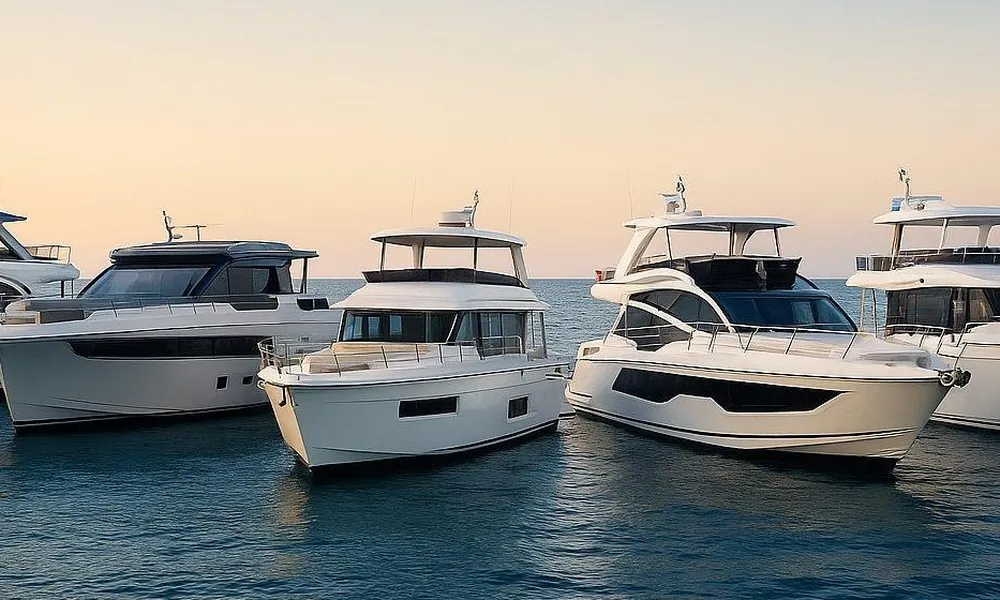
The following models provide examples of established designs in the approximate 50- to 61-foot category. Their inclusion does not mean that a current example is available for $2 million. Asking prices vary by model year, location, condition, equipment and market conditions; check live listings before treating any model as within budget.
| Model | Published overall length | Design |
|---|---|---|
| Ferretti Yachts 500 | 50 ft 4 in | Flybridge motor yacht |
| Azimut Fly 53 | 55 ft 1 in | Flybridge yacht |
| Princess F55 | 54 ft 4 in | Flybridge motor yacht |
| Sunseeker Manhattan 55 | 56 ft 6 in | Motor yacht |
| Prestige 590 | 61 ft 4 in | Flybridge motor yacht |
Specifications vary by model year and configuration.
Ferretti Yachts 500
Ferretti lists the model’s overall length as 15.33 metres (50 feet 4 inches). Its published specifications show two-cabin and optional three-cabin arrangements, with Cummins QSB 6.7 engine options. The manufacturer lists a maximum speed of 30 knots and a cruising speed of 25 knots under its stated test conditions. Actual performance will depend on loading, weather, hull condition and configuration.
Azimut Fly 53
Azimut lists an overall length of 16.78 metres (55 feet 1 inch), three cabins plus an optional crew cabin, and twin Volvo Penta IPS 950 engines. Its published figures include a maximum speed of up to 31 knots. The manufacturer notes that performance figures come from specified test conditions, so they should not be treated as guaranteed real-world results.
Princess F55
Princess lists the F55 at 16.56 metres (54 feet 4 inches) overall, including the pulpit, with six berths. Published engine options include twin Volvo D11 725 or twin Volvo D13 900 engines. The manufacturer’s stated speed range is dependent on engine choice and operating conditions.
Sunseeker Manhattan 55
Sunseeker’s published 2025 range brochure gives the Manhattan 55 an overall length of 17.21 metres (56 feet 6 inches). It lists accommodation for up to six guests and one crew member, with engine options and performance dependent on the selected configuration. Confirm the specification for the exact year and vessel being considered.
Prestige 590
Prestige lists the 590 at 18.7 metres (61 feet 4 inches) overall. Published specifications include twin Cummins 8.3 engines rated at 600 horsepower each, with configuration options. This is a larger model in the comparison group, so buyers should pay particular attention to berth dimensions, operating costs and the condition of its systems.
Use these figures for comparison only; verify the exact vessel’s build sheet and condition.
New or Used: Which Makes More Sense?
A new yacht may offer current equipment, a fresh interior, some layout choices and a manufacturer’s warranty. Confirm the warranty’s duration, exclusions and coverage for labour and parts.
A used yacht may offer more length or equipment for the same budget and can be inspected before purchase. However, components may be worn, technology dated and maintenance incomplete.
| Consideration | New yacht | Used yacht |
|---|---|---|
| Equipment | Current specification may be available | May need upgrades |
| Condition | New at delivery | Depends on use and maintenance |
| Warranty | Check builder’s written terms | Depends on remaining or separately purchased cover |
| Layout | Some customisation may be possible | Usually fixed |
| Delivery | Build and delivery time may apply | Often available sooner |
| Repair risk | Early age-related repairs may be less likely, but not impossible | Inspection may reveal deferred work |
Compare total price, delivery or refit costs, warranty terms, survey results and annual expenses.
Features to Check
Start with the yacht’s dimensions. Length overall affects berth requirements, beam determines width, and draft indicates how much water the vessel needs beneath it. Check all three against your intended marinas and cruising areas.
Match cabins, berths, bathrooms, storage and crew quarters to your needs. Berth count describes sleeping accommodation, not the maximum permitted number aboard.
Request engine and generator details, service history and operating hours, then arrange qualified inspections. Hours alone do not establish condition; maintenance and operating history matter too.
Assess fuel capacity alongside consumption and speed. Ask for range figures at a stated load and speed, and check whether they include a reserve.
Test GPS, chartplotters, radar, autopilot, VHF radio and other communications equipment; check that charts and software are suitable for your voyages. Also test galley appliances, air conditioning, plumbing, batteries and generators. Confirm safety equipment meets the rules for the yacht’s flag, location, size and use.
How Much Does a $2 Million Yacht Cost to Own?

Annual costs depend on size, age, condition, location, use, fuel consumption, insurance and crew requirements.
A commonly quoted planning guideline is to allow roughly 10% to 25% of a yacht’s value per year for ownership and operating expenses. Applied to a $2 million yacht, that broad rule would indicate $200,000 to $500,000 annually. This is only a rough budgeting reference, not a quote or a reliable prediction for an individual vessel. Actual costs may fall outside the range.
Get vessel-specific quotations. Main costs include:
- Maintenance and repairs: Engine servicing, generator work, hull care, systems maintenance and unexpected failures.
- Insurance: Premiums depend on the yacht, owner, coverage, cruising area and use. Request a quote for the exact vessel.
- Fuel: Estimate this using expected engine hours, cruising speed and manufacturer or surveyor-supported consumption figures.
- Dockage and storage: Fees depend on location, season and the yacht’s length and beam. Confirm that a suitable berth is available.
- Crew: A professionally operated yacht may require a captain and other crew. Include wages, benefits, travel and training where applicable.
- Management and administration: Management, registration, inspections, communications and other services may add to the budget.
A lightly used, owner-operated yacht may have a very different cost profile from a heavily used vessel with paid crew. Ask marinas, insurers, service providers and yacht managers for estimates.
Costs to Budget for When Buying
The advertised price may exclude costs to complete the purchase and prepare the yacht. Depending on the transaction, allow for:
- An independent marine survey and specialist engine inspections.
- A haul-out so the underwater hull and running gear can be examined.
- A sea trial and any agreed follow-up testing.
- Legal, brokerage, documentation and closing charges.
- Applicable sales, use, import or other taxes.
- Registration or flagging fees.
- Repairs identified during inspection.
- Replacement or upgrades for outdated safety and navigation equipment.
- Delivery, transport or repositioning costs.
Tax rules are location-specific. For example, Florida’s Department of Revenue explains that sales and use tax can apply to boats sold, delivered, used or stored in the state, subject to applicable rules and exemptions. Buyers elsewhere must check the rules in the relevant jurisdiction.
Keep a separate contingency reserve rather than spending the entire budget on the purchase price. Obtain written estimates before signing and have a qualified professional explain any tax or registration obligations that apply to the transaction.
How to Inspect a Yacht Before Buying
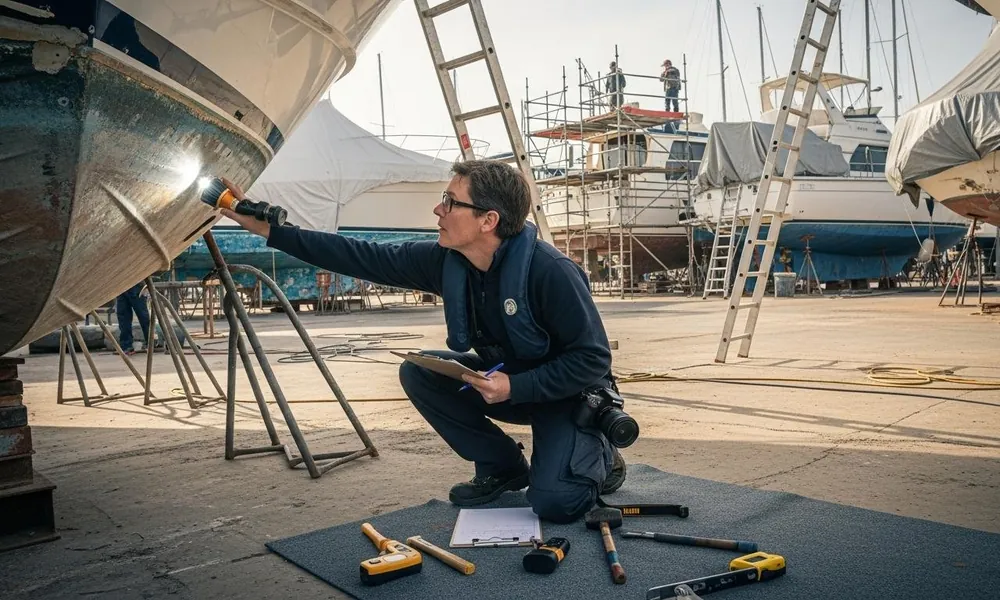
Photographs and seller descriptions are not enough. Arrange an independent survey and specialist checks where needed.
Hull and structure: Inspect the hull, deck, windows, fittings and accessible structural areas. Look for cracks, water intrusion, corrosion, blistering or evidence of previous repairs. The appropriate tests depend on the hull material and the surveyor’s findings.
Engines and generators: Review service invoices and operating-hour records. Have a marine mechanic assess the engines, transmissions and generators, and investigate any warning signs or irregular readings.
Electrical and onboard systems: Test batteries, charging systems, shore power, lighting, pumps, air conditioning, navigation electronics and other major equipment. Record faults and obtain repair estimates.
Maintenance history: Request invoices, service reports, previous surveys and records of significant repairs or damage. Missing records do not prove a problem, but they make it harder to establish how the yacht has been maintained.
Sea trial: Operate the yacht under suitable conditions with qualified assistance. Observe engine temperatures and pressures, steering, vibration, handling and the operation of key systems. A sea trial complements a survey; it does not replace one.
Ownership and documentation: Verify the seller’s authority to sell and check title, registration, mortgages, liens and tax or import documents as applicable. For eligible U.S.-documented vessels, the U.S. Coast Guard’s National Vessel Documentation Center provides services including ownership certificates, abstracts of title and the filing of bills of sale and lien-related instruments. Other countries use their own registries and procedures.
If defects are found, discuss them with the experts. Depending on the contract, you may negotiate, request repairs or further tests, or withdraw.
Questions to Ask Before Making an Offer
Before making an offer, consider the yacht’s purpose, draft and beam, cabin capacity, survey results, annual budget, insurance availability, berth availability and likely resale demand.
A yacht may look attractive online but prove unsuitable if it is difficult to berth or expensive to operate.
Are $2 Million Yachts Worth Buying?
A $2 million budget may suit buyers seeking private accommodation and powered cruising, particularly in the pre-owned market. It does not guarantee a particular model, size or condition.
The best purchase is not necessarily the newest, largest or fastest. A yacht with a suitable layout, sound structure, maintained engines, working systems and complete records may offer better value than a larger vessel needing major work.
Compare individual yachts, verify asking prices, arrange independent inspections and calculate the full ownership cost before committing.
Frequently Asked Questions
What kind of yacht can I buy for $2 million?
Potential options include pre-owned motor yachts, flybridge yachts, sport yachts, sailing yachts and catamarans. Availability depends on current prices, age, condition, location and equipment.
How big is a $2 million yacht?
There is no fixed length. Yachts around 50 to 70 feet may appear in this budget range, but actual options vary by market and condition.
How much does it cost each year to own one?
A broad 10%–25% planning guideline suggests $200,000–$500,000 annually on a $2 million vessel. This is not a quote; build a budget using actual insurance, fuel, dockage, maintenance and crew estimates.
Is a new or used yacht better?
A new yacht may offer current equipment and warranty coverage. A used yacht may offer more space for the same price, but requires careful inspection. Compare the individual vessel, not just its age.
What inspections should I arrange?
Use an independent marine surveyor, arrange specialist engine checks where appropriate, conduct a sea trial and review maintenance and ownership records.
Conclusion
A $2 million yacht budget can open up several types of vessels, particularly in the pre-owned market. The right choice depends on intended use, layout, condition, cruising area and the money available for ongoing ownership.
Verify the asking price and specifications of each yacht through reliable boat marketplaces, arrange an independent survey and sea trial, review its documents and obtain realistic operating-cost estimates. A careful assessment of the individual vessel is more valuable than choosing by length, brand or appearance alone.