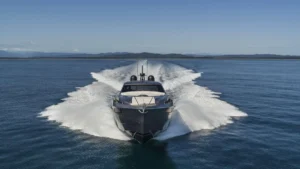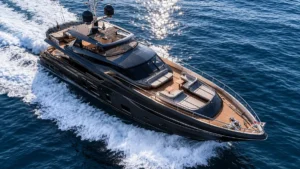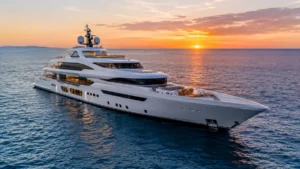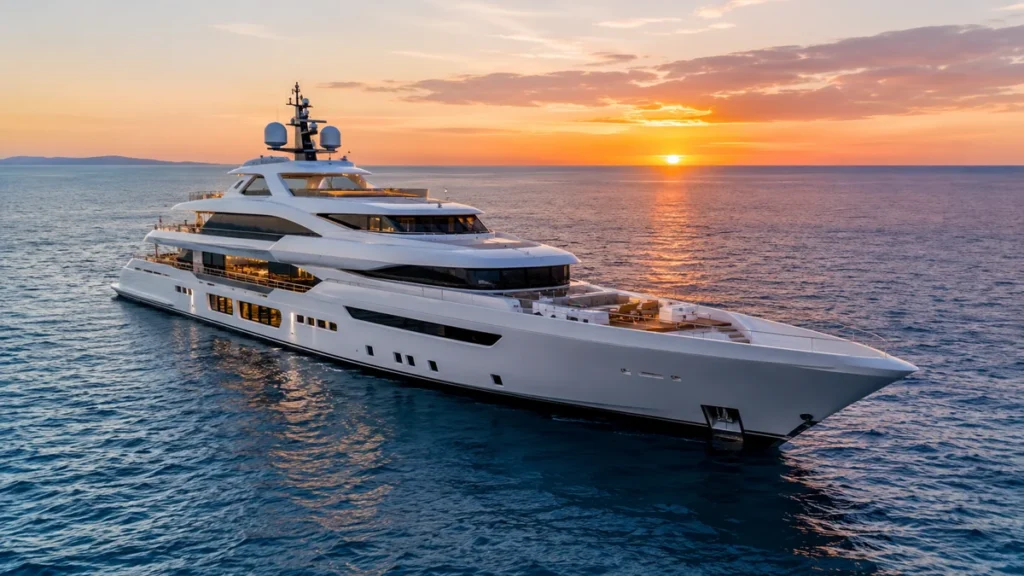
A 150-foot yacht is a large luxury vessel built for comfortable travel, entertaining, and long stretches at sea. At about 45.7 meters, it offers far more room than a typical private yacht. Depending on the design, it may have several guest cabins, separate crew quarters, big outdoor decks, a swim platform, and a range of entertainment facilities.
Price depends on the builder, age, design, condition, and equipment. Buyers must also budget for crew wages, fuel, maintenance, insurance, and dockage.
This guide explains how big a 150-foot yacht is, what it can offer, what it may cost, and what to consider before buying.
Key Takeaways
- A 150-foot yacht is about 45.72 meters long.
- Asking prices vary enormously with age, builder, condition, and design.
- Motor yachts, sailing yachts, catamarans, and explorer yachts each offer a different experience.
- Guest capacity and cabin layouts depend on the individual yacht.
- Annual costs include crew, fuel, insurance, maintenance, and dockage.
- A professional marine survey is essential before buying a pre-owned yacht.
What Is a 150-Foot Yacht?

A 150-foot yacht is a large recreational vessel about 45.72 meters long. Boats of this size are commonly called superyachts, although the term has no single universal legal definition.
They are built to provide comfortable accommodation, private living areas, and facilities for longer trips. Depending on the model, they may have several decks, large dining areas, guest suites, crew quarters, and outdoor entertainment spaces.
A yacht this size can serve many purposes:
- Private family cruising
- Entertaining guests
- Long-distance passages
- Luxury charters
- Vacations in coastal destinations
Not every yacht offers the same facilities. Some emphasize speed and entertainment, while others prioritize range and onboard comfort.
How Big Is a 150-Foot Yacht?
Converted exactly, 150 feet is 45.72 meters. Real usable space also depends on beam, draft, hull design, and the internal layout.
Yachts marketed as “150” rarely measure exactly that. The Wider 150, for example, is 47.05 meters long (about 154 feet) with a beam of 8.6 meters. Always check the specifications of the individual vessel.
Important Yacht Measurements
| Measurement | Meaning |
|---|---|
| Length overall (LOA) | Total length from bow to stern |
| Beam | Width at the widest point |
| Draft | Depth of the hull below the waterline |
| Waterline length | Length measured along the waterline |
| Gross tonnage (GT) | A measure of enclosed internal volume |
| Displacement | The actual weight of the yacht |
Gross tonnage and displacement are different things: one measures volume, the other weight.
Beam and draft also affect which marinas and destinations are practical. A wide or deep-draft yacht has fewer berthing options.
How Much Does a 150-Foot Yacht Cost?

Prices run from several million dollars to tens of millions. There is no single market price because yachts of similar length differ greatly in age, build quality, equipment, and condition.
Brokerage listings show the spread:
- Scintilla Maris (about 149.6 feet, Damen Maaskant) was listed at $16 million. The broker’s page also said it was being sold at a no-reserve auction with online bidding on November 5, 2026, so the final price may differ from the asking figure.
- Artisa (153.2 feet, Heesen, built 2017 and refurbished in 2023) was listed at $25 million.
- Zembra (about 151.9 feet, Delta Marine, a 2026 build) was listed at $69 million.
These are asking prices for specific boats, not fixed prices for the size class, and listings change as yachts are sold or repriced.
What Affects the Price?
| Price factor | Effect |
|---|---|
| Builder | Established yards and build quality can raise value |
| Age | Older yachts often ask less |
| Condition | Well-kept vessels can command more |
| Refit history | Recent major upgrades can affect market value |
| Design | Custom layouts and special features can add cost |
| Equipment | Engines, electronics, tenders, and systems all matter |
A new build usually costs more because of the custom design, materials, and equipment. A pre-owned yacht may cost less, but check its maintenance records and likely repair needs.
Also budget for taxes, registration, insurance, delivery, and any work needed after purchase. These can push the total well beyond the advertised price.
Different Types of 150-Foot Yachts
Hull design and propulsion vary, and the right type depends on how you plan to use the yacht.
1. Motor Yachts
Motor yachts rely on engines for propulsion. They suit owners who want powered cruising, comfortable accommodation, and big entertainment areas, often with lounges, sun decks, swim platforms, and several guest cabins.
2. Sailing Yachts
Sailing yachts use sails and wind, and many also have engines for maneuvering or calm conditions. They appeal to people who enjoy sailing and want something different from a motor yacht.
3. Catamaran Yachts
A catamaran has two parallel hulls joined by a central structure, which can give wide deck areas and a different arrangement of living spaces.
The 150 Sunreef Power is one example. Published specifications list a length of 46 meters and a maximum beam of 13.5 meters. Sunreef also showed a trimaran version of the design, so confirm which configuration and build status apply before relying on any figure.
4. Explorer Yachts
Explorer yachts are built for extended cruising, with larger storage areas, robust hulls, and equipment for long trips. They suit owners who want to go beyond the usual coastal routes.
| Yacht type | Main advantage | Key consideration |
|---|---|---|
| Motor yacht | Powered cruising and comfort | Fuel consumption |
| Sailing yacht | Wind-assisted travel | Sailing conditions |
| Catamaran | Wide layout and deck space | Very wide beam |
| Explorer | Built for extended cruising | Equipment and operating needs |
150-Foot Yacht Specifications
Specifications depend on the builder and model. Two yachts of similar length can differ greatly in engines, fuel capacity, speed, and range.
The Wider 150 is a useful real-world example. It is a hybrid built around a serial hybrid system: four 350 kW MAN generators supply electric motors that turn two Azipod-style drives, and a lithium battery bank allows quiet running without the generators.
Wider 150 Published Figures
| Specification | Published figure |
|---|---|
| Length overall | 47.05 meters |
| Beam | 8.6 meters |
| Draft (full load) | 2.2 meters |
| Gross tonnage | 484 GT |
| Displacement (full load) | 391 tonnes |
| Fuel capacity | 45,000 liters |
| Fresh water capacity | 12,000 liters |
| Maximum speed | 14.1 knots |
| Cruising speed | 13 knots |
| Range | 4,700 nautical miles at 10 knots |
Press reports say the yacht can cruise at 5 knots on batteries alone for about six hours, which works out to roughly 30 nautical miles, and can run its full hotel load at anchor for about eight hours without the generators. I could not confirm a published battery capacity in kilowatt-hours or a formal motor rating, so check those with the builder if you need them.
These figures belong to the Wider 150 alone. They are not standard for every 150-foot yacht.
Inside a 150-Foot Luxury Yacht
The layout depends on the builder, the owner’s wishes, and the intended use.
Master Suite
The master suite is normally the main private cabin. It may have a large bed, a private bathroom, storage, and a seating area. Some yachts put it on the upper deck for extra privacy and views.
Guest Cabins
Guest cabins offer private sleeping space for family and visitors, and their number and layout vary. Some yachts add VIP suites, while others combine space into larger shared areas.
Main Saloon
The main saloon is the central indoor living space, usually with sofas, tables, large windows, and entertainment equipment. It is where guests relax and socialize.
Dining Area and Galley
The dining area provides space for meals, and a professional galley lets the chef and kitchen staff cook for guests and crew.
Crew Quarters
A yacht this size needs dedicated crew areas, such as cabins, bathrooms, a mess, storage, and work spaces. Keeping them apart from guest areas protects privacy and supports daily operations.
What Features and Amenities Can a 150-Foot Yacht Have?

Options depend on the design and equipment. Common ones include:
- Swimming pools and hot tubs: Outdoor relaxation areas.
- Beach clubs: Space near the waterline with direct access to the sea.
- Sun decks: Open areas for sunbathing and socializing.
- Gyms: Exercise equipment and fitness spaces.
- Cinema rooms: Private entertainment areas.
- Tender garages: Storage for small boats and water gear.
- Water toys: Jet skis, paddleboards, and similar equipment.
- Helicopter facilities: Only on yachts designed and equipped for helicopter operations.
None of these is standard on every yacht, so review the equipment list and general arrangement plan before deciding.
How Many People Can a 150-Foot Yacht Accommodate?
Capacity depends on the cabin arrangement, crew facilities, design, and certification. Some yachts sleep around 10 to 12 guests, while others differ. The crew needs separate accommodation.
Guest capacity is not the same as the maximum number of people legally allowed on board. For example, the Red Ensign Group Yacht Code, Part A, applies to commercially used yachts of 24 meters or more that carry no more than 12 passengers, and only to yachts whose construction stage dates from January 1, 2019 or later. Earlier yachts may fall under previous codes, and vessels carrying more than 12 passengers are covered by Part B. Private yachts and other flags have their own rules.
Before chartering or buying, check the certified capacity instead of counting bedrooms.
How Much Does It Cost to Maintain a 150-Foot Yacht?
Ownership costs go far beyond the purchase price. The annual budget depends on how often the yacht is used, how many crew it employs, where it operates, and what maintenance it needs.
Main Ownership Costs
| Expense | What it includes |
|---|---|
| Crew salaries | Captain, engineers, chefs, and other crew |
| Fuel | Main engines, generators, and tenders |
| Maintenance | Regular servicing and repairs |
| Insurance | Vessel and liability coverage |
| Dockage | Marina and berthing charges |
| Provisioning | Food and onboard supplies |
| Management | Technical and administrative services |
| Refits | Major repairs and upgrades |
Crew is often a major share of the budget, since a large yacht needs qualified people to run the engines, navigate, maintain equipment, cook, and look after guests.
Fuel varies too. A yacht that travels often at higher speeds burns more than one that cruises less at lower speeds.
Maintenance depends on age, systems, condition, and service history. Plan for major refits, not just routine servicing.
The common 10% rule, which suggests budgeting about 10% of the purchase price each year, is only a rough guide. Industry sources note that real costs can range from roughly 8% to 20%. A detailed operating budget for the actual vessel is far more useful.
150-Foot Yacht: New vs. Used
The choice depends on your budget, preferred design, and delivery timeline.
| Factor | New yacht | Used yacht |
|---|---|---|
| Design | More customization | Existing layout |
| Condition | Newly built | Depends on maintenance |
| Availability | May require a build period | May be available sooner |
| Purchase price | Often higher | Can be lower |
| Equipment | Chosen during construction | Already installed |
| Maintenance history | Starts with the new owner | Previous records need checking |
Advantages of Buying New
A new yacht lets you choose the design, layout, interior materials, and equipment, and it comes with no ownership history. Construction takes time, though, and changes during the build can affect cost and delivery.
Advantages of Buying Used
A used yacht may cost less and lets you inspect an existing layout before buying. It may also be available sooner. You must, however, check the service records, structure, engines, and equipment carefully.
What Should You Check Before Buying?

A professional inspection can reveal problems that lead to expensive repairs. Key points:
- Hull condition: Look for damage, corrosion, and signs of previous repairs.
- Engines and propulsion: Have qualified professionals inspect engines, generators, and propulsion.
- Maintenance records: Review service history and past repairs.
- Refit history: Check what major upgrades were completed and what may still be needed.
- Technical equipment: Inspect navigation, communication, electrical, and safety systems.
- Fuel consumption: Review actual operating data and expected fuel needs.
- Crew requirements: Understand how many qualified crew are needed.
- Legal documents: Review registration, classification, ownership, and certification.
- Insurance: Get quotes before completing the purchase.
- Operating budget: Estimate annual costs based on real use.
Use a qualified marine surveyor, an experienced yacht broker, and suitable legal and technical advisers.
Is a 150-Foot Yacht Worth Buying?
It can suit buyers who want extensive onboard space, private accommodation, and the ability to travel by sea with family and guests. It may also fit people who entertain often or want a vessel designed for extended cruising.
The purchase price is only part of the decision, however. Crew, fuel, insurance, maintenance, dockage, and refits all add to the total. For occasional yacht vacations, chartering may be more practical than owning.
The right answer depends on how often you will use the yacht, your budget, and the experience you want.
Frequently Asked Questions About 150-Foot Yachts
1. Can a 150-foot yacht fit into a standard marina slip?
Not necessarily. A yacht of about 45.72 meters usually needs a dedicated superyacht berth. Beam, draft, local facilities, and berth length all decide whether it can dock at a particular marina.
2. Does a 150-foot yacht need a full-time captain?
A yacht this size generally needs professional command and qualified crew. Whether the captain must be employed full-time depends on how the yacht is used, flag-state rules, and operating arrangements.
3. Can a 150-foot yacht operate without its main engines?
Some have alternative propulsion, such as hybrid-electric systems. The Wider 150, for instance, can run on batteries for a limited time, with press reports citing about six hours at 5 knots. Actual electric operation depends on stored energy and conditions.
4. How long can a 150-foot yacht stay at sea without refueling?
There is no standard answer. It depends on fuel capacity, engine efficiency, speed, weather, generator use, and onboard consumption. A published range in nautical miles is the better comparison.
5. Does a 150-foot yacht require a special license to operate?
Requirements depend on the flag, private or commercial use, operating area, and applicable maritime rules. Professional qualifications and safe-manning rules may apply, so confirm them with the flag administration.
6. Can a 150-foot yacht be transported by ship?
Yes, depending on its dimensions, weight, and the transport arrangements. A yacht-transport ship or other specialist method may be used, and cost and feasibility depend on the route and the vessel.
7. Does a larger beam always mean more interior space?
Not necessarily. A wider beam can add usable deck and interior space, but the layout also depends on hull design, structure, machinery spaces, and the number of decks.
8. What documents should a buyer request before making an offer?
Typically the registration certificate, ownership records, classification and safety certificates where applicable, maintenance records, survey reports, equipment lists, and details of previous refits. The exact list depends on the yacht and its registration.
Conclusion
A 150-foot yacht offers generous living space, private accommodation, and a wide range of luxury facilities. Its size, design, performance, and price depend on the individual vessel, not on length alone.
Before buying, compare specifications, inspect the condition, review the maintenance history, and prepare a realistic operating budget. A careful assessment will help you choose a yacht that fits your travel plans and finances.