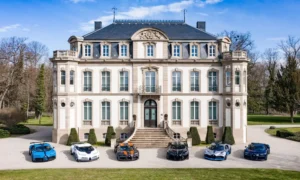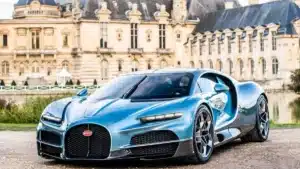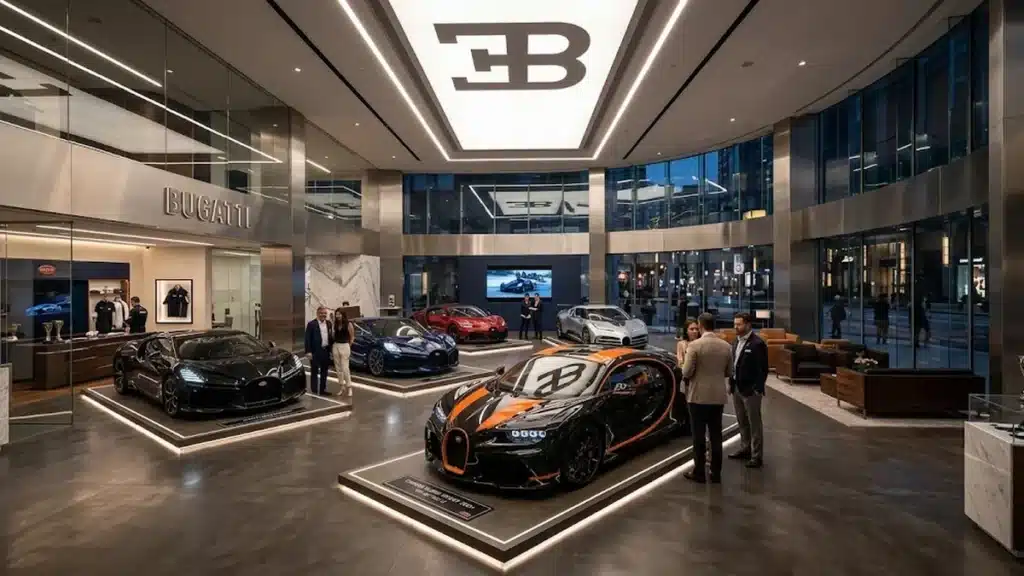
Bugatti cars are high-performance luxury vehicles known for their powerful engines, advanced engineering, unique designs, and limited production. The French manufacturer creates hypercars that combine extreme speed with comfort, craftsmanship, and exclusive features.
Some famous Bugatti models include the Veyron, Chiron, Divo, and Mistral. The newer Tourbillon introduces a hybrid powertrain with a naturally aspirated V16 engine and three electric motors.
Unlike regular sports cars, Bugatti vehicles are produced in small numbers. Customers can also choose special colors, materials, and interior designs to personalize their cars.
Bugatti is especially known for its W16 engine, which powered the Veyron and Chiron generations. Its latest engineering direction combines traditional engine performance with electric power.
Who Makes Bugatti Cars?
Bugatti Automobiles S.A.S. is a French luxury hypercar manufacturer headquartered in Molsheim, Alsace, France. The company develops and produces exclusive vehicles with a focus on performance, design, and craftsmanship.
Bugatti became part of Bugatti Rimac in 2021, when Rimac Group and Porsche established a joint venture to manage the Bugatti brand and Rimac’s automotive operations.
However, the ownership structure changed in 2026. On April 24, Porsche signed an agreement to sell its stakes in Bugatti Rimac and Rimac Group to a consortium led by HOF Capital. The transaction was completed on September 9, 2026.
Rimac Group remains the majority shareholder of Bugatti Rimac with a 55% stake. The HOF Capital-led consortium acquired Porsche’s former 45% stake in the joint venture. Porsche is no longer a shareholder.
Mate Rimac leads Bugatti Rimac and took over as President of Bugatti Automobiles following the ownership transition.
Bugatti continues to operate from Molsheim, France, maintaining its French identity and manufacturing heritage.
History of Bugatti Cars

Bugatti has a history that goes back more than a century. Ettore Bugatti founded the original company in 1909 in Molsheim. It became known for racing cars, luxury vehicles, and innovative engineering.
Here are the major developments in Bugatti’s history:
| Year | Important development |
|---|---|
| 1909 | Ettore Bugatti established the original company. |
| 1920s–1930s | Bugatti gained recognition for racing and luxury cars. |
| 1947 | Ettore Bugatti died. |
| 1987 | Romano Artioli revived the Bugatti brand. |
| 1991 | The EB110 was introduced. |
| 1998 | Volkswagen acquired the Bugatti name and rights. |
| 2005 | Production of the Veyron began. |
| 2016 | Bugatti introduced the Chiron. |
| 2021 | Bugatti Rimac was established. |
| 2024 | Bugatti revealed the Tourbillon. |
| 2025 | Programme Solitaire and its first creation, Brouillard, were introduced. |
| 2026 | The F.K.P. Hommage and Destrier were revealed, and La Manufacture opened. |
The Veyron marked an important step in Bugatti’s modern history. It showed that a road-going car could combine exceptional speed with luxury and comfort.
The Chiron continued this approach with more power and improved engineering. Today, the Tourbillon represents another major change as Bugatti moves from its famous W16 engine to a V16 hybrid powertrain.
Latest Bugatti Cars and Models
Bugatti has produced several hypercars, including coupes, roadsters, and track-focused vehicles. Some models belong to its main production history, while others were created in very limited numbers for selected customers.
Bugatti Tourbillon
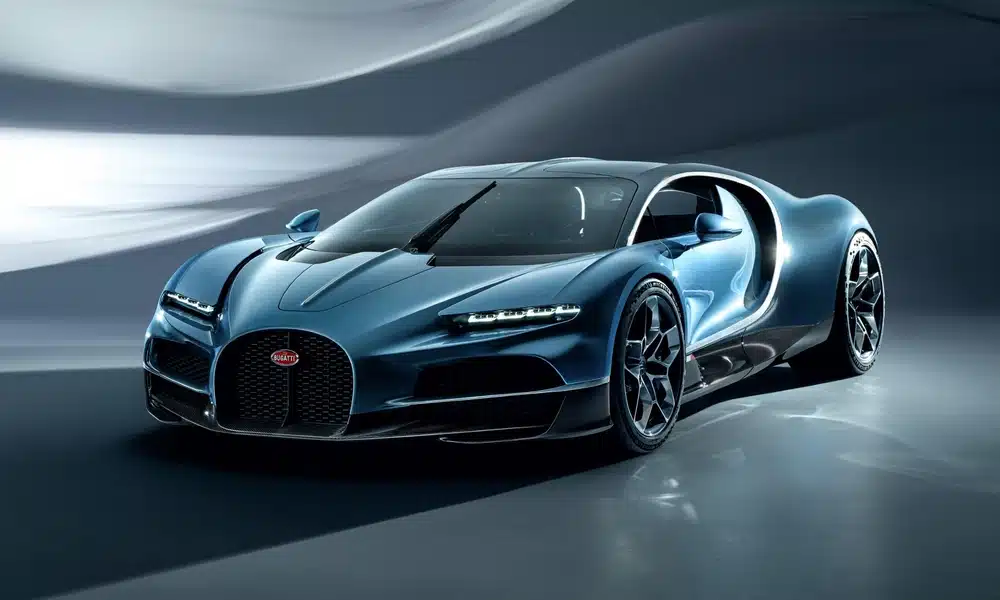
The Bugatti Tourbillon is the successor to the Chiron and represents a new generation of Bugatti hypercars. Introduced in June 2024, it uses a naturally aspirated 8.3-liter V16 engine combined with three electric motors.
Its hybrid powertrain produces a total output of 1,800 PS. The car also features a new design, a carbon-composite structure, and an instrument cluster inspired by traditional mechanical watches.
Important specifications include:
- Engine: 8.3-liter naturally aspirated V16
- Powertrain: V16 hybrid with three electric motors
- Combined output: 1,800 PS
- Production limit: 250 units
- Announced starting price: €3.8 million before taxes
- 0–100 km/h: Approximately 2 seconds
Bugatti has already sold all 250 planned Tourbillon production slots. Therefore, the model is not available for a new factory order through the original allocation. Its customer deliveries were planned to begin in 2026, with the full delivery programme extending through 2029.
The opening of La Manufacture in July 2026 marked an important step towards Tourbillon production. The facility was designed to support the new model’s assembly and quality-control requirements.
Bugatti W16 Mistral

The Bugatti W16 Mistral is an open-top hypercar and the final road-going model to use the brand’s famous W16 engine.
It features an 8.0-liter quad-turbocharged W16 engine producing 1,600 PS. Its design combines an open roof with aerodynamic features that help manage airflow and stability at high speeds.
Important specifications include:
- Engine: 8.0-liter quad-turbo W16
- Power: 1,600 PS
- Production limit: 99 units
- Announced starting price: €5 million before taxes
- Body style: Two-seat roadster
Bugatti completed production of all 99 W16 Mistral cars in July 2026. Its completion marked the end of the road-going W16 production era.
Bugatti Bolide
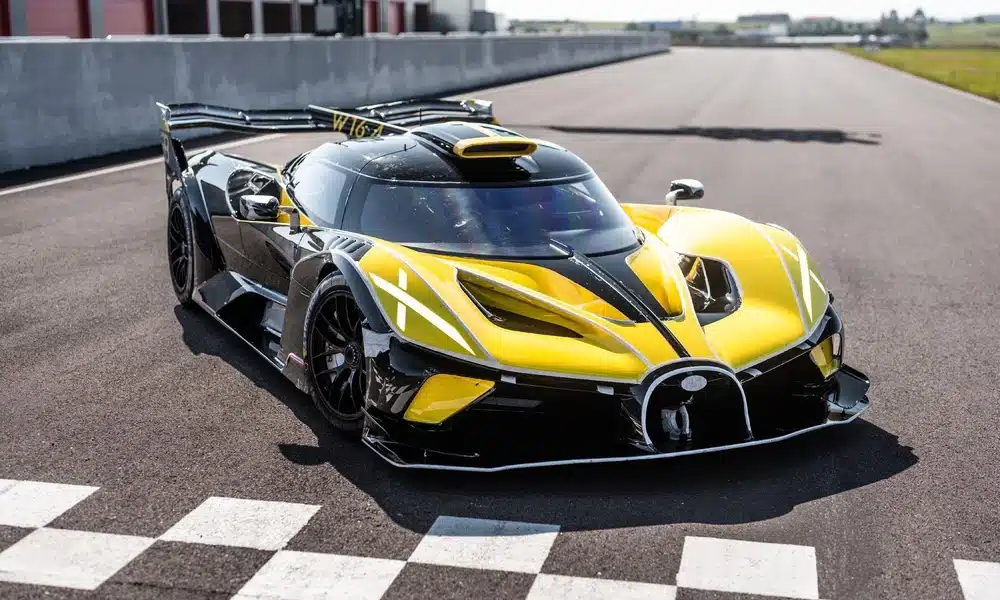
The Bugatti Bolide is a track-focused hypercar developed for racing circuits rather than ordinary public roads. It uses the 8.0-liter quad-turbo W16 engine and produces 1,600 PS in its production specification.
Unlike the Chiron and Mistral, the Bolide focuses on track performance. Its lightweight construction, aerodynamic body, and racing-focused design help it deliver high levels of performance on a circuit.
Key details include:
- Engine: 8.0-liter quad-turbo W16
- Power: 1,600 PS
- Production limit: 40 units
- Announced starting price: Around €4 million before taxes
- Vehicle type: Track-focused hypercar
Bugatti completed the final factory Bolide in November 2025. All 40 examples were produced for track use.
However, there is an important distinction. British engineering company Lanzante revealed a privately commissioned road-legal Bolide conversion at the 2026 Goodwood Festival of Speed. This was a specialist conversion, not a factory-produced road-going Bolide. Road legality depends on the conversion and the regulations of the country where the vehicle is registered.
Bugatti Chiron

The Bugatti Chiron was introduced in 2016 as the successor to the Veyron. It features an 8.0-liter quad-turbocharged W16 engine producing 1,500 PS in its standard version.
The Chiron combines high-speed performance with a luxury interior and advanced vehicle systems. Its production was limited to 500 units, and Bugatti completed the final car in May 2024.
Important specifications include:
- Engine: 8.0-liter quad-turbo W16
- Power: 1,500 PS
- Maximum torque: 1,600 Nm
- Production limit: 500 units
- Top speed: 420 km/h, electronically limited in the standard model
Bugatti also produced several Chiron variants with different performance goals.
| Chiron variant | Main feature |
|---|---|
| Chiron Sport | Improved handling and reduced weight |
| Chiron Pur Sport | Designed for cornering and agility |
| Chiron Super Sport | Focuses on high-speed performance |
| Chiron Super Sport 300+ | Special high-speed edition |
The Chiron Profilée should not be confused with these regular production variants. Bugatti created only one Profilée because all 500 Chiron production slots had already been assigned. It was sold at auction in February 2023 for €9,792,500.
Bugatti Veyron
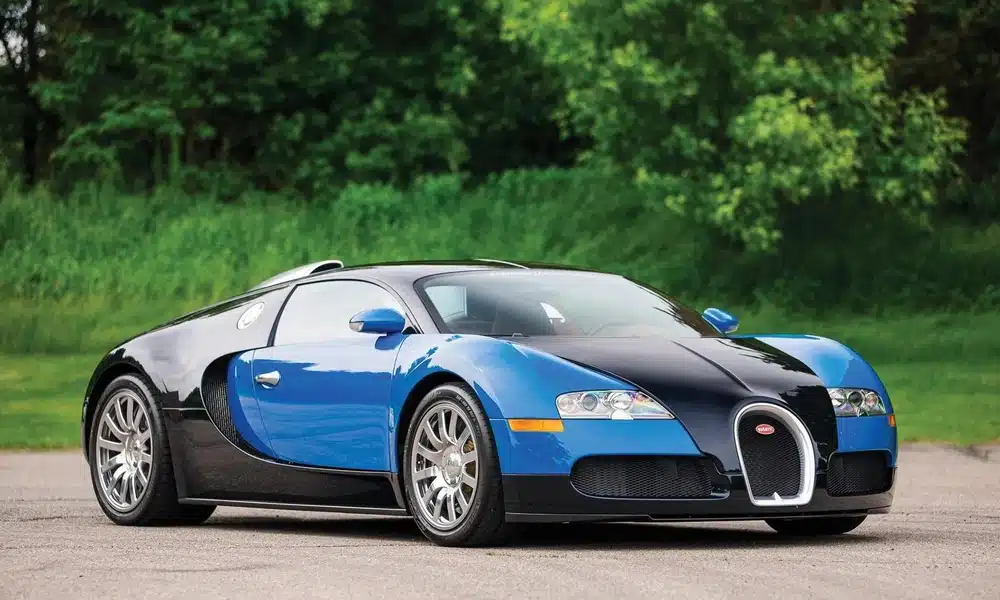
The Bugatti Veyron helped establish the modern Bugatti brand as a major name in the hypercar market. Production began in 2005 and ended in 2015, with 450 vehicles built.
The standard Veyron 16.4 uses an 8.0-liter W16 engine with four turbochargers, producing 1,001 PS. The Veyron Super Sport increased output to 1,200 PS and reached an officially recorded top speed of 431.072 km/h in 2010.
The Veyron was important because it combined extreme performance with the comfort and refinement expected from a luxury car.
Other Exclusive Bugatti Models
Bugatti has also produced special vehicles with unique designs, limited production, and high levels of customization. Some are based on existing Bugatti platforms, while others are one-of-one coachbuilt creations.
| Model | What makes it special |
|---|---|
| Bugatti Divo | Focuses on cornering, agility, and aerodynamic performance. |
| Bugatti Centodieci | Inspired by the EB110 and limited to 10 units. |
| Bugatti La Voiture Noire | A one-off car inspired by the Type 57 SC Atlantic. |
| Bugatti Brouillard | The first Programme Solitaire creation. |
| Bugatti F.K.P. Hommage | A one-off tribute to the Veyron and Ferdinand Karl Piëch. |
| Bugatti Destrier | The third Programme Solitaire creation, based on the Bolide’s technical foundation. |
The EB110 belongs to a different period of Bugatti history. It was produced during the brand’s Italian revival in the 1990s, before Volkswagen acquired the Bugatti name in 1998. It is therefore a separate historic model, not a special edition of a modern Bugatti platform.
Bugatti Cars Comparison Table
The following table compares selected Bugatti models and their main technical features.
| Model | Engine | Power | Type |
|---|---|---|---|
| Tourbillon | V16 hybrid | 1,800 PS | Hybrid hypercar |
| W16 Mistral | W16 | 1,600 PS | Roadster |
| Bolide | W16 | 1,600 PS | Track-focused |
| Chiron | W16 | 1,500 PS | Coupe |
| Veyron 16.4 | W16 | 1,001 PS | Coupe |
These figures refer to selected versions. Power and performance can differ between variants of the same model.
How Much Do Bugatti Cars Cost?
Bugatti cars are among the most expensive vehicles in the automotive market. Their prices depend on the model, production quantity, customization, and original purchase agreement.
The Tourbillon has an announced starting price of €3.8 million before taxes. Special editions such as the Divo and Centodieci had higher original prices because of their limited production and unique designs.
Bugatti Car Prices by Model
| Bugatti model | Announced original price |
|---|---|
| Tourbillon | €3.8 million |
| W16 Mistral | €5 million |
| Bolide | Around €4 million |
| Chiron Super Sport 300+ | €3.5 million |
| Divo | €5 million |
| Centodieci | €8 million |
| La Voiture Noire | Around €11 million |
These are historical or announced prices, not confirmed current resale prices. Taxes, optional features, regional charges, and the second-hand market can change the final amount.
Why Are Bugatti Cars So Expensive?
Several factors contribute to the high prices of Bugatti luxury cars.
- Limited production: Many Bugatti models are built in small numbers, making them difficult to obtain.
- Engine technology: Powerful engines and advanced powertrains require complex engineering.
- Hand assembly: Specialist craftspeople assemble and finish the vehicles.
- Premium materials: Bugatti uses materials such as carbon fiber, fine leather, and carefully finished metal components.
- Customization: Buyers can select individual colors, materials, and design details.
- Exclusive designs: Some models are created as one-off vehicles or special limited editions.
The combination of engineering, craftsmanship, and limited availability makes Bugatti ownership different from buying an ordinary luxury car.
What Makes Bugatti Cars Special?
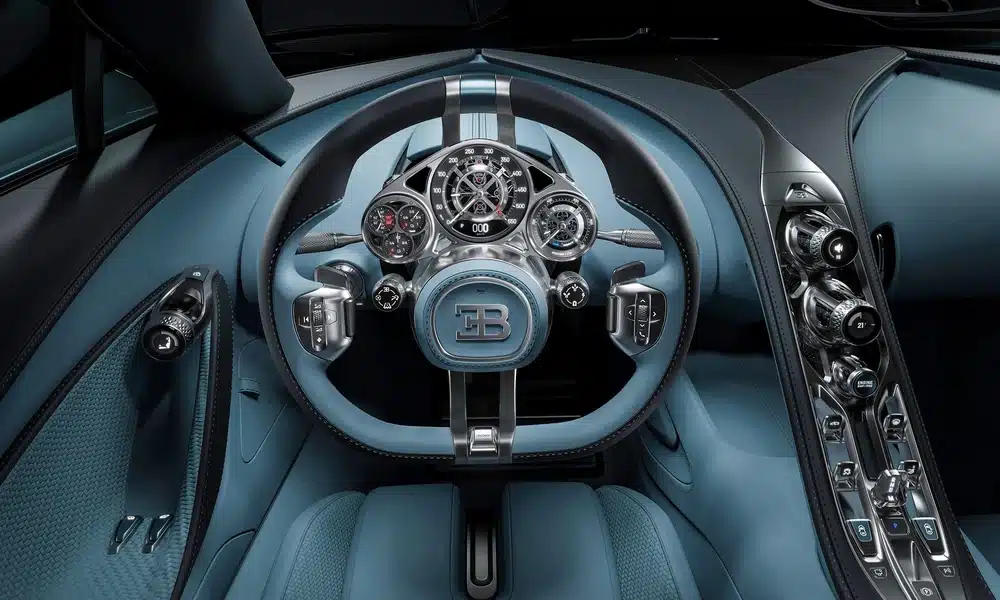
Bugatti vehicles stand out because of their engine technology, aerodynamic design, interior quality, and attention to detail.
Powerful Engine Technology
The W16 engine is one of the best-known features of modern Bugatti cars. It has 16 cylinders arranged in a W-shaped configuration and uses four turbochargers.
The engine powered the Veyron and Chiron families, as well as models such as the Divo, Centodieci, and Mistral.
The Tourbillon introduces a different approach. It uses a naturally aspirated V16 engine with three electric motors. This combination produces 1,800 PS and marks an important change in Bugatti’s engineering direction.
Aerodynamic Design
Bugatti designs its cars to manage airflow at high speeds. Features such as front splitters, rear wings, diffusers, and carefully shaped body panels help improve stability and control.
The exact aerodynamic setup depends on the model. For example, the Bolide uses a track-focused design, while the Mistral has aerodynamic features developed specifically for its open-top body.
Luxury Interior and Craftsmanship
Bugatti interiors combine modern technology with carefully selected materials. Depending on the model and customer configuration, the cabin can include leather, carbon fiber, metal details, and custom finishes.
The Tourbillon also introduces a mechanical instrument cluster inspired by high-end watches. It uses carefully arranged mechanical components rather than relying entirely on digital displays.
Advanced Braking and Engineering
Bugatti vehicles use high-performance braking systems designed to manage the heat and forces created during high-speed driving.
Other engineering features include advanced suspension systems, all-wheel drive in relevant models, and electronic vehicle controls. These systems help manage the power produced by the engines.
Bugatti’s Customization and Manufacturing Process
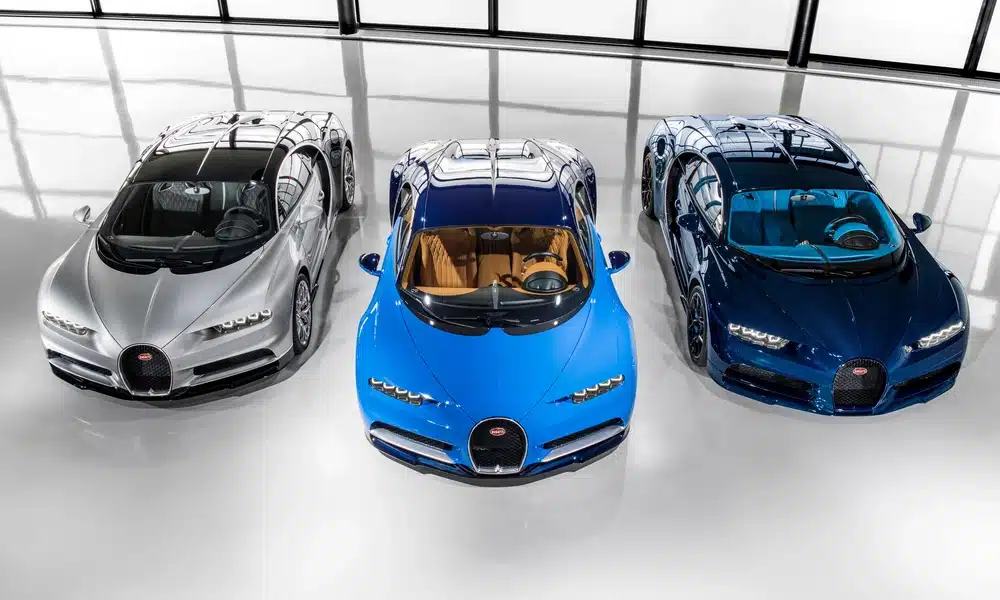
Bugatti builds its cars in Molsheim, France. The company combines specialist engineering with detailed hand assembly to produce vehicles that meet its design and quality requirements.
How Are Bugatti Cars Made?
Bugatti’s manufacturing process includes several stages:
- Design: Engineers and designers develop the car’s shape, structure, and technical systems.
- Engineering: The powertrain, chassis, suspension, and other systems are developed and tested.
- Pre-assembly: Components and interior and exterior sections are prepared.
- Quality checks: Specialist teams inspect parts and complete detailed finishing work.
- Final assembly: The historic Atelier in Molsheim handles the final exterior and interior assembly.
Bugatti inaugurated La Manufacture on July 2, 2026. It is an additional production facility, not a replacement for the historic Atelier.
La Manufacture handles exterior and interior pre-assembly, quality checks, vehicle inspections, polishing, painting, and specialist rework. The historic Atelier remains responsible for the final assembly stages.
Together, these facilities are designed to support production capacity of up to 200 vehicles per year. The company has also described La Manufacture as the future home of Tourbillon production.
Bugatti Sur Mesure
Sur Mesure is Bugatti’s personalization programme. It allows customers to work with the company on individual vehicle designs, including special colors, materials, and interior details.
The aim is to create a car that reflects the owner’s preferences while maintaining Bugatti’s design and engineering standards.
Programme Solitaire
Programme Solitaire focuses on one-of-one Bugatti creations. Unlike standard customization, this programme involves developing unique vehicles with individual designs and bodywork.
Bugatti introduced the programme in 2025 and limits it to a maximum of two unique creations per year.
Its three creations announced by November 2026 are:
- Brouillard: The first creation, introduced in August 2025, inspired by Ettore Bugatti’s favorite horse.
- F.K.P. Hommage: The second creation, revealed in January 2026, pays tribute to the Veyron and its visionary creator, Ferdinand Karl Piëch.
- Destrier: The third creation, revealed in August 2026, uses the technical foundation of the Bolide with a unique body design.
These projects show how Bugatti combines its history with individual customer designs and traditional coachbuilding.
Bugatti Cars vs Other Hypercar Brands
Bugatti competes in a market that includes other manufacturers known for high-performance and exclusive vehicles. However, each company follows a different engineering approach.
| Brand | Main focus | Key difference |
|---|---|---|
| Bugatti | Luxury and extreme performance | Powerful engines, high-speed engineering, and craftsmanship |
| Koenigsegg | Advanced performance engineering | Lightweight construction and innovative powertrain technology |
| Pagani | Design and craftsmanship | Artistic styling and detailed interior finishes |
| Rimac | Electric performance | Fully electric hypercars and advanced battery technology |
Bugatti vs Koenigsegg
Bugatti and Koenigsegg both produce high-performance hypercars, but their engineering approaches are different.
Bugatti is known for combining powerful engines with luxury and high-speed stability. Koenigsegg focuses heavily on lightweight construction, advanced engineering, and innovative performance systems.
Bugatti vs Pagani
Bugatti and Pagani both place strong importance on design and exclusivity. Bugatti is especially known for its powerful engines and high-speed performance, while Pagani places a strong focus on artistic design, detailed materials, and craftsmanship.
Bugatti vs Rimac
Bugatti and Rimac are connected through their corporate group, but their vehicles use different powertrain approaches.
Bugatti’s Tourbillon combines a V16 engine with electric motors. Rimac’s Nevera is a fully electric hypercar that uses electric motors for propulsion.
Bugatti Car Ownership: What Should Buyers Know?

Buying a Bugatti involves more than paying the purchase price. Owners must also consider maintenance, insurance, parts, storage, and access to specialist service facilities.
Can You Buy a New Bugatti?
Availability depends on the model and its production status. The Veyron, Chiron, Mistral, and factory Bolide have completed production.
The Tourbillon’s 250 production slots have also sold out. Customers who did not secure an allocation cannot place an ordinary new factory order for one of those original production slots. A possible purchase through the resale market is a separate matter.
Special one-off Programme Solitaire vehicles are created for individual customers and are not regular showroom models.
How Much Does It Cost to Maintain a Bugatti?
Maintenance costs depend on the model, its condition, usage, and service requirements. Important ownership expenses can include:
- Regular servicing and inspections.
- Specialist replacement parts.
- Tires and high-performance brakes.
- Insurance and secure storage.
- Transportation to authorized service facilities.
There is no single maintenance price that applies to every Bugatti. Buyers should request a model-specific service estimate before purchasing one.
Are Bugatti Cars Road Legal?
Most road-going Bugatti models are designed for public-road use, subject to local approval and registration requirements. These include the Veyron, Chiron, Mistral, and Tourbillon.
The factory Bolide is different because it was developed for track use rather than ordinary public roads. However, Lanzante’s privately commissioned conversion demonstrated that a modified Bolide can be adapted for road use under applicable regulations.
Therefore, road legality depends on the individual vehicle, its modifications, and the country where it is registered.
Can You Buy a Used Bugatti?
Yes. Used Bugatti cars are available through specialist dealers and the luxury car resale market.
Before purchasing one, buyers should check its service history, ownership records, condition, originality, and maintenance requirements. An inspection by a qualified Bugatti specialist is also important.
The Future of Bugatti Cars
Bugatti’s future direction combines its traditional engineering with newer technologies.
The Tourbillon is an important example of this change. Its V16 hybrid powertrain replaces the W16 approach used in the Veyron and Chiron generations.
La Manufacture also supports this new generation of vehicles while the historic Atelier continues its final assembly work in Molsheim.
At the same time, Bugatti continues to focus on limited production and personalized vehicles through programmes such as Sur Mesure and Programme Solitaire.
The company is entering a new period of engineering and manufacturing, but performance, craftsmanship, and exclusivity remain central to its identity.
Frequently Asked Questions About Bugatti Cars
1. Who owns Bugatti in 2026?
Bugatti is part of Bugatti Rimac, in which Rimac Group holds a 55% majority stake. The remaining 45% stake is held by a consortium led by HOF Capital following Porsche’s exit in September 2026.
2. Are all 250 Bugatti Tourbillon cars sold?
Yes. Bugatti’s 250 planned Tourbillon production slots have been allocated. The customer delivery programme is expected to continue through 2029.
3. Which Bugatti model has a V16 engine?
The Bugatti Tourbillon has a naturally aspirated 8.3-liter V16 engine combined with three electric motors. Its total system output is 1,800 PS.
4. Why did Bugatti stop using the W16 engine?
Bugatti introduced the Tourbillon with a new V16 hybrid powertrain as the next step in its engineering development. The W16’s road-going production era ended with the W16 Mistral.
5. Can a Bugatti Bolide be driven on public roads?
The factory Bugatti Bolide is a track-only vehicle. However, British engineering company Lanzante has developed a privately commissioned road-legal conversion. Its legality depends on the vehicle’s modifications and local regulations.
6. What is the difference between Bugatti Sur Mesure and Programme Solitaire?
Sur Mesure is Bugatti’s personalization programme for individual customer configurations. Programme Solitaire goes further by creating one-of-one vehicles with unique bodywork, interiors, and designs.
7. How many Programme Solitaire cars has Bugatti created?
By November 2026, Bugatti had revealed three creations: Brouillard, F.K.P. Hommage, and Destrier. The programme allows a maximum of two unique creations per year.
8. Is the Bugatti Chiron Profilée a production model?
No. Bugatti created only one Chiron Profilée. It was completed as a unique car after all 500 regular Chiron production slots had been assigned and was sold at auction for €9,792,500 in February 2023.
9. Is La Manufacture the only place where Bugatti cars are assembled?
No. La Manufacture handles pre-assembly, inspections, quality checks, polishing, and painting. The historic Atelier in Molsheim continues to handle the final interior and exterior assembly stages.
10. Does Bugatti make fully electric cars?
The Tourbillon is a hybrid, not a fully electric car. It combines a V16 combustion engine with three electric motors. Rimac, a separate brand within the same corporate group, produces fully electric hypercars.
11. Can two Bugatti cars of the same model look different?
Yes. Bugatti customers can select different paint colors, interior materials, finishes, and other design details. Bespoke programmes can also create much more individual vehicles.
12. What happens if a rare Bugatti needs a replacement part?
Owners generally need specialist support through Bugatti’s service network. Replacement-part availability depends on the model and component, particularly for rare or one-off vehicles.
Conclusion
Bugatti cars are known for their powerful engines, high-speed performance, luxury interiors, and limited production. From the Veyron and Chiron to the W16 Mistral and Tourbillon, each generation has introduced important developments in automotive engineering.
The move from the W16 engine to the V16 hybrid powertrain marks a major change for the brand. At the same time, Bugatti continues to create exclusive vehicles through its Molsheim facilities and bespoke programmes.
For buyers and automotive enthusiasts, Bugatti remains a distinctive name in the hypercar market because it combines performance, craftsmanship, and exclusivity.