
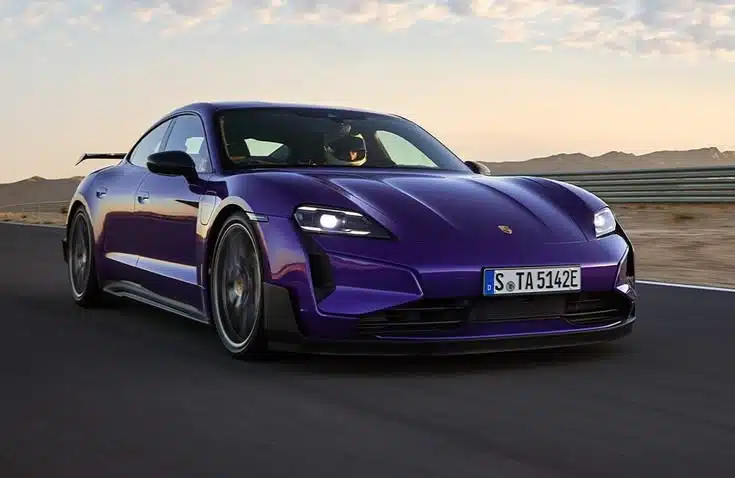
For a long time, the “petrolhead” community looked at electric vehicles with a mix of curiosity and deep-seated skepticism. We were told that EVs were the future, but for those of us who grew up with the smell of high-octane fuel and the mechanical symphony of a V12 engine, “the future” looked a little quiet and a lot like a kitchen appliance.
Fast forward to today. As we move through 2026, the conversation has shifted. We aren’t just talking about range and charging ports anymore; we are talking about EV supercar speed that defies the laws of physics. At turboocruiser.com, we’ve spent the year behind the wheel of the most ambitious machines ever built to answer the ultimate question: Are electric supercars 2026 finally better than their internal combustion ancestors?
The Performance Gap: Beyond the Numbers
When you look at a spec sheet in 2026, the gas-powered supercar is starting to look like it’s bringing a knife to a railgun fight. The primary advantage of the best electric performance car is torque—specifically, instantaneous torque.
In a traditional gas car, even a masterpiece like the Ferrari SF90, there is a delay. The gears must downshift, the turbos must spool, and the pistons must reach their power band. In an electric supercar, the power is “always on.” When you bury your right foot, you aren’t waiting for an explosion; you are simply being teleported.
The New Benchmark: EV Supercar Speed
In 2026, the 0–60 mph sprint has become almost trivial for top-tier EVs. We are now seeing production cars consistently hitting the sub-2.0 second mark.
The Rimac Nevera: Continues to set the pace with a 1.74-second 0–60.
The Pininfarina Battista: Offers a similar level of “violence” with a luxurious Italian wrapper.
The Lotus Evija: Proving that weight management in EVs is finally getting under control.
The Ultimate Showdown: Rimac Nevera vs Gas Supercar
To really understand the divide, you have to look at the Rimac Nevera vs gas supercar debate through the lens of a track day. We took a Nevera and a Bugatti Chiron Super Sport to a closed circuit to see where the lines blur.
The Drag Strip (0–180 mph)
This wasn’t even a contest. The Nevera’s four independent motors allow for torque vectoring that no mechanical differential can match. It finds grip where the Bugatti finds wheelspin. By the time the Bugatti’s turbos were fully singing, the Rimac was already three car lengths ahead.
The Corners and Braking
This is where gas cars traditionally held the crown. Batteries are heavy, and weight is the enemy of cornering. However, in 2026, the best electric performance car manufacturers have turned that weight into an advantage. By placing the battery packs inches off the tarmac, the center of gravity is lower than any Lamborghini or McLaren. The “pivoting” feel of a Nevera mid-corner is something you have to experience to believe.
The Emotional Factor: Sound, Vibration, and Soul
If we only judged cars by a stopwatch, the gas car would have died years ago. But we don’t. We judge them by how they make us feel.
The Case for Gas
There is a visceral, primitive satisfaction in a downshift that cracks like a gunshot. The vibration of a flat-plane crank V8 through the seat of your pants is a form of communication. For many enthusiasts at turboocruiser.com, an EV—no matter how fast—still feels a bit like a very high-speed elevator.
The Case for Electric
The “sound” of an electric supercar in 2026 is no longer just a faint hum. Engineers have started tuning the planetary gear sets and the inverter frequencies to create a futuristic, jet-like whistle. It’s a different kind of soul—one that feels like you’re piloting a TIE Fighter rather than a vintage spitfire.

Technology in 2026: Solid-State and Active Aero
The reason electric supercars 2026 have taken such a leap forward is the maturation of battery tech. We are finally seeing the “bleeding edge” of solid-state batteries entering the limited-run hypercar space.
Weight Reduction: Newer packs are 20% lighter than those from 2023, allowing for better agility.
Thermal Management: One of the biggest issues with older EVs was “limp mode” after two hard laps. The 2026 cooling systems allow these cars to run at 100% power for significantly longer durations.
Active Aero: Since EVs don’t need massive front radiators, designers have been able to sculpt air tunnels through the bodywork that would be impossible on a gas car.
Practicality: The 200-mph Daily Driver?
Can you actually live with these things? As a best electric performance car owner in 2026, the infrastructure has finally caught up to the hardware.
Charging Speeds
In 2026, ultra-fast charging stations can pump 350kW into a Nevera, taking it from 10% to 80% in about 18 minutes. It’s not as fast as a gas pump, but it’s close enough for a coffee break.
Maintenance
This is where the EV wins by a landslide. A high-strung Italian V12 requires a team of Swiss watchmakers to maintain. An EV has fewer moving parts. No oil changes, no spark plugs, and—thanks to regenerative braking—your brake pads might last a decade.
The Verdict: Which One Should You Buy?
At the end of our testing for turboocruiser.com, we’ve come to a nuanced conclusion.
If you want the absolute pinnacle of human engineering—the fastest, most technologically advanced way to get from A to B—the electric supercars 2026 are the winners. They are faster, smarter, and easier to live with.
However, if you want a machine that talks back to you, that challenges you to master its mechanical quirks, and that rewards you with a scream that echoes through the hills, the gas-powered supercar still has a place in our hearts.
The good news? In 2026, you don’t have to choose a side forever. We are living in a golden age where both “old school” fire and “new school” lightning are at their absolute peak.
Final Thoughts on the Future
As we look toward 2027 and beyond, the gap will only widen. As battery energy density continues to climb, the weight penalty of EVs will eventually vanish. When that happens, the gas car will move from being a “performance tool” to being a “heritage item”—like a mechanical watch or a vintage sailboat.
For now, we recommend you enjoy the noise while you can, but don’t be afraid to embrace the silence of the EV supercar speed. It’s a rush like nothing else on this planet.
For more deep-dives into the world of luxury performance and the latest automotive news, stay tuned to turboocruiser.com.
Frequently Asked Questions (FAQs)
Are electric supercars faster than gas cars in 2026?
In terms of acceleration and low-end torque, yes. Almost every top-tier EV supercar now out-accelerates its gas-powered counterparts. However, some gas cars still hold an edge in sustained top-speed runs over 250 mph.
Why is the Rimac Nevera so famous?
The Nevera is widely considered the “benchmark” for the Rimac Nevera vs gas supercar argument because it was the first to prove that an electric car could handle as well as it could accelerate. It holds over 20 world records for performance.
Do electric supercars lose value faster than gas ones?
In the past, yes. But in 2026, limited-production EV hypercars are holding their value incredibly well because they are seen as the “pioneers” of a new era, much like the early Ferraris were in the 60s.
Is it hard to find chargers for an EV supercar?
Not anymore. Most luxury hotels, tracks, and high-end restaurants have installed dedicated high-speed “super-charging” hubs specifically for these types of vehicles.