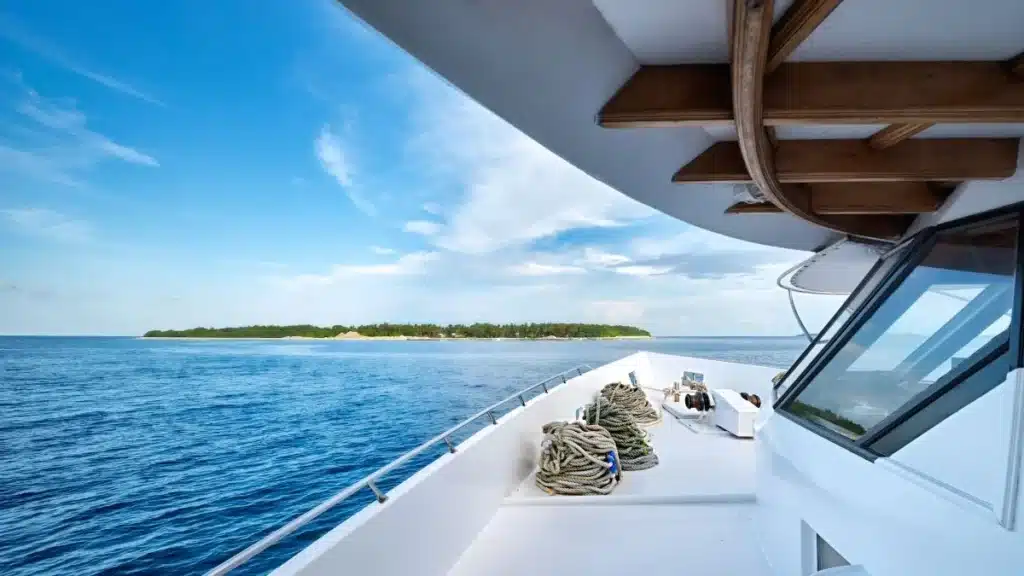
Charter a yacht if you sail fewer than 8 weeks a year, since a $3 million vessel costs $300,000 to $450,000 annually just to keep afloat. Buy only above 12 to 16 weeks of use. In between those two points, fractional ownership often wins. Most owners sail about 54 days a year, which sits below the break-even point.
Chartering vs buying a yacht 2026 comes down to one number most brokers stay quiet about: the weeks you actually spend on the water. At Turboo Cruiser, we ran the real costs to settle this without the sales spin.
Here is the stat that frames it all. The average American boat owner sails just 54 days a year, under eight weeks. So before you wire millions, you want to know where the line falls between a smart buy and an expensive mistake.
Chartering vs Buying a Yacht 2026: Quick Answer for Busy Buyers
The decision regarding chartering vs buying a yacht 2026 comes down to one number most brokers stay quiet about: the weeks you actually spend on the water. At Turboocruiser, we ran the real costs to settle this without the sales spin. The average American boat owner sails just 54 days a year, under eight weeks. So before you wire millions, you want to know where the line falls between a smart buy and an expensive mistake.
The table below shows the split at a glance.
Chartering vs Buying at a Glance
| Factor | Chartering | Buying |
|---|---|---|
| Upfront cost | $0 | $1M to $50M+ |
| Annual cost (60ft) | $100K to $160K (4 weeks) | $300K to $450K |
| Best for | Under 8 weeks a year | 16+ weeks a year |
| Maintenance | Included | 8 to 12% of value yearly |
| Depreciation | None | 40 to 50% lost by year 5 |
| Flexibility | Sail anywhere | Tied to one region |
| Privacy | Good | Highest |
| Overall winner | Most buyers | Heavy users |
Yacht Charter vs Ownership: What Each One Really Costs in 2026
The yacht charter vs ownership gap runs far wider than the sticker price lets on. Owning a yacht costs 10 to 15% of its value every single year, and that is the gentle estimate. The industry calls it the 10% rule, but superyacht owners often watch it climb to 15 or 20% once crew benefits, surprise repairs, and premium marina slips stack up.
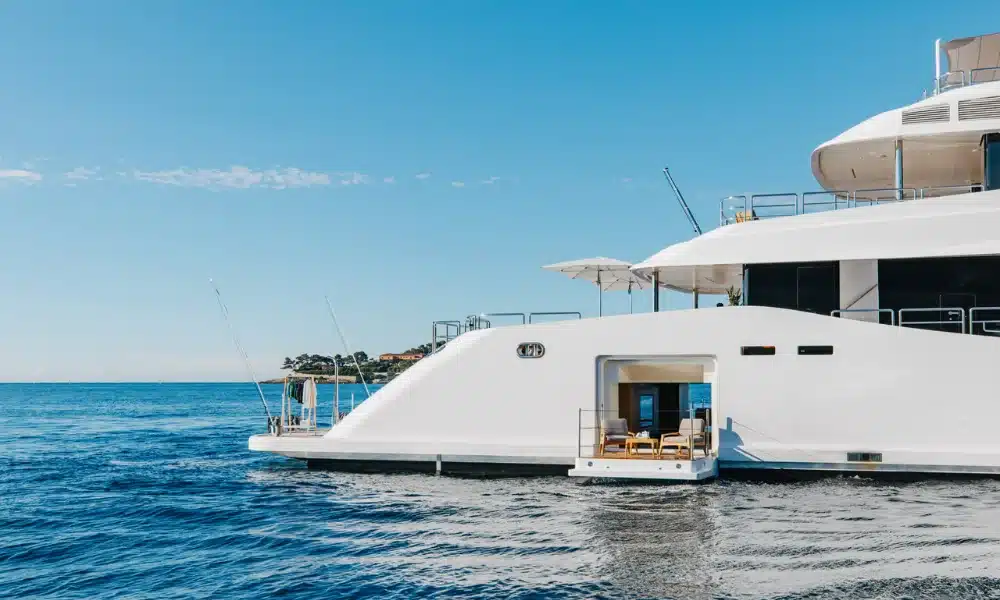
Picture a $3 million, 60-foot motor yacht. Keeping it floating costs roughly $345,000 a year, and you pay that amount whether you step aboard or not. Crew takes the largest bite. A captain earns $5,000 to $25,000 a month. A chef adds another $5,000 to $12,000. A chief stewardess runs $4,100 to $5,800. You cover all of those salaries across twelve months, not only the weeks you happen to be sailing.
Chartering turns that model upside down. You hand over one fee, and it folds in the crew, the fuel, the upkeep, and the insurance. When the trip ends, you walk down the dock with no bills chasing you home.
Annual Ownership Cost Breakdown ($3M, 60ft Yacht)
| Expense | Annual Cost | % of Total |
|---|---|---|
| Crew (captain + 1-2 crew) | $120,750 | 35% |
| Maintenance & repairs | $75,900 | 22% |
| Docking & marina fees | $44,850 | 13% |
| Insurance | $41,400 | 12% |
| Fuel | $37,950 | 11% |
| Miscellaneous | $24,150 | 7% |
| Total | $345,000 | 100% |
Hidden Costs Every First Time Yacht Buyer Misses
A first time yacht buyer usually budgets for crew and fuel, then gets blindsided by everything else. The expense that shocks people most is the major refit due every 5 to 7 years, which can cost 10 to 20% of the original purchase price. Costs also include flag state fees, classification society surveys, and equipment upgrades required by regulators. According to industry standards at Boat International, these hidden fees are what often lead to “buyer’s remorse”.
Other costs hide in plain sight:
- Flag state fees and classification society surveys
- Equipment upgrades that regulators require whether you want them or not
- Moving the yacht between regions, which runs $50,000 to $150,000 in delivery, fuel, and crew transit
- Yacht management firms, which add 15 to 25% on top of operating costs when you would rather not run things yourself
None of these line items appear in the glossy brochure. They appear on your bank statement.
The Break-Even Point in Chartering vs Buying a Yacht 2026
Here is where most guides go vague, and it sits at the heart of the chartering vs buying a yacht 2026 question. Different sources toss out break-even numbers anywhere from 4 weeks to 20 weeks. That kind of spread leaves buyers more confused than when they started, so let us clear it up.
The numbers disagree for one simple reason: each calculation counts different things. A low estimate of 4 to 6 weeks usually pits charter fees against operating costs alone. A higher estimate of 16 to 20 weeks adds depreciation and opportunity cost into the mix, which makes ownership look far pricier and pushes the line upward.
The honest answer lives inside a range. Charter when you use a yacht fewer than 8 weeks a year. Ownership begins to pencil out near 12 to 16 weeks. Past that, owning competes on pure operating math, though it still locks up millions in capital.
Charter vs Own Cost by Weeks Used Per Year
| Weeks/Year | Charter Cost | Ownership Cost | You Save By |
|---|---|---|---|
| 2 | $60,000 | $345,000 | $285,000 (charter) |
| 4 | $120,000 | $345,000 | $225,000 (charter) |
| 8 | $240,000 | $345,000 | $105,000 (charter) |
| 12 | $360,000 | $345,000 | $15,000 (own) |
| 16 | $480,000 | $345,000 | $135,000 (own) |
| 20 | $600,000 | $345,000 | $255,000 (own) |
Look at where the flip happens, right around 12 weeks. And remember, the average owner sails just under 8. So most buyers land squarely in charter country.
Yacht Depreciation and the Real Yacht Investment 2026 Picture
Any talk of yacht investment 2026 needs a reality check, because a yacht rarely behaves like a financial asset. New yachts shed 10 to 20% of their value in the first year. By year five, that loss reaches 40 to 50%. That same $3 million parked in a yacht could have grown significantly in the S&P 500 over the same decade. This “lost return” makes the true price of ownership even higher.
Then comes the cost nobody prints in the sales deck. That same $3 million parked in a yacht could have grown past $8 million in the S&P 500 over the same decade, since the index has averaged 10.33% a year since 1957. So the true price of ownership quietly includes millions in returns you walked away from. That single fact turns chartering is a little cheaper into chartering is dramatically cheaper.
Buying a well-kept yacht that is already 7 to 10 years old softens the blow, since the steepest part of the drop already happened to the first owner. Even so, buying for the math alone rarely holds up.
Can You Offset Costs by Chartering Your Yacht Out?
Plenty of buyers dream of purchasing a yacht, chartering it out, and letting the income cover the bills. Reality lands well short of the pitch. One 48-meter motor yacht brought in €1.59 million in charter income against €1.58 million in expenses. So it barely broke even. A 47-meter sailing yacht covered only 67% of its costs.
Charter income usually offsets 20 to 50% of operating costs when you book 12 to 20 weeks. That helps the budget, but it does not transform a yacht into a money-maker. As brokers like to say, a profitable charter superyacht is still a unicorn. Charter guests also use a yacht hard, so wear adds up fast, and peak charter season tends to clash with the very weeks you wanted the boat for yourself.
Fractional Ownership: The Third Option in Yacht Charter vs Ownership
Most guides frame the yacht charter vs ownership debate as a flat either-or choice. They skip the fastest-growing path in 2026. Fractional ownership, yacht clubs, and subscription programs now open the door for buyers who want skin in the game without the full six-figure carry.
Fractional ownership works in a straightforward way. You buy a share of a yacht, say one-eighth, and you receive a set number of weeks each year. A management company handles the crew, the maintenance, and the scheduling. You split the fixed costs with the other owners, so your annual bill drops sharply.
It fits buyers who:
- Sail somewhere between 4 and 10 weeks a year
- Want steady access to the same vessel
- Like the idea of ownership but not the solo cost
- Prefer no day-to-day management headaches
The trade-offs are honest ones. You share the calendar, so peak dates can collide with another owner. You give up full customization. And you still ride the depreciation curve on your share. Even with those limits, fractional ownership often beats both renting and full ownership for mid-range users.
How to Decide: A Framework for First Time Yacht Buyers in 2026
A first time yacht buyer does not need a broker to begin. You need four honest answers.
- How many weeks a year will you really sail? Answer with your calendar, not your hopes. Under 8 weeks points to chartering. Over 16 leans toward buying. Anything between the two points to fractional.
- One region or many? If you crave the Caribbean in winter and the Mediterranean in summer, chartering lets you match the yacht to the place. Owning ties you to one home port.
- How much do you value customization? If you want your exact layout, your electronics, and your hand-picked crew, ownership delivers what a charter never will. If you simply want a great week on the water, charter handles it.
- What is your capital opportunity cost? Millions tied up in a yacht is money not earning anywhere else. If that lost return bothers you, the scale tips toward chartering.
Which Option Fits You Best
| Your Situation | Best Choice | Why |
|---|---|---|
| Under 8 weeks a year | Charter | Pay only when you sail |
| 8 to 16 weeks | Fractional | Access without the full cost |
| 16+ weeks | Buy | Ownership math finally works |
| Want full customization | Buy | Charter cannot match it |
| Want zero hassle | Charter | Crew and upkeep handled |
| Some ownership, lower cost | Fractional | Shared bills, real stake |
2026 Yacht Market Trends Buyers Should Know
The wider market backs up the shift toward chartering. The global yacht charter market is set to grow from $9.30 billion in 2025 to $9.80 billion in 2026, and crewed charters held a 61.58% revenue share in 2025. Daily charters are the fastest-growing slice, climbing nearly 11% a year as buyers reach for shorter, more frequent trips.
Access keeps widening too. Only about 5 to 7% of high-net-worth individuals own yachts, and roughly 40% of charter clients are sailing for the first time. Around 70% of crewed and cabin bookings now happen online. So the road into yachting in 2026 is broader, more flexible, and far less centered on owning a depreciating asset than it used to be.
Final Thoughts on Chartering vs Buying a Yacht 2026
So how does the chartering vs buying a yacht 2026 call shake out? For most people, chartering takes it. You skip the depreciation, the year-round crew, and the millions in lost investment returns, and you still get the same five-star weeks on the water. Buy only when you will sail 16-plus weeks a year and you truly value a fully customized vessel. If you fall in the middle, fractional ownership hands you a real stake without the full sting.
At Turboocruiser, we keep these guides honest because we do not sell yachts or charters. We just lay out the numbers so you can buy with confidence and leave the regret on the dock.
Frequently Asked Questions
Is it cheaper to charter or buy a yacht in 2026?
Chartering is cheaper for anyone sailing fewer than 12 weeks a year. A 60-foot yacht costs $300,000 to $450,000 a year to own. Four weeks of chartering runs $100,000 to $160,000 in total, with no upkeep or depreciation to carry afterward.
How many weeks per year justify buying a yacht?
Ownership starts to make financial sense near 12 to 16 weeks of annual use. Below that mark, charter fees stay cheaper than the fixed cost of owning. The average owner sails just under 8 weeks, which keeps most buyers in charter territory.
Do yachts hold their value as an investment?
No. Yachts lose 10 to 20% in year one and 40 to 50% by year five. Add the returns you give up by tying up millions, and a yacht works as a lifestyle asset, not an investment.
What is the 10% rule for yacht ownership?
The 10% rule means annual running costs roughly equal 10% of the yacht’s value. A $5 million yacht costs about $500,000 a year to crew, maintain, insure, and dock. Superyachts often push past that, into the 15 to 20% range.
Is fractional yacht ownership worth it?
Yes, for buyers who sail 4 to 10 weeks a year and want a stake without the full cost. You split the fixed expenses and skip the management work, but you do share the calendar and give up custom touches.