The dream of cruising the coastline on your own private vessel is more accessible in 2026 than ever before, but the path to yacht ownership for the first time is littered with hidden reefs. While a $1,000,000 budget sounds like a king’s ransom, in the luxury marine market, it is the “entry-level” sweet spot where smart buyers find incredible value and unprepared buyers find financial ruin.
In this comprehensive first-time yacht buyer guide, we are stripping away the glossy brochure talk to reveal the cold, hard truths about buying a yacht under 1 million. From the real cost of a “bargain” to the 2026 tech you shouldn’t live without, here is everything no one tells you about joining the yachting elite.
1. What $1 Million Actually Buys You in 2026
First, let’s set expectations. In 2026, the yacht market has bifurcated. Inflation and advanced tech have pushed new boat prices up, but a robust second-hand market provides affordable luxury yacht USA options that feel brand new.
The New vs. Used Dilemma
Brand New ($800k – $1M): You are looking at high-end sport yachts or cruising sailboats in the 35–45 foot range. These come with warranties and the latest 2026 hybrid propulsion systems but offer less living space.
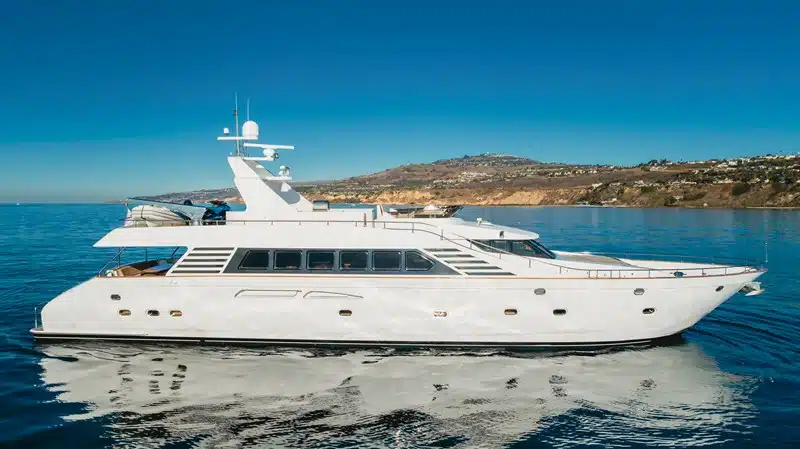
Used ($600k – $950k): This is where you find the best yachts under $1 million 2026 enthusiasts rave about. You can secure a 45–60 foot flybridge motor yacht from a prestige brand like Azimut, Sunseeker, or Princess (typically 5–12 years old). You get the “big boat” feel and multiple cabins, but you inherit the maintenance history.
2. The “10% Rule” is a Myth: The Real Cost of Ownership
Every broker will tell you to budget 10% of the purchase price for annual maintenance. In 2026, this is dangerous advice. For a buying a yacht under 1 million scenario, the actual figure is closer to 15–25% when you account for the “hidden” 2026 variables.
The 2026 Annual Budget Breakdown (Estimated)
| Expense Category | Annual Cost (45ft Yacht) | Why It’s Higher in 2026 |
| Dockage & Slips | $15,000 – $40,000 | Marina space is at a premium in Florida and California. |
| Insurance | $8,000 – $15,000 | Rates have surged due to increased storm frequency. |
| Mechanical/Hull | $20,000 – $35,000 | Specialized 2026 electronics and hybrid parts. |
| Fuel | $10,000 – $30,000 | Depends heavily on your “Hotel Mode” usage. |
| Connectivity | $2,000 – $5,000 | Starlink Maritime and 5G/6G data bundles. |
The Reality Check: If you buy a yacht for $900,000, you should have at least $150,000 in liquid cash available every year to keep her in “Bristol Condition.”
3. The Yacht Buying Checklist: Don’t Skip These Steps
A yacht buying checklist is your only shield against a “lemon.” In 2026, the complexity of onboard systems means a visual inspection is nowhere near enough.
1. The Pre-Purchase Survey (The “Big Three”)
Never, under any circumstances, use a surveyor recommended by the seller. You need three specific inspections:
Hull & Structural: Checking for osmosis in fiberglass or corrosion in aluminum.
Mechanical & Fluids: A certified engine tech must pull oil samples. In 2026, we also check the health of the Lithium-Ion battery banks.
Electrical/Cyber: With the rise of smart-yachts, you need to ensure the NMEA 2000 backbone and navigation software aren’t obsolete.
2. The Sea Trial (Load Test)
Don’t just drive in a straight line. You need to run the engines at Wide Open Throttle (WOT) for at least 15 minutes to check for overheating—a common issue in older vessels under $1M.
3. The “Slip First” Rule
In 2026, it is easier to buy a yacht than it is to find a place to put it. Before you sign the closing papers, ensure you have a signed contract for a mooring or slip. Many first-time buyers in the USA find themselves with a $900k yacht and nowhere to park it.
4. Affordable Luxury Yacht USA: Finding Hidden Gems
If you want the most “bang for your buck,” you need to look at specific regions and models that currently dominate the under-$1M market.
Best Value Models in 2026
Sea Ray L-Class (Used): Excellent for those seeking a reliable American brand with a massive service network.
Beneteau Swift Trawler: The “hybrid” choice for those who want long-range fuel efficiency and modern interiors.
Lagoon 440/450 (Catamaran): If space is your priority, these “condos on the water” offer more square footage than any monohull in this price bracket.
5. Financing and Insurance in the 2026 Market
For a first time yacht buyer guide, financing is often the most stressful part. In 2026, lenders have become more conservative regarding the age of the vessel.
Financing Facts:
Down Payment: Expect to put down 20–30%. Zero-down deals are rare for luxury assets under $1M.
Interest Rates: As of April 2026, marine loan rates for “Good” credit typically range from 6.2% to 7.9%.
Vessel Age: Many lenders won’t finance a boat older than 20 years. If you’re looking at a “vintage” $500k yacht, you might need to pay cash.
The Insurance “Survey” Trap:
In 2026, insurers are requiring a new survey every 3 years for yachts over 10 years old. If your survey shows “minor” structural issues, your premium might double, or coverage might be denied entirely in hurricane-prone zones like Florida.
6. The “Invisible” Costs of Yachting
This is the section yacht ownership first time buyers often skip, but it’s what causes the most “buyer’s remorse.”
Transient Dockage: Your home slip is one thing, but a weekend in Sag Harbor or Newport can cost $200–$500 per night.
The “Yacht Tax”: Everything costs 3x more the moment it’s for a boat. A standard 12V battery might be $150, but a “Marine Grade” version is $450.
Provisioning: Feeding and entertaining 10 guests for a weekend can easily cost $2,000 in high-end catering and fuel.
7. Tech You Need on a $1M Yacht in 2026
If the yacht you are looking at doesn’t have these, you should factor the upgrade cost into your offer:
AI-Assisted Docking: Systems like Volvo Penta’s assisted docking are now common. If you are a first-time buyer, this prevents “docking anxiety” and expensive hull scrapes.
Starlink Maritime: Essential for 2026 remote work and streaming.
Digital Switching: Being able to control your lights, AC, and bilge pumps from your iPhone is no longer a luxury; it’s a 2026 standard for resale value.
Conclusion: Is It Worth It?
Buying a yacht under 1 million is a monumental achievement, but it is a lifestyle commitment, not just a purchase. If you go into it with a clear yacht buying checklist and a realistic understanding of the annual 20% overhead, it will be the most rewarding investment in “happiness” you ever make.
The secret to a successful first purchase is simple: Buy the best-maintained boat you can afford, not the biggest. A pristine 40-foot yacht will provide 10x more joy than a neglected 60-foot project. For more expert advice on navigating the 2026 luxury marine market and to see our latest “Top 10” lists, visit us at turboocruiser.com.
FAQs
Q1: Can I live on a yacht under $1 million?
Absolutely. Many 45–55 foot motor yachts in this price range are designed as “liveaboards” with full galleys, multiple heads (bathrooms), and laundry facilities. Just ensure your marina allows “Liveaboard Status,” as many in the USA have strict limits.
Q2: How much does it cost to “winterize” a yacht?
In northern climates, expect to pay $3,000 – $7,000 for professional winterization and shrink-wrapping. In 2026, climate-controlled indoor storage is the “gold standard” but can cost double.
Q3: Is a catamaran or monohull better for a first-time buyer?
Monohulls are easier to find slips for and generally handle more “traditionally.” Catamarans offer significantly more living space and stability at anchor but can be 50% more expensive to dock due to their width (beam).
Q4: Do I need a captain’s license?
For personal use in the USA, you generally do not need a USCG Captain’s license. however, many insurance companies will require you to complete a “Basic Seamanship” course or have a certain number of “logged hours” with a professional captain before they will bind your policy.
Q5: What is the fastest way to lose money on a yacht?
Deferred maintenance. In the marine world, a $500 repair today becomes a $5,000 repair next month. Keeping up with the “little things” is the only way to protect your resale value.