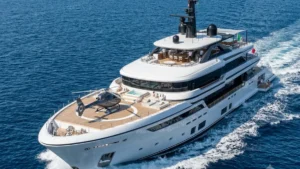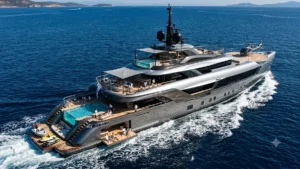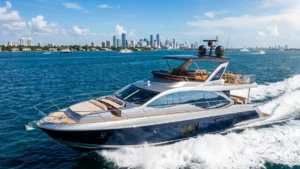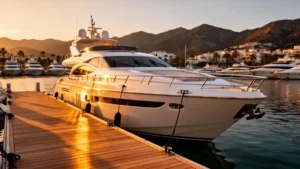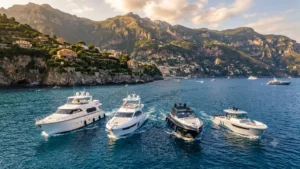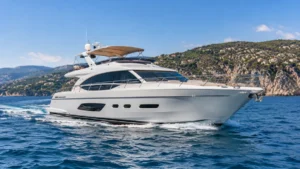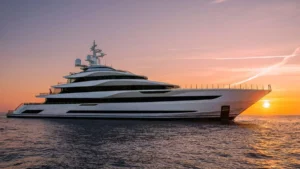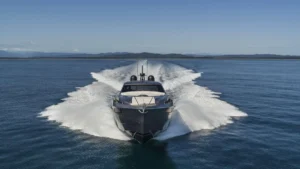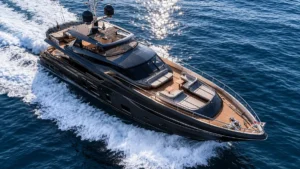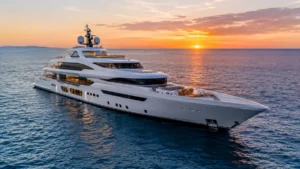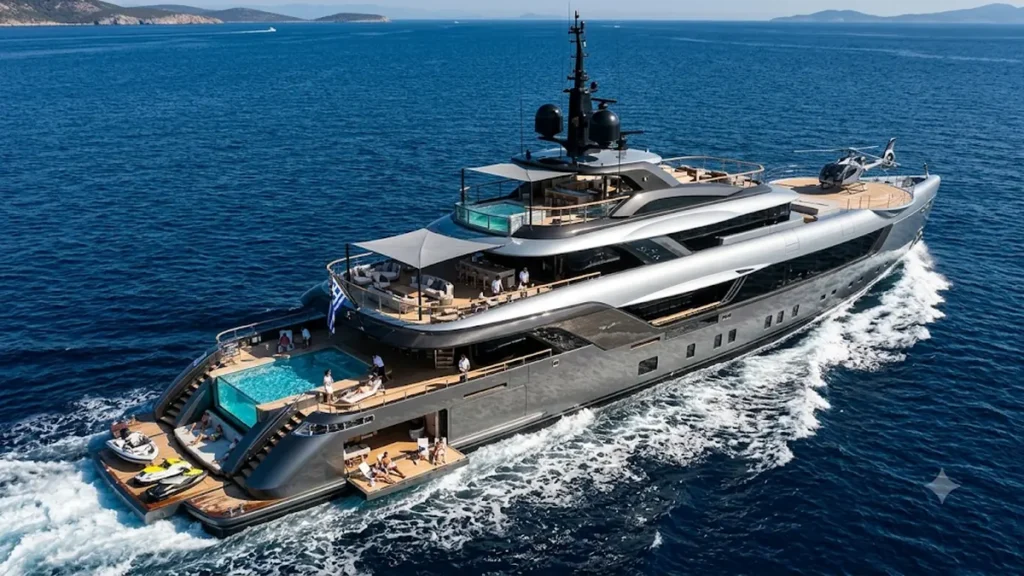
A $40 million yacht can place a buyer in the market for a large luxury motor yacht, often around 50 to 60 metres long. At this level, buyers may find professionally crewed vessels with multiple guest suites, generous indoor and outdoor living areas, sophisticated navigation systems, and equipment for extended cruising.
The market includes both previously owned yachts and new-build opportunities, but the options are not identical. A used yacht may be available for inspection and delivery sooner, while a new project may offer greater control over its layout and finishes.
The purchase price is only one part of the decision. Crew, fuel, insurance, berthing, maintenance, management, and future refits can add millions to the long-term cost of ownership. Buyers should therefore compare each yacht’s condition, technical specification, operating history, and intended use rather than choosing on price or length alone. Listings change, so confirm availability, specifications, and tax details with the appointed broker before making a purchase decision.
This guide explains what a $40 million yacht may offer, how to assess real examples, what its main measurements mean, and which costs and checks deserve attention before purchase.
What Does a $40 Million Yacht Offer?
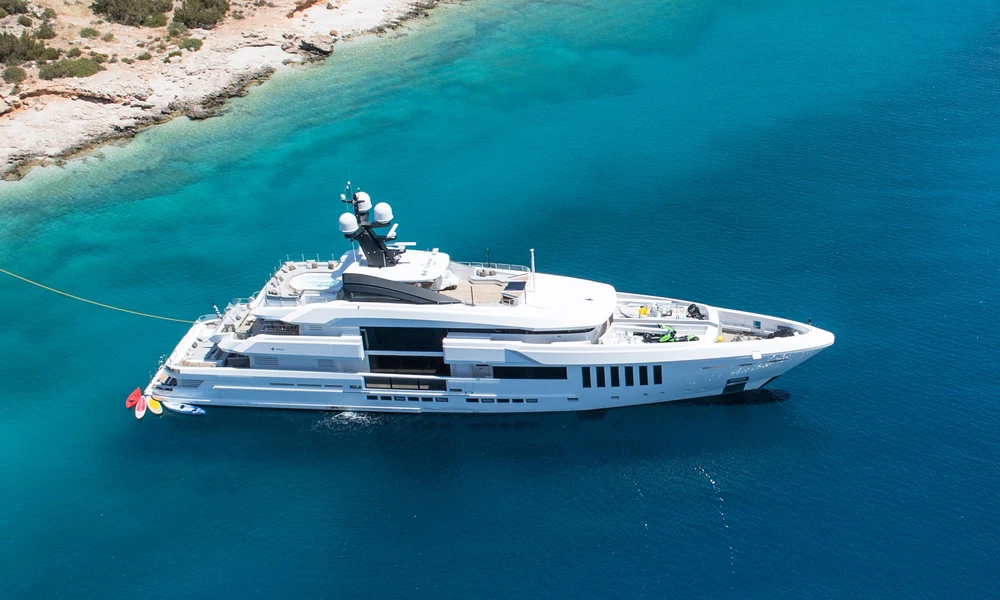
There is no standard specification for a yacht priced at $40 million. Two vessels at a similar asking price can differ in age, builder, interior volume, engine configuration, range, guest capacity, and equipment. Price also depends on market conditions, currency exchange rates, location, tax status, maintenance history, and whether the yacht is offered privately or through a brokerage.
Depending on the individual vessel, features may include:
- An owner’s suite and several guest cabins
- Main salons, dining rooms, and sky lounges
- Professional galley and crew accommodation
- Sun decks, outdoor dining, and swimming platforms
- A beach club or tender garage
- Stabiliser systems and modern navigation equipment
- Gym, sauna, Jacuzzi, pool, or cinema
- Tenders and water-sports equipment
How Large Is a $40 Million Yacht?
Many yachts discussed in this price bracket are approximately 50 to 60 metres long, equal to about 164 to 197 feet. This is a broad market observation, not a fixed price-to-length rule. A newer yacht from a sought-after builder may cost more than an older vessel of the same size. A yacht with a large gross tonnage may also offer more enclosed volume than a longer but slimmer design.
Length is only one measurement buyers should understand:
- Length overall (LOA): The vessel’s total length, measured according to the relevant measurement convention.
- Beam: The yacht’s maximum width.
- Draft: The vertical distance from the waterline to the lowest part of the hull or appendage, as specified.
- Gross tonnage (GT): A measure based on the volume of enclosed spaces. It is not the yacht’s weight.
- Displacement: The weight of the water displaced by the yacht, which is a different measurement from gross tonnage.
Real Examples Around the $40 Million Market
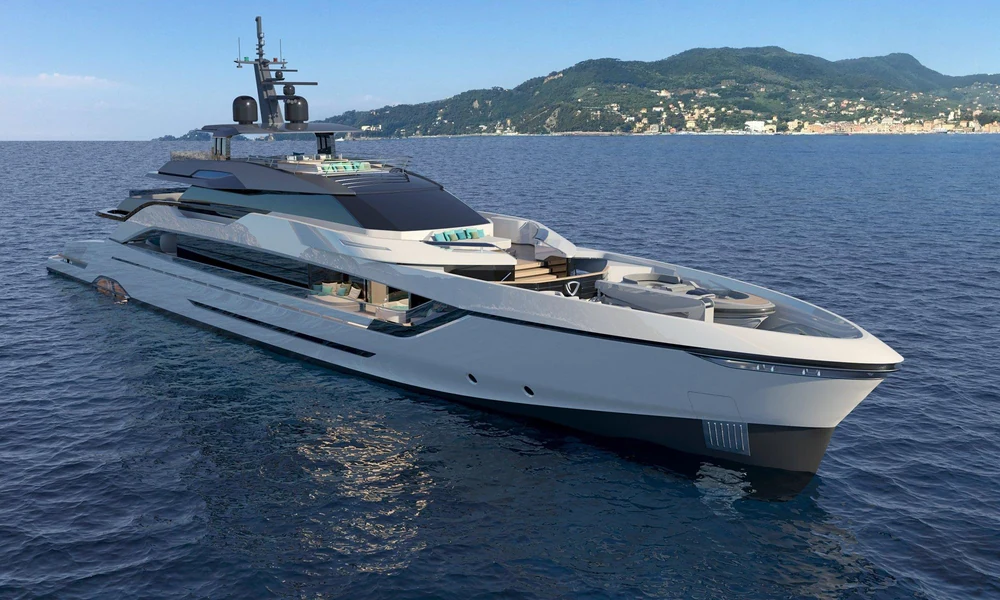
Published listings provide useful examples, but asking prices can change and do not establish the final sale price. The following yachts illustrate different options; they should not be treated as a guarantee that each is currently available at the stated figure. Buyers should confirm current availability, price, tax status, and specification directly with the appointed broker.
NOMAD – Amels 180
NOMAD is a 55-metre Amels 180 delivered in 2019. Amels identifies her gross tonnage as 671 GT, maximum speed as 15.5 knots, and range as 4,500 nautical miles at 13 knots. The shipyard lists Tim Heywood as exterior designer and Bonesteel Trout Hall as the studio responsible for her custom interior. These details make NOMAD a useful example of a large, long-range yacht built on an established semi-custom platform.
Brokerage firm Burgess announced on 26 October 2026 that NOMAD had been listed for sale at €36.45 million. That is an asking price, not evidence of the eventual transaction value. The broker’s announcement also describes the yacht’s beach club and wellness facilities. Buyers should request the latest inventory and technical documents to establish what is included in any current offer.
LAURENTIA – Heesen Yachts
LAURENTIA is a 55-metre steel motor yacht delivered by Heesen in 2017. Heesen publishes a gross tonnage of approximately 740 GT, a beam of 9.6 metres, accommodation for 12 guests, and space for 14 crew. Its published performance figures include a maximum speed of 16 knots and a range of 4,500 nautical miles at 13 knots. The shipyard credits Omega Architects with the exterior design and RADYCA with the interior.
Public brokerage listings have shown different asking prices for LAURENTIA, including figures around €36.5 million and €45 million. This variation is a reason not to present one price as permanent or definitive. Listings can differ by date, broker, tax position, and market status. A prospective buyer should obtain a current written price indication and confirm whether VAT or other taxes are included.
T55 Sportiva – Tankoa Yachts
Tankoa’s T55 Sportiva is a 55-metre design with a published gross tonnage of 499 GT. The shipyard describes a beach club below the waterline, a pool, a spa area, a private suite with an indoor-outdoor terrace, and a fly deck with another pool and sunbathing space. Tankoa’s published under-construction programme lists a T55 Sportiva project for delivery in 2027.
This is best treated as a new-build or in-build comparison, not as an identical alternative to a completed second-hand yacht. Buyers interested in a project should ask whether a particular hull is available, what stage construction has reached, what the contract includes, and which delivery date is contractually guaranteed. A model’s brochure does not prove that every illustrated feature is included in a specific build contract.
Comparing the examples
NOMAD and LAURENTIA are completed yachts with published operating histories and specifications. The T55 Sportiva represents a shipyard project with a different design approach and a stated future delivery programme. Their gross tonnage figures also demonstrate why length alone is insufficient: two yachts measuring about 55 metres can have substantially different enclosed volumes.
Interior Layout and Guest Accommodation
The owner’s suite is usually a principal private space. Depending on the design, it may contain a bedroom, dressing area, bathroom, and a separate seating space. Some yachts provide the owner with a full-beam suite, meaning it extends across much of the vessel’s width. The exact arrangement differs by yacht.
Guest capacity needs careful interpretation. A listing may state the number of guests the yacht can accommodate overnight, while legal limits for people aboard underway can be different. Crew capacity is a separate figure. The flag-state documents, safety certificates, and yacht registration should be checked to confirm the permitted numbers.
Exterior Areas and Onboard Amenities
Outdoor living is central to many large-yacht designs. A sun deck may provide loungers, shaded seating, a bar, or a Jacuzzi. A beach club creates a waterside space near the swimming platform and may include gym or wellness facilities. Some yachts have pools, while others use the same deck area for sunbathing and socialising.
Speed, Range, and Cruising Ability
A yacht’s speed depends on hull design, engine power, displacement, loading, weather, and sea conditions. Large displacement yachts generally prioritise comfortable passage-making and range rather than very high speed. Fast-displacement designs seek a balance between cruising efficiency and higher performance.
The published figures for NOMAD and LAURENTIA provide examples. Amels lists NOMAD with a maximum speed of 15.5 knots and a range of 4,500 nautical miles at 13 knots. Heesen lists LAURENTIA with a maximum speed of 16 knots and a range of 4,500 nautical miles at 13 knots. These are shipyard-published figures, not a promise of the same result in every operating condition.
Buyers planning long passages should ask for fuel-consumption data at different speeds, verified tank capacities, engine and generator records, and the captain’s assessment. A published range figure alone is not enough to plan a crossing. The vessel’s condition, route, forecast, reserve fuel, and emergency options all matter.
What Does It Cost to Own a $40 Million Yacht?

Ownership costs continue after the purchase is complete. A professionally crewed yacht of around 55 metres can require a substantial annual budget, but no single percentage applies to every vessel. Costs depend on crew numbers and employment arrangements, operating region, time at sea, fuel consumption, maintenance condition, insurance terms, berthing location, and whether the yacht is privately used or commercially operated.
A broad industry rule of thumb suggests annual running costs of around 10 to 15 per cent of a yacht’s value. Camper & Nicholsons publishes this range as general guidance, while other yacht-management specialists caution that the percentage is only a starting point and may not fit a particular vessel. For a $40 million yacht, 10 per cent would equal $4 million and 15 per cent would equal $6 million. These are planning illustrations, not a quote or guaranteed annual bill.
A more useful approach is to prepare an itemised budget for the specific yacht.
Crew and employment
Crew costs can include salaries, food, travel, recruitment, training, uniforms, insurance, and other employment expenses. A 55-metre yacht may require a captain, engineers, deck crew, interior staff, and a chef. The number of employees and whether crew members work rotational schedules can materially change the total.
Maintenance and technical work
Routine maintenance includes servicing engines and generators, inspecting electrical and navigation systems, maintaining stabilisers, checking safety equipment, and caring for the hull and exterior finishes. Unplanned repairs can arise even when a yacht has been well maintained. Older vessels may need more extensive work as machinery and onboard systems reach the end of their service lives.
Insurance, berthing, and management
Insurance premiums depend on the insured value, vessel condition, cruising area, usage, claims history, and policy terms. Berthing costs vary by marina, location, season, vessel length, and available services. Professional management may cover accounting, crew administration, technical oversight, compliance, and operational planning.
Checks to Make Before Buying
A yacht purchase should involve experienced independent professionals. The broker can help with the transaction, but the buyer should also appoint a qualified marine surveyor, technical specialists, and a maritime lawyer. Tax advice may be necessary because VAT, import duties, registration, and commercial-use rules vary by jurisdiction. Independent legal and technical advice is essential before any major purchase. This protects buyers.
Key checks include:
- Hull and structure: Inspect for damage, corrosion, coating problems, and evidence of previous repairs.
- Engines and generators: Review service records, operating hours, maintenance history, and test results.
- Technical systems: Examine stabilisers, electrical systems, HVAC, navigation equipment, communications, and safety systems.
- Maintenance records: Check invoices, service reports, class records, and outstanding recommendations.
- Refit history: Identify completed upgrades and work that may be due.
- Sea trial: Assess handling and performance under suitable conditions with the captain and survey team.
- Independent survey: Commission a condition survey and any specialist inspections required.
- Title and ownership: Confirm legal ownership, registration, liens, mortgages, and any claims affecting the vessel.
- Tax status: Establish whether VAT or other taxes have been paid, deferred, or remain due.
- Inventory and contract: Confirm which tenders, toys, spare parts, furnishings, and equipment are included.
- Operating plan: Obtain realistic crew, insurance, berthing, fuel, and maintenance estimates.
Is a $40 Million Yacht Worth Buying?
A yacht at this level may suit a buyer seeking private family travel, extended cruising, entertaining, or access to destinations that can be reached by sea. Whether it is worth buying depends on the owner’s intended use and willingness to manage a complex vessel.
A buyer planning long passages should prioritise range, fuel capacity, machinery condition, storage, and technical support. Someone who expects to entertain frequently may value guest accommodation, outdoor dining, lounges, and a beach club. A buyer who prefers quiet time at anchor may place more importance on stabilisers, tender arrangements, and practical access to the water.
The right choice is the yacht that fits the owner’s plans, not necessarily the longest vessel or the one with the most amenities. A careful comparison of condition, layout, performance, documentation, and total ownership cost is more useful than focusing on the headline price.
Frequently Asked Questions
Can you buy a 55-metre yacht for around $40 million?
Yes, the market has included 55-metre yachts advertised near this price level. NOMAD, for example, was announced for sale at €36.45 million in October 2026. Asking prices change, and buyers must confirm current availability, currency conversion, tax status, and final terms with the broker.
How many people can a $40 million yacht accommodate?
It depends on the vessel’s layout and certification. Some yachts around 55 metres are designed for about 12 overnight guests and a professional crew. Sleeping capacity, maximum permitted persons aboard, and crew capacity are separate figures and must be verified in official documents.
Can a yacht in this price range cross the Atlantic?
Some yachts in this category have published ranges suitable for long ocean passages. NOMAD and LAURENTIA have published ranges of 4,500 nautical miles at 13 knots. A real passage still requires route planning, weather assessment, fuel reserves, vessel checks, and approval from the captain.
Does the purchase price include tenders and water toys?
Not necessarily. The sale inventory and purchase agreement determine what is included. Buyers should obtain a written list of tenders, toys, spare parts, furnishings, and other equipment before signing.
Is annual ownership really 10 per cent of the yacht’s value?
Ten per cent is a commonly quoted rule of thumb, not a fixed formula. Some industry guidance uses a 10 to 15 per cent range, but actual costs depend on the vessel and its operating programme. A yacht-specific budget is essential.
What is more important: length or gross tonnage?
They measure different things. Length describes the yacht’s overall dimension, while gross tonnage measures enclosed volume. Buyers should review both, together with beam, draft, and the general arrangement plan.
Can a privately owned yacht be chartered?
Some yachts can be made available for charter, but this requires the correct registration, compliance, insurance, management, and crew arrangements. Charter income is not guaranteed and should not be assumed when calculating affordability.
Conclusion
A $40 million yacht can provide substantial living space, guest accommodation, professional crew facilities, and equipment for comfortable cruising. Completed yachts such as NOMAD and LAURENTIA show what a 55-metre vessel can offer, while Tankoa’s T55 Sportiva illustrates a new-build design with a different layout and amenity package.
The purchase decision should extend well beyond the asking price. Buyers need to understand gross tonnage, range, guest capacity, condition, maintenance history, tax status, and the cost of keeping the yacht crewed and operational. Published specifications and brokerage listings are useful starting points, but they should be checked against current documents and independent professional advice.
A successful purchase is not simply about finding a yacht advertised for $40 million. It is about selecting a vessel that matches the owner’s intended use and can be maintained safely and responsibly over the long term. Independent verification remains important throughout ownership.