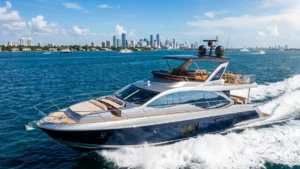
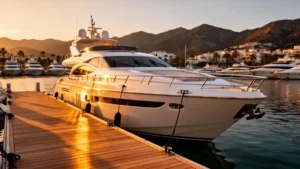
Finding the right sport yacht for sale means comparing more than appearance and speed. Buyers need to consider size, engine power, cruising range, onboard space, condition, and ownership costs. Designs range from open models with large outdoor areas to enclosed hardtop yachts that offer more protection from the weather.
Popular manufacturers include Sunseeker, Pershing, Riva, Azimut, and Riviera, each with different layouts, performance levels, and accommodation. Whether you want a new or pre-owned model, understanding these differences leads to a better decision. This guide covers popular brands, prices, specifications, features, and the checks to complete before purchasing.
What Is a Sport Yacht?
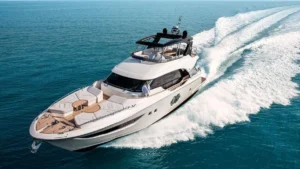
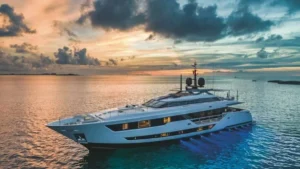
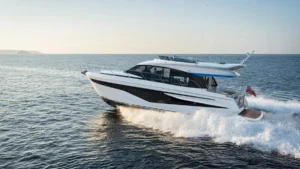
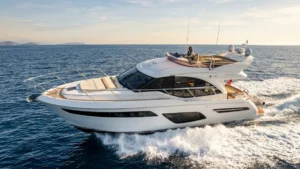
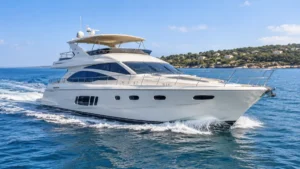
A sport yacht is a motor yacht that combines performance-focused handling with comfortable spaces for relaxing, entertaining, and cruising. Many have sleek exteriors, powerful engines, open cockpits, and well-equipped interiors. Unlike smaller speedboats, larger models may include several cabins, bathrooms, a galley, and a saloon.
Common features include performance-oriented hulls, powerful engines, open or enclosed cockpits, sunbathing and seating areas, navigation and entertainment systems, and onboard accommodation on larger models.
The term has no fixed size or speed definition. Manufacturers and brokers may apply it to different motor yacht designs.
Types of Sport Yachts for Sale
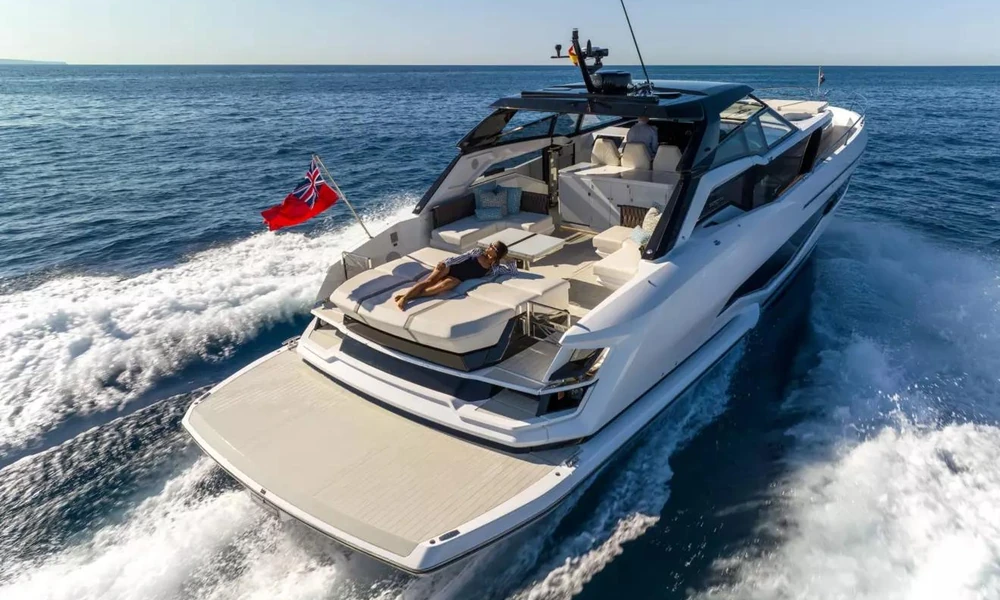
The right layout depends on how you plan to use the yacht, how much outdoor space you want, and the weather you usually cruise in.
- Open sport yachts have large outdoor areas with an open connection between the cockpit and surrounding decks. They suit outdoor cruising and entertaining, but offer less protection from sun, rain, and wind.
- Hardtop sport yachts have a fixed roof over the cockpit or seating area, and some have opening roof sections. They balance outdoor enjoyment with weather protection, though the level of enclosure depends on the windows and doors.
- Coupe sport yachts usually have an enclosed or semi-enclosed main deck and a sleek profile. Large windows provide light and views, making them practical for buyers who want a protected interior.
- Sportbridge yachts add an upper deck with a steering position and seating. This gives guests another place to relax and the operator an elevated view, but the extra structure increases overall height, so check bridge clearance and marina access.
| Yacht type | Main feature | Main consideration |
|---|---|---|
| Open | Large outdoor areas | Less weather protection |
| Hardtop | Fixed roof over cockpit | Roof design and ventilation |
| Coupe | Enclosed or semi-enclosed deck | Interior layout |
| Sportbridge | Additional upper deck | Overall height |
Popular Sport Yacht Brands and Models
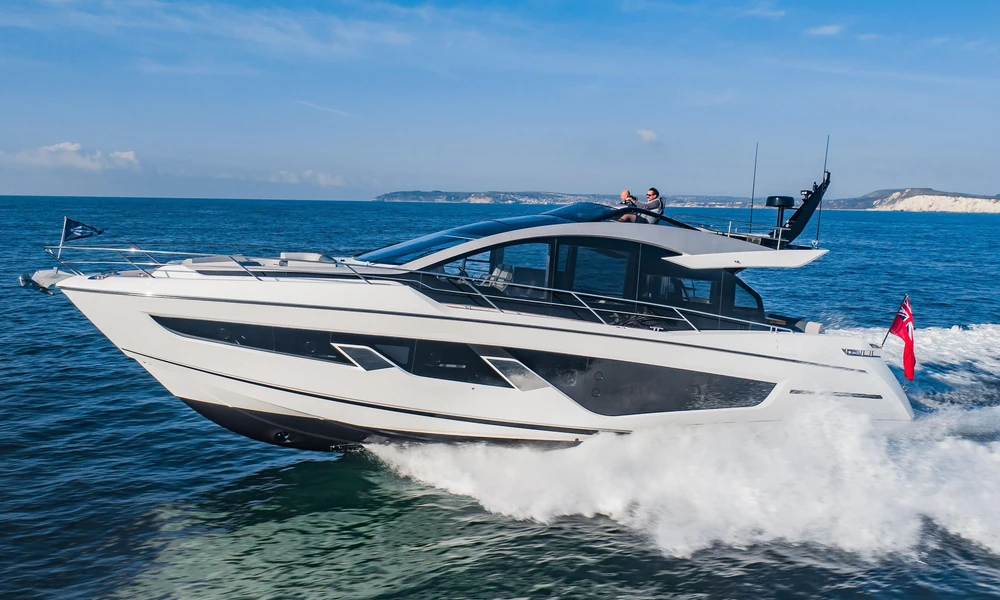
Several established builders offer models designed around speed, comfort, and outdoor living.
Sunseeker is a British manufacturer known for performance-focused motor yachts, with Predator and Sport Yacht ranges. The Sunseeker 65 Sport Yacht has an overall length of 20.50 metres, a maximum beam of 5.10 metres, and a fuel capacity of 3,500 litres. Its published maximum speed is up to 35 knots, depending on engines. It has three cabins, with a four-cabin option.
Pershing is an Italian manufacturer associated with sporty, high-performance designs. The Pershing GTX80 offers large indoor and outdoor living areas. It is 23.99 metres long with a maximum beam of 5.80 metres, a maximum speed of up to 34 knots, and a published cruising speed of up to 28 knots. It has four standard cabins.
Riva is an Italian builder known for distinctive styling and luxury. The Riva 76′ Perseo Super is a sport-fly model 23.25 metres long with a maximum beam of 5.75 metres. Depending on the engines selected, the manufacturer publishes maximum speeds of 32 or 37 knots. It has three guest cabins and a separate crew cabin.
Azimut offers several ranges, including the sport-focused S Series. The Azimut S8 is 24.63 metres long with a maximum beam of 5.55 metres. Its published specifications include three Volvo Penta IPS 1350 engines, a maximum speed of up to 34 knots, and a cruising speed of up to 28 knots. It has four guest cabins and accommodation for two crew.
Riviera is an Australian builder with a Sport Yacht range that combines motor yacht accommodation with layouts designed for cruising and entertaining. Review each model’s length, engine arrangement, fuel capacity, and cabin layout individually.
| Model | Length overall | Published maximum speed |
|---|---|---|
| Sunseeker 65 Sport Yacht | 20.50 m | Up to 35 knots |
| Pershing GTX80 | 23.99 m | Up to 34 knots |
| Riva 76′ Perseo Super | 23.25 m | 32–37 knots |
| Azimut S8 | 24.63 m | Up to 34 knots |
Manufacturer-published figures for specific models and configurations. Actual performance varies with engines, loading, maintenance, and sea conditions.
New vs Used Sport Yachts for Sale
Both options have advantages, and the right choice depends on budget, availability, and condition.
New yachts come from the manufacturer or an authorized dealer, with a choice of finishes, equipment packages, and engines. Benefits include new construction, customization, a manufacturer warranty according to its terms, and no previous ownership history. However, prices are higher, and build-to-order yachts mean waiting for delivery.
Used yachts offer established models at a range of price levels, sometimes with equipment added by previous owners. Review maintenance records, engine hours, repair history, and overall condition. A used yacht may cost less than a comparable new one, but repairs or outdated equipment can raise the total cost.
| Factor | New yacht | Used yacht |
|---|---|---|
| Condition | New from builder | Depends on age and maintenance |
| Price | Generally higher | Varies by model and condition |
| Customization | Options may be available | Existing layout and equipment |
| Warranty | Manufacturer terms | Depends on remaining cover |
| Availability | Stock or build schedule | Depends on current listings |
| Maintenance history | Begins with new ownership | Must be reviewed |
Sport Yacht Sizes
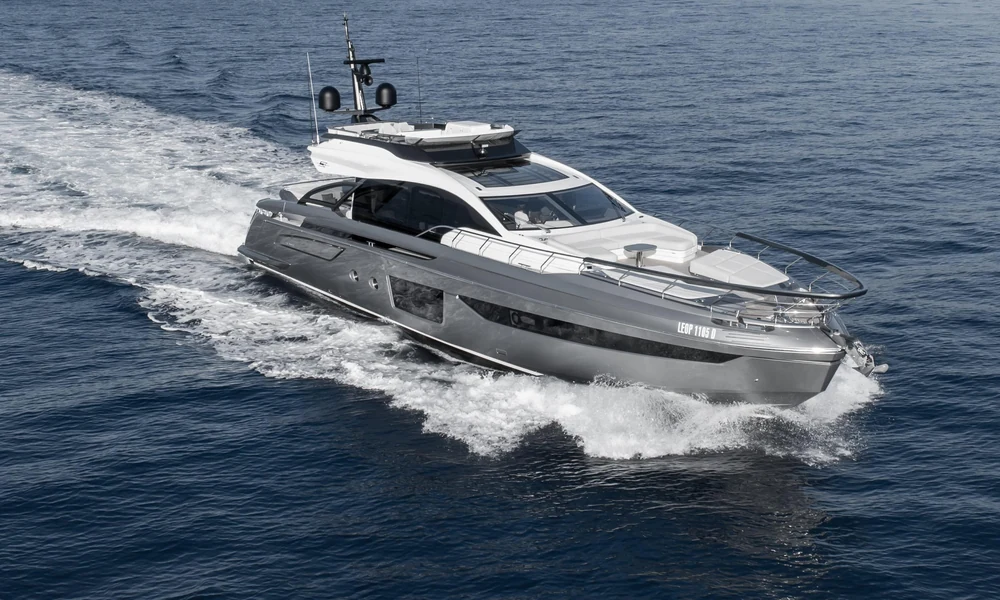
Size affects interior space, accommodation, fuel capacity, and equipment.
- Smaller models suit day trips and short coastal journeys, with a compact cabin, seating area, and basic facilities. Consider storage, passenger capacity, and handling.
- Mid-size models offer more accommodation, such as several cabins, a larger saloon, a galley, and extra outdoor seating, and suit owners who combine day cruising with overnight stays.
- Larger models have more room for guests and equipment, more powerful engines, and bigger fuel tanks, but higher berthing, servicing, insurance, and crew costs.
The right size depends on passenger numbers, cruising distance, marina facilities, and budget. A larger yacht is not automatically a better choice.
Sport Yacht Prices
Prices vary widely with manufacturer, model, length, age, engine configuration, equipment, and condition. New yachts are generally more expensive than comparable older ones, yet used yachts from the same range can still differ greatly in price.
Examples of Used Asking Prices
The examples below are advertised Sunseeker Predator 68 listings in the US market.
| Model year | Yacht model | Advertised asking price | Listing location |
|---|---|---|---|
| 2006 | Sunseeker Predator 68 | $749,000 | Huntington Beach, California |
| 2017 | Sunseeker Predator 68 | $1,349,000 | Holland, Michigan |
| 2018 | Sunseeker Predator 68 | $1,395,000 | Newport, Rhode Island |
These are advertised asking prices, not confirmed sale prices. Listings and prices can change. Confirm tax status and included equipment with the seller.
What Affects Price
- Manufacturer and model: brands and models attract different levels of demand.
- Length and age: larger yachts carry more accommodation and equipment; older ones may be cheaper, depending on condition.
- Engines: type, power, and condition affect value.
- Maintenance and equipment: service records, generators, stabilizers, navigation systems, and upgrades all matter.
- Location: demand, taxes, and transport costs differ between regions.
Costs Beyond the Purchase Price
Plan for fuel and engine servicing, insurance, marina fees, repairs and parts, cleaning and maintenance, winter storage or haul-out, crew if applicable, and registration, taxes, and import costs. Request actual quotations before setting an annual budget.
Specifications to Compare
- Length overall (LOA): the total length under the manufacturer’s measurement standard. It helps with size comparison and marina planning.
- Beam: the width at the widest point, which affects interior space and berth width.
- Draft: the distance from the waterline to the lowest underwater point in the stated loading condition. A deeper draft can limit access to shallow waters.
- Engines and horsepower: compare the whole configuration, not horsepower alone. Condition, maintenance, and propulsion type also matter.
- Maximum and cruising speed: maximum speed is the highest published or tested speed under stated conditions; cruising speed is the speed intended for normal journeys. Cruising speed is more useful for judging fuel consumption and range.
- Fuel capacity and range: capacity is how much fuel the yacht carries; range is how far it can travel under stated conditions. Compare range alongside speed, load, and conditions.
| Specification | Why it matters |
|---|---|
| LOA | Overall size and berth planning |
| Beam | Width and interior space |
| Draft | Water depth requirements |
| Horsepower | Engine power |
| Cruising speed | Normal performance |
| Fuel capacity and range | Storage and estimated distance |
| Cabins | Guest accommodation |
| Hull material | Construction and maintenance |
Features to Look For
The right features depend on how you use the yacht.
- Exterior: cockpit seating and dining, sunbathing areas, a swim platform, a tender garage, a hardtop or opening roof, and outdoor storage.
- Interior: a main saloon, galley, guest cabins, bathrooms, storage, and crew accommodation on some models.
- Navigation and technology: GPS chartplotters, radar, autopilot, VHF radios, and electronic engine displays. Not every model includes the same equipment as standard, so check the individual yacht.
- Comfort and safety: air conditioning, generators, and stabilizers improve comfort. Also check life-saving equipment, fire protection, bilge pumps, emergency communications, and navigation lights.
Performance and Propulsion
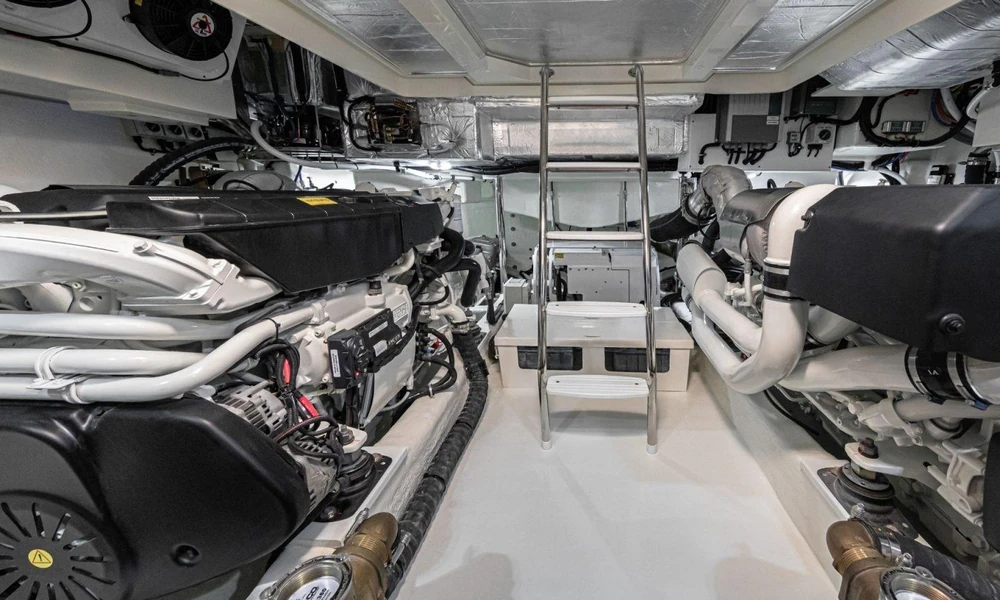
Performance depends on more than horsepower. Hull design, weight, loading, propulsion, and sea conditions all play a part. Many sport yachts have twin engines, while larger or more specialized models may have more.
Common propulsion systems include:
- Shaft drives, which transfer engine power through shafts to the propellers.
- Pod drives, which use steerable units beneath the hull.
- Waterjets, which generate thrust by moving water through a propulsion system.
Each has different handling, maintenance, and operating characteristics.
Higher speeds generally need more power and increase fuel consumption, so compare fuel use at realistic cruising speeds rather than maximum speed. For example, the Sunseeker 65 Sport Yacht publishes a range of up to 750 nautical miles at 10 knots. That is a specific manufacturer figure and should not be expected at maximum speed.
What to Check Before Buying a Used Sport Yacht
- Hull and exterior: look for cracks, damage, and previous repairs, and check the deck, windows, rails, and swim platform. Have a qualified surveyor assess suspected structural damage.
- Engines and mechanical systems: review engine hours, maintenance records, cold-start behavior, oil or fuel leaks, cooling systems, vibration or noise, and diagnostic reports. Engine hours alone do not prove an engine is good or bad; maintenance and operating history matter too.
- Electrical and navigation: test batteries, charging systems, the generator, displays, and lighting, and confirm the equipment matches the seller’s description.
- Interior: inspect cabins, galley, bathrooms, and upholstery for water damage, dampness, unusual smells, and faulty equipment.
- Records: ask for service invoices, repair records, engine and generator documents, and details of previous refits.
- Ownership and documents: verify the seller’s authority to sell, registration papers, hull identification, recorded loans or liens, tax and VAT status, and compliance or import documents. Requirements depend on the country of registration and use.
An independent pre-purchase survey can find problems that a normal viewing misses. Agree the scope and ask whether separate engine, electrical, or specialist inspections are needed. A survey does not guarantee against future faults.
A sea trial lets you evaluate the yacht in the water: engine starting and operation, steering and handling, acceleration, vibration or noise, navigation and control systems, and the generator. Where appropriate, make the survey and sea trial conditions of the purchase agreement, with clear terms for handling unsatisfactory findings.
Where to Find Sport Yachts for Sale
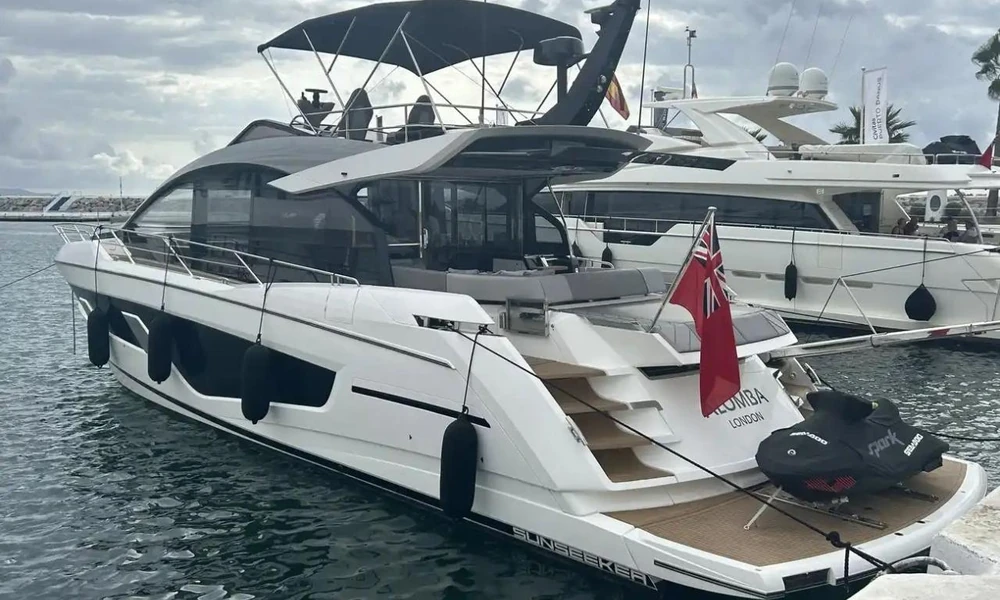
- Brokerage websites such as YachtWorld, YachtBuyer, and TheYachtMarket list yachts by manufacturer, location, and price.
- Manufacturer websites show current models, official specifications, layouts, and authorized dealers, which helps when comparing new and pre-owned versions of the same model.
- Brokers and dealers arrange viewings, relay seller information, and guide the purchase. Ask for the full specification, equipment list, tax status, and maintenance records before offering.
- International listings widen your choice, but check location, currency, taxes, registration, and transport. A yacht advertised abroad may involve extra costs before you can use it at home.
How to Buy a Sport Yacht
- Set your budget, including the purchase price and ownership expenses.
- Choose a type: open, hardtop, coupe, or sportbridge.
- Select a size based on passengers, accommodation, range, and marina access.
- Compare models and equipment.
- Find listings, new and used.
- Contact the seller or broker for details and records.
- Arrange a viewing of the exterior, interior, and equipment.
- Make a written offer with any conditions.
- Arrange a survey and sea trial with independent professionals.
- Complete legal checks on ownership, title, tax status, and documents.
- Finalize the purchase and transfer.
- Arrange insurance and registration before operating the yacht.
Contracts, deposits, taxes, and registration differ by country, so get legal and professional advice before completing the transaction.
How to Choose the Right Sport Yacht
| Intended use | Features to prioritize |
|---|---|
| Day trips | Cockpit space, seating, handling |
| Weekend cruising | Cabins, galley, storage |
| Longer journeys | Range, fuel capacity, comfort |
| Entertaining guests | Deck layout, seating, saloon |
| Performance boating | Engine configuration, hull design |
| Controlled budget | Maintenance history, fuel use, berthing costs |
Do not choose on appearance or maximum speed alone. Consider the full specification, condition, running costs, and the facilities at your usual marina.
Conclusion
Finding the right sport yacht for sale requires careful comparison of models, prices, specifications, and ownership expenses. Manufacturers such as Sunseeker, Pershing, Riva, Azimut, and Riviera offer different designs for different needs.
New yachts provide current models and customization, while used yachts offer wider price choice and established designs, but need careful checks of engines, hulls, records, and documents. Before buying, compare cruising range, layout, equipment, and running costs, and arrange an independent marine survey and sea trial to make a better-informed decision.
Frequently Asked Questions
Does a sport yacht’s advertised range apply at maximum speed?
No. Published range figures are tied to a particular speed and test conditions. They can change with engine speed, fuel load, passenger weight, and sea conditions. Always check the conditions behind the manufacturer’s range figures.
Can a sport yacht be used for overnight stays?
Yes, many sport yachts have cabins, bathrooms, and a galley, but facilities vary by model. Check the sleeping spaces, freshwater capacity, storage, and onboard systems before buying.
Do high engine hours mean a used sport yacht is in poor condition?
Not necessarily. A yacht with more engine hours and proper servicing can be in better condition than one with fewer hours and neglected maintenance. Review the service records and arrange a professional inspection.
Are optional features included in a sport yacht’s asking price?
Not always. Stabilizers, upgraded navigation systems, additional generators, and special finishes may be optional. Ask for an itemized equipment list and confirm exactly what the asking price includes.
Can an older sport yacht be a better purchase than a newer one?
Yes. An older yacht with a documented service history and fair price may be a better purchase, while a newer model may still need costly repairs. Compare the overall condition and ownership costs rather than age alone.
Should I arrange a marine survey before or after making an offer?
A common approach is to submit a written offer subject to a satisfactory survey and sea trial, with the conditions stated in the purchase agreement. Agree on the exact process with your broker or legal adviser.
Can two sport yachts with the same model name have different specifications?
Yes. Engine options, equipment packages, layouts, refits, and production-year changes can create differences. Compare each yacht’s individual build details and equipment list before purchasing.
Is maximum passenger capacity the same as overnight capacity on a sport yacht?
No. Maximum passenger capacity and sleeping capacity are separate specifications. Check the accommodation details and passenger limits before planning trips with guests.