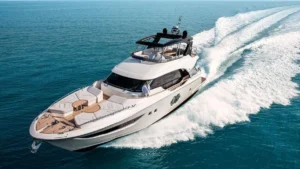
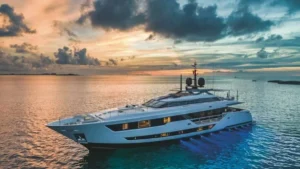
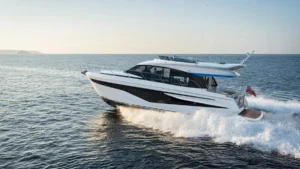
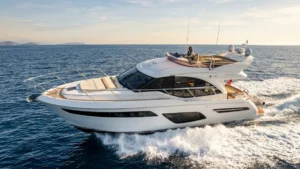
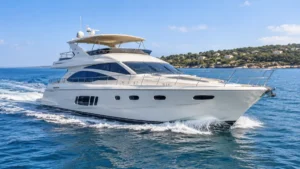
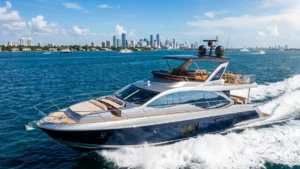
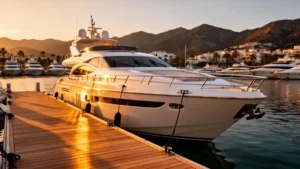
A 70 ft yacht offers space for comfortable cruising, overnight stays, and entertaining guests. It is large enough for several cabins, indoor living areas, and outdoor spaces, although its features depend on the manufacturer and design. Buyers can choose from motor yachts, flybridge yachts, sport yachts, and long-range explorer yachts.
A 70-foot yacht measures 21.34 metres, but actual dimensions differ between models. Some offer more living space, while others focus on speed, fuel efficiency, or longer journeys. Before buying, compare dimensions, price, cabin arrangement, engine power, cruising range, and running costs. This guide explains each of these and what to consider when choosing.
What Is a 70 Ft Yacht?
A 70 ft yacht is a recreational vessel of around 70 feet (21.34 metres), designed for private cruising, family trips, entertaining, fishing, or longer journeys. A motor yacht uses engines for propulsion, a sailing yacht uses sails with an auxiliary engine, and explorer yachts focus on extended cruising, storage, and practical systems.
Exact features depend on the model. Some have four guest cabins and separate crew accommodation, while others use different layouts to provide larger living areas. A model name may also differ from the actual length overall, so rely on the manufacturer’s specifications rather than the name.
70 Ft Yacht Dimensions and Specifications
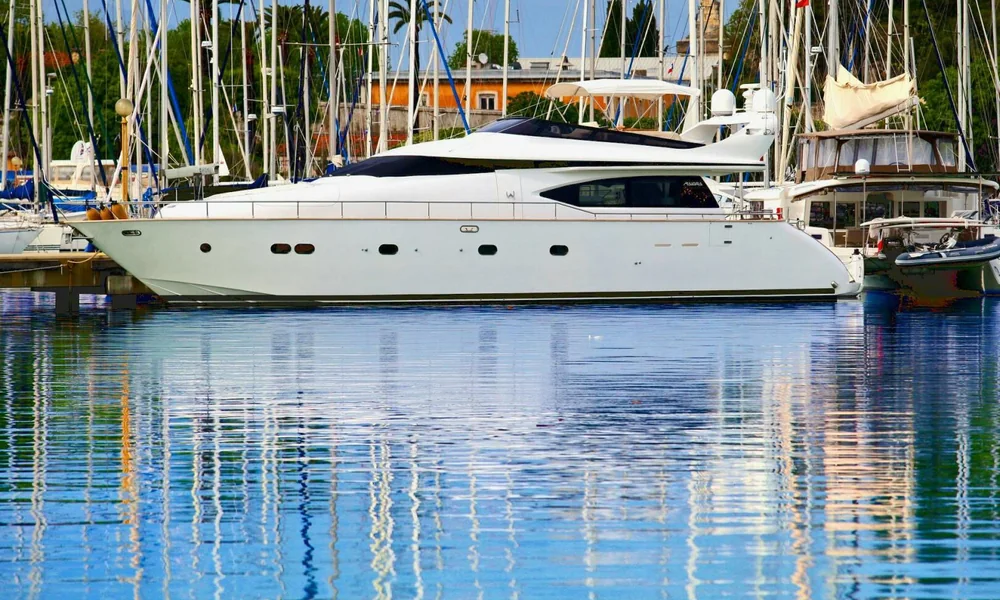
Dimensions affect interior space, performance, water requirements, and marina options.
- Length overall (LOA): measured from the foremost to the rearmost point, including parts specified by the manufacturer. A yacht advertised as a 70-footer may have an actual LOA above or below 70 feet.
- Beam: the maximum width. A wider beam gives more interior space and larger cabins but can limit marina berth options.
- Draft: the distance from the waterline to the lowest point. A deeper draft means fewer options in shallow marinas and coastal areas.
- Air draft: the height above the waterline, which matters under bridges and overhead structures. Include antennas and other installed equipment when checking clearance.
- Displacement: the yacht’s weight when afloat. It affects performance, handling, and fuel use, as heavier yachts may need more power to reach higher speeds.
| Dimension | Why it matters |
|---|---|
| Length overall | Marina berth and storage |
| Beam | Interior space and berth fit |
| Draft | Water depth requirements |
| Air draft | Bridge clearance |
| Displacement | Performance and handling |
Types of 70 Ft Yachts
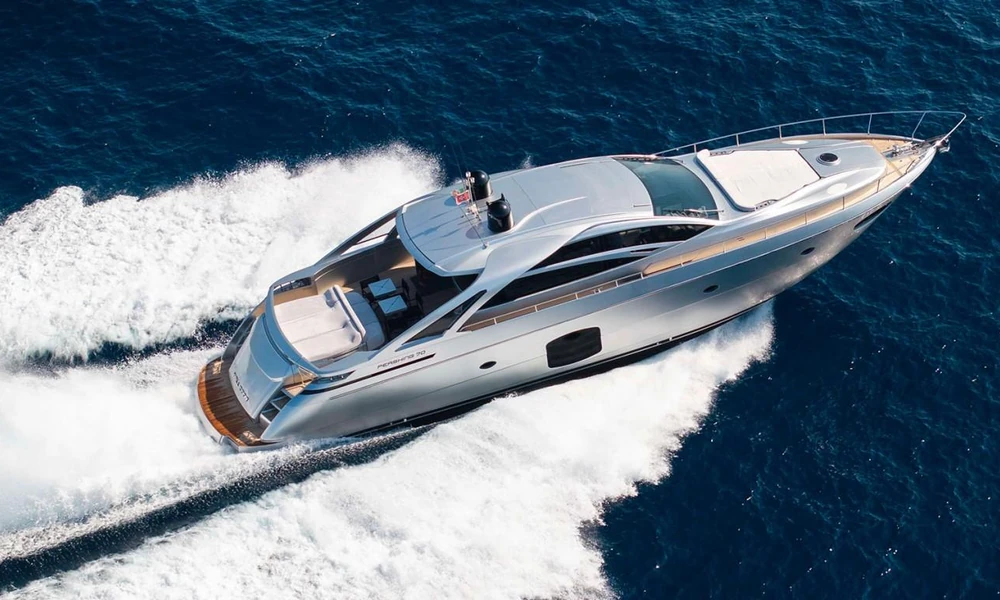
- Motor yacht: engines as the main propulsion, with indoor living areas, cabins, a galley, and outdoor seating. Suits owners who want powered cruising and comfortable accommodation.
- Flybridge yacht: an additional upper deck with a helm station and seating, giving better visibility and extra space for relaxing or entertaining. Some have enclosed upper-deck areas.
- Sport yacht: performance and modern styling, with powerful engines and hulls built for speed. Consider fuel consumption, cruising speed, and interior space.
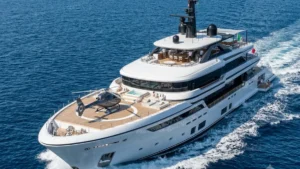
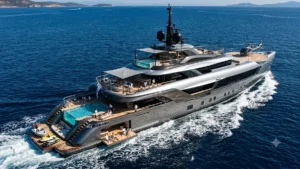
- Expedition yacht: built for longer journeys, with greater fuel capacity, storage, and equipment. Verify range from actual specifications rather than appearance or length.
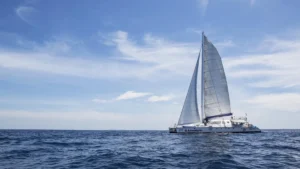
- Sailing yacht: sails as the main propulsion, with an auxiliary engine. Rigging, sails, keel, and maintenance differ from a motor yacht.
- Power catamaran: two hulls joined by a wide main structure, offering large living areas and different stability and handling. The wide beam needs attention when choosing a berth.
Popular 70 Ft Yacht Models
Several manufacturers offer models around this size. Compare individual models rather than assuming they offer the same features.
Azimut Fly 70
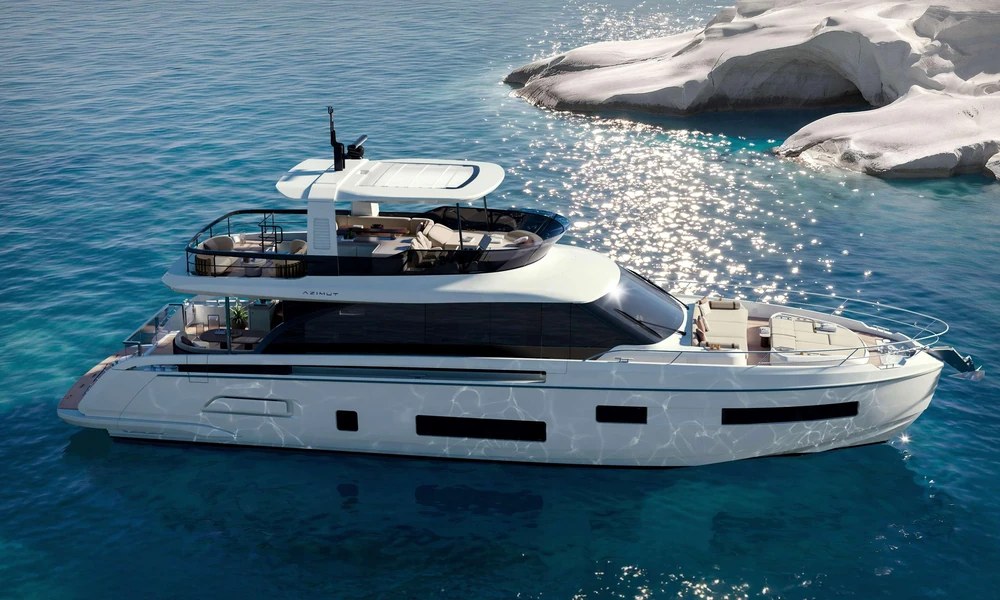
The Azimut Fly 70 is a luxury flybridge motor yacht with four guest cabins and one crew cabin. The manufacturer lists an overall length of 21.47 metres (70 ft 5 in) and a maximum beam of 5.46 metres.
It uses two Volvo Penta IPS 1350 engines rated at 1,000 horsepower each, with a published maximum speed of up to 31 knots and a stated cruising speed of up to 25 knots under the manufacturer’s test conditions. Fuel capacity is 3,900 litres, and the draft is published as approximately 1.56 metres at full load, including propellers.
Palm Beach 70
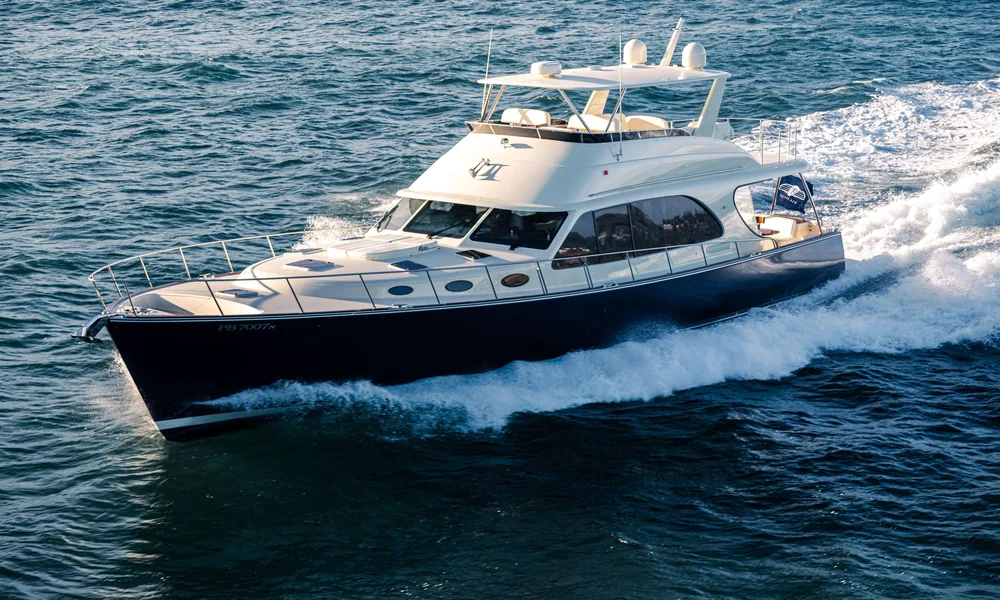
The Palm Beach 70 comes in Sedan, Flybridge, Extended Flybridge, and Skylounge configurations. Its model name does not represent its exact length: the manufacturer lists an LOA of 76 ft 3 in and a length on deck of 69 ft 8 in.
The standard engines are two Volvo IPS 1200S at 900 horsepower each, with optional Volvo IPS 1350S and Volvo D13 shaft-drive configurations. Performance and range depend on the engine option. The IPS 1350S configuration has a stated range of 933 nautical miles at 21 knots under the manufacturer’s test conditions.
| Feature | Azimut Fly 70 | Palm Beach 70 |
|---|---|---|
| Actual LOA | 70 ft 5 in | 76 ft 3 in |
| Beam | 17 ft 11 in | 19 ft 1 in |
| Design | Flybridge | Sedan and flybridge options |
| Cabins | 4 guest + 1 crew | Depends on layout |
| Standard engines | 2 × Volvo IPS 1350 | 2 × Volvo IPS 1200S |
| Main focus | Luxury and performance | Performance and configuration choice |
Manufacturer-published figures. Engine options, equipment, and test conditions can change performance.
Interior and Layout
The interior provides space for sleeping, dining, cooking, and relaxing, but the layout depends on the design and the owner’s chosen configuration.
- Main salon: the central indoor living area, often with sofas, tables, and large windows. Some yachts connect it to the cockpit to create a larger entertaining space.
- Master cabin: the main private sleeping area, which may include a double bed, storage, seating, and an en-suite bathroom. Position and size vary.
- Guest cabins: sleeping space for family and visitors, with double or twin beds. Check the number of sleeping places separately from the number of cabins.
- Galley and dining area: the kitchen, with cooking equipment, refrigeration, and storage. Some layouts put it on the main deck, others on the lower deck.
- Crew quarters: separate accommodation for those operating and maintaining the yacht. Size and number depend on the design and intended use.
- Outdoor areas: a flybridge, cockpit, foredeck seating, and swim platform for relaxing and dining.
How many people can sleep on a 70 ft yacht? There is no fixed capacity. It depends on the number of cabins, bed arrangements, and crew accommodation, so check the manufacturer’s berth information for the specific model.
Performance, Speed, and Range
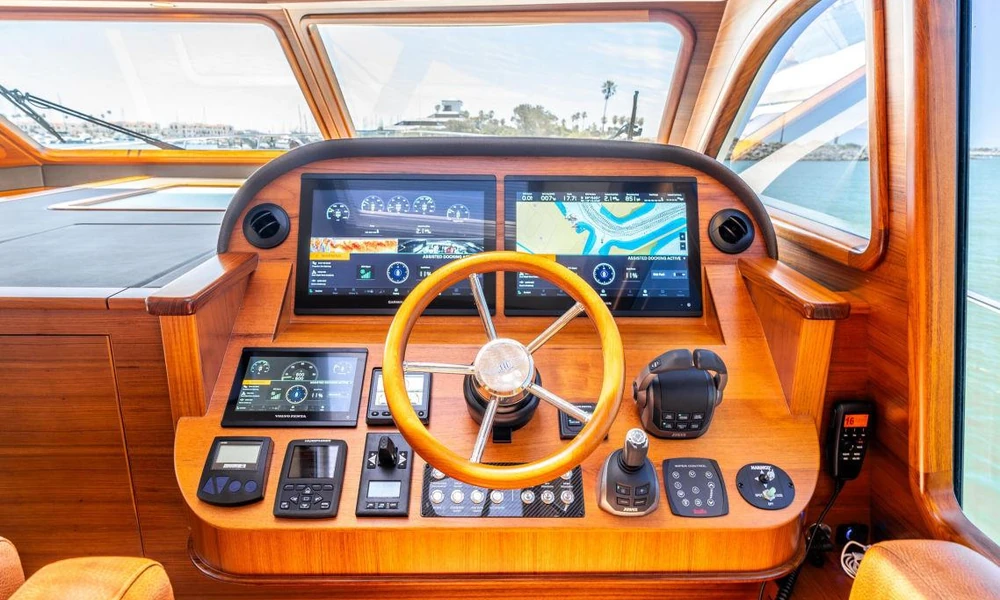
Performance depends on hull design, engine power, displacement, fuel capacity, and operating conditions, so two yachts of similar length can have very different speed and range.
Speed. Some performance-focused 70 ft motor yachts exceed 30 knots, and the Azimut Fly 70 publishes a maximum of up to 31 knots. Maximum speed differs from cruising speed, which is used for normal journeys and affects fuel consumption and range.
Range. Range is the distance a yacht can travel under specified conditions. Fuel capacity alone does not determine it, as engine consumption, speed, hull condition, load, and weather also matter. The Palm Beach 70’s 933-nautical-mile figure is a manufacturer’s test result, not a guarantee in every situation.
Engines. Many 70 ft motor yachts use twin diesel engines with shaft-drive or pod-drive propulsion. The setup affects performance, maintenance, fuel use, and handling, so compare engine specifications and service records.
| Performance factor | What it tells buyers |
|---|---|
| Engine power | Available propulsion power |
| Maximum speed | Highest published speed under test conditions |
| Cruising speed | Speed for normal cruising |
| Fuel capacity | Amount the tanks can hold |
| Fuel consumption | Fuel used in operation |
| Range | Estimated distance under stated conditions |
How Much Does a 70 Ft Yacht Cost?
Price depends on the manufacturer, age, condition, equipment, engine configuration, and customization. New and used yachts differ in equipment, warranty, and condition, and used prices also reflect maintenance history, engine hours, repairs, and the market.
As a market reference, a 2024 Azimut 70 has been advertised at approximately $2.499 million. This is an individual asking price, not a market value or confirmed sale price. A broader snapshot of 70–80 ft listings reported a median asking price of approximately $1.79 million in November 2026, but it mixes sizes, brands, ages, and designs, so it should not be read as the price of a 70 ft yacht specifically.
What affects price:
- Manufacturer: designs, materials, and equipment differ.
- Age: newer yachts may have updated technology.
- Condition: poor maintenance reduces value and raises future costs.
- Engines: type and power affect the purchase price.
- Customization: special interiors and optional equipment increase costs.
- Refit history: repairs and upgrades influence value.
When comparing prices, check whether taxes, delivery, optional equipment, and other charges are included.
Cost of Owning and Maintaining a 70 Ft Yacht
The purchase price is only one part of ownership.
- Fuel depends on engine size, cruising speed, operating hours, and fuel prices. Regular high-speed use consumes more than lower-speed cruising.
- Maintenance and repairs include engine and generator servicing, hull cleaning, antifouling, and equipment checks. Older yachts may need more repairs and parts.
- Marina fees depend on location, berth size, season, and facilities.
- Insurance depends on value, age, cruising location, coverage, and use. Get a quotation before completing the purchase.
- Crew costs depend on the number of crew, employment arrangements, and operating schedule.
- Refits and unexpected costs, such as major repairs, electronics upgrades, interior work, and equipment replacement, should be budgeted separately from annual operating costs.
| Expense | Main cost factors |
|---|---|
| Fuel | Engine use and cruising speed |
| Maintenance | Age and condition |
| Insurance | Value and cruising area |
| Marina fees | Location and berth size |
| Crew | Number of employees and salaries |
| Refits and repairs | Scope of work and equipment condition |
No single annual figure applies to every 70 ft yacht, so obtain estimates for the specific vessel, location, and intended use.
Do You Need a Crew?
A 70 ft yacht may be run by its owner or with professional crew, depending on the design, equipment, local rules, and intended use. A captain may handle navigation, docking, safety, and overall operation, while other crew help with maintenance, cleaning, guest service, and food preparation. Some yachts have separate crew cabins, while others have limited crew accommodation.
Consider whether you can manage the yacht yourself or need professional help, and check the licensing and operating requirements for the yacht’s flag and cruising area.
What to Check Before Buying
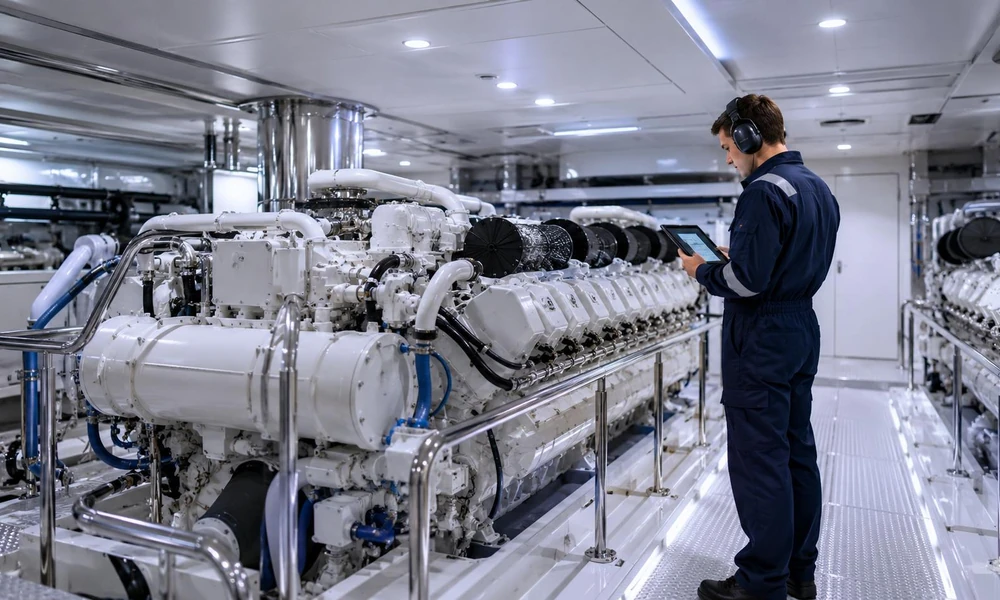
A proper inspection can reveal problems that lead to expensive repairs.
- Actual dimensions: confirm LOA, beam, draft, and air draft to see whether the yacht fits your marina and planned routes.
- Maintenance records: ask for engine servicing, generator maintenance, repairs, and equipment replacements.
- Engines and generators: have qualified professionals inspect them, checking hours, service history, leaks, warning systems, and unusual wear.
- Hull and structure: an independent marine surveyor should inspect the accessible hull, deck, structure, and systems. An underwater inspection may also be needed.
- Navigation and safety equipment: check navigation electronics, communications, fire equipment, and bilge pumps.
- Cabin and passenger capacity: check guest cabins, berths, bathrooms, and crew spaces rather than relying on the model name or advertised capacity.
- Marina compatibility: confirm the yacht fits the intended berth, including length, beam, draft, and overhead clearance along planned routes.
- Survey and sea trial: a survey gives an independent assessment of condition, and a sea trial lets you evaluate handling, engines, steering, and systems underway. For an expensive purchase, add separate engine inspections and other specialist checks where needed.
Is a 70 Ft Yacht Right for You?
A 70 ft yacht suits buyers who want more accommodation and living space than smaller boats provide. It may be a good fit for families who spend time on the water, owners who want several guest cabins, people who often entertain, buyers interested in extended cruising, and those with the budget for maintenance and professional crew.
It also needs suitable docking, regular maintenance, and careful financial planning. If you do not need several cabins or large outdoor spaces, a smaller yacht may be easier and cheaper to run. Compared with 60 ft and 80 ft yachts, a 70-footer sits in the middle on space, docking needs, and running costs, though all three depend heavily on the model and usage. A larger yacht does not automatically offer better value, so choose the size that matches your requirements and budget.
Conclusion
A 70 ft yacht offers a combination of accommodation, indoor living space, outdoor areas, and cruising options, but its dimensions, speed, range, cabin arrangement, and price depend on its design and manufacturer.
Before choosing, compare actual specifications, engine setup, fuel capacity, and maintenance history, and factor insurance, docking, crew, and future repairs into your budget. The right yacht is not necessarily the largest or fastest. It is the one that matches your intended use, budget, and preferred cruising lifestyle.
Frequently Asked Questions
How much does a 70 ft yacht cost?
It depends on the manufacturer, model year, condition, equipment, and customization. Used 70-foot yachts can have very different asking prices, so compare similar models and current listings.
How wide is a 70 ft yacht?
There is no standard width. The Azimut Fly 70, for example, has a maximum beam of 5.46 metres.
How deep is the draft?
Draft varies by model, hull design, and loading. The Azimut Fly 70 has a published draft of approximately 1.56 metres at full load, including propellers.
How fast can a 70 ft yacht travel?
It depends on engine power, hull design, weight, and sea conditions. Some motor yachts in this size range exceed 30 knots, but actual performance varies.
How much fuel does a 70 ft yacht hold?
Capacity differs between models. The Azimut Fly 70 has a published fuel capacity of 3,900 litres, so check the specifications of the specific model.
Can a 70 ft yacht cross an ocean?
Some are designed and equipped for ocean cruising, while others are intended mainly for coastal trips. It depends on hull design, stability, fuel range, safety equipment, weather planning, and crew experience.
Does it need a special marina berth?
It needs a berth that fits its actual length and beam, with suitable depth and clearance. Confirm the marina’s requirements before purchasing.
Is a 70 ft yacht a superyacht?
Usually not. The term has no single definition, but it is most often applied to yachts of about 24 metres (around 79 feet) and above. A 70-footer is typically classed as a large motor yacht, though some sellers may use the word more loosely.
What is the difference between length overall and length on deck?
Length overall measures the full length, including projecting parts such as platforms, while length on deck is measured along the deck. They can differ noticeably, as with the Palm Beach 70, so check both measurements when comparing yachts.