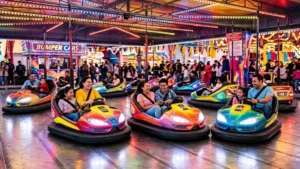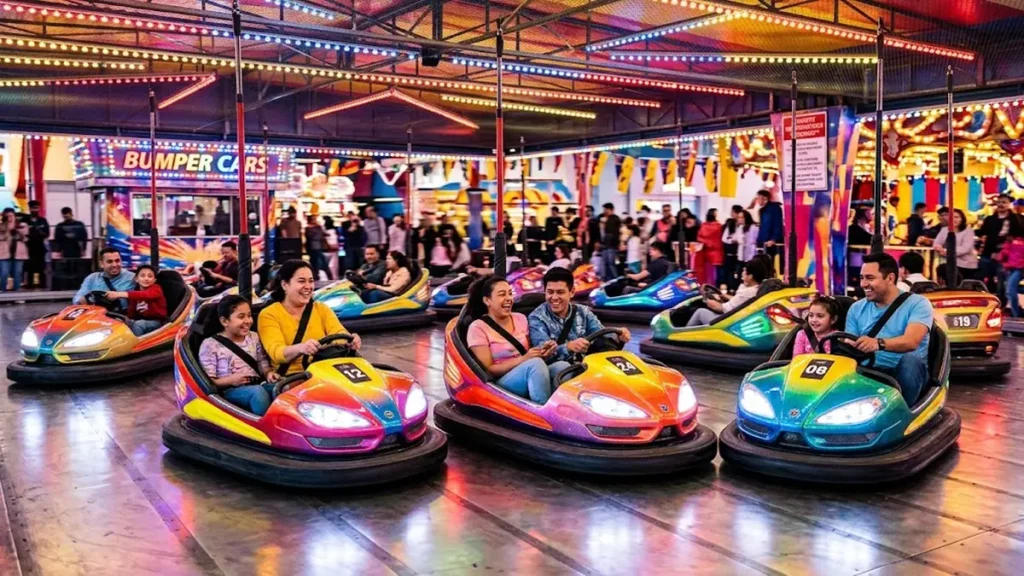
Bumper cars are small amusement vehicles designed for riders to drive around an enclosed arena and gently collide with other vehicles. Popular at amusement parks, family entertainment centers, carnivals, and indoor attractions, they combine simple driving controls with playful competition.
The basic experience is easy to understand: choose a car, fasten the safety restraint, steer around the arena, and enjoy the friendly collisions. Although the concept is simple, bumper cars use different electrical systems, floor designs, and safety features depending on the attraction.
What Are Bumper Cars?
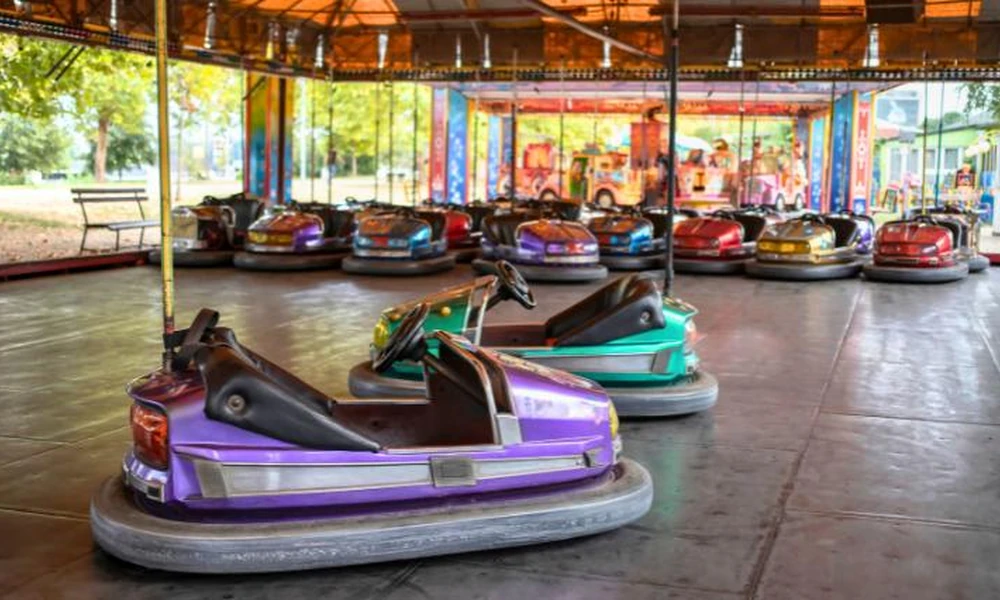
Bumper cars are specially designed amusement rides with protective rubber bumpers surrounding their bodies. These bumpers absorb some of the energy from collisions and help reduce damage during normal operation.
Most bumper cars are built for one or two riders and operate at relatively low speeds. Their steering systems allow drivers to move forward, reverse, and turn within a designated riding area.
They are commonly found in:
- Amusement parks
- Indoor entertainment centers
- Shopping mall attractions
- Carnivals and fairs
- Family recreation facilities
- Theme parks
How Do Bumper Cars Work?
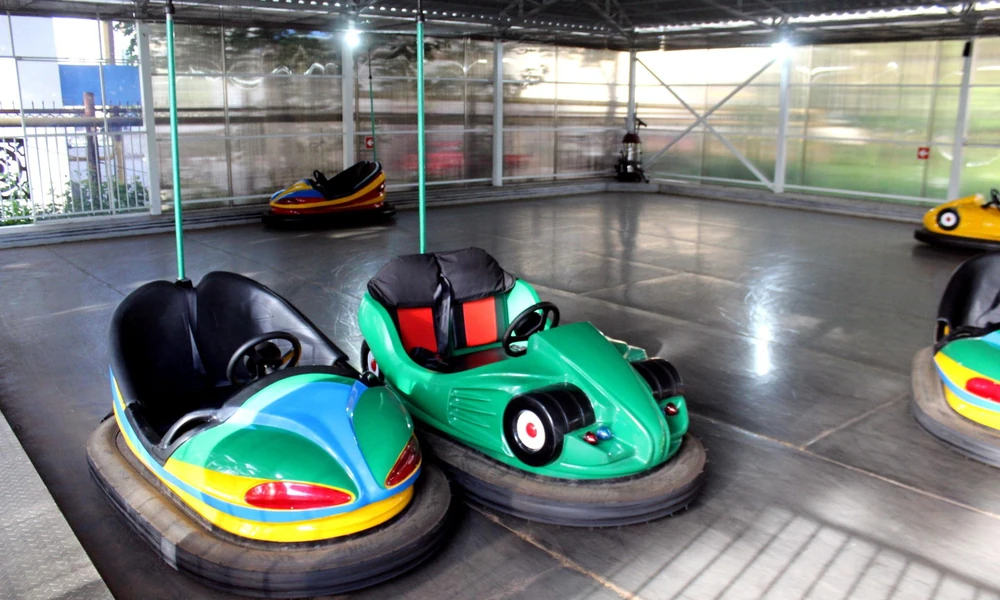
Bumper cars use an electric power system to move around a specially designed arena. The exact technology depends on the ride.
Floor-and-Ceiling Electrical Systems
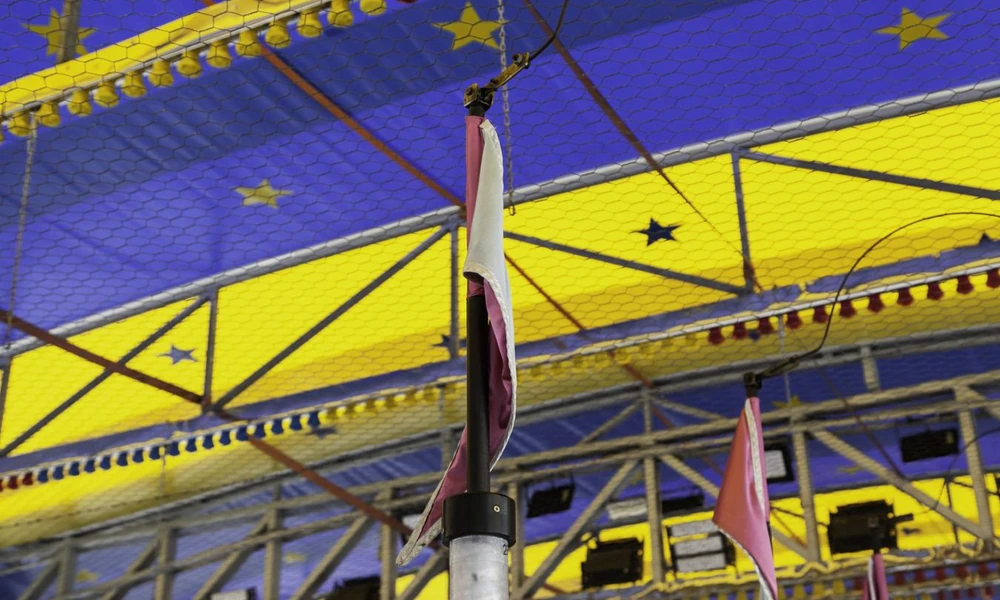
Traditional bumper car systems often use an electrically conductive floor and an overhead electrical grid.
A metal pole attached to each vehicle reaches toward the overhead grid. Electrical contact between the vehicle and the system supplies the energy needed to operate its motor.
Floor-Powered Systems
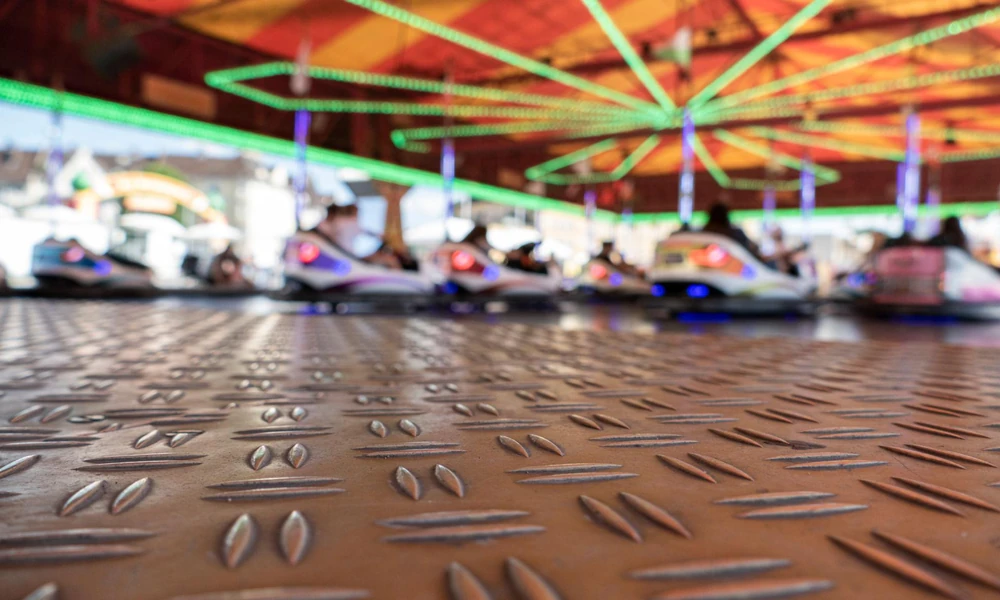
Some modern bumper car attractions use electrical systems built into the floor.
These systems can eliminate the need for traditional overhead power grids, depending on the design.
Battery-Powered Bumper Cars
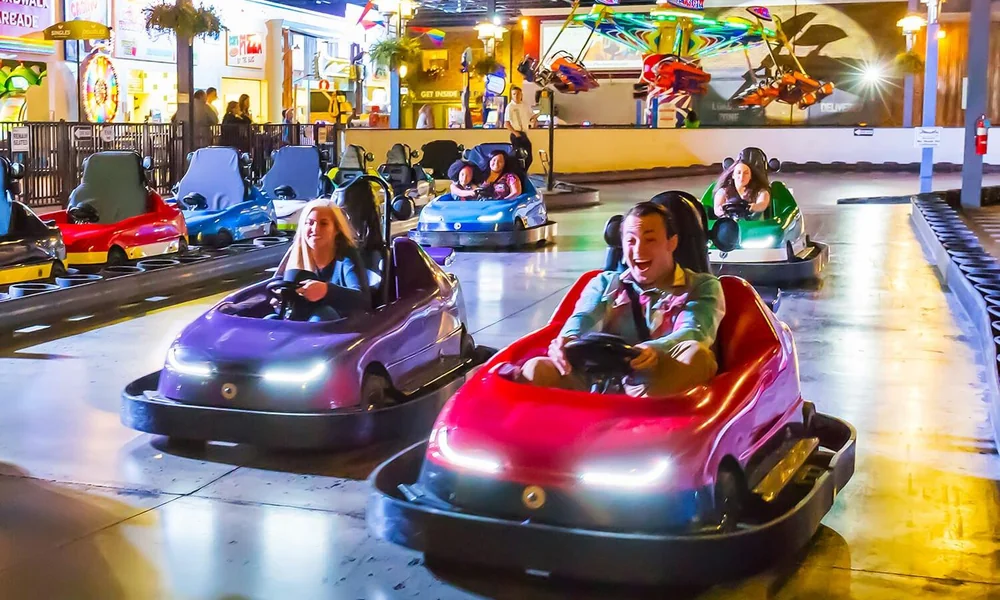
Battery-powered models carry rechargeable batteries inside the vehicle.
They can be suitable for certain indoor attractions and smaller entertainment venues. Operators must consider battery capacity, charging time, maintenance, and operating schedules.
Different Types of Bumper Cars
Traditional Bumper Cars
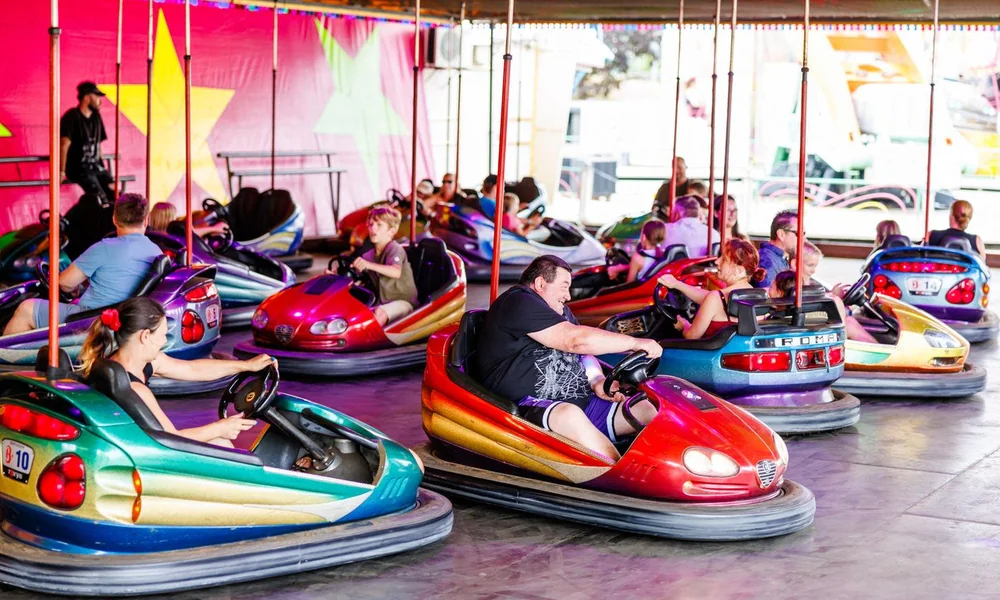
Traditional models are commonly found at amusement parks and fairgrounds. They usually feature a simple steering wheel, accelerator, protective rubber bumper, and seating for one or two people.
Electric Bumper Cars
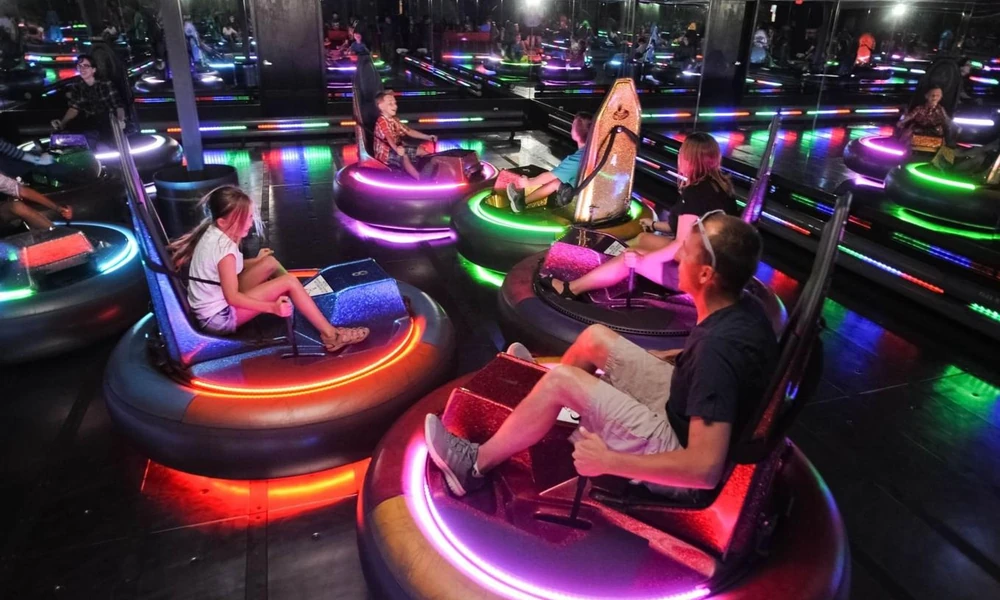
Electric bumper cars use electricity to power their motors. Depending on the system, they may receive power from the arena or an onboard battery.
Indoor Bumper Cars
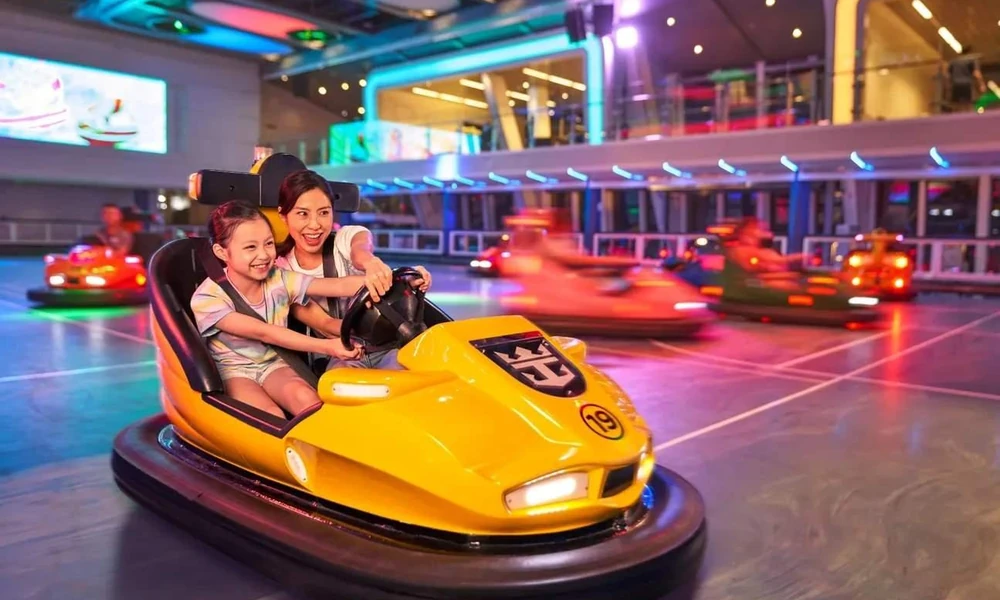
Indoor bumper cars operate inside dedicated arenas, often at family entertainment centers and amusement facilities.
Their tracks may feature decorative lighting, themed walls, and controlled riding areas.
Outdoor Bumper Cars
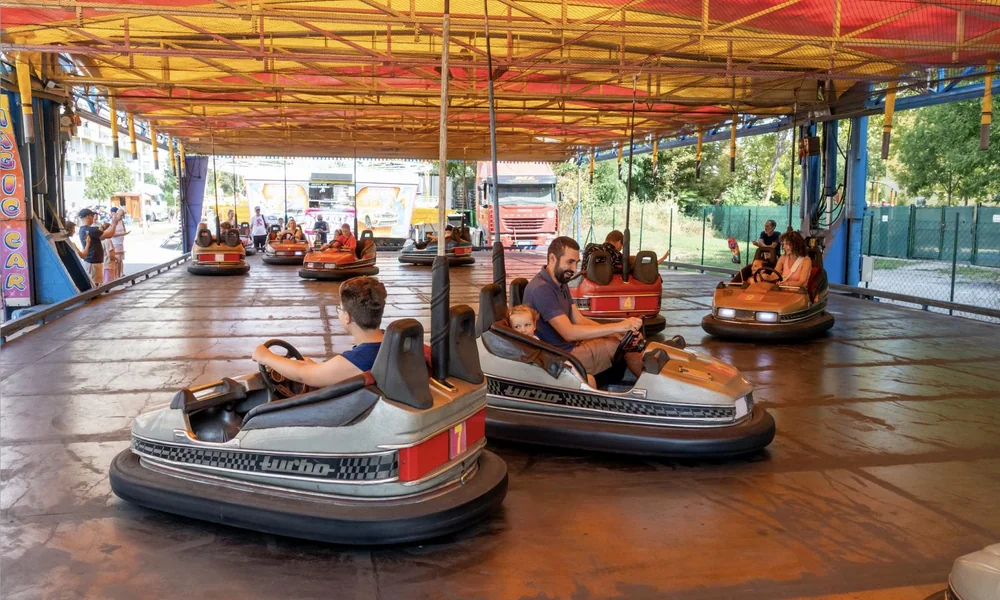
Outdoor bumper car attractions are commonly installed at amusement parks, carnivals, and seasonal fairs.
They may operate in larger arenas designed for multiple vehicles.
Kids’ Bumper Cars
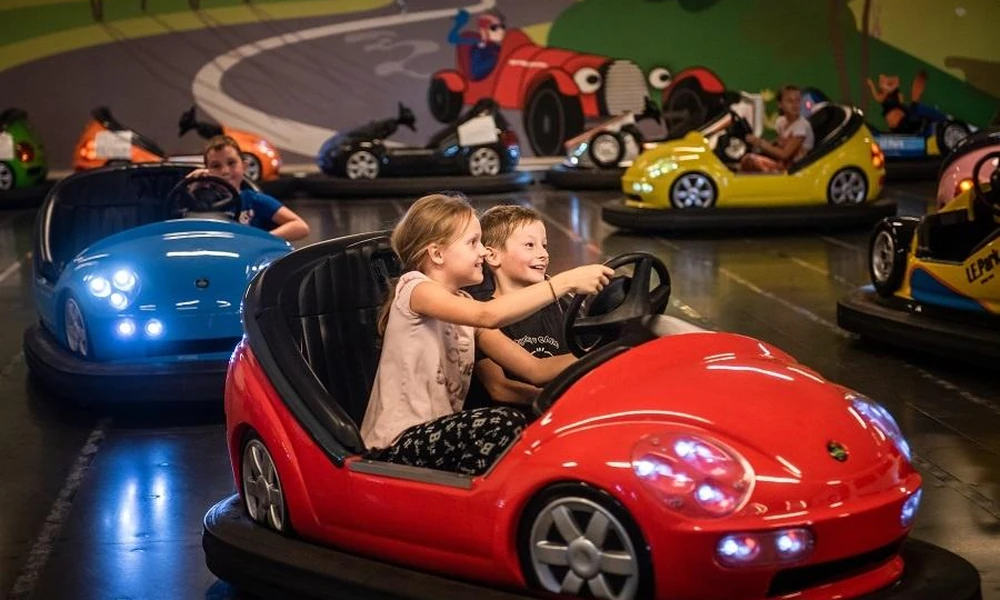
Children’s bumper cars are designed with age-appropriate dimensions, controls, and safety arrangements.
Some models are operated by children independently, while others allow an adult to accompany a younger rider. Age, height, and weight restrictions depend on the attraction.
Inflatable Bumper Cars
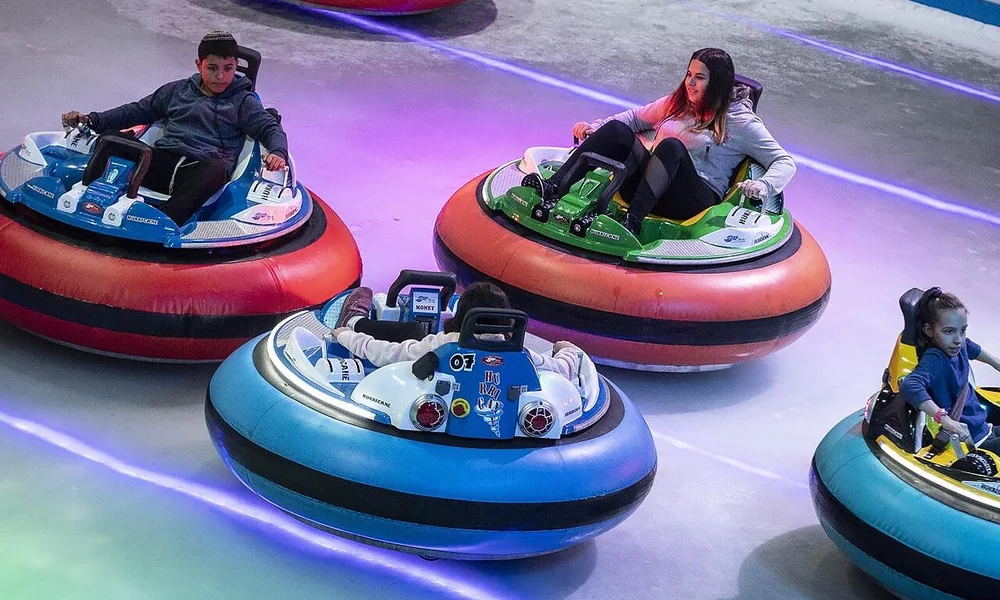
Inflatable bumper cars use soft outer structures to create a different type of collision-based attraction.
Some versions operate on specialized surfaces and may use different movement systems from traditional electric bumper cars.
Bumper Car Safety Features
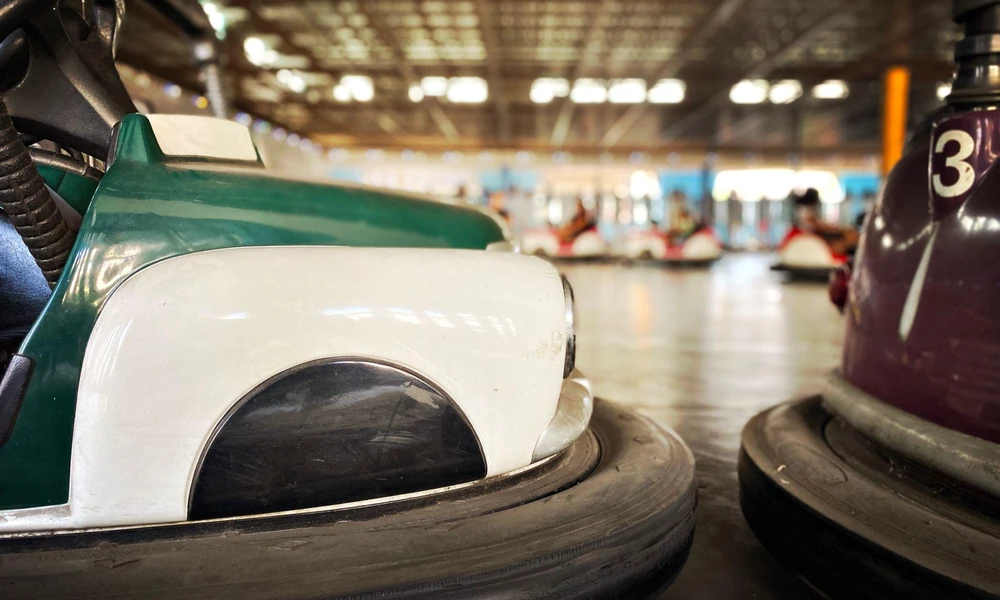
Bumper cars are designed for controlled amusement rides, but safety procedures still matter.
Common safety features include:
- Rubber bumpers around the vehicle.
- Seat belts or other rider restraints.
- Enclosed riding arenas.
- Speed and operating controls.
- Vehicle inspection procedures.
- Operator supervision.
- Emergency stopping systems where provided.
Riders should follow the attraction’s instructions and use all required restraints.
Safety Tips for Riders
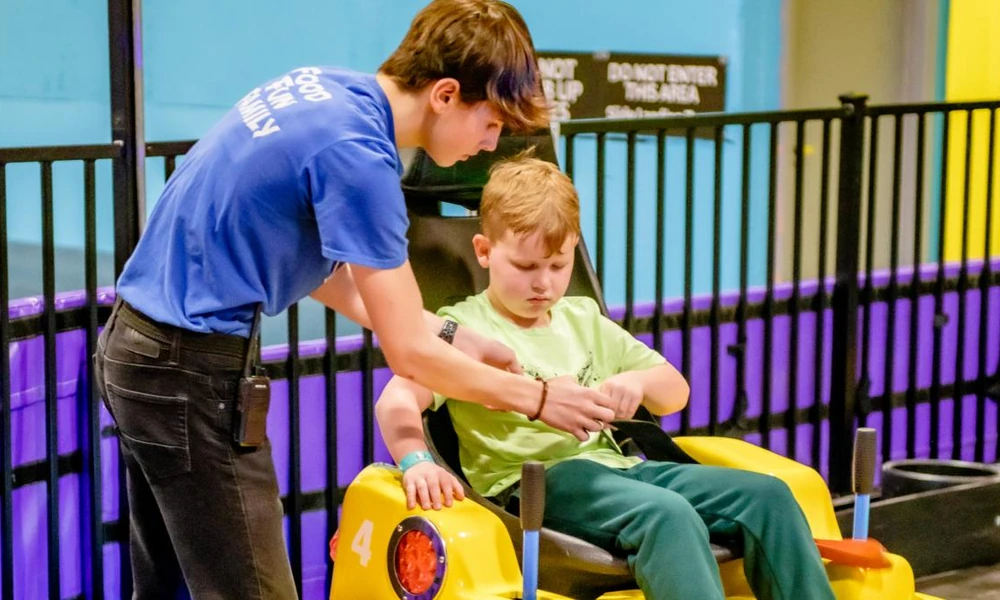
Before getting into a bumper car:
- Check the posted age and height requirements.
- Fasten the seat belt or required restraint.
- Keep hands and feet inside the vehicle.
- Follow the operator’s instructions.
- Avoid standing or leaning outside the car.
- Stop riding if the vehicle behaves unusually.
- Follow all restrictions for children and accompanying adults.
People with certain medical conditions, injuries, or pregnancy-related concerns should check the attraction’s safety guidance before riding.
Are Bumper Cars Suitable for Children?
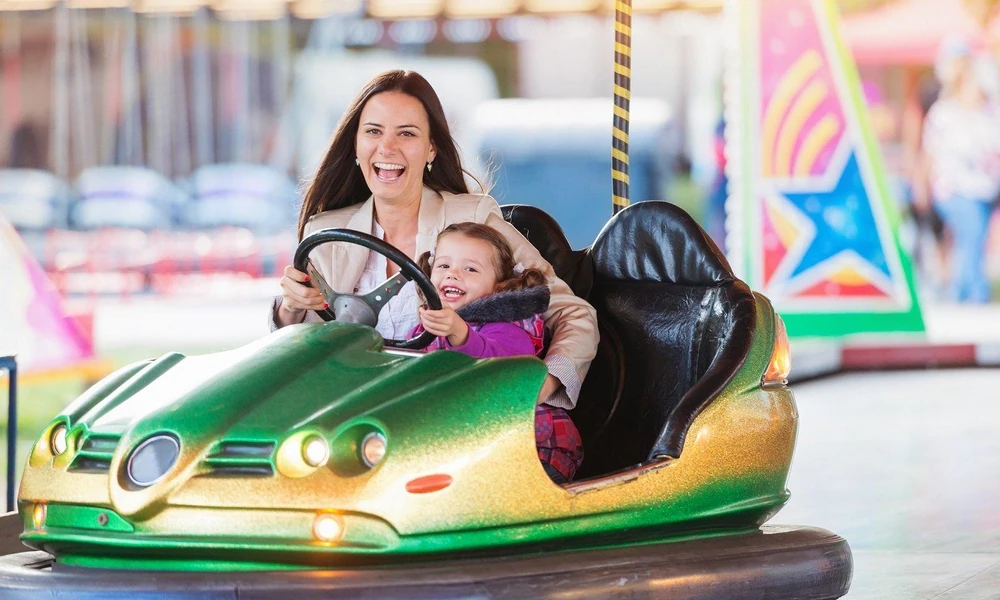
Many amusement parks offer bumper car attractions designed for children, but eligibility depends on the specific ride.
Some attractions require children to meet a minimum height, while others allow younger riders to participate with an adult.
Parents should check the posted rules rather than assuming every bumper car ride is suitable for all ages.
What to Consider When Buying Bumper Cars
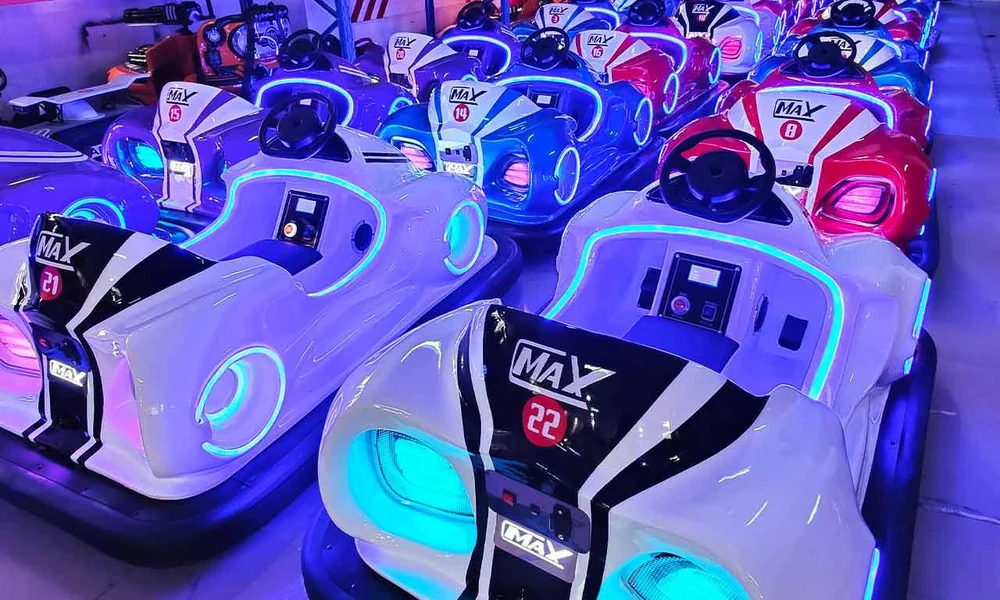
Businesses considering bumper cars for an entertainment venue should evaluate more than the purchase price.
Vehicle Design and Capacity
Consider the number of riders each vehicle can accommodate, its dimensions, weight limits, and accessibility.
Power System
Compare traditional overhead systems, floor-powered designs, and battery-powered vehicles.
Each option has different installation, operating, and maintenance requirements.
Arena Requirements
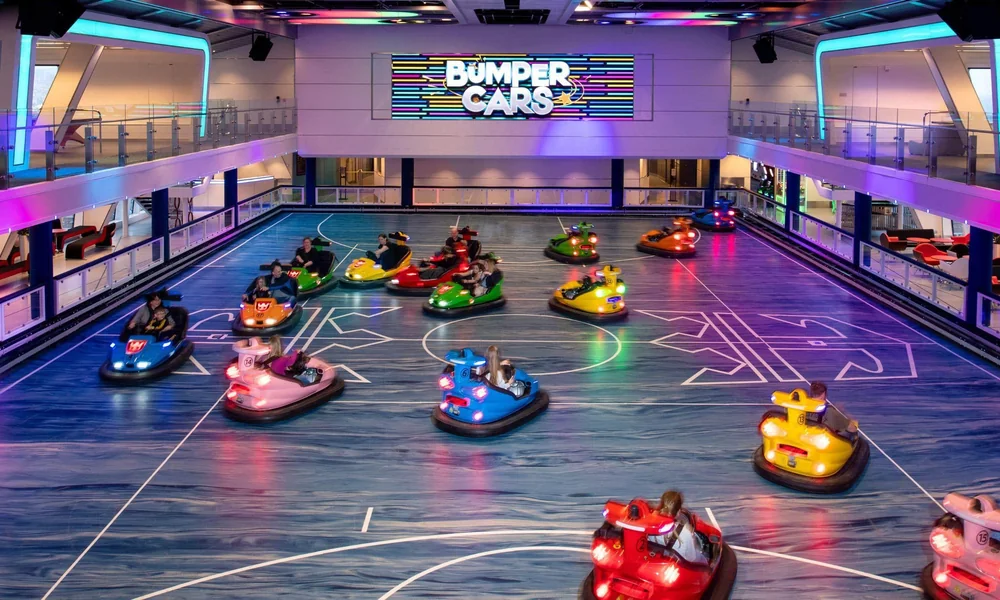
The riding area must accommodate the vehicles, turning space, safety barriers, entry points, and operator access.
Safety and Compliance
Ask the manufacturer for technical documentation, inspection requirements, operating instructions, and applicable safety certifications.
Local amusement-ride regulations should also be reviewed before installation.
Maintenance and Replacement Parts
Check the availability of replacement bumpers, tires, motors, batteries, electrical components, and other parts.
Reliable maintenance support can help reduce downtime.
Total Operating Costs
Include electricity, staffing, inspections, repairs, cleaning, insurance, and equipment replacement when estimating long-term costs.
How Much Do Bumper Cars Cost?
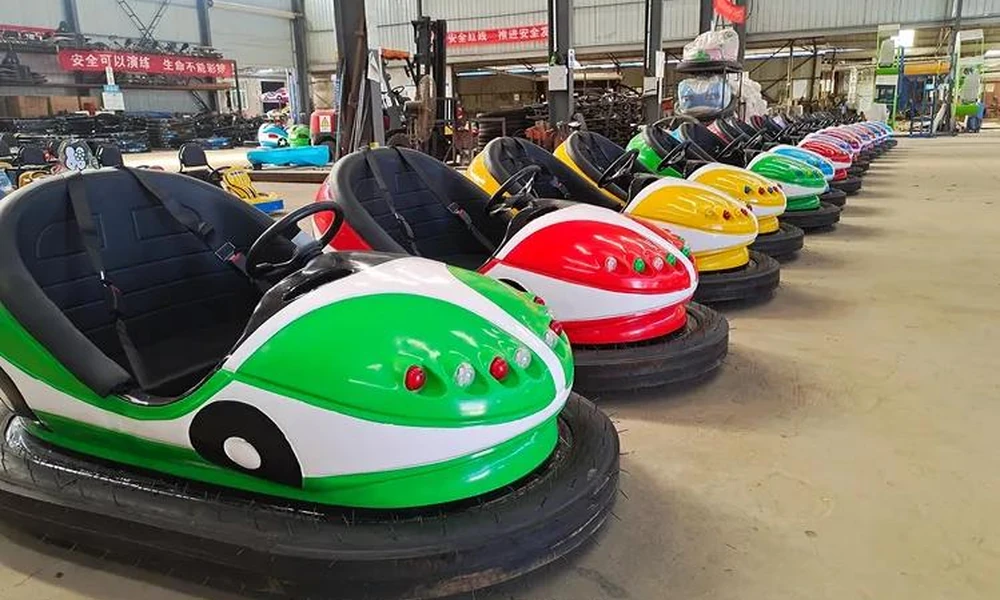
Bumper car prices vary depending on vehicle size, technology, manufacturer, customization, and intended use.
A small battery-powered vehicle for a limited attraction is different from a commercial bumper car designed for a full amusement arena.
A business should request a detailed quotation covering:
- Vehicle price
- Power and charging equipment
- Arena installation
- Safety barriers
- Shipping and setup
- Training and maintenance
- Warranty coverage
Comparing the complete installation cost is more useful than comparing vehicle prices alone.
Frequently Asked Questions About Bumper Cars
How fast do bumper cars go?
Bumper car speeds vary by model and attraction. They are generally designed for controlled amusement rather than high-speed driving. Check the manufacturer’s specifications for exact figures.
Do bumper cars need electricity?
Most traditional bumper cars use electrical power. Some receive electricity from the arena, while battery-powered models carry their own rechargeable batteries.
Can two people ride in one bumper car?
Yes. Some models are designed for two riders, but capacity depends on the vehicle and attraction rules.
Are bumper cars safe?
Bumper cars include protective features such as rubber bumpers and rider restraints. However, riders must follow safety instructions, and attractions require proper maintenance and supervision.
What age can children ride bumper cars?
There is no universal minimum age. Each attraction sets its own age, height, and supervision requirements.
Can bumper cars be used indoors?
Yes. Indoor bumper car arenas are common at family entertainment centers, amusement venues, and shopping complexes.
What is the difference between bumper cars and go-karts?
Bumper cars are designed for controlled collisions in an enclosed arena. Go-karts are designed primarily for driving around a track without intentional vehicle-to-vehicle collisions.
Final Verdict
Bumper cars remain a popular amusement attraction because they offer a simple, interactive experience for families and groups. Traditional electric models, battery-powered vehicles, and children’s versions provide different options for entertainment venues.
For riders, the most important considerations are the attraction’s safety rules and age requirements. For businesses, vehicle quality, arena design, electrical systems, maintenance support, and installation costs deserve careful evaluation.
Disclaimer: This article is provided for general informational and educational purposes only and does not promote or endorse any product, service, brand, or individual. Details may change, and no guarantee is made regarding completeness or accuracy.