AI yacht technology 2026 is no longer a concept reserved for tech conferences and prototype labs. Real, purchasable yachts are hitting the water with systems that navigate autonomously, respond to voice commands, monitor weather in real time, and even dock themselves without a human hand on the wheel.
For serious boaters and luxury buyers, this changes everything.
In this post, we break down exactly what AI-powered yachts can do in 2026, which five models are leading the pack, and what you need to know before you buy into the future of sailing.
What Is AI Yacht Technology and Why Does It Matter in 2026?
AI yacht technology refers to the integration of artificial intelligence, machine learning, sensor networks, and automation systems into the design and operation of modern yachts.
In practical terms, this means a yacht that can read its environment, make real-time decisions, and assist or even replace certain tasks a skipper would traditionally perform manually.
This is not about removing the joy of sailing. It is about making sailing safer, more efficient, and accessible to a wider range of boat owners including those without years of technical experience on the water.
The leap forward in 2026 is significant. Processing power has caught up with ambition. Sensor technology has become affordable enough to integrate at scale. And connectivity through satellite internet has made it possible for a yacht to stay smart even in the middle of the ocean.
What Can AI-Powered Yachts Actually Do?
Before we get to the five models, it helps to understand what autonomous yacht systems are genuinely capable of in 2026.
Autonomous Navigation
The most advanced yachts can now plot and adjust their own routes in real time. Using a combination of GPS, radar, lidar, and camera arrays, the system reads the water around the vessel, identifies other boats, obstacles, and weather changes, and adjusts course without any human input.
This does not mean you leave the helm and go take a nap. Most systems operate as highly advanced autopilot with collision avoidance baked in. You remain the captain. The AI is your very competent first mate.
Voice Control and Smart Command Systems
Voice controlled yacht technology has matured rapidly. Several 2026 models allow the captain to issue verbal commands for navigation, speed adjustment, anchor deployment, lighting, entertainment systems, and cabin controls.
Think of it as having a marine-grade version of a smart home assistant, one that understands nautical terminology and responds instantly even in wind and open-water conditions.
Predictive Weather and Routing Intelligence
AI systems now pull live meteorological data, cross-reference it with sea state sensors on the hull, and generate routing recommendations that avoid rough weather windows automatically.
Some systems will alert you to a developing storm three days out and suggest an alternative route before you have even noticed a change in the sky.
Self-Docking Technology
Docking is statistically one of the most stressful and accident-prone moments in boating. Several 2026 models have solved this almost entirely.
Using bow and stern thrusters combined with ultrasonic sensors and AI positioning systems, these yachts can dock themselves within centimeters of a target position. You guide them to the marina entrance, select your berth on a touchscreen, and the boat does the rest.
Predictive Maintenance
Smart yacht features now include engine monitoring systems that track hundreds of data points simultaneously. If a fuel injector is beginning to underperform or a belt is showing wear patterns, the system flags it before it becomes a breakdown.
This alone can save yacht owners tens of thousands of dollars in emergency repair costs and prevent dangerous failures at sea.
5 AI-Powered Yachts That Can Basically Sail Themselves in 2026
Here are five of the most impressive best technology yachts 2026 currently available or entering the market this year, based on available data and industry reporting.
1. Sunreef 80 Eco with AI Navigation Suite
Sunreef has long been a leader in sustainable luxury yachting, and the 80 Eco model available in 2026 pushes that further with a full AI navigation suite layered over its solar-electric hull.
The system includes full autonomous route planning, real-time obstacle detection, and an integrated voice command interface that controls everything from sail trim to cabin temperature.
The Sunreef 80 Eco is particularly notable for combining its AI systems with zero-emission electric propulsion, making it one of the most technologically and environmentally advanced yachts you can buy today.
Key AI Features:
- Full autonomous navigation with collision avoidance
- Voice command control across navigation and cabin systems
- Solar-powered AI processing with low energy draw
- Predictive weather rerouting integrated into the helm display
- Self-docking assist in marina environments
Estimated starting price: $4.5 million and above based on available data.
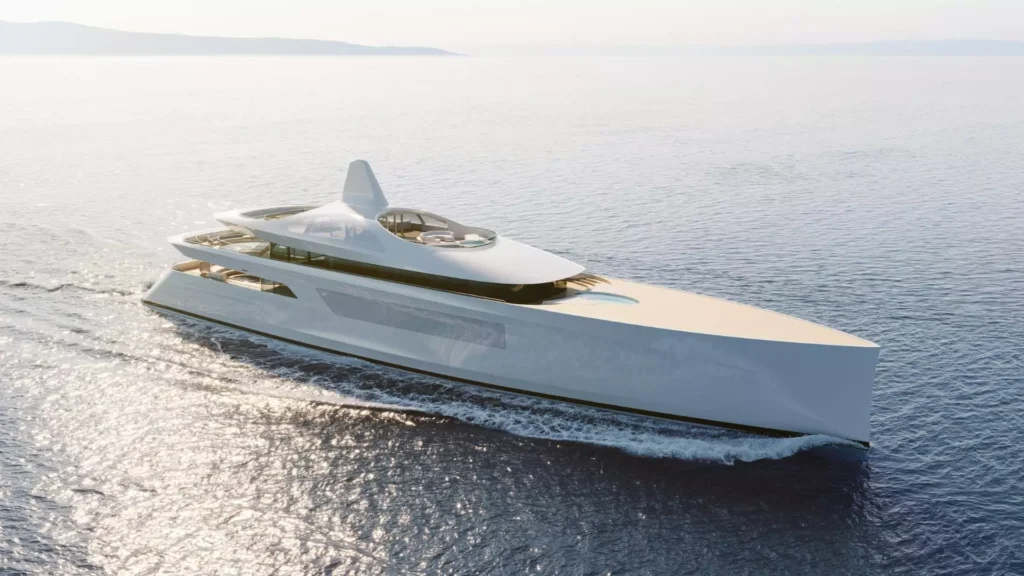
2. Silent 120 Explorer
The Silent 120 is a catamaran that reads more like a floating data center than a boat. Built by Austrian company Silent-Yachts, this model uses an AI-powered energy management system that constantly balances solar input, battery reserves, and propulsion demand.
For offshore passages, the Silent 120 uses its autonomous systems to maintain optimal speed and course while the crew sleeps. Its camera and radar array provides 360-degree awareness around the clock.
This is one of the most capable autonomous yacht systems currently available for long-range ocean crossing.
Key AI Features:
- AI energy management balancing solar, battery, and motors in real time
- 360-degree autonomous watch system for offshore passages
- Automated sail and thruster trim adjustments
- Satellite-connected weather intelligence with rerouting
- Smart cabin systems with voice and app control
Estimated starting price: $6 million and above based on available data.
3. Beneteau Océanis 51.1 with Seanaptic AI Integration
Beneteau brought AI to a more accessible price point with the Océanis 51.1 fitted with Seanaptic’s AI navigation and analytics platform. Seanaptic is a marine AI company whose software has been adopted by several production sailboat builders in 2024 and 2025.
This system specializes in fuel efficiency optimization, predictive maintenance alerts, and intelligent autopilot that learns the skipper’s preferred sailing style over time.
It is one of the strongest examples of a yacht automation review that demonstrates AI working quietly in the background rather than demanding attention.
Key AI Features:
- Seanaptic AI learning autopilot that adapts to skipper preferences
- Predictive engine and rigging maintenance alerts
- Fuel and energy consumption optimization in real time
- Remote monitoring via smartphone app
- Route planning with tide, current, and wind integration
Estimated starting price: $450,000 and above based on available data.
4. Axopar 45 Cross Cabin with Garmin Autonomous Suite
Axopar and Garmin partnered to produce what might be the most practical AI-powered powerboat on this list. The Axopar 45 Cross Cabin comes equipped with Garmin’s full autonomous navigation suite, which includes their ActiveCaptain intelligence system, radar-based obstacle avoidance, and one of the best self-docking systems available in 2026.
For buyers who want cutting-edge smart yacht features without crossing into multi-million dollar territory, the Axopar 45 delivers impressive capability at a relatively accessible price point.
Key AI Features:
- Garmin autonomous navigation with radar obstacle detection
- ActiveCaptain AI for route planning and marina data
- Hands-free self-docking using thruster automation
- Voice-activated Garmin helm controls
- Predictive maintenance monitoring through Garmin OneHelm
Estimated starting price: $280,000 and above based on available data.
5. Sanlorenzo SX112 with NEMO AI System
Sanlorenzo’s SX112 is where Italian luxury meets serious artificial intelligence. The yacht is fitted with NEMO, Sanlorenzo’s proprietary AI platform developed in collaboration with technology partners in the maritime sector.
NEMO monitors every system on the yacht simultaneously including propulsion, navigation, onboard climate, security, and entertainment. It learns usage patterns over time and begins anticipating needs, adjusting cabin temperature before guests arrive in a room, suggesting departure windows based on weather patterns, and flagging maintenance needs weeks before they become urgent.
This is arguably the most sophisticated AI yacht technology 2026 available in the luxury segment and one of the finest examples of how yacht automation has matured into something genuinely seamless.
Key AI Features:
- NEMO proprietary AI managing all onboard systems simultaneously
- Behavioral learning that anticipates crew and guest preferences
- Advanced collision avoidance and autonomous route holding
- Fully integrated voice controlled yacht interface throughout the vessel
- Long-range weather intelligence with AI departure planning
Estimated starting price: $8 million and above based on available data.
H2: What to Consider Before Buying an AI-Powered Yacht
The technology is genuinely impressive, but there are practical questions every buyer should ask before committing.
Connectivity dependency: Most AI navigation systems rely on satellite internet to function at their highest capability. In remote waters, some features may be limited without a strong connection. Confirm what the system does offline before you buy.
Software updates and support: AI systems require regular software updates. Ask the manufacturer how updates are delivered, how long the system is supported, and what happens to your yacht’s intelligence if the technology company behind the platform changes direction.
Training and certification: Even the most autonomous yacht still requires a licensed and capable skipper in most jurisdictions. AI does not eliminate the need for seamanship knowledge. It enhances it.
Cybersecurity: A connected yacht is a yacht with potential vulnerabilities. Ask manufacturers what cybersecurity measures are in place to protect navigation systems and onboard data.
Insurance implications: AI systems may affect your marine insurance policy. Some insurers are beginning to offer discounts for vessels with autonomous collision avoidance. Others are still developing frameworks. Check with your broker before purchase.
The Future of AI Yacht Technology Beyond 2026
The yachts on this list represent the leading edge, but the pace of development suggests that what feels cutting-edge today will be standard in five years.
Fully crewless coastal delivery of yachts between marinas is already being tested in Scandinavia. AI systems that communicate vessel-to-vessel to coordinate safe passage in busy shipping lanes are in development. Hydrogen-powered propulsion paired with AI energy management is being prototyped by multiple European builders.
The direction is clear. Yachts are becoming intelligent, connected, sustainable vessels that reduce human error, improve safety, and expand access to offshore sailing.
For buyers considering a purchase in 2026, investing in a yacht with a strong AI foundation is not just a luxury choice. It is a practical one.
Conclusion
AI yacht technology 2026 has moved from promise to product. The five models covered in this post represent the best of what is available right now, from the solar-powered intelligence of the Silent 120 Explorer to the Italian sophistication of the Sanlorenzo SX112 with NEMO.
Whether you are drawn to autonomous yacht systems for safety, efficiency, or the sheer excitement of sailing with a machine that genuinely thinks, the options have never been better.
The sea has always rewarded preparation, knowledge, and smart decision-making. In 2026, your yacht can help with all three.
For more in-depth reviews, technology breakdowns, and the latest in marine innovation, visit turbocruiser.com, your go-to source for everything at the intersection of boating and cutting-edge technology.
Frequently Asked Questions
Q1: What is AI yacht technology in 2026?
AI yacht technology refers to the use of artificial intelligence, machine learning, and sensor systems integrated into modern yachts to assist with navigation, docking, weather routing, maintenance alerts, and voice-controlled operation. In 2026, several production models offer these features as standard or optional packages.
Q2: Can a yacht really dock itself?
Yes. Several 2026 models including the Axopar 45 and Sunreef 80 Eco feature self-docking systems that use bow and stern thrusters combined with ultrasonic sensors and AI positioning to guide a vessel into a berth with minimal human input, based on available data.
Q3: Are voice controlled yacht systems reliable at sea?
Modern voice controlled yacht systems are designed for marine environments and can filter wind and ambient noise effectively. Leading systems from Garmin and proprietary platforms like NEMO have shown strong reliability in real-world testing, though conditions and connectivity can affect performance.
Q4: What is the most affordable AI-powered yacht in 2026?
Based on available data, the Beneteau Océanis 51.1 with Seanaptic AI integration and the Axopar 45 with Garmin’s autonomous suite offer the most accessible entry points into serious AI-powered sailing, with starting prices from approximately $280,000 to $450,000.
Q5: Do I still need sailing experience to operate an AI yacht?
Yes. AI systems are designed to assist and enhance seamanship, not replace it. Most maritime jurisdictions require a licensed skipper regardless of the vessel’s automation level. AI makes sailing safer and more efficient, but core boating knowledge remains essential