The car you drive today is smarter than the computers that sent humans to the moon. That’s not an exaggeration — it’s the new reality of AI in cars.
Artificial intelligence is no longer a futuristic concept reserved for science fiction. In 2026, it is embedded in the vehicles on your street, the navigation apps on your phone, and the safety systems that quietly prevent thousands of accidents every day. From autonomous driving technology to real-time traffic prediction, AI is reshaping what it means to get behind the wheel — or not get behind it at all.
AI in Cars: What Has Actually Changed?
A few years ago, AI in vehicles meant basic cruise control and parking sensors. Today, it means something far more powerful.
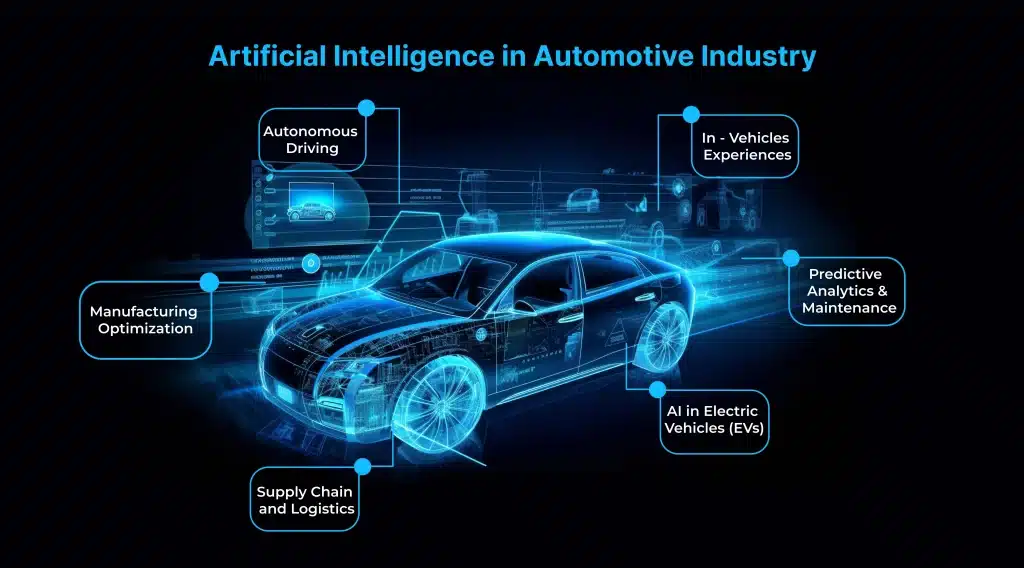
Modern AI systems can read road conditions, predict driver behavior, communicate with other vehicles, and make split-second decisions faster than any human ever could. The driving experience in 2026 is not just more comfortable — it is fundamentally safer, smarter, and more connected. This transformation is happening across three major areas: driver assistance, full autonomy, and smart mobility infrastructure.
How AI-Powered Driver Assistance Works Today
Advanced Driver Assistance Systems (ADAS)
Almost every new car sold in 2026 comes equipped with some form of Advanced Driver Assistance System, commonly known as ADAS. These systems use a combination of cameras, radar, lidar sensors, and AI algorithms to monitor the road in real time.
Features now considered standard include:
- Lane-keeping assist — keeps the vehicle centered without driver input
- Automatic emergency braking — stops the car before a collision occurs
- Adaptive cruise control — adjusts speed based on surrounding traffic
- Blind-spot monitoring — alerts drivers to vehicles they cannot see
- Driver drowsiness detection — reads eye movement and steering patterns
These are not gimmicks. Studies from automotive safety organizations estimate that ADAS features are already preventing hundreds of thousands of accidents globally each year.
AI That Learns Your Driving Style
One of the most interesting developments in 2026 is personalized AI. Some vehicles now use machine learning to study how you drive — your preferred speed, braking style, typical routes, and even your stress levels based on grip pressure and biometric data.
Over time, the car adapts to you. It pre-conditions the cabin temperature before you get in, suggests routes based on your schedule, and even adjusts suspension settings based on road conditions it has learned you dislike. This is AI in cars working not just for safety — but for genuine comfort and personalization.
The State of Autonomous Driving Technology in 2026
Where Self-Driving Cars Actually Stand
The self-driving cars future has arrived — but not quite in the way Hollywood imagined. Full Level 5 autonomy, where a car can drive anywhere with no human input at all, remains limited to specific environments and testing zones.
However, Level 3 and Level 4 autonomy have made significant real-world progress.
Level 3 means the car can handle most driving tasks independently but requires a human to take over when prompted. Several mainstream manufacturers including Mercedes-Benz, BMW, and Honda now offer certified Level 3 vehicles in select markets.
Level 4 means fully autonomous within defined geographic areas. Robotaxi services from companies like Waymo are operating commercially in multiple U.S. cities, with expansion continuing into 2026.
The Role of AI Chipsets and Computing Power
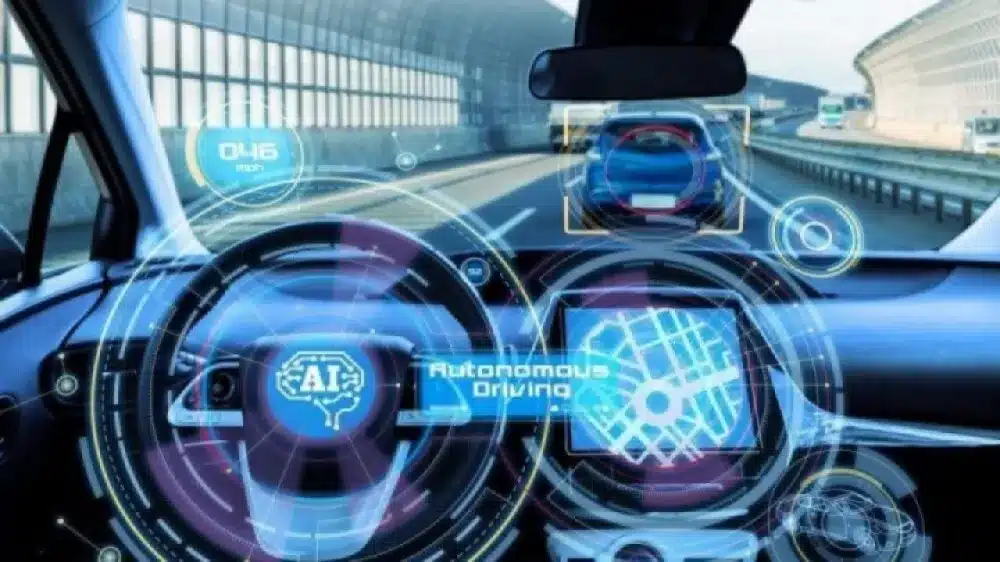
Autonomous driving technology is only possible because of the AI processors now built into vehicles. Companies like NVIDIA, Qualcomm, and Mobileye supply chips capable of processing billions of sensor data points per second.
These chips allow vehicles to build a live 3D map of their surroundings, identify pedestrians, cyclists, road signs, and obstacles, and calculate the safest possible path — all within milliseconds. Without this computing power, autonomous driving would remain theoretical.
Vehicle-to-Everything (V2X) Communication
One of the most exciting developments in the self-driving cars future is V2X technology. This allows vehicles to communicate directly with traffic lights, road sensors, other cars, and even pedestrians’ smartphones.
In cities where V2X infrastructure is being rolled out, AI-powered vehicles can anticipate a red light change before it happens, slow down for an accident two miles ahead, or receive a warning about black ice on a bridge. This is smart mobility in its most practical form — the road itself becomes part of the AI system.
Smart Mobility: AI Beyond the Vehicle
AI in Traffic Management
AI is not just inside cars — it is transforming entire city transport networks. Smart traffic management systems now use real-time data from thousands of cameras and sensors to dynamically adjust signal timing, reduce congestion, and prioritize emergency vehicles.
Cities like Singapore, Dubai, and Los Angeles are already seeing measurable reductions in average commute times thanks to AI-driven traffic optimization.
Predictive Maintenance
One underappreciated application of AI in cars is predictive maintenance. Modern vehicles monitor hundreds of components in real time and use AI to predict when a part is likely to fail — before it actually does.
This means fewer breakdowns, lower repair costs, and importantly, fewer accidents caused by mechanical failure. Your car essentially tells you it needs a brake pad replacement two weeks before it becomes a problem.
Electric Vehicles and AI Integration
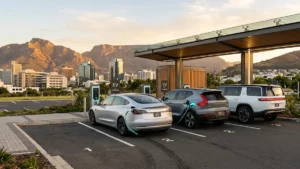
The rise of electric vehicles and AI go hand in hand. AI manages battery charging cycles to extend lifespan, predicts range based on driving style and weather, and even communicates with home energy systems to charge at the lowest-cost time of day. In 2026, the smartest EVs are not just cars — they are mobile computing platforms that happen to carry passengers.
Challenges Facing AI in the Automotive Industry
AI in cars is impressive, but it is not without real challenges.
Cybersecurity is a growing concern. A connected vehicle is also a potential target for hackers. Automakers are investing heavily in securing AI systems, but it remains an ongoing arms race.
Regulation varies significantly by country. Autonomous driving technology that is legally permitted in California may not be approved in Germany or the UAE, creating fragmented rollouts.
Public trust is still being built. Many drivers remain cautious about handing control to an algorithm, even when the data suggests AI is statistically safer than human driving in most conditions.
Ethical decision-making in edge cases — the classic “trolley problem” applied to self-driving cars — still has no universally agreed answer, and AI systems are being programmed with different priorities by different manufacturers.
What to Expect in the Next Few Years
The trajectory of AI in cars points clearly toward one destination: a future where human driving is optional rather than required. By the late 2020s, experts estimate that Level 4 autonomy will be available in most major global cities. Insurance models will shift from driver-based to vehicle-based. Road fatalities — 94% of which are currently caused by human error — could drop dramatically.
Smart mobility will become an integrated system where your car, your city’s infrastructure, and your daily schedule all communicate seamlessly in the background. The driving experience will not disappear. But it will become a choice, not a necessity.
Conclusion
AI in cars is not a coming revolution — it is an ongoing one. In 2026, autonomous driving technology, smart mobility systems, and intelligent driver assistance are working together to make roads safer, commutes smarter, and vehicles more personal than ever before.
From ADAS features that prevent collisions to V2X communication that connects your car with the city around it, the self-driving cars future is being built one innovation at a time. The challenges are real, but so is the progress.
Whether you are a car enthusiast, a daily commuter, or simply someone interested in where technology is headed, understanding AI in the automotive world has never been more important.
For the latest news, insights, and in-depth coverage on automotive technology and smart mobility, visit turbocruise.com — your trusted source for everything driving forward.
Frequently Asked Questions
Q1: What does AI do in modern cars?
AI in modern cars powers features like automatic emergency braking, lane-keeping assist, adaptive cruise control, driver drowsiness detection, predictive maintenance, and in advanced models, partial or full autonomous driving. It processes real-time sensor data to make driving safer and more efficient.
Q2: Are fully self-driving cars available in 2026?
Full Level 5 self-driving cars are not yet widely available to consumers. However, Level 3 autonomy is available in several production vehicles, and Level 4 robotaxi services are operating commercially in select cities through companies like Waymo.
Q3: Is autonomous driving technology safe?
Based on available data, AI-assisted and autonomous driving systems perform as well as or better than human drivers in most controlled conditions. Human error accounts for an estimated 94% of road accidents, which is the primary problem autonomous driving technology aims to solve.
Q4: What is smart mobility?
Smart mobility refers to an interconnected transport system where vehicles, infrastructure, and data communicate in real time. It includes AI-managed traffic systems, V2X communication, electric vehicle integration, and ride-sharing platforms — all designed to move people more efficiently and sustainably.
Q5: How does AI improve electric vehicles?
AI improves EVs by optimizing battery management, predicting driving range based on real-time conditions, scheduling charging at off-peak hours, and learning driver habits to improve overall efficiency. It also enables over-the-air software updates that continuously improve vehicle performance.