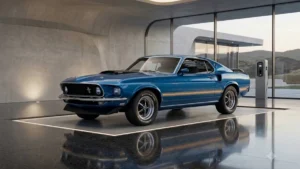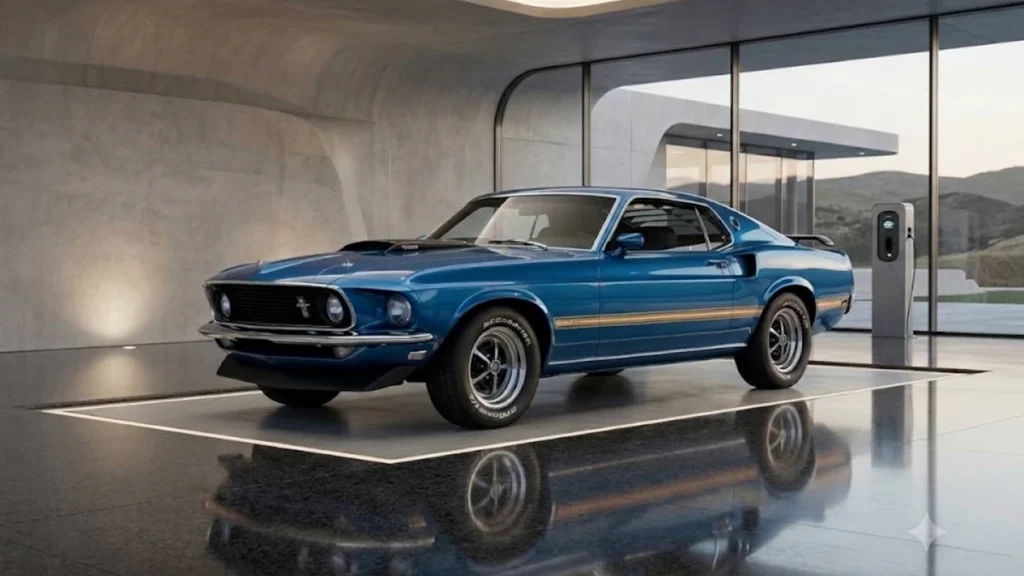
The 1969 Ford Mustang is an important car in the history of the first-generation Mustang. It got a major restyle, with a longer and wider body, new exterior details, and four headlights. Ford also added new models: the Mach 1, the Boss 302, and the Boss 429.
Buyers could choose from many engines, from a six-cylinder to powerful V8s. The Mach 1 mixed performance with bold styling. The Boss models were built for racing purposes.
This guide covers the 1969 Mustang’s history, body styles, engines, horsepower, specifications, production numbers, and what to check before buying one.
What Is the 1969 Ford Mustang?
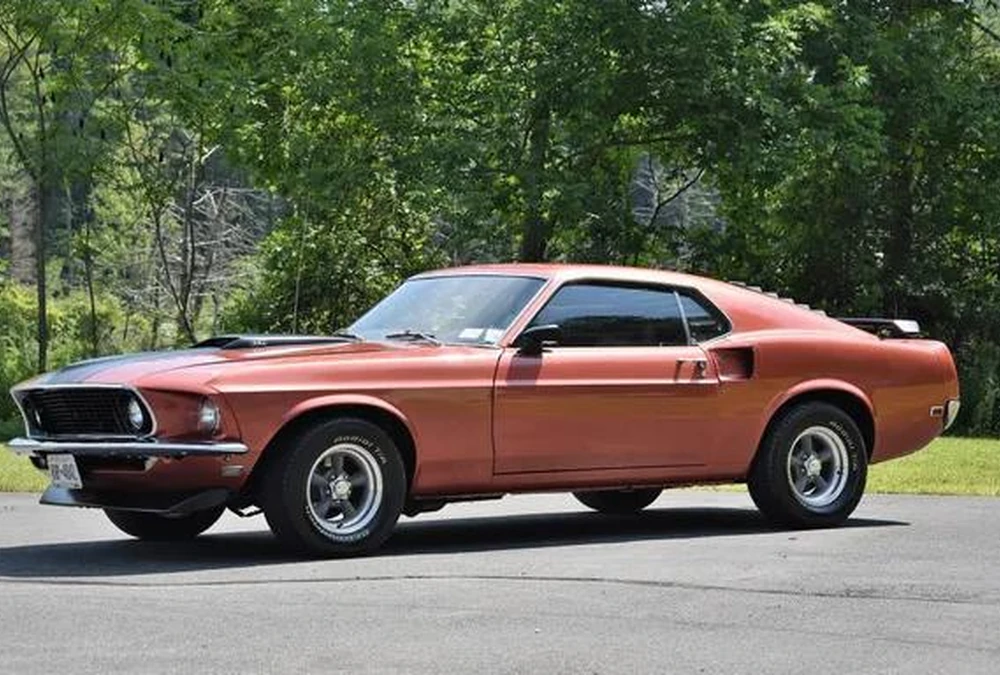
The 1969 Mustang is part of the first generation of Ford’s Mustang sports car. It came in three body styles: hardtop, SportsRoof, and convertible. The lineup also included the Grande, a more comfortable hardtop, and the Mach 1, a performance model.
Three models are especially important:
- Mach 1: A performance Mustang with its own exterior and interior features.
- Boss 302: A high-performance model built with Trans-Am racing in mind.
- Boss 429: A limited-production model built so Ford could race its 429 engine in NASCAR.
History of the 1969 Ford Mustang
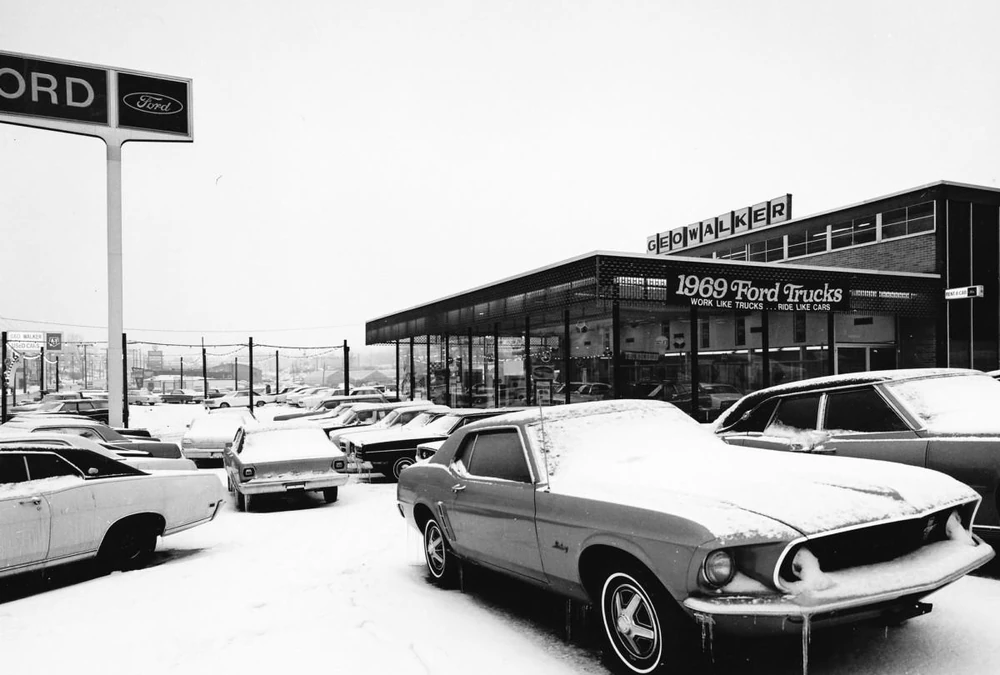
Ford introduced the Mustang in April 1964. It quickly became a big success and helped create the “pony car” market.
For 1969, Ford gave the Mustang a major restyle. The body became longer and wider, and the front end got four headlights. The car kept the same basic platform as before, but it looked very different from the 1968 model.
Ford also added new models. The Mach 1 joined the lineup as a performance option. The Boss 302 and Boss 429 added even more specialized choices.
The Mach 1 was very popular. The Boss models were built in much smaller numbers.
Exterior Design and Features
Front Design
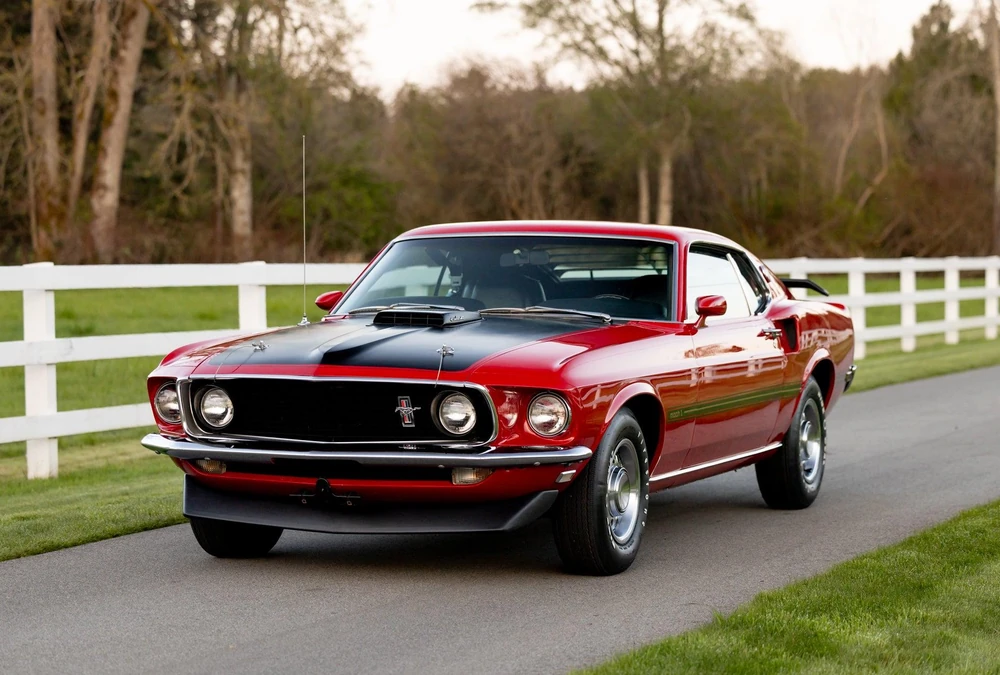
The 1969 Mustang has four headlights: two inside the grille opening and two outside it. The running-horse emblem sits off-center in the grille.
Body Shape
The body is longer and wider than the 1968 Mustang. The side panels have stronger curves. The SportsRoof (the fastback style) has a roofline that slopes toward the rear.
Exterior Features
Depending on the model and options, a 1969 Mustang could have:
- Four headlights
- A SportsRoof body
- Model badges and stripes
- An optional rear spoiler
- An optional hood scoop
- Optional rear window louvers on some models
- Special wheels and trim
Not every car had all of these features.
1969 Ford Mustang Body Styles and Models
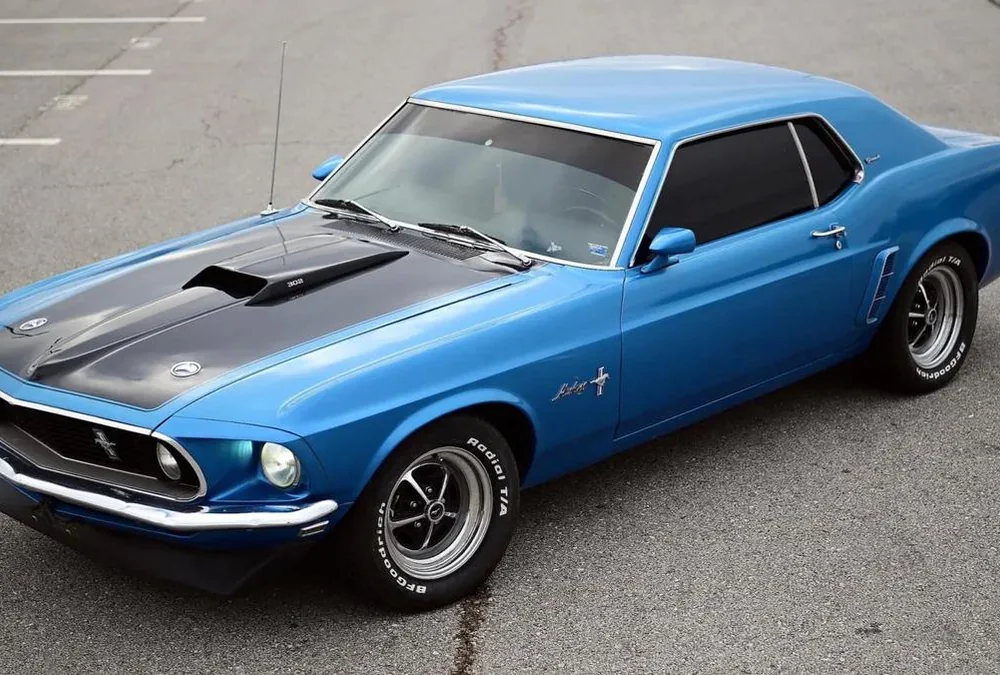
Mustang Hardtop
The hardtop is a two-door coupe with a fixed roof. It came with many engine and equipment choices.
Mustang SportsRoof
The SportsRoof has a sloping rear roofline. The Mach 1 and Boss models were built on this body style.
Mustang Convertible
The convertible has a folding soft top for open-air driving. It was offered with different engines and options.
Mustang Grande
The Grande is a hardtop built for comfort. It has:
- Special interior trim
- Wood-style dashboard details
- Extra sound insulation
- An electric clock
Mustang Mach 1
The Mach 1 was a performance model. It came only as a SportsRoof.
Its standard engine was the 351-cubic-inch V8 with a two-barrel carburetor. Buyers could also pick more powerful V8s.
The Mach 1 had a matte-black hood, special badges and stripes, a performance suspension, and a sporty interior with high-back bucket seats, a center console, and wood-style trim.
1969 Ford Mustang Engine Options and Horsepower
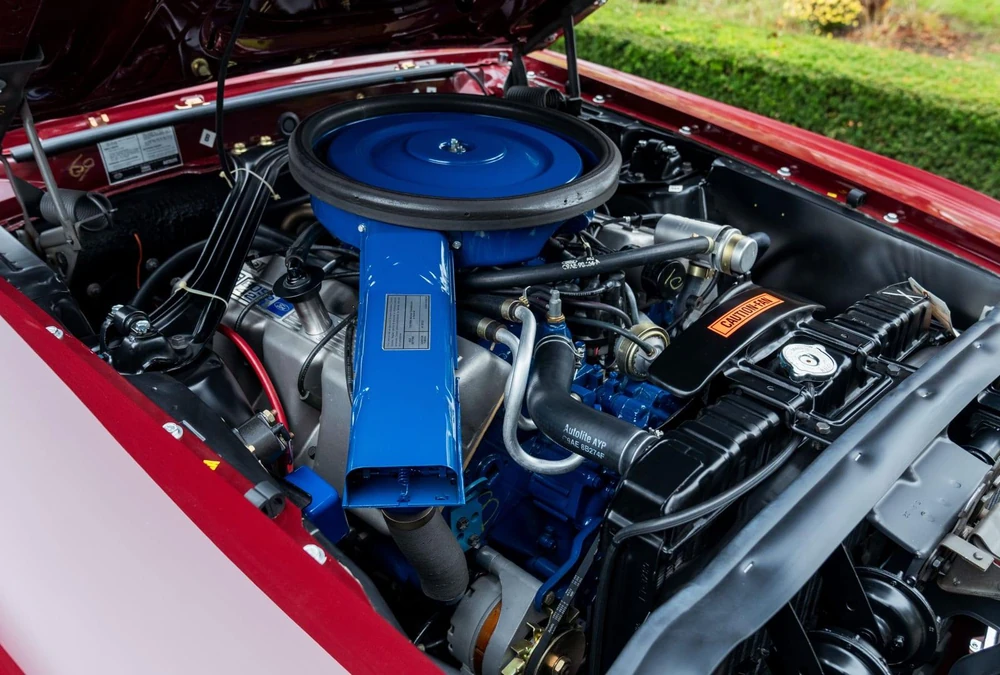
The 1969 Mustang had two six-cylinder engines and many V8 engines. The numbers below are the horsepower ratings Ford advertised at the time. Modern ratings are measured differently, so they are not directly comparable.
| Engine | Advertised horsepower |
| 200-cubic-inch six-cylinder | 115 hp |
| 250-cubic-inch six-cylinder | 155 hp |
| 302 V8 (2-barrel carburetor) | 220 hp |
| 351 V8 (2-barrel carburetor) | 250 hp |
| 351 V8 (4-barrel carburetor) | 290 hp |
| 390 V8 (4-barrel carburetor) | 320 hp |
| 428 Cobra Jet V8 | 335 hp |
| 428 Cobra Jet Ram Air V8 | 335 hp |
| 428 Super Cobra Jet V8 | 335 hp |
| Boss 302 V8 | 290 hp |
| Boss 429 V8 | 375 hp |
Which engines you could get depended on the model and options.
200-Cubic-Inch Six-Cylinder
This was the basic engine. It made 115 horsepower and was meant for everyday driving.
250-Cubic-Inch Six-Cylinder
This larger six-cylinder made 155 horsepower.
302-Cubic-Inch V8
The regular 302 V8 made 220 horsepower. Do not confuse it with the Boss 302, which was a special high-performance engine.
351-Cubic-Inch V8
The 351 V8 came in two versions:
- Two-barrel carburetor: 250 horsepower
- Four-barrel carburetor: 290 horsepower
390-Cubic-Inch V8
This optional V8 made 320 horsepower.
428 Cobra Jet and Super Cobra Jet
The 428 Cobra Jet was one of the main performance engines for the 1969 Mustang. Ford advertised it at 335 horsepower.
The Ram Air version had the same rating. It pulled cooler air in through the hood scoop.
The Super Cobra Jet came with the Drag Pack option. It had extra heavy-duty parts for hard use, and it was also rated at 335 horsepower.
Boss 302 V8
The Boss 302 used a special 302 V8 rated at 290 horsepower. Ford built it with Trans-Am racing in mind. It came only with a four-speed manual transmission.
Boss 429 V8
The Boss 429 had the most powerful engine in the lineup. Its 429 V8 was rated at 375 horsepower.
Ford built it so the engine could race in NASCAR. The engine was too big for a normal Mustang, so Ford built the cars at its Dearborn plant and then sent them to a company called Kar Kraft, which modified them to fit the engine.
1969 Ford Mustang Performance and Driving Features
Transmission Options
- Three-speed manual
- Four-speed manual
- SelectShift Cruise-O-Matic three-speed automatic
Which transmission you could get depended on the engine and model. The Boss 302 came only with the four-speed manual.
Rear-Wheel Drive
All 1969 Mustangs sent power to the rear wheels.
Suspension
The front suspension used coil springs. The rear used a solid axle with leaf springs. Performance models had upgraded suspension parts.
Brakes
The Mustang had a dual hydraulic brake system. Front disc brakes were an option.
1969 Mustang Mach 1 vs. Boss 302 vs. Boss 429
| Feature | Mach 1 | Boss 302 | Boss 429 |
| Main purpose | Performance and styling | Trans-Am racing | Letting Ford race its 429 engine in NASCAR |
| Body style | SportsRoof | SportsRoof | SportsRoof |
| Engine | 351 2-barrel V8 standard; bigger V8s optional | Special 302 V8 | 429 V8 |
| Advertised horsepower | Depends on the engine | 290 hp | 375 hp |
| Transmission | Manual or automatic, depending on engine | Four-speed manual only | Four-speed manual |
| Production | 72,458 | 1,628 | 859 (includes two Boss Cougars) |
The Mach 1 was built in much larger numbers. The Boss 302 and Boss 429 are rarer.
1969 Ford Mustang Interior
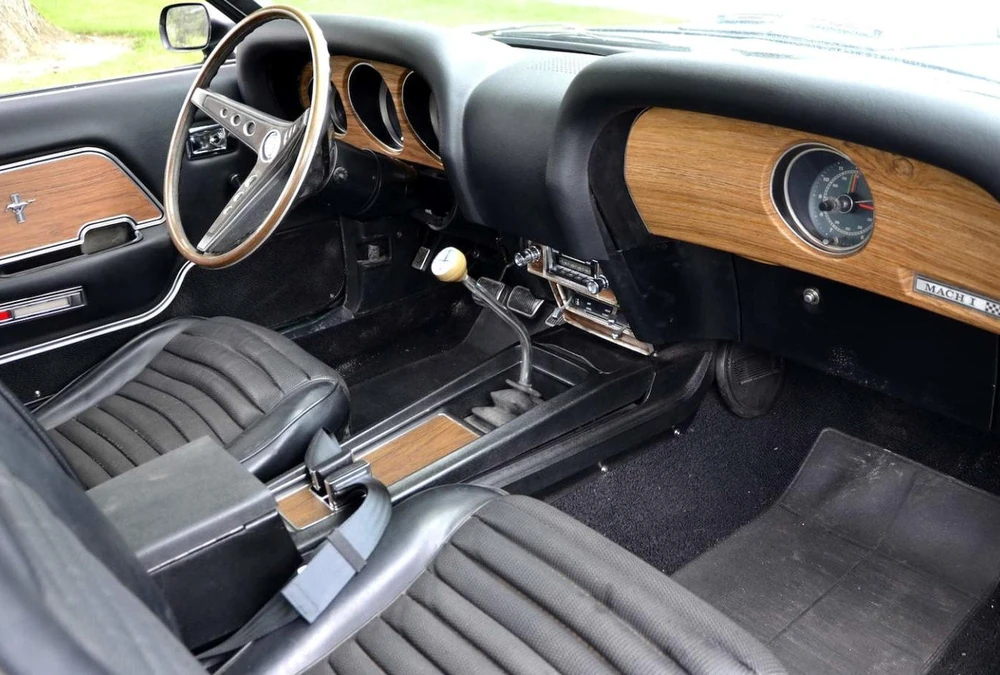
The interior depended on the model and options. A standard Mustang had a driver-focused dashboard, front bucket seats, and a rear seat.
The Grande had a more comfortable cabin with special trim and extra sound insulation. The Mach 1 had its own sporty interior.
Available equipment included:
- Bucket seats
- Air conditioning
- Power steering
- Upgraded radios
Not every car had these items. To check what a specific car came with, look at its factory records.
1969 Ford Mustang Specifications
| Detail | Specification |
| Manufacturer | Ford |
| Model year | 1969 |
| Body styles | Hardtop, SportsRoof, convertible |
| Wheelbase | 108 inches |
| Length | About 187.4 inches |
| Width | About 71–72 inches |
| Height | About 50.5–51.3 inches, depending on body style |
| Fuel tank | 20 gallons on most models (a larger tank was optional) |
| Drivetrain | Rear-wheel drive |
| Seating | Up to four people |
| Transmission options | Three-speed manual, four-speed manual, three-speed automatic |
Exact size and weight changed with the body style, engine, and options.
1969 Ford Mustang Production Numbers
Ford built 299,824 Mustangs for the 1969 model year.
| Model | Production |
| All 1969 Mustangs | 299,824 |
| Mach 1 | 72,458 |
| Boss 302 | 1,628 |
| Boss 429 | 859 (includes two Boss Cougars) |
The Boss 429 figure of 859 includes two Mercury Cougars called Boss Cougars. That means 857 were Mustangs. Some sources list slightly different totals because they count the cars differently.
The Mach 1 was built in much larger numbers than either Boss model. Their low production is one reason collectors want the Boss cars so much.
How to Identify a 1969 Ford Mustang by Its VIN
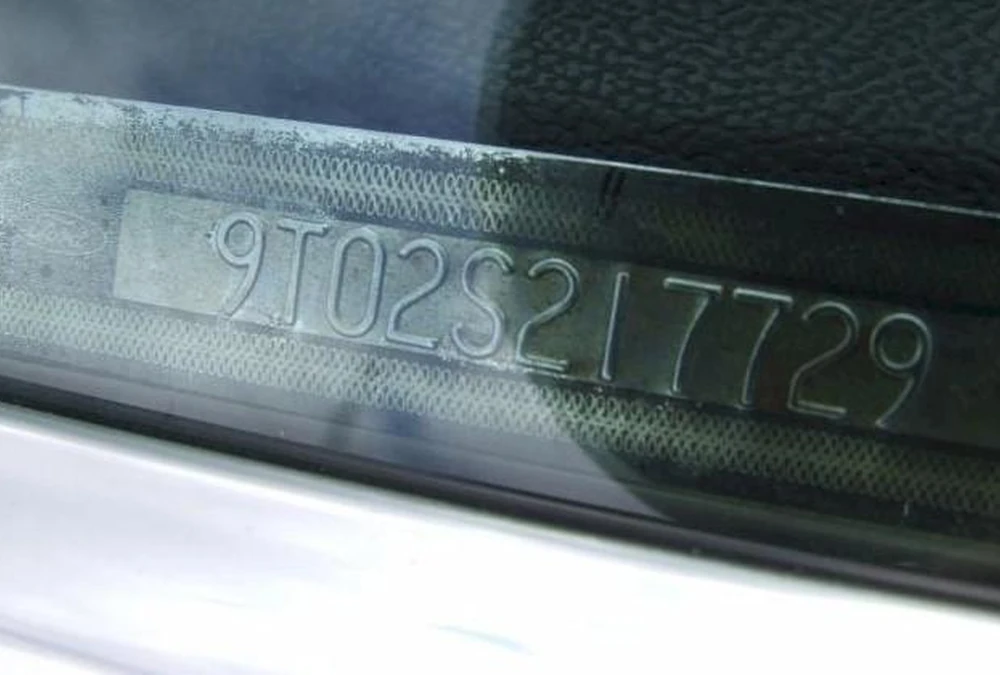
The VIN (Vehicle Identification Number) is the first thing to check when identifying a 1969 Mustang. A 1969 VIN has 11 characters.
The VIN is on a plate on the driver’s side of the dashboard, which you can see through the windshield. The car also has a warranty plate on the driver’s door.
1969 Mustang VIN Structure
| Position | Meaning |
| 1st character | Model year (9 = 1969) |
| 2nd character | Assembly plant |
| 3rd and 4th characters | Body style |
| 5th character | Engine code |
| Last six characters | Production number |
Example VIN
9F02Z100001 (an example only, not a real car)
- 9: 1969 model year
- F: Dearborn assembly plant
- 02: SportsRoof body
- Z: Boss 429 engine code
- 100001: Production number
A VIN alone does not prove a car still has its original engine and parts. Compare it with the door plate, factory records, and the car itself.
1968 vs. 1969 vs. 1970 Ford Mustang
| Feature | 1968 Mustang | 1969 Mustang | 1970 Mustang |
| Body design | Earlier styling | Longer, wider restyled body | Based on the 1969 body, with a revised front end |
| Headlights | Two | Four | Two |
| Mach 1 | Not available | Available | Available |
| Boss 302 | Not available | Available | Available |
| Boss 429 | Not available | Available | Available |
The four-headlight front end is the easiest way to spot a 1969 Mustang. In 1970, Ford went back to two headlights.
1969 Ford Mustang Colors and Options
Ford offered many factory paint colors in 1969. The color on the car’s data plate shows its original paint.
Depending on the model, buyers could choose options such as:
- Power steering
- Air conditioning
- Power front disc brakes
- Automatic transmission
- Four-speed manual transmission
- Rear spoiler
- Hood scoop
- Upgraded interior trim
- Power convertible top
An option being available does not mean every car had it.
Buying a 1969 Ford Mustang: What to Check
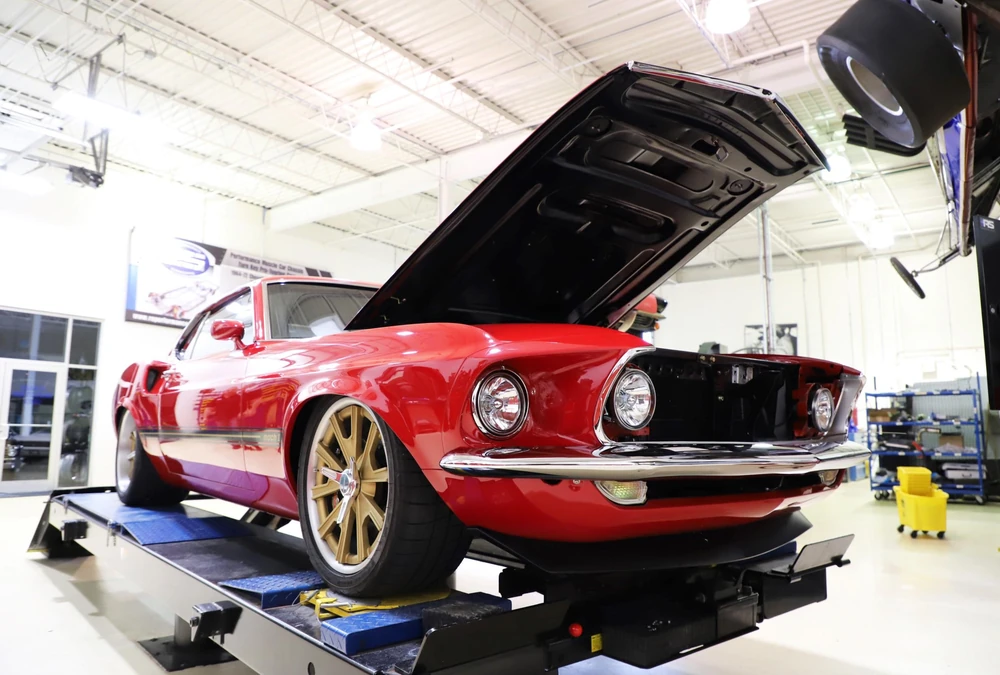
A 1969 Mustang can be a great classic car. But age, past repairs, maintenance and changes made over the years can all affect it.
1. Check for Rust
Rust is the biggest problem to look for. Check these areas:
- Floor pans
- Rocker panels (the panels under the doors)
- Trunk floor
- Cowl (the area below the windshield)
- Windshield frame
- Rear frame rails
- Lower quarter panels
- Door bottoms
New paint can hide rust or old repairs. If you cannot judge the body yourself, hire a professional to inspect it.
2. Check the Engine
Find out which engine is installed and whether it matches the car’s original specification. Look for oil leaks, strange noises, overheating, and smoke. On a Mach 1 or Boss car, check carefully, because the engine may have been changed over the years.
3. Check the Transmission
Make sure it shifts smoothly and does not make strange noises. Look for leaks and signs of past repairs. It should also match the model. For example, a real Boss 302 has a four-speed manual.
4. Check the Suspension and Brakes
Look for worn bushings, damaged springs, leaking shocks, and loose parts. Check the brake lines, hoses, calipers, drums, and master cylinder. A classic car often needs brake work, even if it looks fine.
5. Check the VIN and Originality
Compare the dashboard VIN with the door plate and any records. If the seller says the car is a real Boss or Mach 1, ask for papers that prove it.
6. Check the History
Ask for service records, restoration bills, ownership history, and photos of past work. Also ask whether the car has been changed from how it left the factory.
What Affects the Value of a 1969 Ford Mustang?
Two 1969 Mustangs with the same model name can be worth very different amounts. The main factors are:
- Model: A real Boss 302 or Boss 429 is usually worth more to collectors than a standard Mustang.
- Engine: An original high-performance engine adds interest.
- Condition: Rust, accident damage, mechanical problems, and the quality of any restoration all matter.
- Originality: Factory-correct parts and equipment can raise collector interest.
- Paperwork: VIN checks, factory records, and restoration history help prove what the car is.
- Body style: Hardtops, SportsRoofs, and convertibles attract different buyers.
- Market demand: Classic car prices go up and down.
To judge a price, compare it with recent sales of similar cars, not just asking prices in online ads. Before you pay extra for a rare model, have a professional confirm what the car really is.
Is the 1969 Ford Mustang Worth Buying Today?
It can be, if you like its looks, its history, and its many engine choices.
A standard hardtop or SportsRoof is a good choice if you want a classic Mustang to restore or enjoy. The Mach 1 is a sportier choice. The Boss 302 and Boss 429 appeal to collectors who care about Mustang racing history.
But an older Mustang can cost a lot to keep up. Rust, worn parts, missing original parts, and undocumented changes can all add to the bill.
Before buying, check the car’s condition, confirm what it is, review its history, and compare the price with recent sales of similar cars.
Conclusion
The 1969 Ford Mustang stands out because of its new look, its four headlights, and its wide range of models. Buyers could pick a six-cylinder or a V8, and the Mach 1, Boss 302, and Boss 429 each took performance in a different direction.
If you are thinking of buying one, inspect its condition, check for rust, verify the VIN, and confirm it is original. These steps help you avoid overpaying for a car that is misidentified or poorly restored.
Frequently Asked Questions About the 1969 Ford Mustang
How much horsepower did the 1969 Ford Mustang have?
It depended on the engine. Ford advertised 115 horsepower for the 200-cubic-inch six-cylinder and 375 horsepower for the Boss 429.
What was the standard engine in the 1969 Mustang Mach 1?
The standard engine was the 351-cubic-inch V8 with a two-barrel carburetor. It was rated at 250 horsepower.
What is the difference between the Boss 302 and the Boss 429?
The Boss 302 used a special 302 V8 rated at 290 horsepower and was built with Trans-Am racing in mind. The Boss 429 used a 429 V8 rated at 375 horsepower and was built so Ford could race the engine in NASCAR.
Did the 1969 Mustang have four headlights?
Yes. Two were inside the grille opening and two were outside it. The 1970 Mustang went back to two headlights.
How can I tell if a 1969 Mustang is a real Boss model?
Check the VIN and the door plate, then compare the car with factory records. A VIN alone does not prove the original engine and parts are still there. For a valuable Boss car, get an independent expert to verify it.