A muddy trail in the Philippines can change dramatically after a few hours of heavy rain. A road that was easy to cross in the morning may become slippery, deeply rutted, and difficult to navigate by afternoon. For 4×4 owners who regularly travel through provincial roads, farm tracks, mountain trails, and remote outdoor destinations, choosing the right tires can make a major difference.
The BFGoodrich Mud-Terrain T/A KM3 is a strong option for drivers who prioritize aggressive traction in deep mud and on rocky trails. The Toyo Open Country R/T is worth considering if you want a balance between off-road capability and everyday driving comfort. Drivers who spend more time on paved roads than challenging trails may be better served by an all-terrain tire instead of a dedicated mud tire.
The best choice depends on your vehicle, typical terrain, driving frequency, tire size, budget, and how much highway driving you do.
Best Mud Tires for Off-Road Driving in the Philippines at a Glance
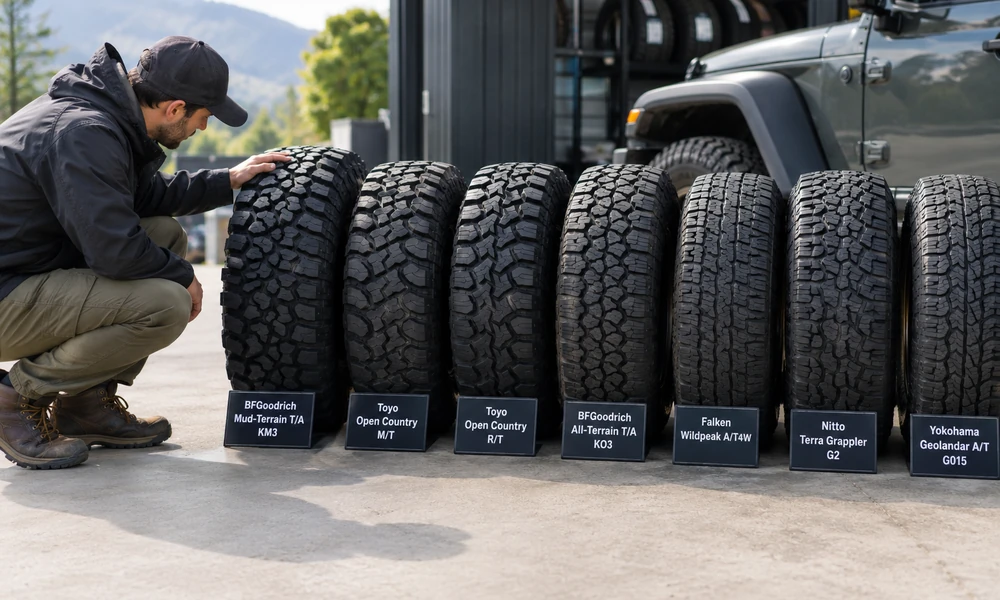
| Tire | Best For | Main Consideration |
| BFGoodrich Mud-Terrain T/A KM3 | Deep mud and rocky trails | Aggressive off-road-focused design |
| Toyo Open Country M/T | Demanding off-road use | Built for tough terrain; consider road comfort |
| Toyo Open Country R/T | Mixed road and trail driving | Rugged-terrain compromise |
| BFGoodrich All-Terrain T/A KO3 | Mixed pavement, gravel, and dirt | More versatile than a dedicated mud tire |
| Falken Wildpeak A/T4W | Everyday driving with occasional off-road trips | All-terrain design rather than a pure mud tire |
| Nitto Terra Grappler G2 | Daily driving and light off-road use | Better suited to mixed use than extreme mud |
| Yokohama Geolandar A/T G015 | Road use with occasional rough surfaces | Consider for versatility, not maximum mud performance |
This is a practical shortlist, not a laboratory-tested ranking of every tire available in the Philippines. Availability, exact sizes, load ratings, and prices vary by dealer and vehicle fitment.
1. BFGoodrich Mud-Terrain T/A KM3 Best for Deep Mud
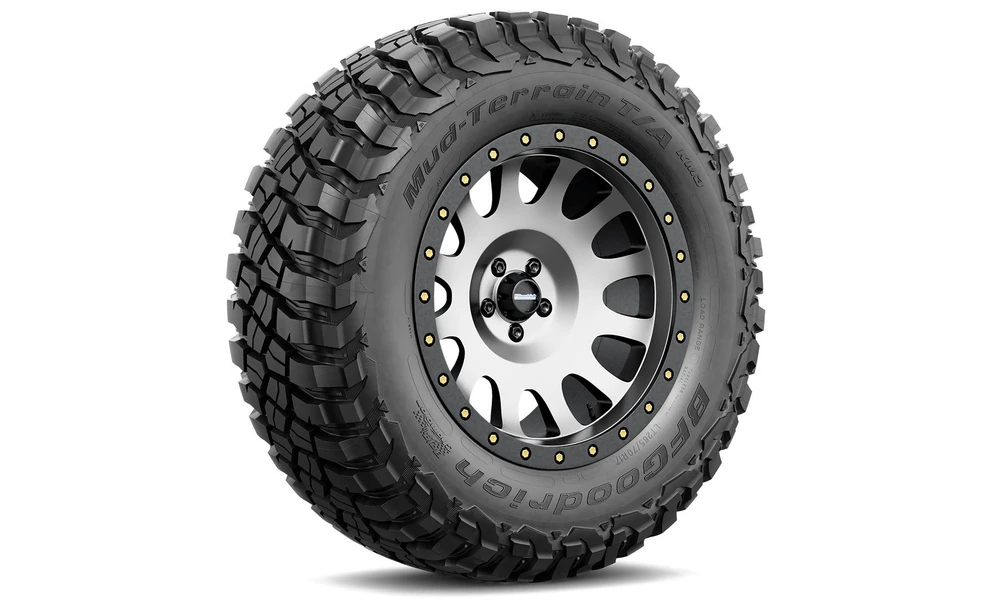
The BFGoodrich Mud-Terrain T/A KM3 is designed for drivers who regularly encounter difficult off-road conditions. Its aggressive tread pattern is intended to grip mud, loose ground, rocks, and rubble, while reinforced sidewall construction supports durability on demanding trails.
It is a strong candidate for a 4×4 that spends substantial time away from paved roads rather than a vehicle used almost exclusively for commuting.
Why consider it:
- Aggressive tread designed for mud and loose surfaces.
- Off-road-focused traction characteristics.
- Reinforced sidewalls intended to withstand demanding terrain.
- Suitable for drivers who prioritize trail capability.
What to consider: Mud-terrain tires generally involve trade-offs in highway noise, ride comfort, rolling resistance, and wet-pavement behavior compared with road-focused tires. Check the specific size and load rating before purchase.
Best for: 4×4 owners who regularly drive through deep mud, rocky trails, and challenging unpaved routes.
2. Toyo Open Country M/T Best for Demanding Off-Road Routes
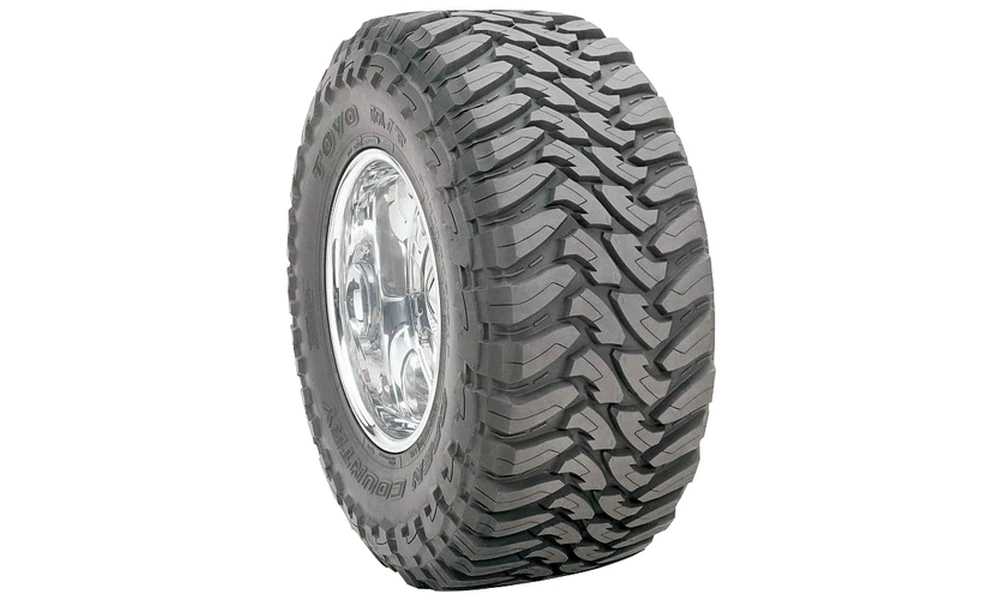
The Toyo Open Country M/T is another option for serious off-road use. Its aggressive tread design and rugged construction make it worth comparing with the BFGoodrich KM3 if your driving regularly involves mud, rocks, and loose soil.
The decision between these two should be based on the exact size you need, vehicle compatibility, local stock, price, and the terrain you encounter most frequently.
Why consider it:
- Mud-terrain design for demanding off-road conditions.
- Aggressive tread intended to grip loose surfaces.
- A suitable option to compare for dedicated trail vehicles.
- Available in multiple fitments, depending on market and model.
What to consider: A dedicated mud tire is not automatically the best choice for wet highways. Compare road manners and wet traction alongside off-road capability, especially if you travel long distances between trails.
Best for: Drivers who prioritize difficult off-road routes over a quiet daily commute.
3. Toyo Open Country R/T Best for Mixed Road and Trail Driving
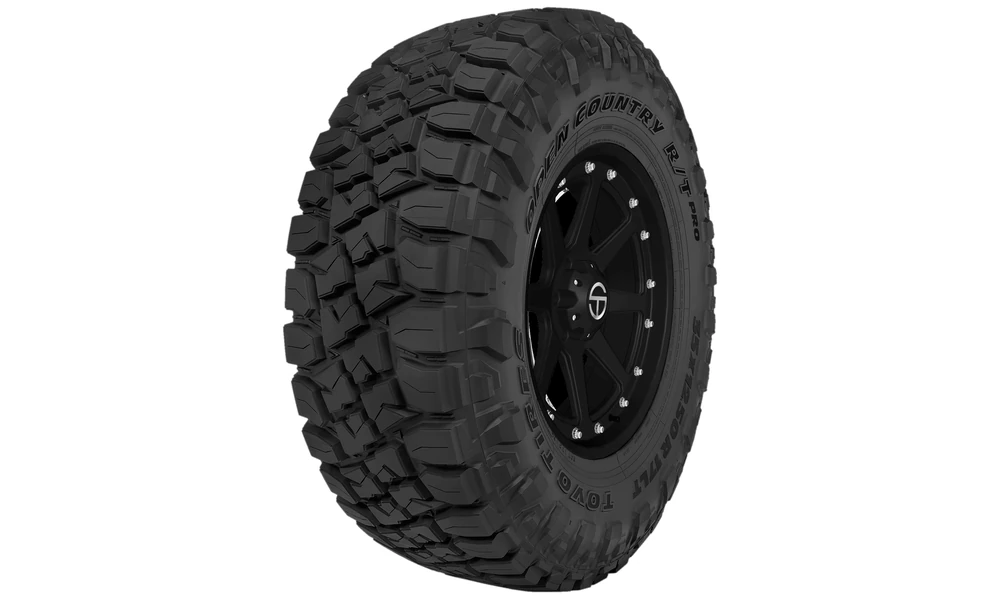
Not every off-road driver needs an extremely aggressive mud-terrain tire. The Toyo Open Country R/T uses a rugged-terrain approach intended to combine substantial off-road capability with more everyday usability than some specialized mud tires.
This makes it worth considering if you drive on paved roads during the week and visit muddy trails or remote destinations on weekends.
Why consider it:
- Rugged tread design for mud, gravel, and dirt.
- Intended to balance off-road traction with road use.
- Suitable for SUVs, pickups, and compatible 4×4 vehicles.
- A useful middle ground between all-terrain and mud-terrain designs.
What to consider: The R/T designation does not mean every rugged-terrain tire performs identically. Review the exact tire’s specifications, wet-road behavior, load rating, and available sizes before deciding.
Best for: Drivers who need off-road capability without choosing the most specialized mud tire available.
4. BFGoodrich All-Terrain T/A KO3 Best Versatile Alternative
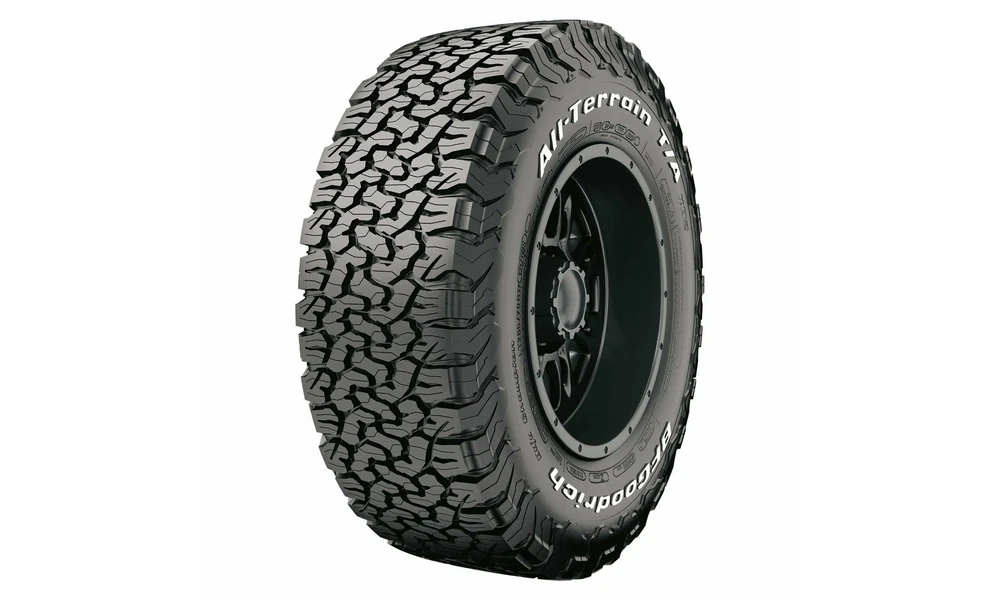
For many drivers in the Philippines, an all-terrain tire can be a more practical purchase than a dedicated mud tire. The BFGoodrich All-Terrain T/A KO3 is designed for mixed on-road and off-road use, with a focus on durability and traction across varied surfaces.
It is worth considering if your vehicle regularly travels on asphalt but also needs to handle gravel roads, construction access routes, dirt tracks, and occasional muddy sections.
Why consider it:
- Designed for mixed road and off-road driving.
- Reinforced construction aimed at durability.
- Tread features intended to improve traction on varied surfaces.
- Certain versions carry the Three-Peak Mountain Snowflake (3PMSF) marking; verify the specific tire.
What to consider: An all-terrain tire is not equivalent to a dedicated mud tire in every deep-mud situation. If your main activity involves frequent mud bogs and soft trails, compare its performance with a true mud-terrain model.
Best for: Pickup and SUV owners who want one tire for commuting, provincial travel, and occasional off-road trips.
5. Falken Wildpeak A/T4W Best for Everyday Use and Occasional Trails
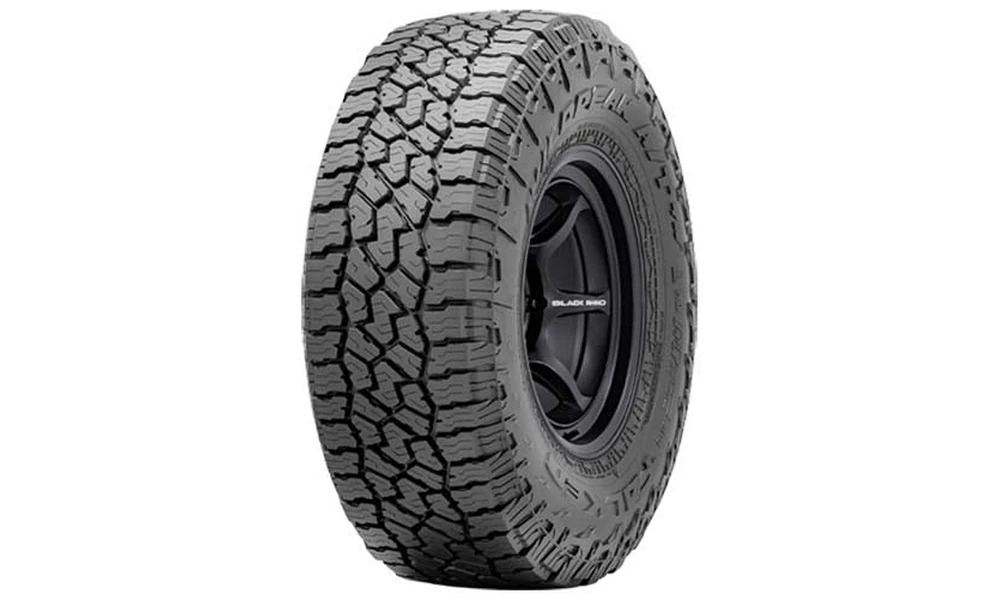
The Falken Wildpeak A/T4W is an all-terrain option for drivers who need versatility. Its category makes it more appropriate for mixed driving than for people who spend most of their time in deep mud.
If your typical week includes city driving, highways, gravel roads, and occasional outdoor trips, it is worth comparing with more aggressive mud tires.
Why consider it:
- All-terrain design for mixed surfaces.
- A practical category for drivers who use paved roads frequently.
- Worth comparing for comfort and durability alongside trail capability.
What to consider: Confirm local availability and the exact specifications for your size. Do not assume that an all-terrain tire will clear deep mud as effectively as a dedicated mud-terrain design.
Best for: Drivers who want off-road versatility without making mud traction their only priority.
6. Nitto Terra Grappler G2 Best for Mixed Daily Driving
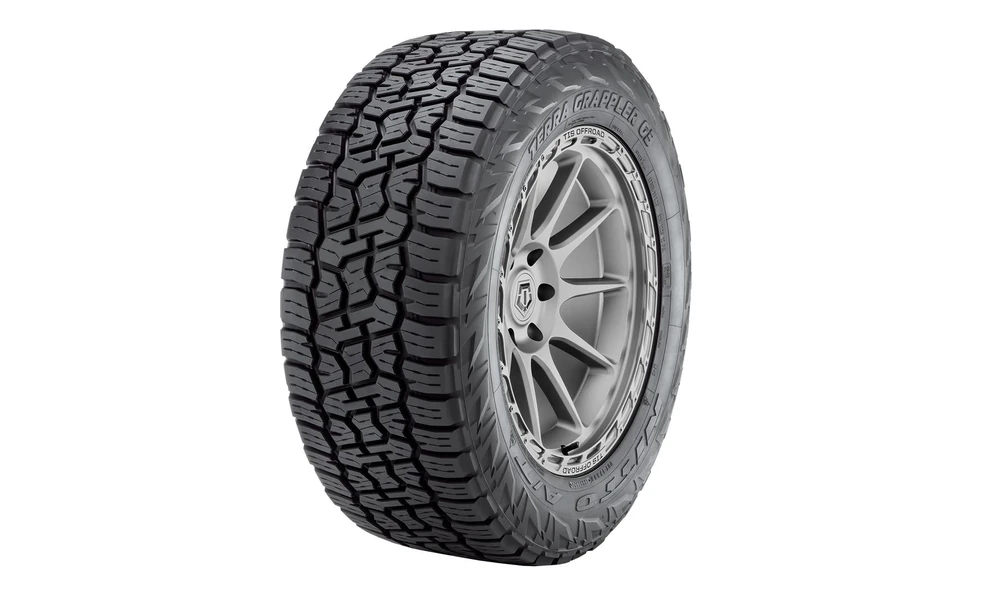
The Nitto Terra Grappler G2 is an all-terrain tire to consider if your vehicle spends more time on paved roads than on extreme trails. Its intended use makes it a different proposition from the KM3 or Open Country M/T.
For many owners, a tire that handles ordinary roads comfortably and still supports light off-road travel can be more useful than an aggressive mud tire that is rarely used to its full potential.
Why consider it:
- All-terrain positioning for mixed use.
- A potential option for pickups and SUVs that alternate between roads and unpaved routes.
- Worth comparing if highway use and everyday practicality matter.
What to consider: Check current local availability, size, load rating, and manufacturer specifications. Confirm whether the particular fitment matches your vehicle and typical terrain.
Best for: Drivers who need an all-terrain tire for commuting, provincial travel, and occasional dirt roads.
7. Yokohama Geolandar A/T G015 Best for Light Off-Road Use
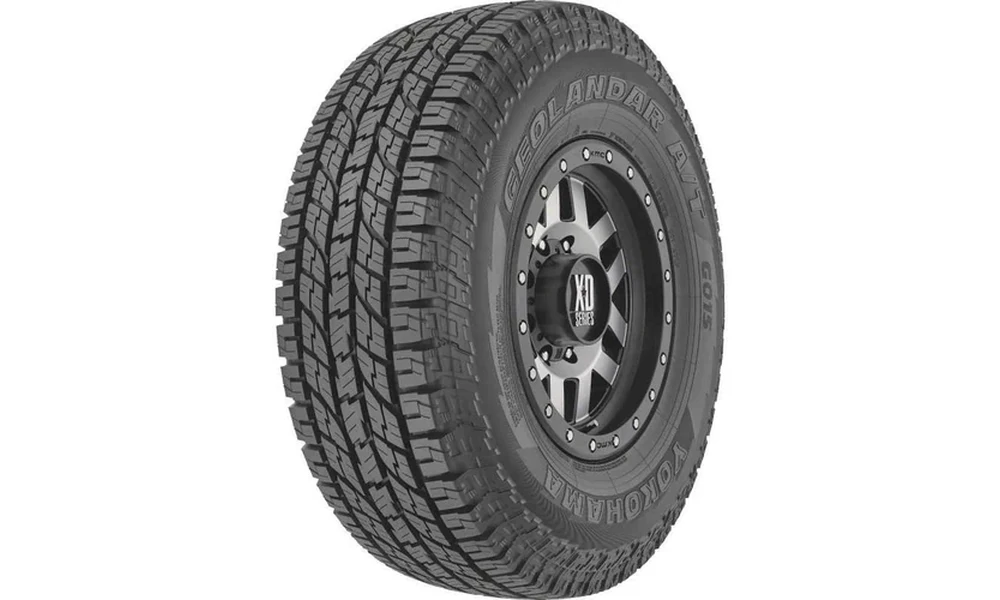
The Yokohama Geolandar A/T G015 is another all-terrain model to compare if your driving involves paved roads, gravel, and occasional rough access routes.
It may be a better category match than a mud tire for drivers who rarely encounter deep mud but still want a tire designed for more varied surfaces than ordinary highway tires.
Why consider it:
- All-terrain design for mixed road conditions.
- A candidate for everyday use with occasional off-road driving.
- Worth comparing against other all-terrain tires in your vehicle’s size.
What to consider: It should not be treated as a direct substitute for a dedicated mud tire in extreme off-road conditions. Compare its specifications with your intended terrain and the manufacturer’s fitment recommendations.
Best for: SUV and pickup owners who need everyday versatility more than maximum mud-clearing ability.
Mud-Terrain vs. All-Terrain Tires: Which Should You Buy?
Choosing the right category is often more important than choosing between two brands.
| Feature | Mud-Terrain (M/T) | All-Terrain (A/T) |
| Deep mud | Generally the stronger category | Depends on tread design and mud depth |
| Gravel and dirt | Very capable | Very capable |
| Highway comfort | Often noisier and firmer | Usually more road-friendly |
| Daily commuting | Can be a compromise | Often the more practical choice |
| Fuel consumption | May increase, depending on tire and setup | Often a better fit for mixed use |
| Best use | Frequent, challenging off-road driving | Daily driving plus occasional off-road trips |
These are general comparisons. Actual performance depends on the specific tire, vehicle, tire pressure, tread condition, load, and terrain.
Choose mud-terrain tires if:
- You frequently drive through deep, sticky mud.
- Your routes include challenging trails and loose soil.
- You regularly need aggressive tread to clear mud from the contact area.
- Off-road capability matters more than a quiet highway ride.
Choose all-terrain tires if:
- Most of your driving is on paved roads.
- You visit gravel roads, dirt tracks, or mild trails occasionally.
- You want to balance road comfort with off-road capability.
- You need a more versatile tire for daily use.
What to Look for When Buying Mud Tires in the Philippines
1. Match the tire to your vehicle
Check the tire placard, owner’s manual, and manufacturer guidance for the correct tire size, load index, and speed rating. Do not assume that a tire will fit just because the wheel diameter matches.
Larger tires can affect clearance, steering, braking, gearing, and speedometer accuracy. A modified vehicle may also need additional clearance or suspension adjustments.
2. Consider the local terrain
The Philippines has varied driving conditions, including wet-season mud, rocky mountain roads, loose soil, and paved highways. A tire suitable for one environment may be less effective in another.
For deep mud, look for a genuine mud-terrain design. For mixed use, compare all-terrain options that balance road manners and off-road traction.
3. Check wet-road performance
A tire that performs well in mud may not deliver the same behavior on wet asphalt. Rain, standing water, worn tread, and excessive speed can all reduce control.
If you regularly drive on highways during heavy rain, make wet-road performance a central part of your decision rather than focusing only on tread appearance.
4. Check the load rating
Pickups and SUVs may carry passengers, tools, camping gear, or work equipment. Choose a tire with a suitable load index and construction for the vehicle and its intended loads.
A higher load rating is not a reason to ignore the vehicle manufacturer’s recommendations.
5. Compare the full cost
Compare the price of four tires, installation, balancing, alignment if needed, and any changes required for larger fitments. Ask the dealer about warranty terms and after-sales support.
Prices and availability can vary considerably by tire size and location, so request a quote for your exact fitment instead of relying on a generic online price.
Off-Road Driving Tips for Muddy Philippine Roads
Even the best mud tires cannot eliminate the risks of driving through deep mud or floodwater.
- Inspect the route before entering unfamiliar terrain.
- Avoid water crossings when the depth or current is uncertain.
- Use the correct 4WD mode and low range when your vehicle is equipped for it.
- Maintain steady, controlled momentum instead of sudden acceleration.
- Avoid steering or braking abruptly on slippery surfaces.
- Do not enter ruts that are deeper than your vehicle’s clearance.
- Carry suitable recovery equipment and know how to use it safely.
- After off-road driving or during car maintenance, inspect the tires for cuts, embedded debris, and sidewall damage.
Follow your vehicle’s instructions for four-wheel-drive operation and tire-pressure adjustments. Do not deflate tires beyond safe limits or drive at highway speed with pressures intended only for slow off-road travel.
Final Verdict
For serious mud and rocky trails, the BFGoodrich Mud-Terrain T/A KM3 is a strong option to compare with the Toyo Open Country M/T. If you split your time between paved roads and off-road trips, the Toyo Open Country R/T or an all-terrain model such as the BFGoodrich All-Terrain T/A KO3 may be a more practical fit.
Before buying, confirm the correct size and load rating, check local stock and warranty support, and compare wet-road behavior with off-road traction. The best mud tire is the one that suits your actual routes—not simply the one with the most aggressive tread.
Frequently Asked Questions
What are the best mud tires for off-road driving in the Philippines?
The BFGoodrich Mud-Terrain T/A KM3 and Toyo Open Country M/T are strong candidates for drivers who regularly encounter deep mud and demanding trails. The Toyo Open Country R/T is worth considering for mixed road and off-road use. The best choice depends on fitment, budget, and the terrain you encounter.
Are mud-terrain tires good for rainy roads?
They can provide useful traction on muddy surfaces, but mud-terrain tread does not automatically mean better grip on wet pavement. Compare wet-road performance and drive cautiously in heavy rain, especially where water may be standing on the road.
Should I choose mud-terrain or all-terrain tires for a pickup?
Choose mud-terrain tires if deep mud and difficult trails are frequent parts of your driving. Choose all-terrain tires if you spend most of your time on paved roads and only occasionally drive on dirt or gravel.
Do mud tires increase fuel consumption?
They can. Aggressive tread, heavier construction, increased rolling resistance, and larger tire sizes may increase fuel consumption. The actual effect depends on the tire, vehicle, driving conditions, and modifications.
Can I use mud-terrain tires every day?
Yes, provided the tire is compatible with your vehicle and used within its specifications. However, expect possible trade-offs in road noise, comfort, fuel economy, and wet-pavement handling compared with more road-focused tires.
What tire size is best for off-road driving?
There is no single best size for every 4×4. Use the manufacturer’s recommended fitment as your starting point and consider ground clearance, wheel compatibility, load rating, and any vehicle modifications. Larger tires can require additional changes and may affect handling and braking.
Are all-terrain tires enough for muddy provincial roads?
They may be sufficient for light mud, gravel, and occasional rough roads. For frequent deep mud or challenging trails, a dedicated mud-terrain tire may be more appropriate.