The best truck for snow and winter driving is one that combines four-wheel drive, good ground clearance, stability control, and tires designed for cold weather. The right choice depends on whether you drive through snowy city streets, icy highways, steep mountain roads, or deep snow.
For buyers comparing pickups, the Toyota Tacoma, Ford F-150, Chevrolet Silverado 1500, Ram 1500, and Toyota Tundra are worth considering. However, winter tires and the specific truck’s configuration often matter more than choosing the biggest or most powerful pickup.
Which Trucks Are Best for Snow and Winter Driving?
1. Ford F-150: Best All-Around Winter Pickup
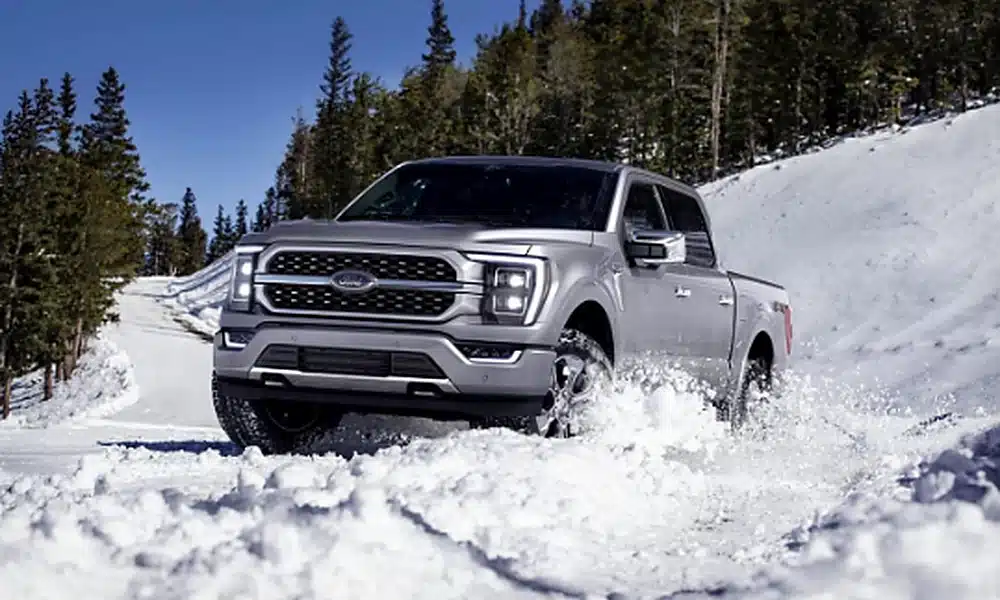
The Ford F-150 is a strong choice for drivers who need a truck for everyday commuting, winter travel, towing, and outdoor work. Properly equipped four-wheel-drive versions can provide useful traction on snow-covered roads, while available drive modes help drivers adapt to changing surfaces.
Why consider it:
- Available four-wheel drive (4WD).
- Multiple engine and configuration options.
- Useful ground clearance for deeper snow, depending on configuration.
- Suitable for work, family use, and long-distance winter driving.
Best for: Drivers who want one pickup for daily use and challenging winter conditions.
Watch out for: A large truck can be harder to control and stop on ice. Choose winter-rated tires rather than relying on 4WD alone.
2. Toyota Tacoma: Best Midsize Truck for Winter Adventures
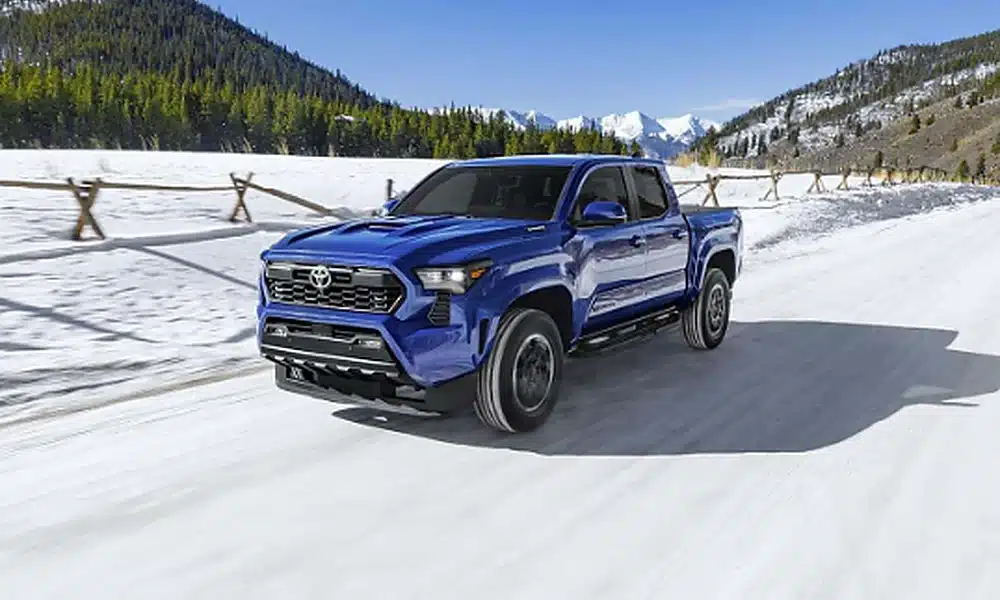
The Toyota Tacoma is worth considering if you want a smaller pickup for snowy back roads, mountain trips, and outdoor adventures. Its available 4WD systems and off-road-oriented configurations can help on uneven, snow-covered terrain.
Why consider it:
- Midsize dimensions can make it easier to maneuver than a full-size pickup.
- Available 4WD and terrain-focused features.
- Useful ground clearance on suitable trims.
- Practical for drivers who regularly travel beyond paved roads.
Best for: Drivers who prioritize maneuverability and outdoor capability.
Watch out for: Off-road tires are not automatically the best tires for icy pavement. Check winter traction ratings and braking performance.
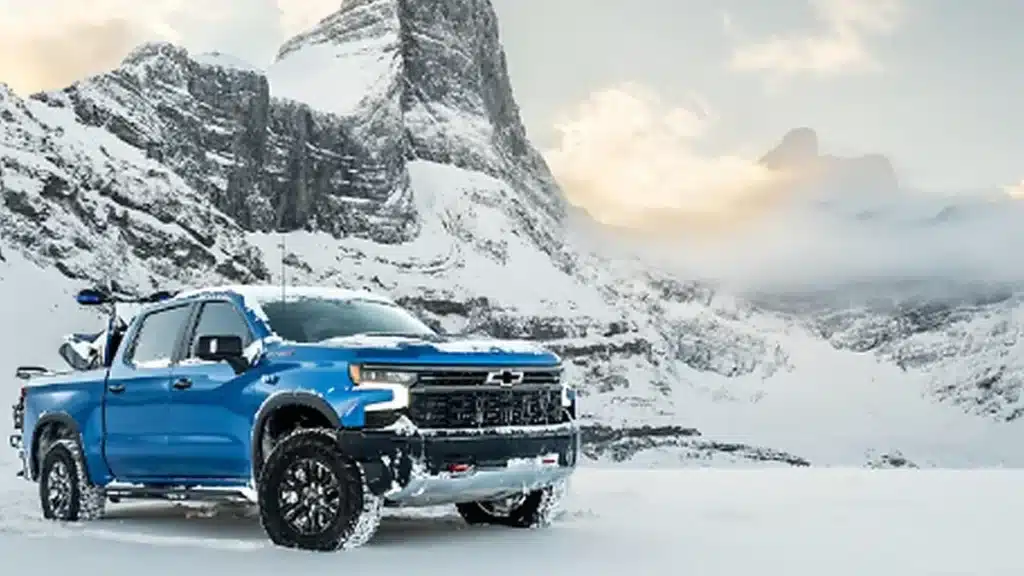
3. Chevrolet Silverado 1500: Best for Work and Heavy-Duty Winter Use
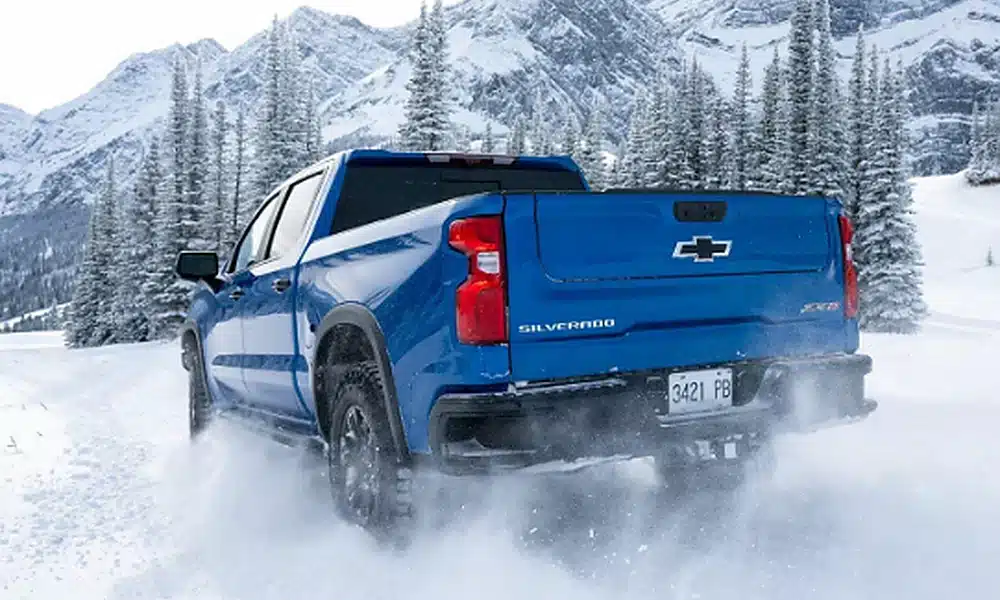
The Chevrolet Silverado 1500 offers a range of configurations for drivers who need winter traction alongside towing and hauling capability. A properly equipped 4WD model is particularly useful for rural roads and work sites that receive regular snowfall.
Why consider it:
- Available 4WD configurations.
- Multiple cab, bed, and powertrain options.
- Useful towing and hauling capability.
- Suitable for drivers who need a versatile work truck year-round.
Best for: Contractors, rural drivers, and people who need a winter-capable pickup for work.
Watch out for: Towing and carrying heavy loads do not automatically improve traction. Extra weight can change braking distances and handling.
4. Ram 1500: Best for Winter Comfort
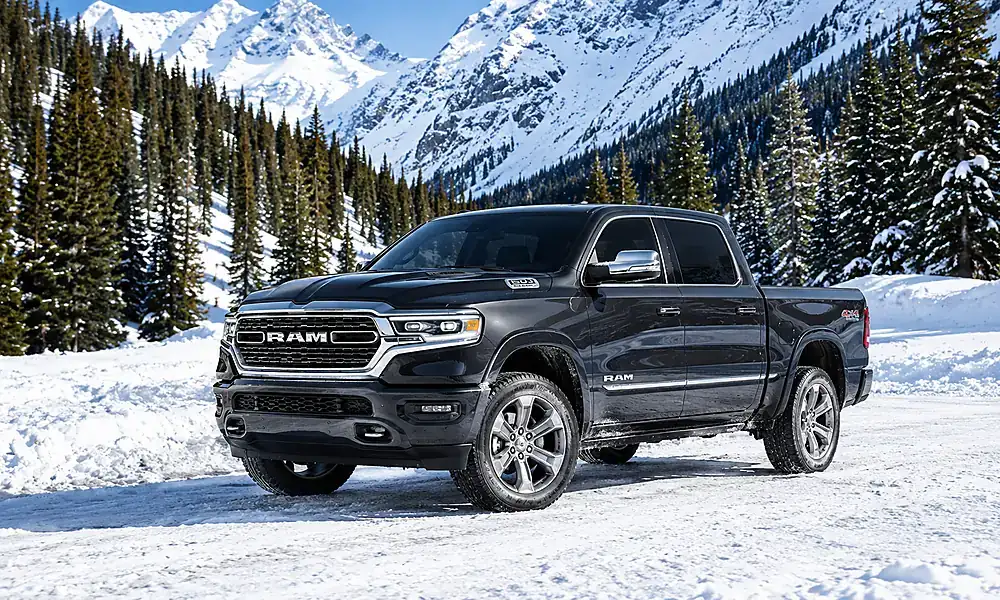
The Ram 1500 is a compelling option for drivers who spend long hours on winter highways and want a comfortable cabin. Certain configurations offer 4WD, while suspension and equipment vary by model and trim.
Why consider it:
- Available 4WD.
- Comfortable interior options for long journeys.
- Strong capability for everyday work and recreational use.
- Multiple configurations to suit different needs.
Best for: Drivers who combine winter commuting with long-distance travel and occasional towing.
Watch out for: Confirm that the exact model has the drivetrain and tires you need. Comfort features do not substitute for winter traction.
5. Toyota Tundra: Best Full-Size Toyota Pickup
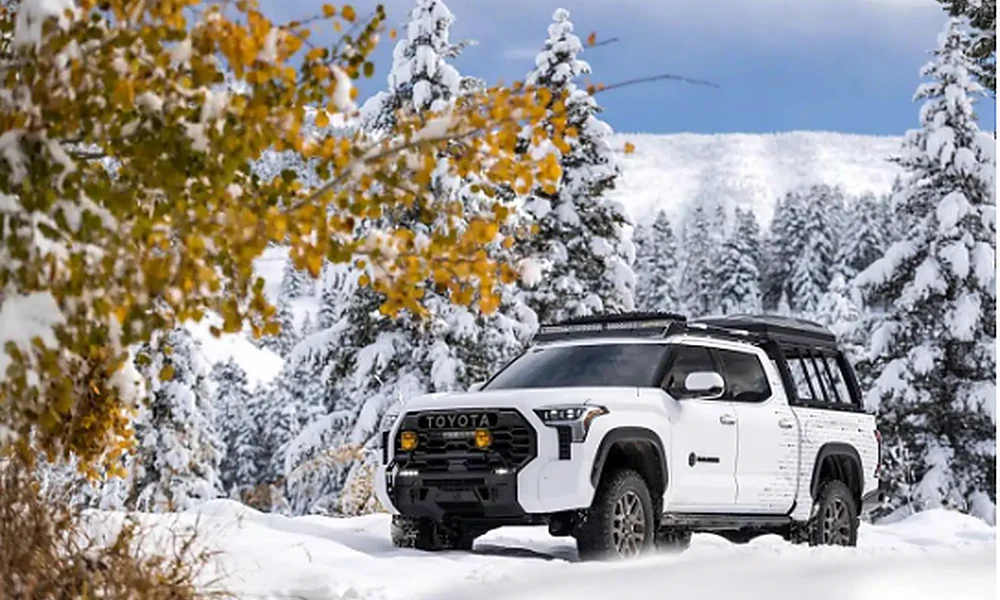
The Toyota Tundra is another option for drivers who want a full-size pickup with available 4WD and substantial towing capability. It can be a practical choice for snowy rural areas, provided the configuration is suitable for the terrain.
Why consider it:
- Available 4WD configurations.
- Full-size cabin and bed options.
- Useful towing and hauling capability.
- Suitable for drivers who prefer a larger pickup.
Best for: Drivers who want a full-size truck for winter travel, work, and recreation.
Watch out for: Its size may be inconvenient on narrow roads or in tight parking areas. Deep snow also requires adequate clearance and suitable tires.
Best Trucks for Snow: Quick Comparison
| Truck | Best use | What to prioritize |
| Ford F-150 | All-around winter driving | 4WD and winter tires |
| Toyota Tacoma | Snowy back roads | 4WD, clearance, winter-rated tires |
| Chevrolet Silverado 1500 | Work and rural roads | 4WD and suitable load-rated tires |
| Ram 1500 | Comfortable winter travel | 4WD and highway winter traction |
| Toyota Tundra | Full-size winter capability | 4WD, tire selection, road clearance |
These are practical recommendations, not a definitive performance ranking. Actual winter capability varies with model year, trim, tires, drivetrain, weight, and road conditions.
What Makes a Truck Good for Snow and Winter Driving?
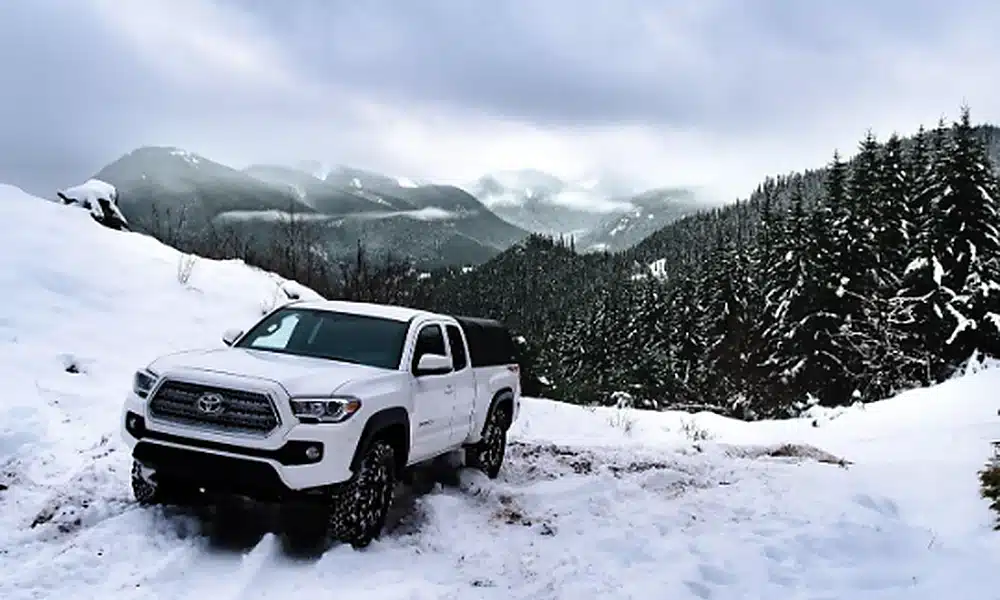
Choosing the right truck involves more than selecting a powerful engine. These are the features that matter most.
Four-wheel drive versus all-wheel drive
Four-wheel drive is common on pickups and can help distribute power to the wheels when accelerating on snow. Some systems allow the driver to select a suitable mode for slippery surfaces.
However, 4WD does not automatically make a truck stop faster or turn better on ice. Drive according to the road conditions and the vehicle manufacturer’s instructions.
Winter tires
Winter tires are one of the most important upgrades for snowy and icy roads. Their rubber compounds and tread designs are intended to improve cold-weather grip.
Look for tires carrying the three-peak mountain snowflake symbol when severe-snow performance is needed. All-terrain tires vary considerably in winter performance, so do not assume every aggressive tread is suitable for ice.
Ground clearance
Higher ground clearance can help a truck travel through deeper snow without its underbody becoming stuck. Nevertheless, clearance alone will not prevent sliding or guarantee that the vehicle can cross a snow-covered road safely.
Electronic stability control
Electronic stability control helps the driver maintain control when the vehicle begins to skid. It is particularly valuable on slippery roads, where abrupt steering or acceleration can cause a loss of control.
Cold-weather reliability
Winter driving can place extra demands on the battery, engine fluids, cooling system, and tires. Check the battery condition, tire pressure, recommended oil viscosity, and coolant protection before winter arrives.
For a broader maintenance routine, see TurbooCruiser’s car maintenance checklist.
Are Gas, Diesel, or Hybrid Trucks Better in Winter?
The best powertrain depends on how you use the truck and the climate in which you drive.
- Gasoline trucks: A sensible choice for many private owners who want straightforward everyday use.
- Diesel trucks: Worth considering for towing and heavy work, but cold starts may require appropriate winter fuel and equipment.
- Hybrid trucks: Can offer fuel-efficiency advantages, although cold temperatures may affect battery performance and fuel economy.
No powertrain guarantees better snow traction. Tire grip, drivetrain configuration, vehicle setup, and driver behavior are more important when comparing winter road performance. Electric pickups, such as the Tesla Cybertruck, are another option to consider, although cold temperatures can affect battery performance and driving range.
Tips for Driving a Pickup in Snow and Ice
- Install suitable winter tires before severe winter weather begins.
- Accelerate and brake smoothly to reduce wheelspin and skidding.
- Increase following distance and reduce speed when visibility or traction is poor.
- Use the appropriate 4WD mode according to the owner’s manual.
- Carry an emergency kit with warm clothing, a flashlight, a shovel, and recovery equipment.
- Clear snow and ice from the windows, mirrors, lights, and roof before driving.
- Avoid cruise control on slippery roads, and never assume 4WD makes icy conditions safe.
If conditions are severe enough that you cannot maintain control, the safest choice may be to delay the trip.
Final Verdict
The Ford F-150 is a strong all-around choice for snow and winter driving, while the Toyota Tacoma is worth considering for drivers who regularly navigate snowy back roads. The Chevrolet Silverado 1500, Ram 1500, and Toyota Tundra are also capable options when correctly equipped.
Before choosing, prioritize winter tires, suitable 4WD equipment, stability control, and enough ground clearance for the conditions you actually encounter. These factors will make a greater practical difference than simply buying the largest truck.
Frequently Asked Questions
What is the best truck for snow and winter driving?
The Ford F-150 is a strong all-around option, while the Toyota Tacoma suits drivers who want a more maneuverable midsize pickup. The best choice depends on road conditions, budget, payload requirements, and the truck’s exact equipment.
Is 4WD or AWD better for snow?
Both can improve traction when accelerating on slippery surfaces. Pickups commonly offer 4WD, which is useful for snow-covered roads and some rough terrain. Neither system replaces winter tires or careful braking.
Are pickup trucks safe on icy roads?
They can be safe when properly equipped and driven cautiously, but their weight, tires, and handling characteristics matter. A pickup can still slide or lose control on ice, even with 4WD.
Are heavier trucks better in snow?
Not necessarily. More weight can help with certain traction situations, but it also increases the energy that must be managed during braking. Tire quality and vehicle setup remain crucial.
Should I use snow tires on a 4WD truck?
Yes, if you regularly drive in severe winter conditions. Suitable winter tires can improve grip and braking on cold, snowy, and icy surfaces regardless of whether the truck has 4WD.
What is the best budget truck for winter driving?
A used 4WD pickup with a sound maintenance history and a good set of winter tires may offer better value than an expensive truck with unsuitable tires. Compare the vehicle’s condition, maintenance costs, and available safety features before buying.