
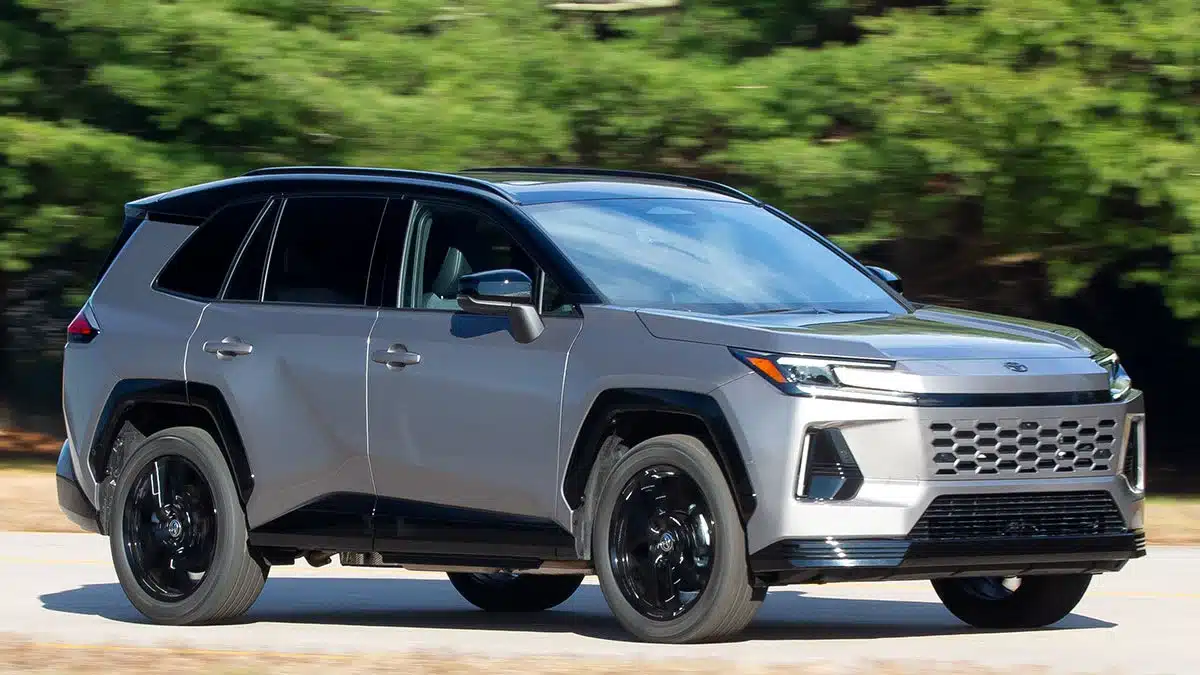
Key Takeaways
Impressive fuel efficiency up to 43 MPG combined
Flexible trim options ranging from budget-friendly LE to luxury Limited
Proven long-term reliability paired with standard AWD capability
Strong real-world performance with minimal ownership headaches
Tired of frequent gas station stops and rising fuel costs? The Toyota RAV4 Hybrid combines spacious comfort, modern technology, and impressive fuel efficiency in one practical SUV. If you’re comparing different models, explore the best hybrid SUVs of 2026 to find an option that fits your driving needs and budget. Its electric-assist powertrain helps you save money on fuel without changing your driving habits.
At Turboocruiser, we took a deep dive into the latest model to see how it holds up in real-world driving conditions. Whether you are a daily commuter navigating stop-and-go city traffic or an adventurous road-tripper, this breakdown will help you decide if it deserves a spot in your driveway.
The Toyota RAV4 Hybrid delivers an ideal balance of practical efficiency, everyday utility, and proven dependability. Achieving up to an EPA-estimated 43 MPG combined, it features standard Electronic On-Demand All-Wheel Drive across most trims. With flexible pricing starting around $31,900 and a trim lineup tailored for budget, luxury, or off-road needs, it remains one of the smartest compact crossover choices available.
What Makes the RAV4 Hybrid Powertrain So Popular?
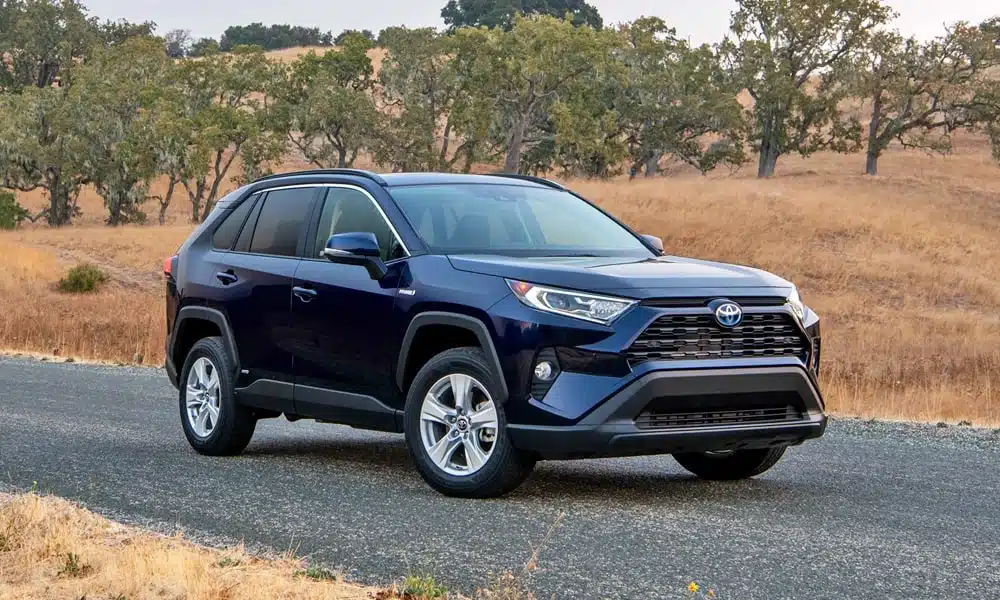
Underneath the bold hood sits Toyota’s refined 2.5-liter four-cylinder engine paired with electric motors. Together, this system generates 236 net combined horsepower on All-Wheel Drive configurations, giving it punchy acceleration whenever you step on the gas pedal. Unlike gas-only compact crossovers that struggle when entering highway traffic, this hybrid setup delivers instant electric torque.
You do not even have to plug it in; the battery recharges itself automatically through regenerative braking while you slow down. The setup combines a 2.5L 4-cylinder gas engine with electric motor-generators to produce 236 horsepower and a self-charging battery, feeding power straight to the standard Electronic On-Demand AWD system. If you’re also considering fully electric alternatives, compare the available options to see whether an electric sedan better suits your driving needs.
Breaking Down the RAV4 Hybrid MPG and Efficiency
When shopping for an eco-friendly crossover, fuel savings usually top the priority list. Fortunately, the RAV4 Hybrid MPG numbers consistently outperform standard gasoline rivals across city streets and open highways.
The EPA estimates reach up to 47 MPG in city driving and 40 MPG on the highway, resulting in a combined rating of 43 MPG for front-wheel-drive variants, while AWD versions maintain a stellar 41 city and 38 highway split.
Real-World Efficiency Expectations
On paper, front-wheel-drive configurations reach up to 47 MPG city and 40 MPG highway, while standard AWD trims rate around 43 MPG city and 37 MPG highway. Based on available data and testing by the team at Turboo Cruiser, real-world fuel economy generally hovers around 38 to 41 MPG depending on driving habits, tire pressures, and ambient weather conditions.
Cold winter months may temporarily drop your efficiency because the gas engine runs longer to heat the cabin. However, even during cold spells, you will still enjoy far better gas mileage than standard non-hybrid vehicles in its class.
Exploring RAV4 Hybrid Price and Trim Options
Choosing the right vehicle means finding a balance between features and budget. The RAV4 Hybrid price structure offers excellent versatility across several distinct trim levels, making it easy to find a trim that fits your wallet.
The entry-level LE starts around $31,900 and includes a 10.5-inch touchscreen alongside Toyota Safety Sense. Moving up, the SE costs roughly $34,500 and brings a sport-tuned suspension and 18-inch alloy wheels. The XLE Premium sits at about $37,200 with synthetic leather upholstery, a power liftgate, and a power moonroof.
For outdoor enthusiasts, the Woodland trim retails near $38,500 with all-terrain tires and an activity mount. The XSE commands around $39,800, offering two-tone exterior paint and a 12.3-inch digital gauge cluster, while the range-topping Limited reaches roughly $43,300 with ventilated front seats and a premium JBL audio system.
Which Trim Gives You the Best Value?
Budget Buyers: The base LE trim covers all fundamental safety and tech features while giving you maximum fuel savings right out of the gate.
Best Value Overall: The XLE Premium hits the practical sweet spot by adding synthetic leather seating, keyless access, and a power liftgate for under $38,000.
Style & Tech Enthusiasts: The XSE grade brings aggressive styling accents, two-tone roof options, and sharper handling response.
Understanding RAV4 Hybrid Reliability and Known Problems

Is it built to last? When looking closely at RAV4 Hybrid reliability, Toyota’s track record is hard to beat. The brand’s hybrid powertrains have been refined over more than two decades, making them some of the most dependable mechanical systems on the road today.
Common Issues to Watch For
No vehicle is completely perfect, and buyers should keep a few documented RAV4 Hybrid problems in mind:
High-Voltage Cable Corrosion: Older model years experienced corrosion on the rear electric motor cable (often called “Cablegate”). Toyota addressed this in newer builds with upgraded cable shielding and expanded warranty coverage.
Gas Tank Fueling Discrepancies: Some drivers noted difficulty completely filling the 14.5-gallon gas tank due to the tank’s shape design.
Cabin and Highway Noise: At hard acceleration, the continuous variable transmission (CVT) can cause engine drone inside the cabin.
In most cases, these minor issues do not disrupt daily driving or long-term vehicle health, and proper maintenance keeps these crossovers running smoothly well past 150,000 miles.
Head-to-Head Comparisons
RAV4 Hybrid vs CRV Hybrid
How does it stack up against its biggest rival? A direct RAV4 Hybrid vs CR-V Hybrid comparison reveals two distinct personalities. The Toyota achieves up to 43 combined MPG with standard Electronic AWD on most trims and 236 horsepower, whereas the Honda CR-V Hybrid reaches up to 40 combined MPG with front-wheel drive standard, optional AWD, and 204 horsepower. While the RAV4 provides more cargo space flexibility and higher horsepower, the Honda offers a slightly softer ride comfort.
RAV4 Hybrid vs RAV4 Prime
Are you curious about plug-in capabilities? Comparing the standard hybrid to the RAV4 Prime (Plug-in Hybrid) comes down to how you plan to charge:
Standard Hybrid: Self-charging battery system, lower upfront purchase price, zero need for home charging outlets.
RAV4 Prime (PHEV): Up to 50–52 miles of pure electric driving range before the gas engine kicks in, higher 324 horsepower output, higher initial cost.
If you have easy access to home charging and want electric-only short trips, the RAV4 Prime is a fantastic upgrade. Otherwise, the standard hybrid remains the most practical and hassle-free choice for everyday drivers.
Final Verdict: Is the RAV4 Hybrid Right for You?
When you add up its outstanding fuel efficiency, proven dependability, and practical interior space, it is easy to see why the RAV4 Hybrid remains a top seller. It handles daily commutes effortlessly while giving you peace of mind during long family trips.
If you want a versatile crossover that holds its resale value remarkably well, this SUV deserves a spot at the top of your test-drive list. If you’re also interested in fully electric alternatives, explore these Jeep electric car models for 2026 to compare their range, pricing, and features. Head over to Turboocruiser for more hands-on car reviews, maintenance guides, and automotive news!
Frequently Asked Questions
What is the real-world fuel economy of the RAV4 Hybrid?
While official EPA estimates reach up to 43 MPG combined, most drivers report getting around 38 to 41 MPG in real-world driving conditions across mixed city and highway routes.
Is the Toyota RAV4 Hybrid expensive to maintain long-term?
No, routine maintenance costs are quite low and comparable to standard gasoline vehicles because hybrid components like brake pads actually last significantly longer due to regenerative braking systems.
Does the RAV4 Hybrid require special charging stations?
No, standard hybrid models self-charge through kinetic energy while driving, meaning you never have to plug them into an electrical wall outlet or public charging station.