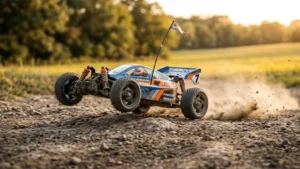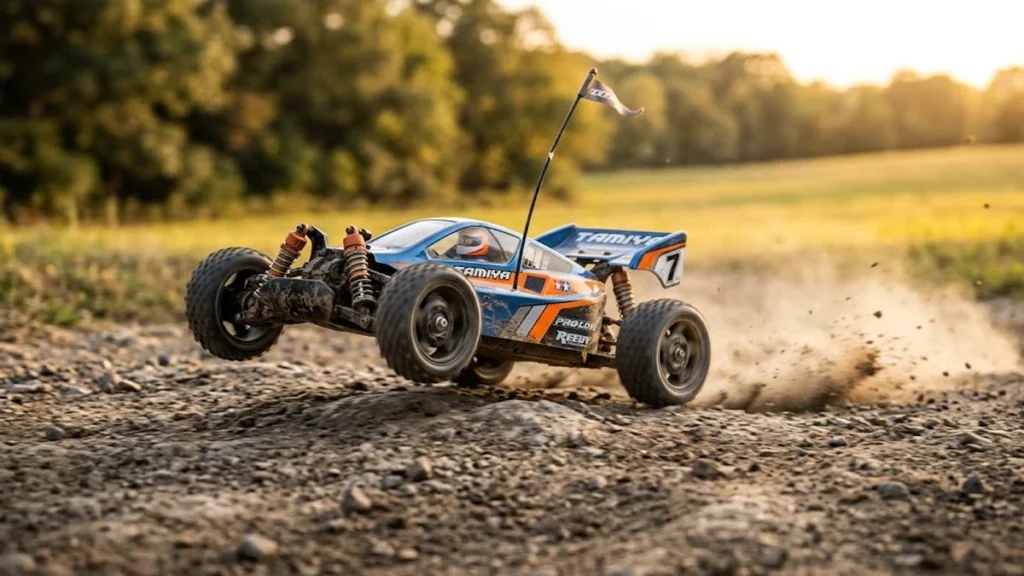
There is something satisfying about holding a controller, pressing the throttle, and watching a small car accelerate across the ground. Its tires spin, the suspension reacts to bumps, and a quick turn can send it drifting around a corner. For a moment, an ordinary driveway or empty patch of land becomes a miniature racing circuit.
That is the appeal of RC cars. They combine the excitement of driving with the freedom to experiment, race, customize, and learn how machines work.
RC cars, short for remote-controlled cars, are miniature vehicles operated using a handheld transmitter or compatible control system. Some are designed for children and casual play, while others are sophisticated hobby machines capable of high speeds, off-road driving, competitive racing, and extensive customization.
Whether you are buying your first remote-control car or looking for a serious hobby-grade model, understanding the different types, power systems, and features can help you make a better choice.
What Are RC Cars?
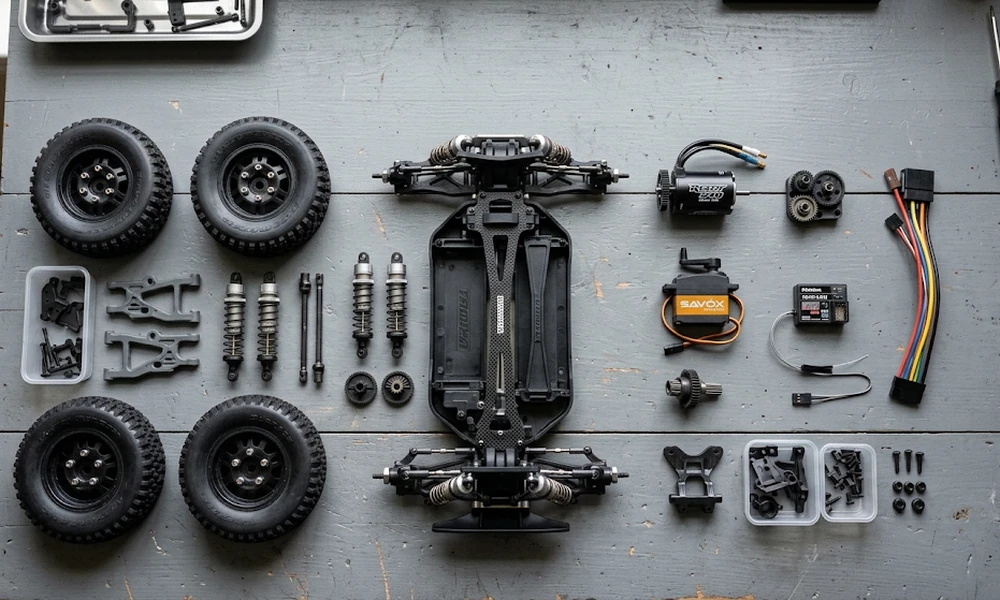
RC cars are vehicles controlled remotely through a transmitter that sends commands to a receiver inside the car. Depending on the model, the controls can manage acceleration, braking, steering, and sometimes additional functions.
Most modern RC cars use radio-frequency communication, commonly in the 2.4 GHz band. This allows compatible systems to communicate over short distances without requiring a physical connection between the controller and vehicle. A typical RC car includes several important components:
- Transmitter: The handheld controller used to operate the vehicle.
- Receiver: Receives commands from the transmitter.
- Motor: Provides the power that moves the car.
- Electronic speed controller: Regulates motor speed in electric models.
- Steering servo: Moves the steering mechanism.
- Battery or fuel system: Supplies the energy needed to operate the vehicle.
- Chassis and suspension: Support the vehicle and help it handle different surfaces.
The quality of these components influences how the car accelerates, steers, handles rough terrain, and withstands repeated use.
Different Types of RC Cars
Not all RC cars are designed for the same purpose. Choosing the right style depends on where you want to drive, how much maintenance you are comfortable with, and what kind of experience you want.
1. On-Road RC Cars
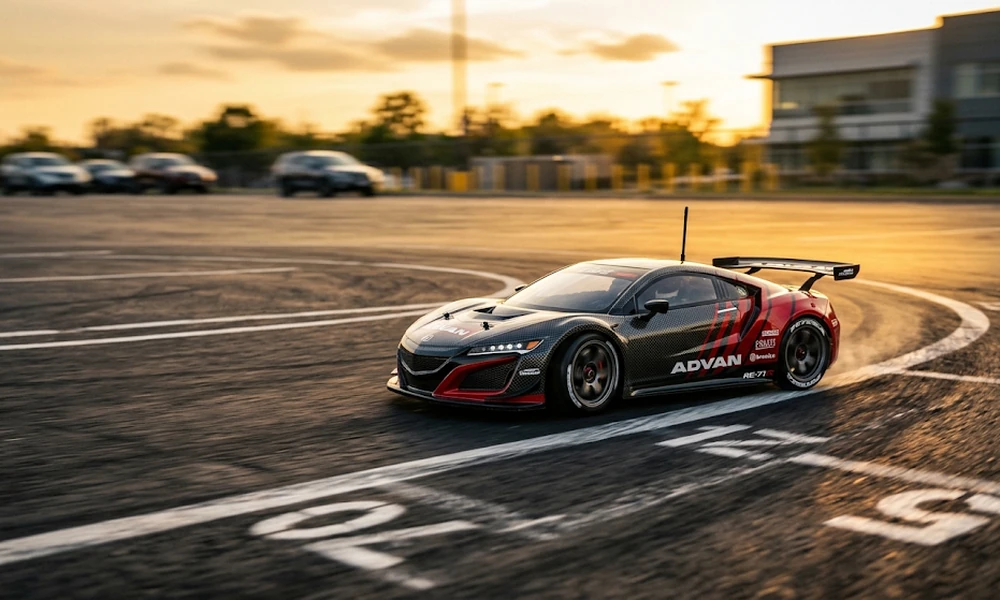
On-road RC cars are designed for smooth surfaces such as driveways, paved paths, and racing tracks. They usually feature lower ground clearance and tires optimized for grip on relatively even surfaces.
Their low stance can help them handle corners with precision. Some are styled after real-world sports cars, touring cars, or racing machines.
On-road models are a good option for people who enjoy circuit racing, controlled handling, and driving on smooth surfaces.
2. Off-Road RC Cars
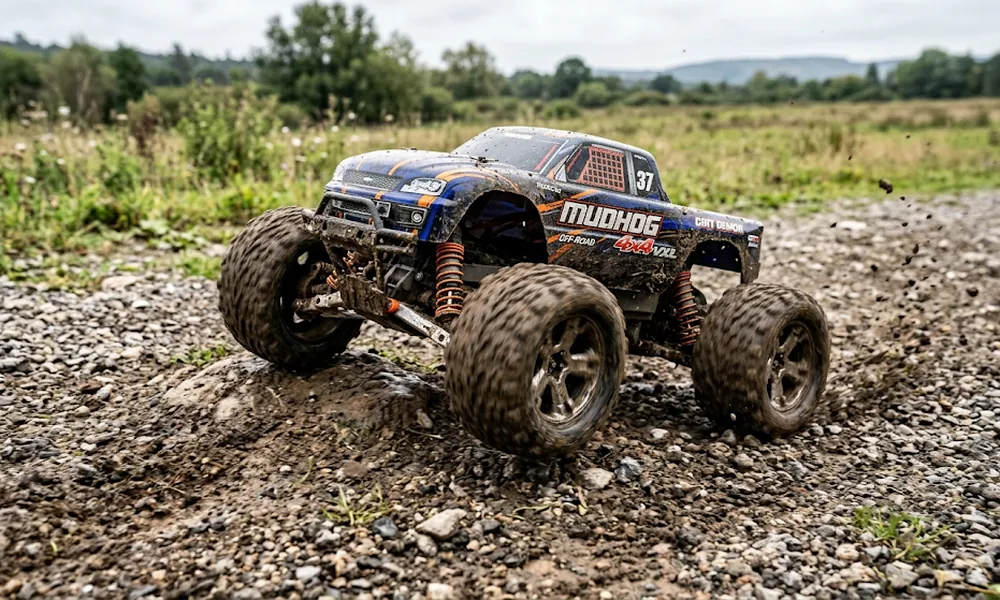
Off-road RC cars are built to handle uneven ground, loose dirt, gravel, and other challenging surfaces. Their higher ground clearance, suspension travel, and tire designs help them cope with obstacles.
Some models are designed for trail driving, while others focus on jumps, speed, or racing across dirt tracks.
If you want to drive in parks, open fields, or rough outdoor areas, an off-road model is often more practical than a low-slung road car.
3. RC Monster Trucks
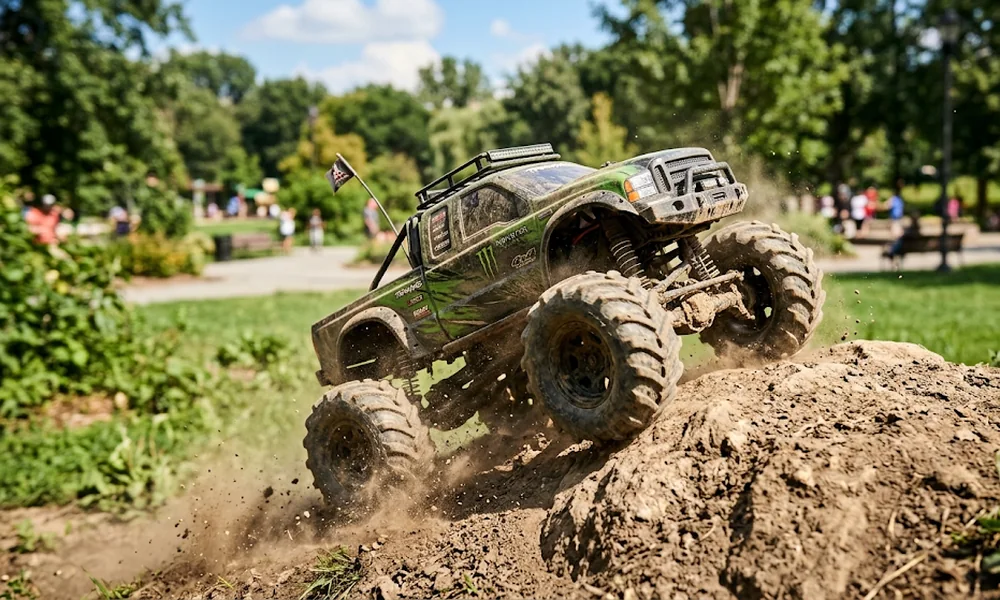
Monster-truck RC cars are known for their oversized tires, tall suspension, and rugged appearance. Many are designed to climb over obstacles, drive across rough ground, and handle jumps.
Their large tires can help them cross surfaces that would stop smaller road-focused cars. However, their height and weight can affect cornering, and repeated hard landings can put stress on suspension parts.
Monster trucks are especially appealing to drivers who prioritize rugged fun over precise circuit racing.
4. RC Drift Cars
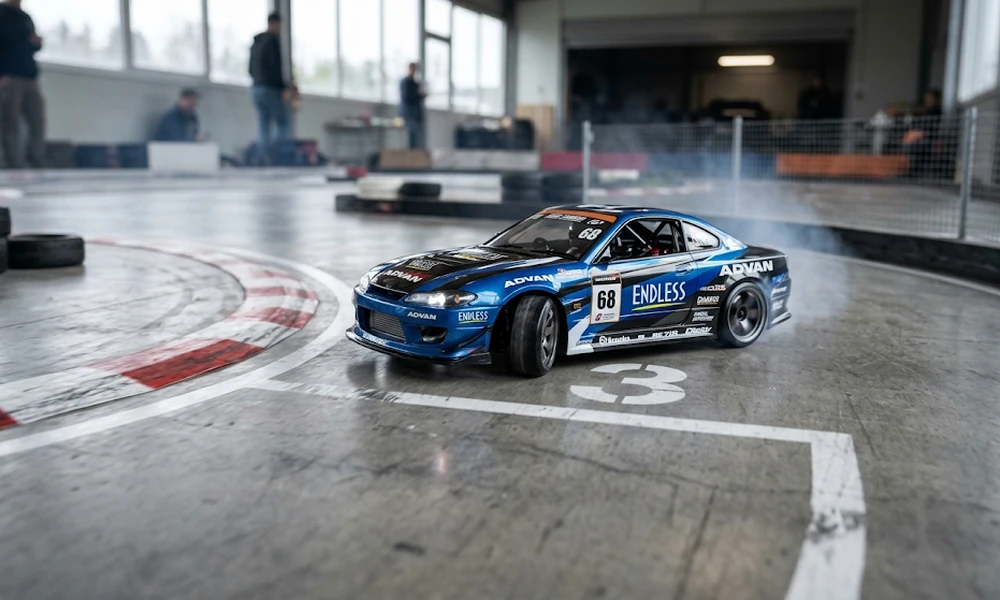
RC drift cars are designed to slide through corners while the driver maintains control of the vehicle. They typically use specialized tires and chassis setups that allow controlled sideways movement on suitable surfaces.
Drifting requires practice. Drivers must coordinate throttle and steering to control the car’s angle and direction rather than simply aiming for maximum grip.
For enthusiasts who enjoy technique, smooth movements, and stylish driving, RC drifting can become a rewarding hobby.
5. RC Buggies and Truggies
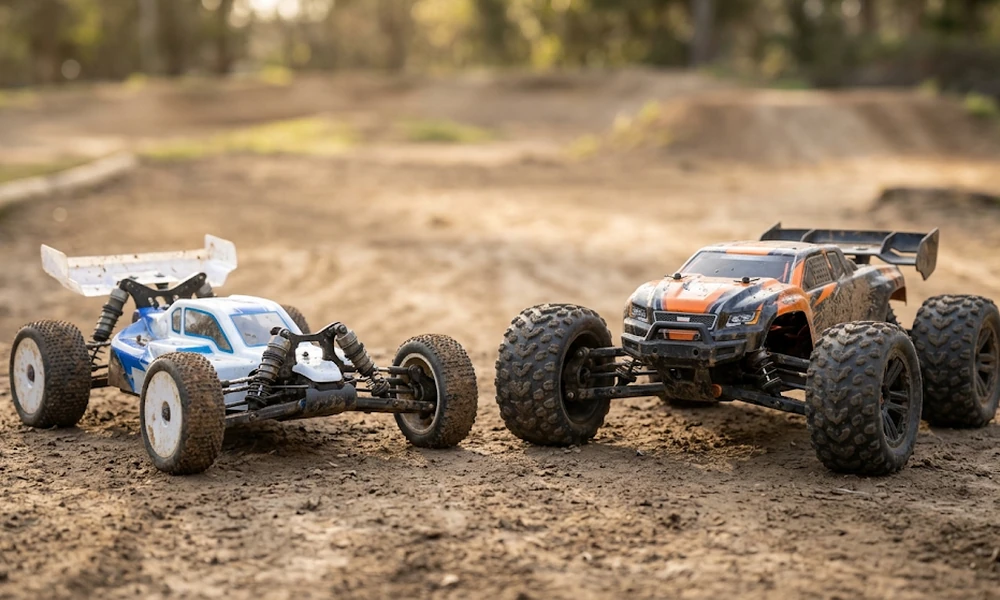
RC buggies generally have lightweight bodies, relatively narrow profiles, and suspension systems suited to dirt tracks. They are commonly used in off-road racing.
Truggies combine some characteristics of buggies and trucks, often featuring wider stances and larger tires. Depending on the model, they can offer a balance between speed, stability, and rough-terrain capability.
Both types are worth considering if competitive off-road driving interests you.
6. RC Crawlers
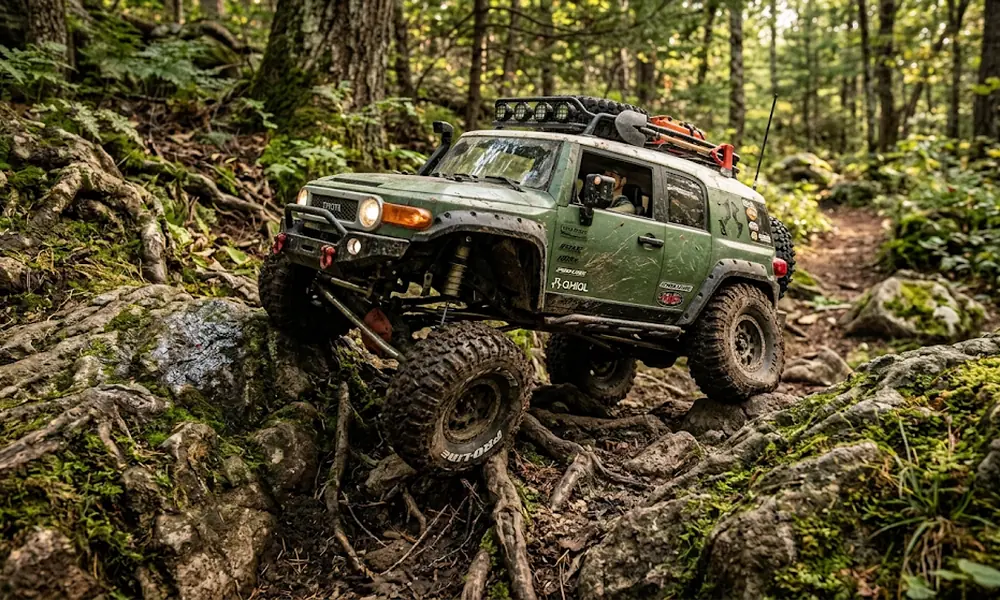
RC crawlers are designed to navigate rocks, roots, steep inclines, and technical obstacles at controlled speeds.
Unlike speed-focused RC cars, crawlers emphasize torque, traction, suspension articulation, and precise throttle control. Their slow pace is part of the challenge.
Many enthusiasts enjoy building realistic trails and modifying their crawlers with different tires, suspension components, lights, and body accessories.
7. RC Cars for Children
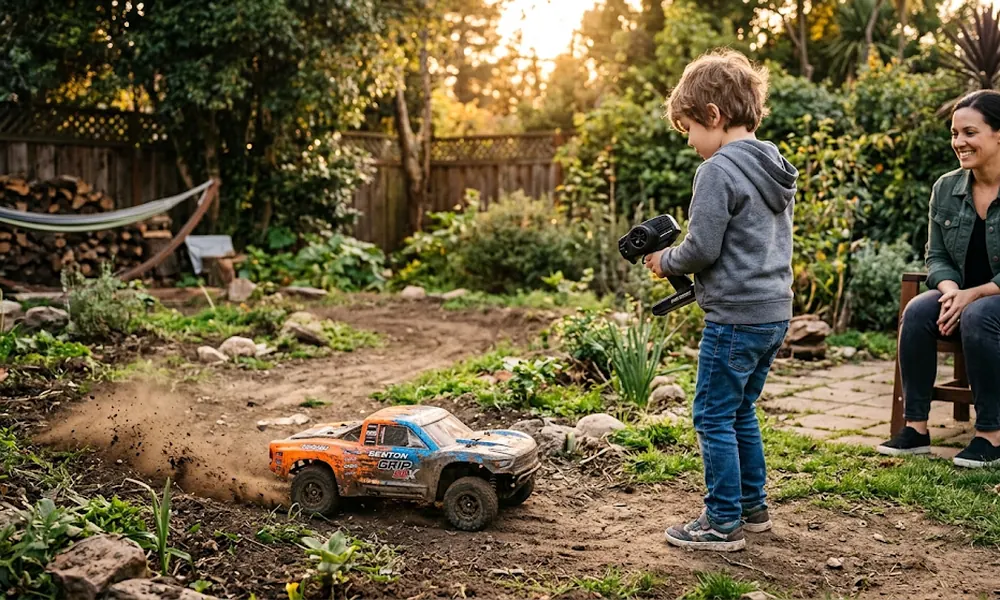
Entry-level RC cars are often designed for simple operation, durable construction, and accessible pricing. They can introduce children to basic steering, acceleration, and coordination.
For younger users, choose an age-appropriate model with straightforward controls and follow the manufacturer’s battery and charging instructions. Adult supervision may be necessary, especially when charging batteries or operating faster vehicles.
Electric vs. Nitro and Gas-Powered RC Cars
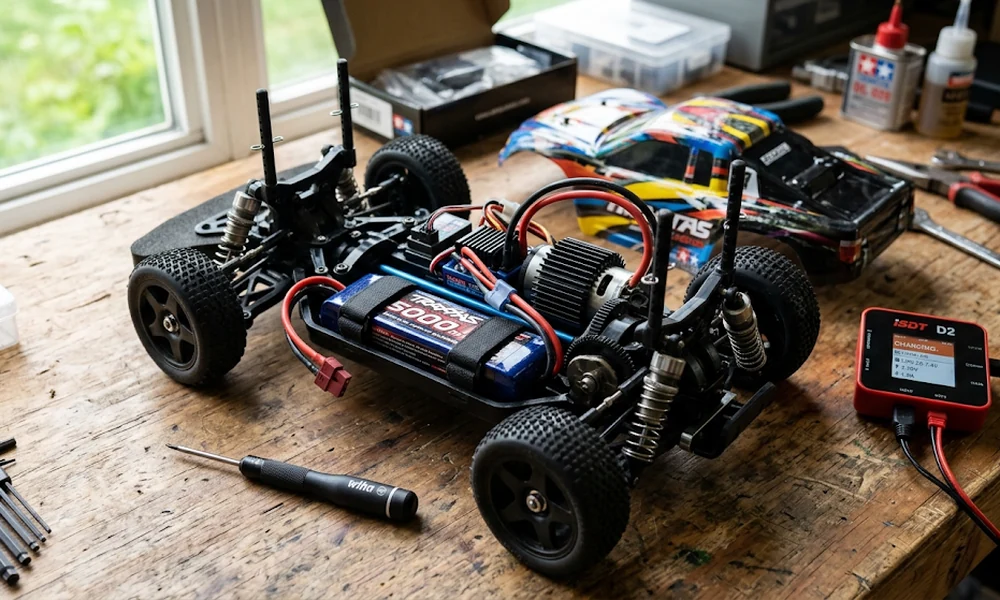
One of the biggest decisions when buying an RC car is choosing its power system.
Electric RC Cars
Electric RC cars use rechargeable batteries to power an electric motor. They are popular because they are generally easy to operate, start quickly, and require less routine mechanical maintenance than nitro models.
Many hobby-grade electric cars use brushless motors, which can deliver strong performance and good efficiency. Brushed motors are also common in beginner models and can be suitable for casual driving.
Electric models are often the best starting point for newcomers because charging a battery and driving the car is relatively straightforward.
Nitro RC Cars
Nitro RC cars use small combustion engines powered by specialized nitro fuel. They produce engine noise and exhaust, creating an experience that resembles miniature motorsport.
However, nitro models usually require more maintenance and mechanical knowledge. Owners may need to tune the engine, maintain the fuel system, clean components, and understand starting procedures.
They can be rewarding for enthusiasts who enjoy mechanical adjustments as much as driving, but they are not always the simplest first choice.
Gas-Powered RC Cars
Some larger RC vehicles use gasoline-based fuel systems. These models are generally associated with larger platforms and specialized hobby use.
They can offer long running times and a distinctive engine-driven experience, but their purchase prices, size, noise, fuel requirements, and maintenance needs may make them less suitable for beginners.
For most first-time buyers, a rechargeable electric RC car is the most straightforward option.
Brushed vs. Brushless RC Cars
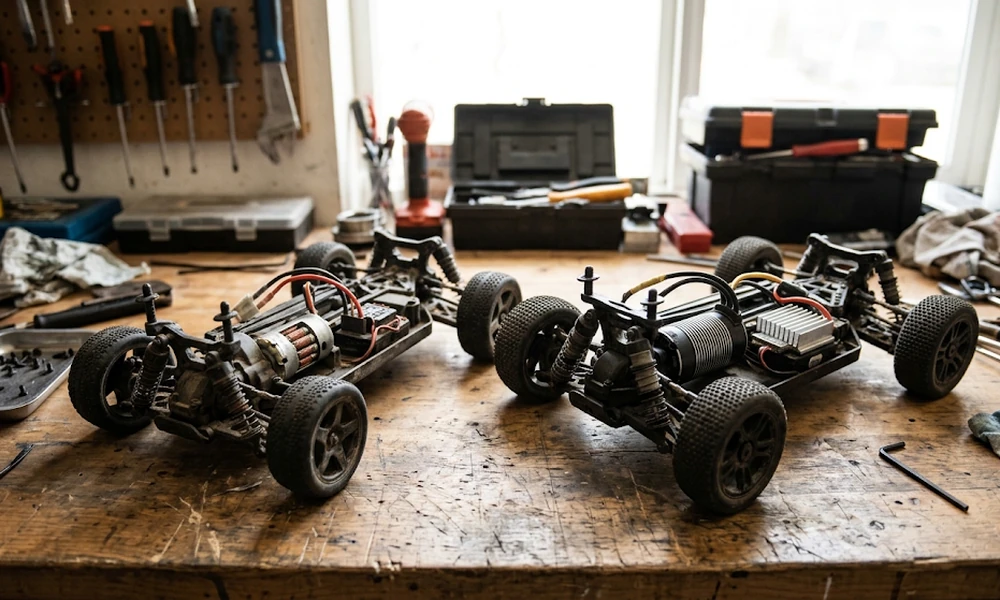
Electric RC cars commonly use either brushed or brushless motors.
Brushed motors are often found in affordable entry-level vehicles. They can provide an accessible introduction to the hobby and are generally straightforward to use.
Brushless motors typically offer higher performance potential, improved efficiency, and less motor maintenance because they do not use the same physical brushes found in brushed designs. Their actual performance depends on the motor, electronic speed controller, battery, gearing, and vehicle setup.
A brushless RC car can be extremely fast, so it is important to match the model to your driving ability and available space.
How Fast Can RC Cars Go?
RC car speeds vary widely. Small toy-grade models may move at modest speeds, while performance-focused hobby models can travel at speeds that demand substantial open space and careful control.
Some specialized RC cars can exceed 60 mph, and certain heavily modified models can go much faster under appropriate conditions. These figures are not representative of every RC car, and manufacturer speed claims may depend on specific batteries, gearing, surfaces, and test conditions.
Speed is not the only factor worth considering. Acceleration, steering response, braking, traction, and durability all influence how enjoyable a vehicle is to drive.
A manageable car that handles predictably may be more fun for a beginner than an extremely fast model that is difficult to control.
How to Choose the Right RC Car
The best RC car depends on your intended use, experience, budget, and maintenance preferences.
Decide Where You Will Drive
Start by considering your driving environment.
For paved surfaces, an on-road car may be the best fit. For dirt and uneven ground, consider a buggy, monster truck, or off-road truck. For rocky obstacles, a crawler is more appropriate.
Choosing a vehicle that matches the terrain can improve handling and reduce unnecessary damage.
Consider Your Experience
Beginners usually benefit from simple controls, durable construction, readily available replacement parts, and a power system that does not require extensive tuning.
Experienced enthusiasts may prefer advanced suspension adjustments, brushless power, programmable electronics, or a model designed for competitive racing.
Check Replacement Parts Availability
RC cars can experience wear and damage, especially when driven hard. Tires, suspension arms, gears, steering components, and body shells may eventually need replacement.
Before purchasing an unfamiliar model, check whether spare parts are available and whether repairs can be completed without replacing the entire vehicle.
Understand the Battery Requirements
Electric RC cars use different battery types and capacities. Battery choice affects runtime, charging time, weight, and performance.
Always use a compatible charger and follow the battery manufacturer’s safety instructions. Lithium-polymer batteries require particular care because incorrect charging, physical damage, or improper storage can create a fire risk.
Look Beyond the Purchase Price
The initial cost may not include batteries, a charger, spare tires, tools, or other accessories. Some hobby-grade models include everything required to drive, while others are sold as kits or vehicles that need additional equipment.
Compare the complete cost of getting started rather than choosing solely by the advertised price.
RC Cars for Beginners: What Should You Buy First?
A beginner should generally look for an electric RC car with proportional steering and throttle, durable components, and an accessible supply of replacement parts.
Proportional controls allow the driver to make gradual steering and throttle adjustments instead of being limited to simple full-on or full-off inputs. This makes it easier to learn smooth driving.
An affordable off-road truck is a sensible choice for someone who wants to drive across different outdoor surfaces. A basic on-road model may be better for a paved driveway or small racing area.
You do not need the fastest model to enjoy the hobby. Learning how to control a car, judge braking distance, and navigate corners can be more rewarding than immediately upgrading to maximum speed.
How to Maintain an RC Car
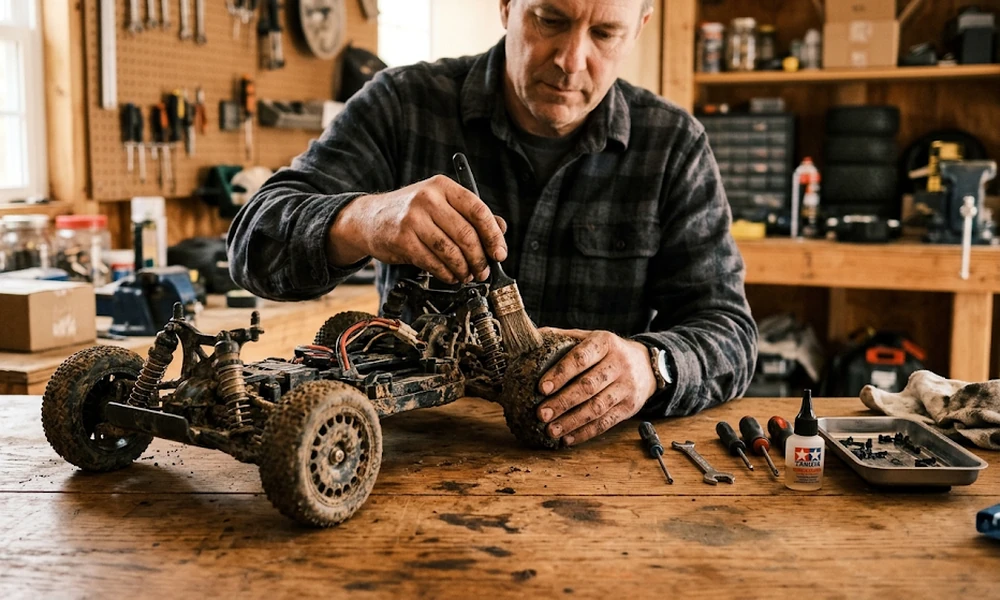
Regular maintenance can extend the life of an RC car and help it perform consistently.
After driving, remove dirt, grass, and debris from the chassis and suspension. Check the tires for damage, inspect screws and body mounts, and look for loose wires or damaged connectors.
For off-road vehicles, pay particular attention to dirt around moving components. Follow the manufacturer’s instructions before applying cleaners or lubricants, since not every electronic component or bearing can tolerate the same products.
Battery care is equally important. Use the correct charger, avoid charging unattended, and store batteries according to their manufacturer’s guidance.
If the vehicle begins making unusual noises, pulling to one side, or losing power unexpectedly, investigate the issue before continuing to drive it.
Are RC Cars Worth Buying?
RC cars can be worth buying if you enjoy driving, technology, collecting, mechanical projects, or friendly competition. They can also introduce useful skills, including basic electronics, troubleshooting, mechanical assembly, and vehicle setup.
The hobby offers different levels of commitment. A simple model can provide casual entertainment, while a hobby-grade vehicle can become a long-term project involving upgrades, racing, and customization.
The key is choosing a model that suits your interests instead of buying more performance than you need.
Frequently Asked Questions
What does RC stand for in RC cars?
RC stands for remote control or radio control. It describes vehicles operated wirelessly using a transmitter and a receiver inside the car.
Are electric RC cars better than nitro RC cars?
Electric models are generally easier to start and maintain, making them a practical choice for beginners. Nitro models appeal to enthusiasts who enjoy combustion engines, engine tuning, and a more mechanical experience.
What is the best RC car for beginners?
A durable electric RC car with proportional controls, readily available replacement parts, and a suitable speed for the intended driving area is a strong starting point.
How long do RC car batteries last?
Runtime depends on battery capacity, vehicle weight, motor efficiency, driving style, and terrain. Check the manufacturer’s estimates and remember that aggressive acceleration can reduce runtime.
Can RC cars be driven on the road?
RC cars can be driven on suitable private paved areas, tracks, or other permitted locations. Public roads are dangerous because of full-size traffic, and local rules may restrict where remote-controlled vehicles can be operated.
Are expensive RC cars worth it?
More expensive hobby-grade models may offer better components, performance, repairability, and customization options. However, a lower-cost model may be better for casual play or someone learning the basics.
Final Verdict
RC cars turn a simple idea into a surprisingly rich hobby. They can be fast racing machines, rugged off-road trucks, realistic crawlers, drifting projects, or accessible toys for a first introduction to remote-controlled vehicles.
For beginners, an electric model with durable construction and available replacement parts is often the smartest starting point. Experienced enthusiasts can explore brushless power, advanced suspension setups, competitive racing, and extensive customization.
The best RC car is not necessarily the fastest or most expensive. It is the one that gets you outside, makes you want to drive again, and gives you a reason to keep improving.
Disclaimer: This article is intended for informational purposes only.