
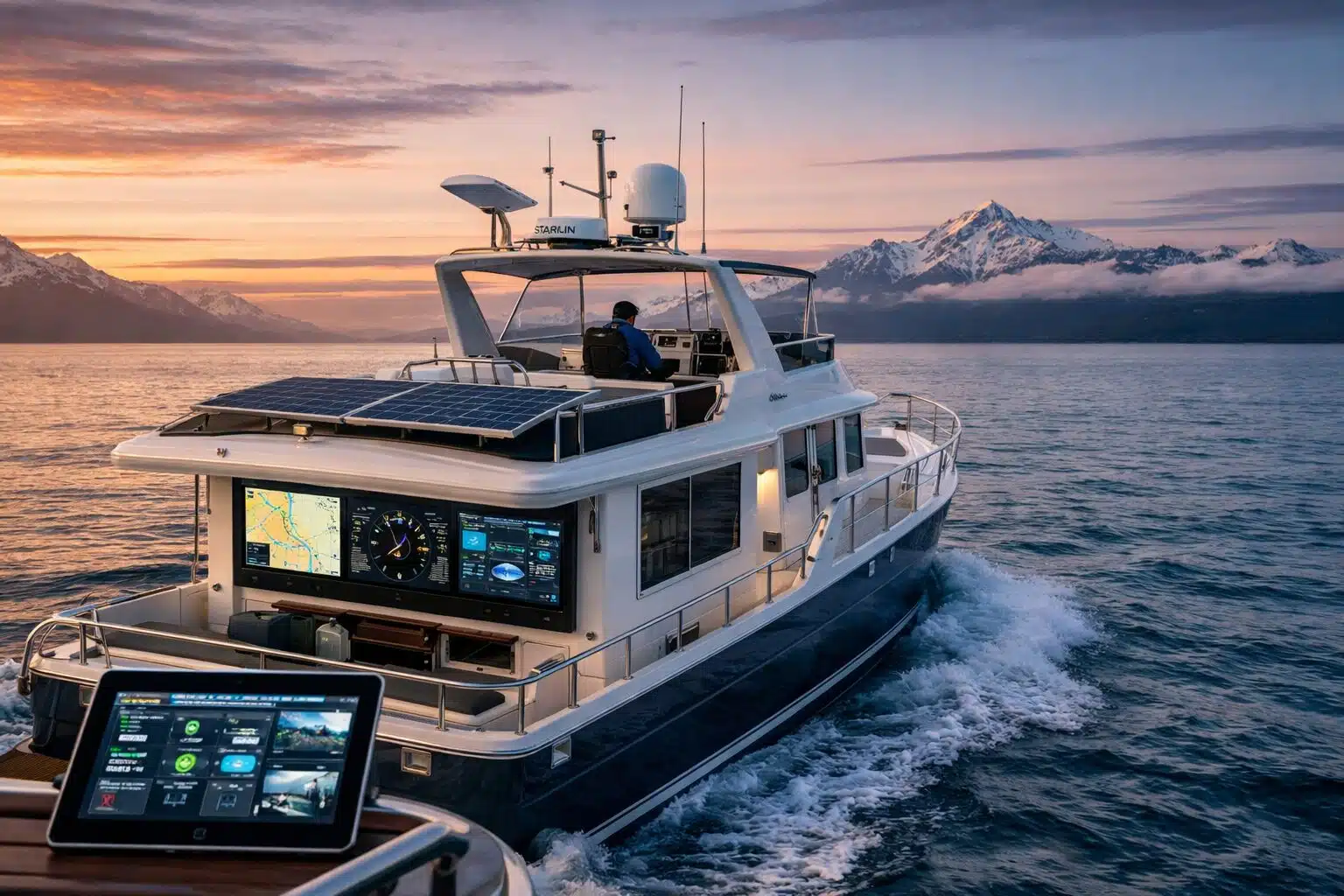
Imagine stepping aboard your vessel with the ambient lighting already set to your exact preference, the salon chilled to a perfect temperature, and the hybrid propulsion systems running silent diagnostics before you even touch the helm. Luxury marine engineering has officially evolved beyond standalone electronic components. Today, seamless digital integration is the baseline expectation for discerning owners.
The rapid emergence of smart yacht automation 2026 represents a massive paradigm shift in maritime tech. Marine automation is no longer restricted to complex physical switch panels located in the engine room or main helm station. Advanced digital networks now allow captains and owners to monitor, manage, and optimize every critical onboard infrastructure component from a standard smartphone interface.
By utilizing comprehensive yacht app control, investing in integrated automated yacht systems, and embracing cutting edge smart boat technology, yacht owners are unlocking unprecedented levels of operational safety, energy efficiency, and luxury convenience. At turboocruiser.com, we analyze the latest marine engineering trends. Below is an in depth look at how marine network architecture is fundamentally transforming the modern yachting experience.
The Connected Cruiser Rule: Real time marine integration relies on NMEA 2000 network backbones paired with local digital switching networks. This architecture translates high level smartphone application commands into physical voltage adjustments seamlessly.
The Architecture of Modern Marine Automation
To appreciate the immense convenience of modern remote systems, it helps to understand how these independent onboard components talk to each other. Historically, running a yacht required managing distinct, isolated systems like the bilge pumps, the generator sets, the battery banks, and the climate controls, each with its own physical dial, breaker panel, or digital display interface.
Modern smart boat technology replaces this chaotic mess of independent hardware with a unified digital backbone. At the center of this setup is a centralized programmable logic controller network that bridges traditional marine protocols with internet protocol data routing.
When you tap a button on your mobile screen to change your cabin lights or check fuel levels, your app sends an encrypted signal via an onboard local area network. This network uses satellite internet links like Starlink Maritime when offshore, and local cellular data networks when cruising near the coastline. The central processing unit receives this command and instantly adjusts the corresponding relay across your digital switching network, eliminating thousands of feet of traditional heavy copper wiring from the hull of the vessel.
4 Core Pillars of Integrated Yacht Infrastructure
True marine automation goes far beyond simply turning on audio systems or adjusting underwater lights using a phone app. It involves linking the core mechanical, structural, and electrical safety systems of your vessel into a single responsive network.
1. Advanced Propulsion Monitoring
Modern propulsion networks allow captains to stream comprehensive engine diagnostics, thermal readouts, fuel burn metrics, and transmission parameters directly to a mobile device. Owners can monitor total engine load and view predictive maintenance tracking data in real time, catching minor mechanical anomalies long before they escalate into an expensive failure out at sea.
2. Intelligent Power Management
Managing electricity on a luxury vessel is a complex balancing act between shore power connections, onboard generators, inverter banks, and large battery storage units. Automated energy hubs monitor total electrical loads continuously. If power demand climbs too high, the system automatically runs the auxiliary generator or drops non essential loads like ice makers or laundry machines to prevent a total blackout.
3. Integrated Marine Security Arrays
Modern security systems combine high definition optical thermal cameras with smart sensor networks. Owners can view real time camera feeds, check the lock status of individual exterior doors, track the precise location of the vessel using GPS geofencing tools, and receive instant push notifications if a bilge high water alarm triggers while the yacht is left unattended at the marina.
4. Climate and Comfort Optimization
Onboard climate control networks link your marine chillers directly to automated window blinds and environmental sensor arrays. When the system detects high exterior solar heat load during a hot afternoon, it lowers the salon blinds automatically to reduce the workload on your air conditioning compressors, saving immense amounts of fuel and generator run time.
Comparing Leading Automation Frameworks
Selecting the correct technical infrastructure for your vessel depends on your hull size, existing marine electronics brand alignment, and whether you are building a new yacht or retrofitting an older model.
| System Provider | Primary Integration Protocol | Best Suited For | Key Smart Feature |
| Garmin EmpirBus | NMEA 2000 and Ethernet | Center consoles and mid-sized motor yachts | Seamless integration with glass cockpit displays |
| Raymarine YachtSense | Modular CAN bus architecture | Custom superyachts and premium sportfishers | High level hardware redundancy and power fault protection |
| CZone Digital Control | Robust NMEA 2000 platforms | Production powerboats and sailing vessels | Highly customizable operational lifestyle modes |
| Victron Energy Systems | VE.Direct and Modbus protocols | Long-range trawlers and off-grid catamarans | Industry leading battery storage and solar power analytics |
5 Practical Steps to Retrofit Smart Technology
Upgrading an existing boat with modern automated yacht systems does not require scrapping your entire electrical system. By taking a systematic approach to your digital upgrades, you can successfully add comprehensive mobile management capabilities to older hulls.
Conclusion: Embracing the Future of Luxury Cruising
Investing in a comprehensive smart yacht automation 2026 platform transforms your vessel from a collection of complex mechanical systems into a highly responsive, efficient, and deeply intuitive extension of your luxury lifestyle. It takes the guesswork out of captaincy, simplifies daily pre flight checklists, and gives you absolute peace of mind regarding the safety and security of your boat when you are hundreds of miles away.
As marine engineering continues to advance, the line between consumer technology and luxury yacht systems will continue to blur. The owners who embrace these digital tools today will enjoy higher resale values, lower ongoing operational maintenance costs, and an unmatched, stress free cruising experience out on the open water.
Are you looking for detailed performance analysis articles, walkthroughs of the world’s most luxurious vessels, or expert guides on marine propulsion upgrades? Be sure to keep your browser tab permanently locked right here to Turboocruiser for your ultimate supply of modern marine content, yacht reviews, and cutting edge boating tech insights.
Frequently Asked Questions (FAQ)
What happens to my automated yacht systems if the internet connection drops?
All high quality smart yacht automation 2026 systems are designed with a local priority architecture. If your satellite or cellular internet link fails, you lose remote off-boat phone control, but all internal systems continue to function perfectly via the physical touchscreens on the bridge and localized hardware bypass panels.
Is remote yacht app control vulnerable to digital hacking?
Any network connected device carries a small amount of risk, which is why premium marine networks rely on banking grade encryption protocols, private virtual networks, and mandatory multi factor authentication paths. Securing your onboard Wi-Fi network with strict password rules prevents unauthorized access to your boat’s digital backbone.
Can older diesel engines be linked to modern smart boat technology?
Yes. By installing specialized analog to digital data gateways, you can translate older mechanical sender signals, oil pressure metrics, and tachometer readings into clean NMEA 2000 data strings. This allows you to view full engine diagnostics on modern mobile applications.
How much weight can digital switching save on a 60 foot motor yacht?
By replacing traditional heavy multi-core copper wiring lines with a streamlined digital backbone and localized power distribution nodes, a digital switching system can easily reduce total electrical wiring weight by an estimated 30% to 40% on a mid-sized luxury vessel.