
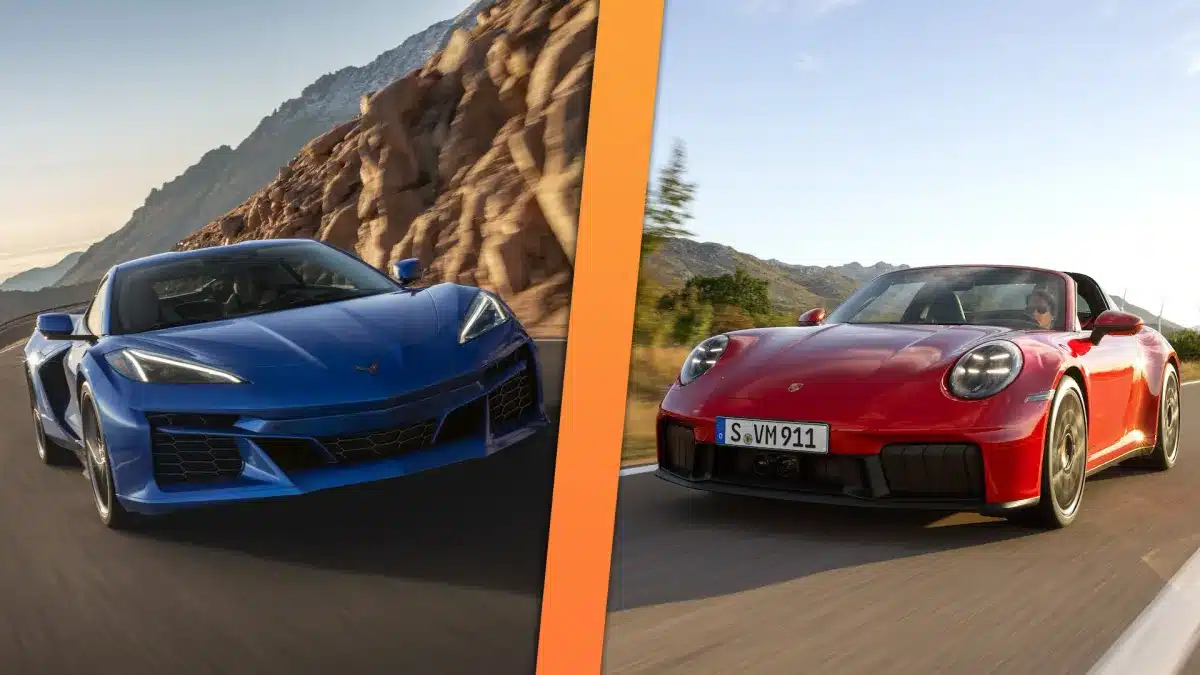
The sports car world is changing fast. Electrification is no longer just for eco-friendly hatchbacks. It is now powering top-tier performance machines. The debate around the corvette e-ray vs porsche 911 highlights this massive shift. Both brands have taken different paths to achieve the same goal. That goal is total all-wheel-drive dominance.
For decades, these two names represented completely different philosophies. The Corvette relied on front-engine American V8 muscle. The Porsche 911 stuck to its rear-engine German heritage. Today, both cars utilize advanced hybrid technology. They combine internal combustion with electric motors. This changes everything we know about traction and acceleration.
This deep dive serves as a comprehensive corvette e-ray review. We will compare it directly to its legendary German rival. We will look at speed, engineering, and daily liveability. Here is how these two hybrid giants stack up.
Drivetrain Engineering and Architecture
The mechanical layouts of these two cars could not be more different. Chevrolet uses a unique layout for the hybrid corvette. The traditional 6.2-liter LT2 V8 engine sits behind the driver. It sends 495 horsepower strictly to the rear wheels.
An electric motor sits on the front axle. This motor adds 160 horsepower. It powers the front wheels independently. There is no mechanical link between the front and rear axles. It is a completely digital all-wheel-drive system. The car chooses exactly when to apply front-wheel power.
Porsche takes a much more integrated approach with its new T-Hybrid system. The 911 Carrera 4 GTS uses a single electric turbocharger. It also features a permanent magnet synchronous motor inside the transmission. The electric components support a new 3.6-liter flat-six engine.
The Porsche system focuses on seamless power integration. It uses a traditional mechanical all-wheel-drive system. Power travels through a central driveshaft to all four corners. The electric energy serves to fill any gaps in turbo boost.
Power and Raw Performance Specs
When looking at e-ray specs, the sheer numbers favor the American contender. The Corvette delivers massive power for its price point. The total system output reaches a stunning 655 horsepower. It also produces 595 pound-feet of torque. This gives it incredible launch capabilities.
The Porsche 911 Carrera 4 GTS appears outgunned on paper. Its hybrid system generates 532 horsepower. Total torque sits at 449 pound-feet. However, the Porsche has a significant weight advantage. It weighs roughly 250 pounds less than the Corvette. This changes the real-world dynamics completely.
| Performance Metric | Chevrolet Corvette E-Ray | Porsche 911 GTS T-Hybrid |
| Engine Type | 6.2L V8 + Electric Motor | 3.6L Turbo Flat-6 + Electric Motor |
| Total Horsepower | 655 hp | 532 hp |
| Total Torque | 595 lb-ft | 449 lb-ft |
| Drivetrain | eAWD (Through-the-road) | Mechanical AWD |
| Battery Capacity | 1.9 kWh | 1.9 kWh |
Weight impacts every aspect of performance. The Corvette carries its heavy V8 plus the front electric motor. The hybrid battery sits in the center tunnel. This brings total weight to nearly 3,900 pounds. The Porsche remains lighter and more compact.
Acceleration and Straight Line Speed
The battle of e-ray vs 911 gets incredibly tight on the drag strip. The official e-ray 0-60 time is a blistering 2.5 seconds. The electric front motor provides instant torque from a dead stop. There is no lag and no wheelspin. The car just launches forward violently.
Porsche claims a 0-60 time of 2.9 seconds for the GTS. However, Porsche is famous for understating their performance numbers. In real-world testing, the 911 hits 60 miles per hour in 2.8 seconds. The electric motor inside the PDK gearbox gives it an instant push.
In the quarter-mile, the cars finish neck and neck. The Corvette jumps ahead early due to its extra power. The Porsche begins catching up at higher speeds. The 911 has a more efficient aerodynamic profile. It also benefits from its lighter mass. Both cars finish the quarter-mile in the 10.9 to 11.0-second range.
Handling, Steering, and Track Dynamics
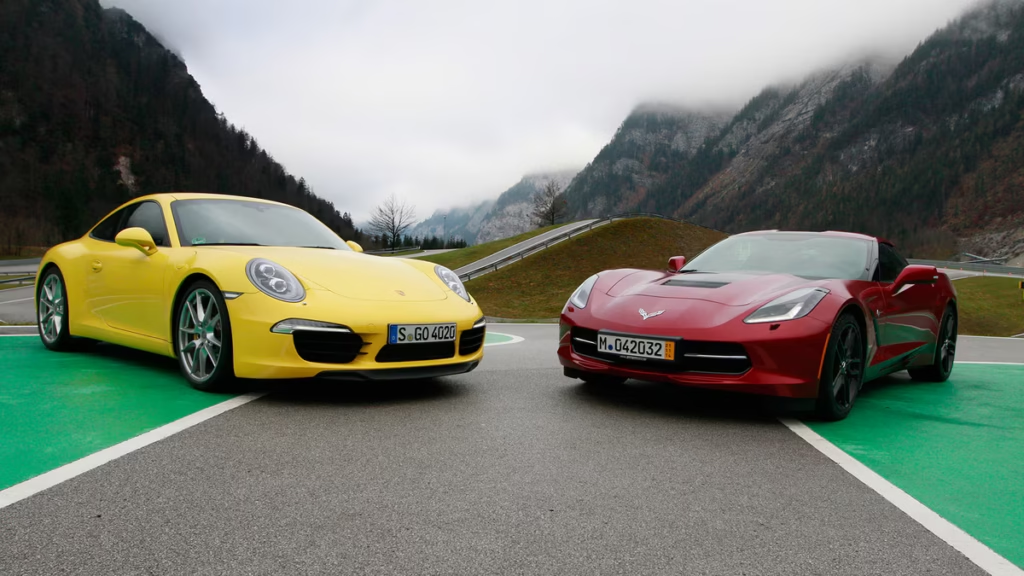
Power is only half the story for sports cars. How they handle corners matters just as much. The Corvette E-Ray uses a wide-body design. It borrows its aggressive stance from the track-focused Z06 model. It comes standard with massive performance tires. Carbon-ceramic brakes provide immense stopping power.
The E-Ray handles corners with extreme stability. The front electric motor pulls the car out of turns. It uses torque vectoring to adjust individual wheel speeds. This makes the heavy car feel incredibly agile.
The Porsche 911 offers a more traditional sports car feel. Its steering is telepathic and highly communicative. The rear-wheel steering system cuts down the wheelbase virtually. It allows the car to change direction with surgical precision.
The 911 feels lighter on its feet than the Corvette. It manages its weight better during rapid transitions. The active roll stabilization keeps the chassis completely flat. It inspires massive confidence on winding back roads. If precision handling like this excites you, don’t miss our head-to-head on the Porsche 911 GT3 RS vs Ferrari 296 GTB — track day king.
Interior Comfort and Everyday Usability
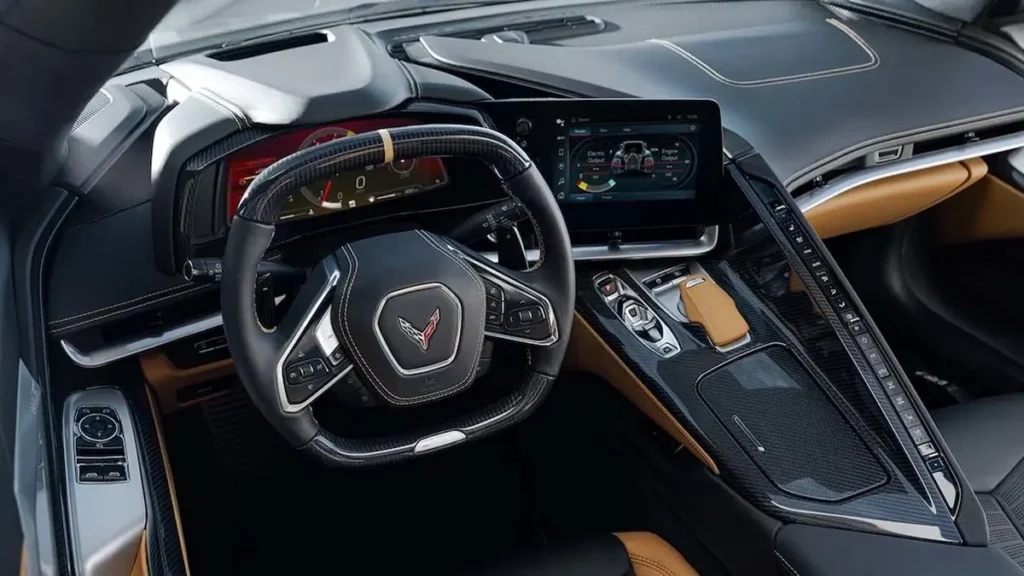
A great sports car must also work as a daily driver. The Corvette cabin feels like a jet fighter cockpit. A tall wall of buttons separates the driver from the passenger. The seats are highly supportive and comfortable.
The Corvette offers decent storage space. It retains the rear trunk behind the engine. It also features a small front trunk. However, the front electric motor reduces the front trunk size slightly.
The Porsche 911 layout remains the benchmark for daily usability. It offers an open, airy cabin design. Visibility is excellent in every direction. It also features tiny rear seats. These seats work perfectly for children or extra luggage.
The 911 dashboard is clean and modern. It utilizes a fully digital instrument cluster. The materials feel premium and tightly assembled. The infotainment system is fast and highly intuitive. It is an easy car to drive every single day.
Unique Hybrid Modes and Efficiency
Both cars use electrification to boost performance rather than save fuel. Neither car is a plug-in hybrid. You cannot plug them into a wall. The batteries charge through regenerative braking and engine power.
The Corvette features a distinct “Stealth Mode.” This allows you to drive purely on electricity for short distances. You can travel up to five miles at speeds under 45 mph. This is perfect for leaving your neighborhood quietly. The loud V8 stays asleep until you press down hard.
Porsche does not offer a pure electric driving mode. The 911 battery is always working with the engine. The electric turbocharger eliminates lag completely. The throttle response is instant in any gear. It feels like a massive, naturally aspirated engine. Curious how these hybrid systems actually store and deliver power? Check out our breakdown of next-gen EV batteries and what to expect in 2026.

Pricing and Value Proposition
The price difference between these two machines is massive. The Corvette E-Ray starts around $108,000. Even with options, it rarely exceeds $130,000. This represents incredible performance value. You get supercar acceleration for a relatively attainable price.
The Porsche 911 Carrera 4 GTS starts much higher. The base price sits around $184,000. Porsche options add up very quickly. A well-equipped model can easily cross $200,000.
You are paying for precision engineering and premium badge prestige. The Porsche holds its value incredibly well over time. The Corvette offers raw performance numbers that disrupt the entire market. Looking for similar performance without the six-figure price tag? Explore our list of best sports cars under $80,000 in 2026.
Conclusion
The choice between these two cars comes down to personal taste. The Corvette E-Ray is an absolute powerhouse. It offers brutal straight-line speed. It features an exotic mid-engine look. The price makes it a performance bargain. It brings hybrid all-wheel-drive tech to the masses.
The Porsche 911 remains the precision instrument. It offers unmatched steering feel and build quality. Its hybrid system integrates seamlessly into the driving experience. It feels lighter, sharper, and more refined. It is the choice for driving purists with deep pockets. For another electrified showdown between American muscle and German precision visit Turboocruiser, read our comparison of the Audi RS e-tron GT vs Porsche Taycan Turbo S — EV performance war.
FAQs
What is the 0–60 mph time for the Porsche 911 Carrera 4 GTS?
The all-wheel-drive hybrid sports car achieves a blistering 0–60 mph sprint in just 2.9 seconds.
What is the maximum horsepower output of the Chevrolet Corvette E-Ray?
The advanced eAWD hybrid system combines a 6.2-liter V8 engine with an electric motor to generate 655 horsepower.
What is the starting price for the base Porsche 911 Carrera model?
The entry-level model features a 388-horsepower twin-turbo flat-six engine and starts at an MSRP of $135,500.
How far can the Corvette E-Ray travel on purely electric power?
Using its dedicated Stealth Mode, the sports car can drive quietly up to 4 miles at speeds under 45 mph.
Does the standard Porsche 911 lineup still offer a traditional manual transmission?
The enthusiast-focused Carrera T model comes exclusively configured with a 6-speed manual gearbox for purists.