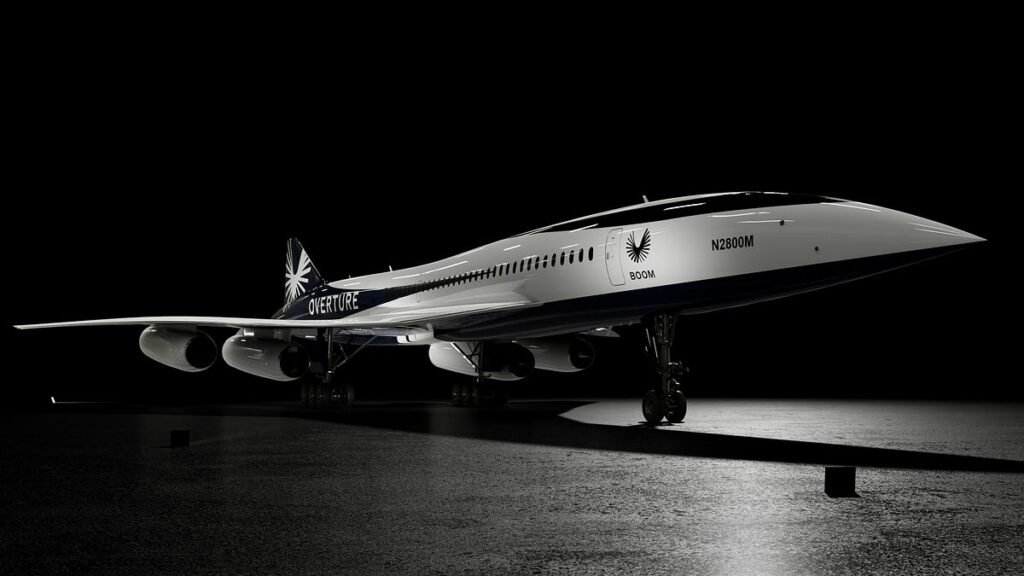
The dream of commercial supersonic flight has been dead since the Concorde retired in 2003. However, the race to revive ultra-fast travel is officially heating up again. Leading this charge is the boom overture supersonic jet, a revolutionary commercial aircraft designed to fly at nearly twice the speed of standard airliners. We are witnessing massive regulatory, technical, and financial breakthroughs in boom overture 2026 development. These milestones suggest that the return of supersonic flight is no longer a distant fantasy.
To answer the burning question: yes, supersonic travel is officially on its way back. In fact, a historic regulatory shift in 2026 is paving the way for commercial overland flights.
If you are an aviation enthusiast or a business traveler, you need to understand how this aircraft will change global travel. In this post, we will explore the technology, the funding, and the specifications of this highly anticipated overture airliner.
The Regulatory Shift: Erasing a 52-Year Speed Limit
For over five decades, civil aircraft were strictly banned from flying faster than the speed of sound over the United States, until the FAA’s official notice of proposed rulemaking formally moved to repeal that ban in 2026. This rule was designed to protect people on the ground from the bone-rattling noise of sonic booms. However, the regulatory landscape has completely changed in 2026.
Specifically, the Federal Aviation Administration (FAA) has proposed a new noise-based certification standard. This proposal officially lifts the old 1973 prohibition on civil supersonic flights over land. Under these updated rules, aircraft can legally fly faster than Mach 1 over the mainland. However, they must prove that their sonic signature does not exceed a strict limit on the ground.
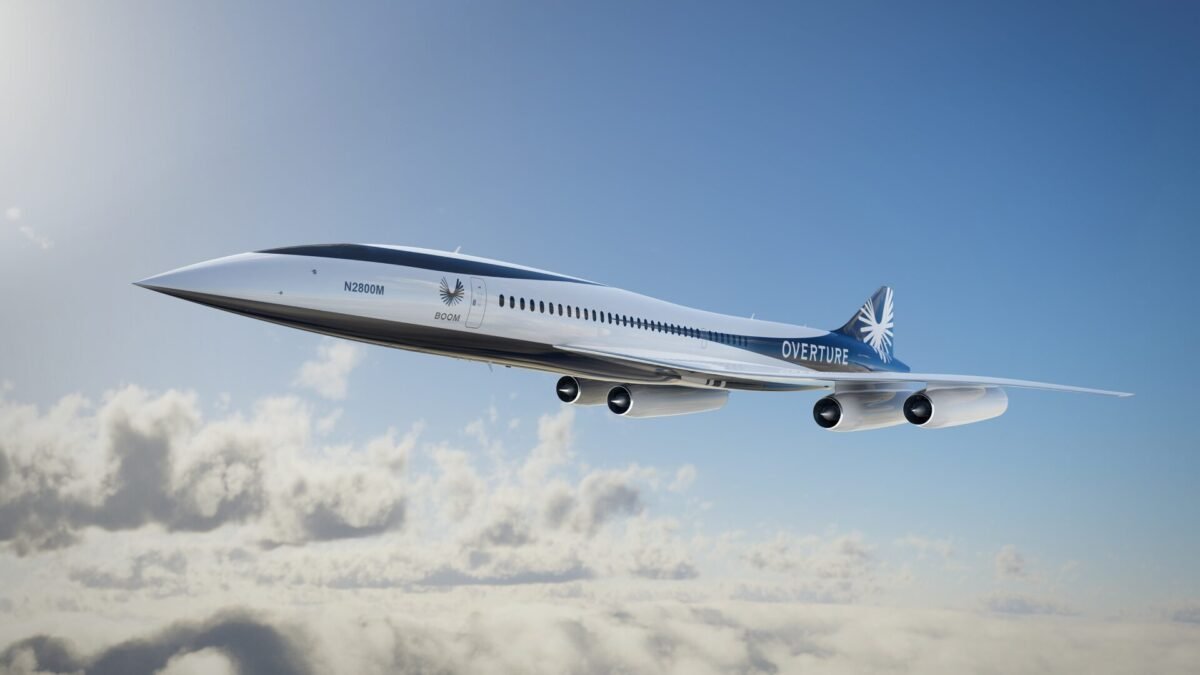
This legal breakthrough was made possible by advanced aerodynamics. Modern engineering has proven that we can successfully quiet the sonic boom. Consequently, instead of a thunderous crash, the pressure waves can be softened into a gentle atmospheric thump. This shift represents a monumental victory for boom supersonic as they prepare their production lines.
Proving the Science: The Success of XB-1
Before building a massive passenger jet, a company must first prove its designs in the real world. This is exactly what the engineers at boom supersonic did with their XB-1 demonstrator aircraft.
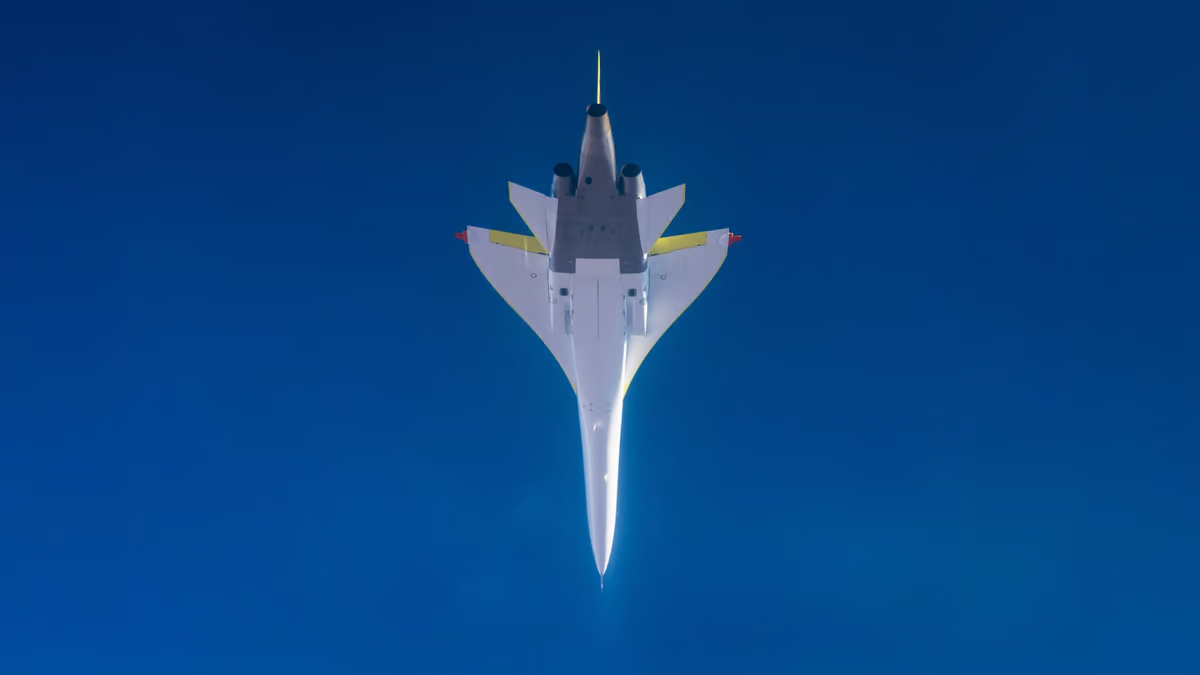
In early 2025, the XB-1 successfully completed its historic first supersonic test flight over the Mojave Desert. It became the very first independently developed supersonic jet to break the sound barrier. Furthermore, the test aircraft achieved this milestone without letting a sonic boom touch the ground.
This incredible feat relies on a physics concept known as Mach cutoff. By flying at highly precise altitudes and speeds, the sonic boom refracts in the atmosphere. As a result, the noise bends upward and dissipates before it can ever shake the ground below.
Powering the Future: The Genius Symphony Engine Pivot
Developing a supersonic engine is a massive undertaking. In fact, major aerospace engine builders previously declined to construct a custom powerplant for a startup. Consequently, Boom decided to design its own engine, named Symphony.
Symphony is a medium-bypass turbofan engine designed for efficient, continuous supersonic cruise. It does not require afterburners, which dramatically reduces noise and fuel consumption. In 2026, the company is actively conducting tests on its prototype combustor system.
However, building an engine program requires billions of dollars. To solve this funding puzzle, Boom executed a brilliant business strategy. Specifically, they adapted the Symphony engine core into a 42-megawatt natural gas turbine called Superpower.
This industrial turbine is designed to power artificial intelligence (AI) data centers without using water. The pivot was an instant success. An AI infrastructure leader placed a massive $1.25 billion order for these turbines. Consequently, this contract provides Boom with the crucial cash flow needed to finish developing the overture airliner.
Technical Specifications: Overture vs. Concorde
The boom overture supersonic jet is designed to succeed where the Concorde failed, joining a new generation of ultra-fast aircraft alongside developments like the Bombardier Global 8000, the fastest civil jet since Concordehttps://turboocruiser.com/bombardier-global-8000-the-fastest-civil-jet-since-concorde-arrives-in-2026/. it will offer airlines a profitable, sustainable, and reliable high-speed option.
Let us compare the estimated falcon 10x specs paradigm with the actual supersonic specifications of the Overture, alongside a look back at the Concorde:
| Performance Metric | Concorde (Historical) | Boom Overture (Estimated) |
| Maximum Cruise Speed | Mach 2.04 | Mach 1.7 |
| Maximum Flight Range | 3,900 Nautical Miles | 4,250 Nautical Miles |
| Passenger Capacity | 92 to 128 Passengers | 60 to 80 Passengers |
| Engine Infrastructure | 4 x Rolls-Royce Olympus 593 | 4 x Propulsion Symphony |
| Afterburner Use | Yes (Extremely loud and inefficient) | No (Quiet and efficient supercruise) |
| Fuel Source | Standard Jet A-1 | 100% Sustainable Aviation Fuel (SAF) |
| Takeoff Noise Level | Extremely Loud | Equivalent to modern subsonic jets |
By choosing a slightly slower cruise speed of Mach 1.7, Boom engineers unlocked massive benefits. Specifically, they avoided the need for complex, heavy titanium alloys. The aircraft can instead rely on advanced carbon composite materials. These materials are lighter, stronger, and far more fuel-efficient at high speeds.
The Passenger Experience: Flying Twice as Fast
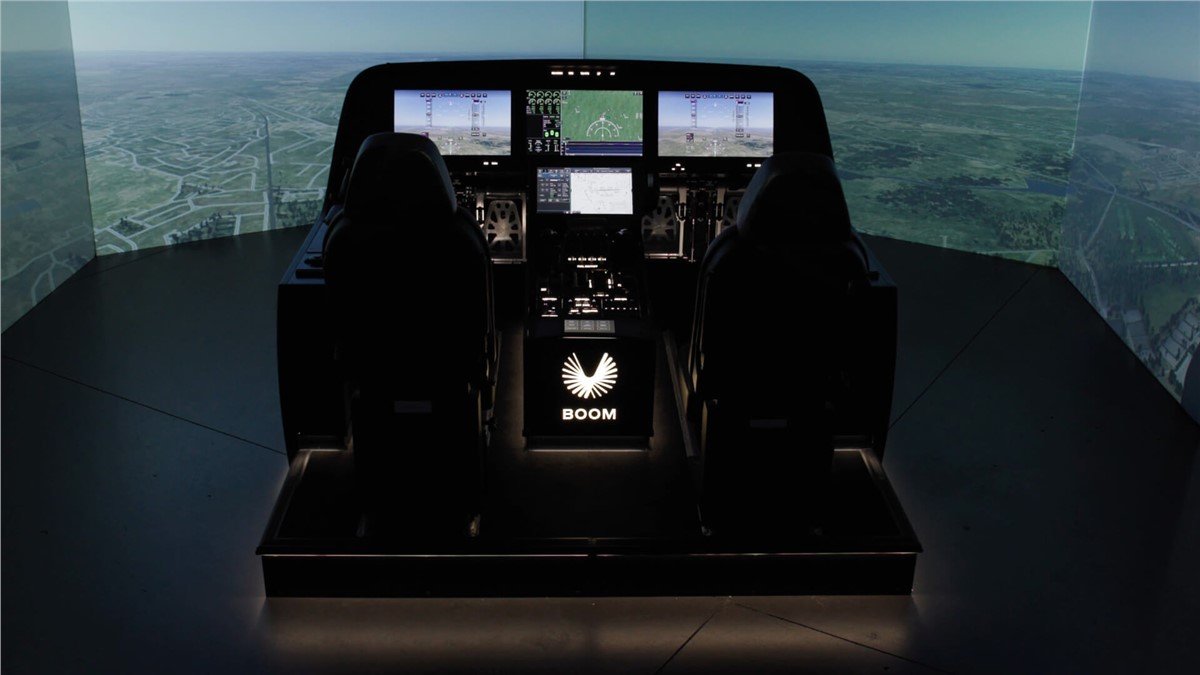
Stepping onto the Overture will feel like stepping into a premium boutique hotel. Unlike the cramped seating of the historical Concorde, this modern airliner prioritizes comfort.
Because the plane is designed with a single seat on each side of the aisle, every passenger gets a window and direct aisle access. In addition, the oversized windows will offer stunning views of the earth from an altitude of 60,000 feet. At this height, you can clearly see the curvature of the earth and a dark, deep blue sky.
Because supersonic aircraft fly so fast, travel times on major global routes will be cut in half. For example, a flight from Newark to London will take just three hours and forty minutes. Consequently, business travelers can easily fly to Europe for a meeting and return home the exact same day, a shift that will inevitably reshape how we compare private jet travel versus first class for time-sensitive trips.
The Environmental Paradox: Running on 100% SAF
Historically, high-speed travel has faced heavy criticism for its carbon footprint. Supersonic flight naturally requires more fuel than slow, subsonic flying. To address this challenge, Boom has committed to running the Overture entirely on 100% Sustainable Aviation Fuel (SAF).
Sustainable aviation fuel is made from renewable waste resources. As a result, it can reduce carbon emissions by up to 80% over the lifecycle of the fuel. However, the global supply of SAF is currently very small.
Therefore, the aviation industry must scale up SAF production rapidly over the next decade. If fuel production increases, the Overture will become the cleanest option for high-speed intercontinental travel.
Market Viability: Who Is Buying the Overture?
Skeptics often wonder if airlines are truly ready to invest in supersonic travel, especially when compared against the current lineup of top private jets in the world for 2026. However, the numbers suggest a massive appetite for speed. Boom has already secured over 130 orders and pre-orders from the world’s leading carriers.
These are not just simple letters of intent. Specifically, airlines like American Airlines have already placed non-refundable cash deposits to lock in their delivery slots.
Additionally, the company is working with Northrop Grumman to explore military and government versions of the aircraft. Speed is a massive asset for rapid transport, medical evacuation, and diplomatic missions. Consequently, a specialized supersonic business jet variant could eventually serve as a high-speed command center for global leaders.
Verdict: A Bright Future on the Horizon
To sum up, the dream of supersonic commercial flight is no longer dead. Thanks to the success of the XB-1 demonstrator, the landmark 2026 FAA policy shifts, and the genius financial pivot of the Symphony engine program, Boom is turning fiction into reality.
We can expect the first full-scale Overture prototype to roll out of the Greensboro, North Carolina superfactory by 2027. After that, rigorous flight testing will begin. If everything goes according to plan, we will see passengers flying at supersonic speeds by 2030.
The return of high-speed travel will compress our world, saving hours of precious travel time. To keep up with the latest in aviation tech, supercar innovations, and premium travel trends, make sure to visit our home page at turboocruiser.
Frequently Asked Questions
Will the Boom Overture fly in 2026?
No, the full-scale Overture airliner is not scheduled to fly in 2026. However, its scaled-down demonstrator, the XB-1, successfully completed its historic supersonic test flights in early 2025. Boom plans to begin testing the full-scale Symphony engines in late 2026.
Is supersonic flight legal over land now?
In 2026, the FAA proposed landmark rules that lift the 1973 ban on civil supersonic flight over land. Under this proposed framework, aircraft can fly faster than Mach 1 over land as long as they do not produce an audible sonic boom on the ground.
How fast is the Boom Overture supersonic jet?
The Overture is designed to cruise at a maximum speed of Mach 1.7. This translates to roughly 1,122 miles per hour or 1,806 kilometers per hour, which is twice the speed of standard commercial passenger planes.
How much will a ticket on the Boom Overture cost?
Boom has designed the aircraft to operate with a lower cost structure than the Concorde. Consequently, airlines are expected to price Overture tickets similarly to modern international business class fares.
What fuel will the Overture run on?
The aircraft is engineered from the ground up to operate on 100% Sustainable Aviation Fuel (SAF). This commitment helps the company minimize the environmental impact of flying at supersonic speeds.