
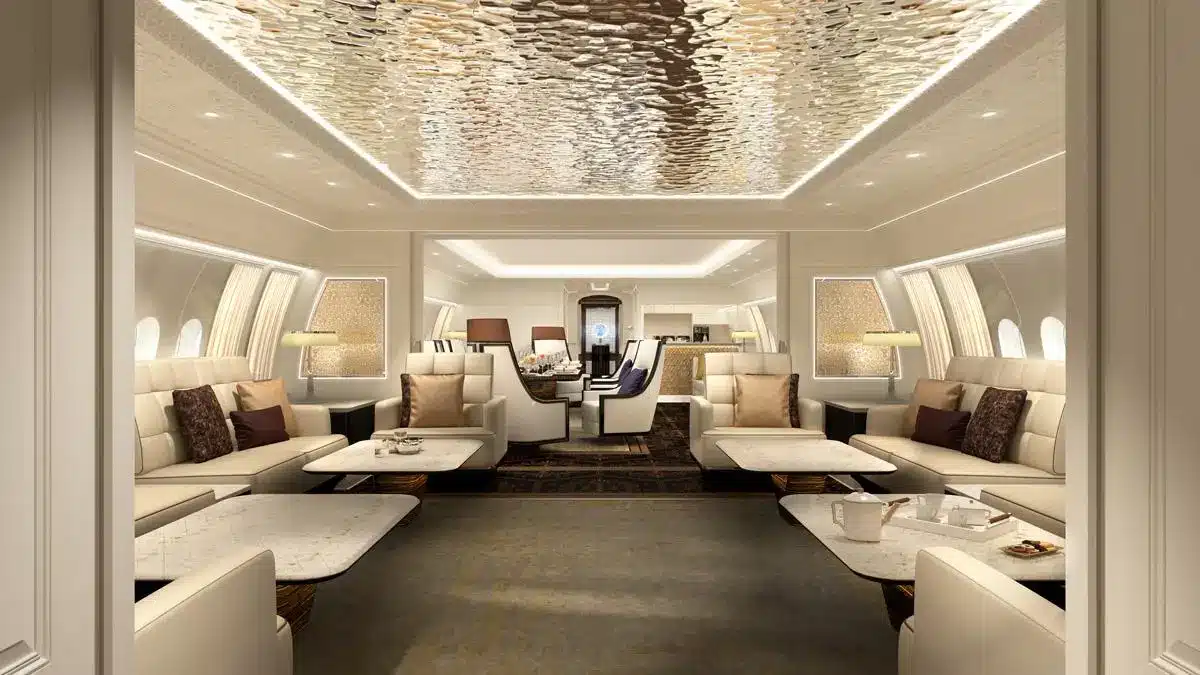
The golden age of travel was supposed to be behind us, but in 2026, the gap between “luxury” and “utility” has never been wider. If you are reading this, you’ve likely sat in a First Class pod, sipped the vintage Champagne, and realized that despite the lie-flat bed, you are still at the mercy of a commercial flight schedule. You are still taking off when the airline says so, and you are still walking through a crowded terminal.
This brings up the ultimate question for high-net-worth travelers this year: is it finally time to make the jump? At turboocruiser.com, we spend our time dissecting the mechanics of high-performance living, and today we are looking at the reality of private jet vs first class 2026.
1. The 2026 Reality Check: What Has Changed?
A few years ago, First Class was almost catching up to private travel in terms of seat comfort. But in 2026, the world has shifted. Commercial aviation is facing unprecedented staffing shortages and congested hubs. Even with a First Class ticket, the “ground experience”—the TSA lines, the baggage delays, and the mechanical cancellations—remains a major bottleneck.
When we talk about is private jet worth it, we aren’t just talking about leather seats. We are talking about the “Total Travel Time.” A commercial flight from New York to London might take seven hours in the air, but it takes ten hours of your life when you factor in the airport. A private jet takes seven hours of your life, period.
2. Comparing the Costs: The Hard Numbers
Let’s be honest about the private jet cost vs first class. There is no world where owning a jet is “cheaper” than a First Class ticket, but the math is different than it used to be.
2026 Cost Comparison Table (Estimated)
| Feature | First Class (International) | Private Jet (Charter/Own) |
| Ticket Price / Hourly | $10,000 – $25,000 per seat | $6,000 – $20,000 per hour |
| Ground Time | 2–3 hours pre-flight | 15 minutes pre-flight |
| Privacy | Shared cabin | Total solitude |
| Destination Access | Major hubs only | 5,000+ regional airports |
| Flexibility | Fixed schedule | “Depart when ready” |
If you fly more than 200 hours a year, the conversation moves away from chartering and toward ownership or fractional jet ownership. In 2026, the tax incentives for business aircraft have stabilized, making it a viable corporate tool rather than just a luxury toy.
3. The Middle Ground: Fractional Jet Ownership
Most people think you either buy a whole plane or you fly commercial. In 2026, the most popular choice is the middle road. Fractional jet ownership allows you to buy a “share” of a plane (usually 1/16th or 1/8th).
This gives you the guaranteed availability of a private aircraft without the headache of hiring pilots, managing maintenance, or dealing with hangar fees. You get the “owner experience” for a fraction of the capital. For many of our readers at turboocruiser.com, this is the “sweet spot” where the utility finally outweighs the cost.
4. Why “Worth It” Is Measured in Minutes, Not Dollars
When people ask, is private jet worth it, they are usually looking at a spreadsheet. But for the modern executive or business owner, the real currency is time.
Imagine you need to visit three manufacturing plants in the Midwest in a single day. Commercially, that is a three-day trip involving two nights in hotels and multiple rental cars. Privately, you can hit all three sites and be back home for dinner. You haven’t just saved money on hotels; you’ve saved two days of your life. That is the “X-factor” that commercial First Class simply cannot compete with.
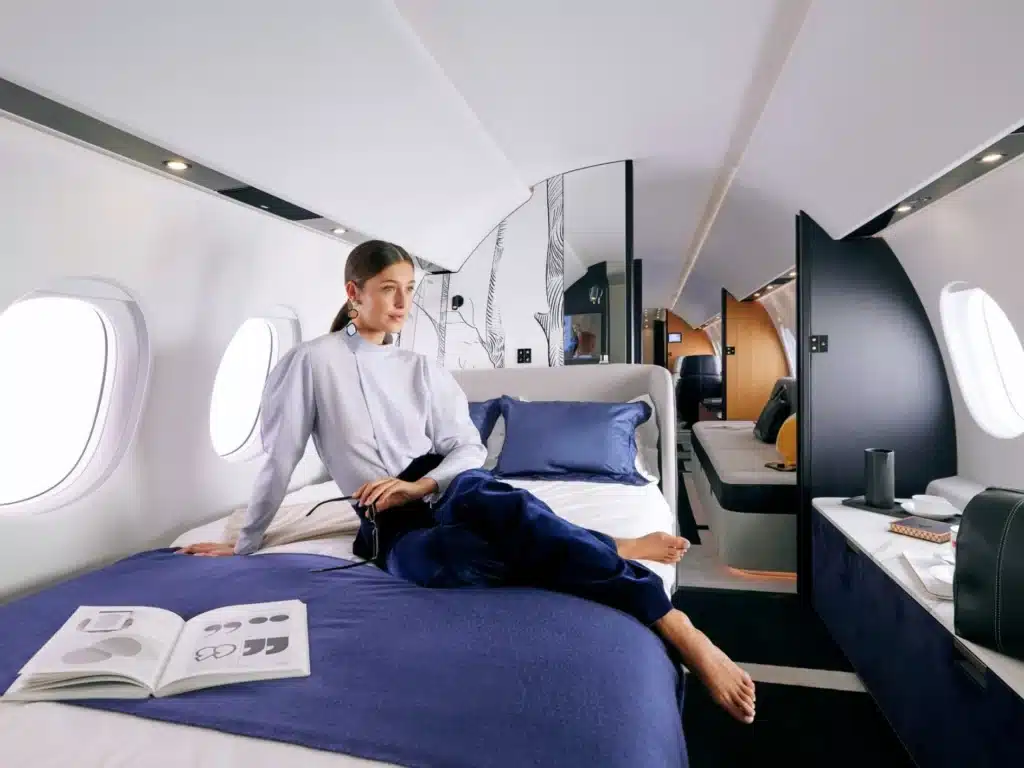
5. The Cabin Experience: First Class vs. The Gulfstream
In First Class, you are a guest. On a private jet, you are the boss. In 2026, private cabins have become mobile offices with Starlink-powered internet that is faster than most home connections.
Noise Levels: Private jets, especially the newer models like the Global 7500, are significantly quieter than commercial airliners. This means you arrive at your destination with less “jet lag” and ear fatigue.
Air Quality: Private jets often use 100% fresh air systems rather than recirculated air, which keeps you feeling sharper during long-haul flights.
Dining: You aren’t choosing between “chicken or pasta.” You are choosing exactly what is stocked in the galley before you even arrive at the airport.
6. The Environmental Question in 2026
We have to address the elephant in the room: the environmental impact. In 2026, the private aviation industry has made massive strides in Sustainable Aviation Fuel (SAF). Many private terminals now offer SAF as a standard option. While First Class on a large commercial jet has a smaller per-person carbon footprint, the private industry is the one leading the charge on electric and hybrid-electric short-haul flight technology.
7. When First Class Still Wins
We wouldn’t be doing our job at turboocruiser.com if we didn’t tell you when to stick with the airline. First Class still wins if:
You are traveling alone on a common route: A $15,000 First Class seat from NYC to LA is much cheaper than a $40,000 private charter.
You enjoy the “Lounge Life”: Some of the 2026 First Class lounges in Dubai and Singapore are basically five-star resorts.
You don’t mind the schedule: If you aren’t in a rush, the “forced relaxation” of a commercial flight can be quite nice.
8. Final Verdict: The 2026 Decision
So, private jet vs first class 2026—who wins?
If your time is valued at $2,000+ per hour, or if you travel with a team of four or more people, the private jet is no longer a luxury; it is a logical business decision. The ability to fly into smaller airports closer to your final destination saves hours of ground transport.
However, for the occasional vacation or the solo business trip, First Class remains the peak of comfortable, pampered travel without the six-figure commitment.
At turboocruiser.com, we believe the best way to travel is the one that leaves you with the most energy at the end of the day. For some, that’s a pod in the sky. For others, it’s a jet waiting on the tarmac.
FAQs
What is the average cost to own a private jet in 2026?
Beyond the purchase price (which can range from $3 million for a light jet to $75 million for a heavy jet), you should expect to pay about $500,000 to $1 million annually in fixed costs like crew, insurance, and hangarage.
Is fractional ownership better than chartering?
If you fly more than 50 hours a year, fractional ownership is usually better because it offers a lower hourly rate and guaranteed availability. If you fly less, stick to chartering.
Can I bring my pets on a private jet?
This is one of the biggest “wins” for private travel. Unlike First Class, where pets are often restricted or kept in crates, private travel allows your pets to sit right in the cabin with you.
What is the “hidden cost” of owning a jet?
Depreciation. A jet is a depreciating asset, much like a luxury car. In 2026, you have to factor in that your plane will likely be worth 10% to 15% less every year you own it.
How do private jet speeds compare to commercial?
Most private jets fly at similar speeds to commercial planes, but they can fly at higher altitudes (up to 51,000 feet). This allows them to avoid commercial traffic and weather, often resulting in a smoother and slightly faster flight.