
The modern luxury car ownership experience is no longer just about horsepower figures or the suppleness of the leather seats. Instead, the battlefield has completely shifted to the digital dashboard. The software running on those massive glass panels now dictates how much we enjoy our daily commutes.
If you are stepping into a premium vehicle this year, you will find yourself at the center of an intense software war. Comparing bmw idrive 9 vs mercedes mbux 2026 highlights a fascinating divide in automotive philosophy. Both brands are striving to deliver the best car infotainment 2026, but they are taking wildly different routes to get there, resulting in two unique digital environments.
The Philosophy Behind the Glass
Luxury manufacturers are no longer just building cars; they are effectively building rolling supercomputers. The goal is to create a seamless bridge between your smartphone ecosystem and your physical vehicle architecture.
When you look at a modern luxury car screen, you are seeing the culmination of massive investments in software design. BMW has transitioned its latest iDrive 9 system to an Android Automotive foundation, prioritizing app variety and a smartphone-like menu flow. Mercedes-Benz, on the other hand, is introducing its third-generation MBUX system powered by their proprietary MB.OS architecture. This system focuses on stunning 3D graphics and automated, cloud-connected intelligence.
BMW iDrive 9: Streamlined, App-Centric Efficiency
BMW’s latest software update focuses heavily on reducing menu clutter and making daily tasks as quick as possible. By building iDrive 9 on an Android platform, they have opened up the cabin to a massive ecosystem of third-party applications.
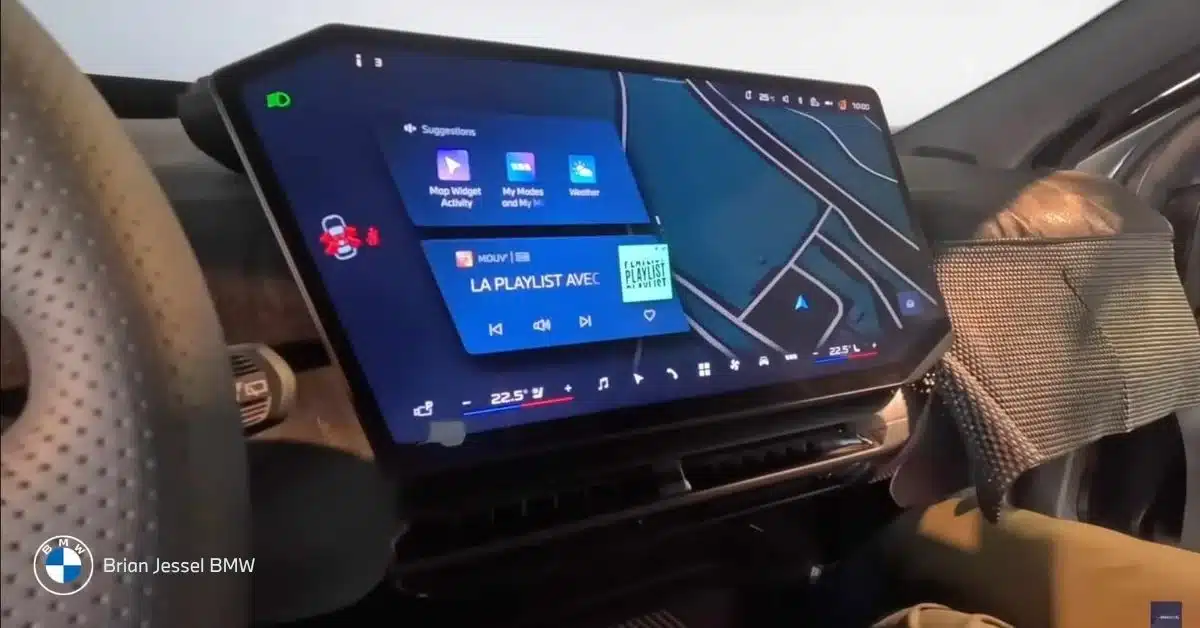
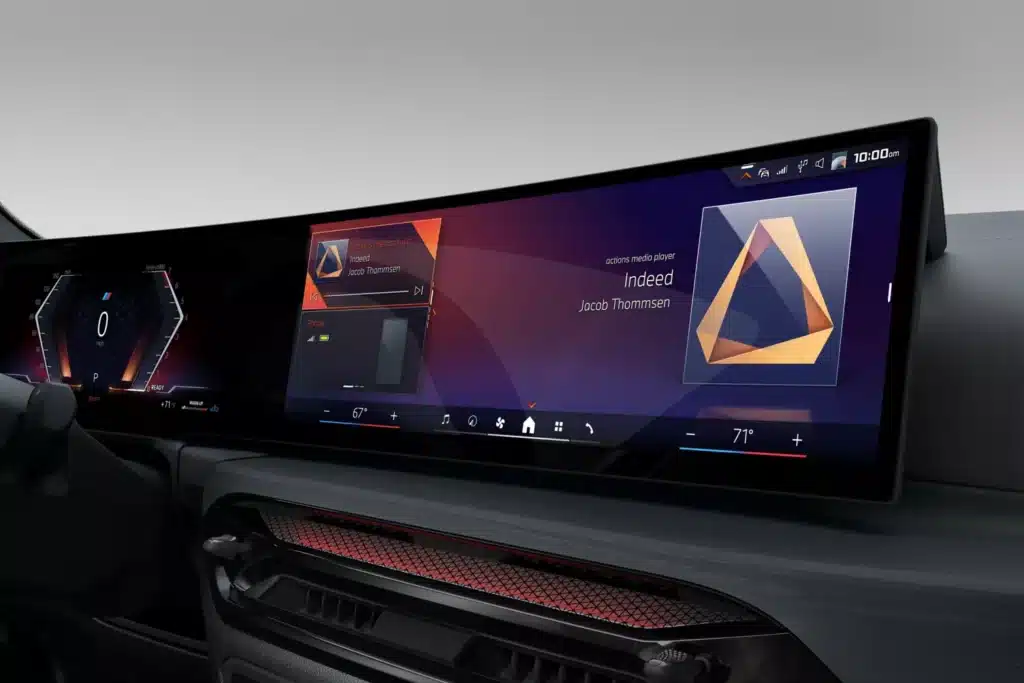
The visual centerpiece is the beautiful BMW Curved Display, which angles slightly toward the driver for an integrated, cockpit feel. A standout feature of this setup is the QuickSelect menu structure. Rather than forcing you to dig through multiple submenus just to turn on your ventilated seats or change a radio station, frequently used features live as permanent widgets on the side of the home screen.
An interesting hardware shift in many compact models running iDrive 9 is the removal of the iconic physical rotary controller on the center console. This layout forces a heavy reliance on touchscreen inputs and voice interaction. To offset this, BMW has expanded its Intelligent Personal Assistant, allowing you to use completely natural speech to adjust settings.
Through the optional Digital Premium subscription, iDrive 9 also turns the stationary cabin into a mobile lounge. You can stream full-bandwidth video content or play casual video games right on the dashboard, using your smartphone as the controller while waiting at a charging station.
Mercedes-Benz MBUX 3.0: The Immersive Visual Powerhouse
If BMW is focused on minimalist speed, Mercedes-Benz is aiming for absolute visual spectacle and predictive artificial intelligence. The third-generation MBUX system runs directly on top of the brand’s chip-to-cloud MB.OS architecture, creating an incredibly unified network across the car.
Visually, the available MBUX Superscreen and Hyperscreen layouts remain breathtaking. Glass stretches completely across the dashboard, giving the front passenger their own dedicated display with independent audio zoning. The graphics are powered by advanced gaming engines, delivering beautiful 3D navigation maps that realistically visualize your exact surroundings in real time.
Where Mercedes truly shines is its predictive AI capabilities. The system actively learns your daily routines and automates them through customizable structures. For instance, if you always turn on the heated steering wheel and call your office when it drops below forty degrees outside, the car will eventually learn to do it for you automatically.
The MBUX Virtual Assistant uses conversational AI to handle complex, multi-step requests. You can say things like, “Find a highly rated Italian restaurant near my destination that has EV charging nearby,” and the system will cross-reference Google data and vehicle range metrics to map out the perfect stop.
Side-by-Side System Breakdown
To help you visualize how these digital powerhouses compare in daily operation, let us look at their core attributes side by side based on current production data.
Software Foundation: BMW iDrive 9 relies on an Android Automotive OS base, making it incredibly flexible for third-party apps. Mercedes MBUX 3.0 operates on a proprietary, in-house MB.OS architecture built for deep vehicle integration.
User Interface Style: BMW utilizes the QuickSelect layout with zero nested submenus on the main layer. Mercedes uses a “Zero Layer” concept featuring large, immersive 3D graphics and floating widgets.
Input Methods: iDrive 9 depends primarily on touchscreen gestures and voice commands. MBUX 3.0 uses a mix of touchscreen, capacitive touch panels, and advanced AI voice control.
Unique Selling Point: BMW excels with its native app store, in-car gaming options, and lightning-fast menu layout. Mercedes stands out with its passenger screen integration, beautiful 3D maps, and predictive automation.
The Reality of Daily Driving: Which System Wins?
Conducting a thorough iDrive vs MBUX review reveals that the best system depends entirely on your personal tech preferences. Neither system is objectively better, but they serve two very different types of users.
BMW’s iDrive 9 feels incredibly efficient. If you want an interface that gets out of your way and mimics the clean, rapid pacing of a premium tablet, you will love it. The layout keeps the driving experience front and center, and the cloud-powered maps load instantly.
Mercedes MBUX 3.0 is designed for tech enthusiasts who want to feel like they are piloting a spaceship. The visual depth of the screens is unmatched, and the way the car wraps ambient lighting and climate routines around your mood is spectacular. However, the sheer volume of features means it does come with a slightly steeper learning curve than BMW’s layout.
Conclusion: The New Era of Cabin Luxury
The digital experience has become the defining characteristic of modern luxury transportation. Both platforms prove that automakers are finally taking software as seriously as mechanical engineering.
BMW has succeeded in making a highly complex system feel approachable, fast, and remarkably clean. Mercedes-Benz has managed to build an ecosystem that feels genuinely alive, utilizing artificial intelligence to adapt to your life. Whichever direction you choose, the level of connectivity available this year is truly exceptional.
For more hands-on reviews of automotive technology, luxury vehicle comparisons, and the latest design trends, head over to turboocruiser.com.
Frequently Asked Questions
Can I still use Apple CarPlay and Android Auto with these new systems?
Yes, both BMW iDrive 9 and Mercedes MBUX 3.0 support wireless Apple CarPlay and Android Auto. The smartphone interfaces project cleanly onto the large central screens, though native apps are deeply integrated into the factory software.
Do these infotainment systems require an active internet subscription?
The core features like basic Bluetooth connectivity, AM/FM radio, and local climate control work completely free of charge. However, advanced features such as real-time traffic updates, in-car gaming, video streaming, and predictive AI assistants require an active data plan or premium digital subscription.
How do software updates work for these vehicles?
Both manufacturers utilize over-the-air software updates. The vehicle downloads data automatically using an internal cellular connection while parked, allowing the factory to patch bugs, refresh menus, and even add entirely new features without requiring a visit to a dealership service center.
Does the passenger screen in the Mercedes system distract the driver?
No, Mercedes uses clever privacy technology for the passenger screen. The display features an invisible filter that blocks the driver’s line of sight when the vehicle is in motion. If the interior camera detects the driver trying to look over at a passenger’s video stream, the system will automatically dim that specific screen until the driver focuses back on the road.