
Choosing the best luxury sedan 2026 has become a high-stakes battle of philosophies. For decades, the executive automotive tier followed a predictable path. Mercedes-Benz set the benchmark for absolute comfort, while BMW injected driver-focused performance.
In 2026, those lines are blurrier than ever. Mercedes has rolled out a sweeping facelift for the S-Class, packing it with continuous screen real estate and an aggressive push toward electrification. Meanwhile, the bold, geometrically polarizing BMW 7 Series continues to win over buyers by turning its rear cabin into a literal rolling cinema.
If you are choosing an elite machine to park in your garage or to be chauffeured in, this comprehensive flagship sedan comparison will reveal exactly where your capital should go. Welcome to turboocuiser, where we break down the finest automotive assets on earth.
The Styling Showdown: Polarizing Brutalism vs. High-Tech Elegance
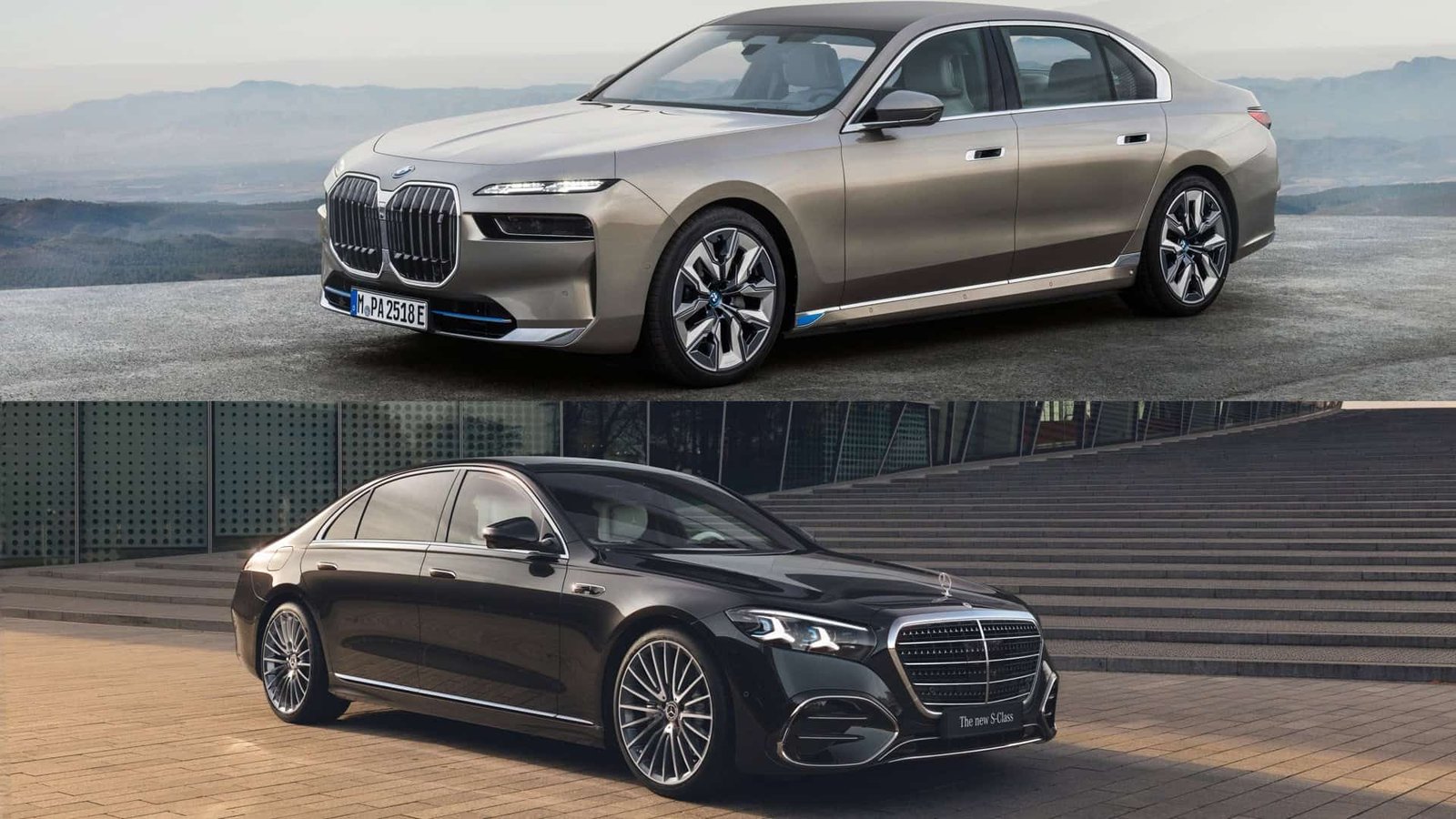
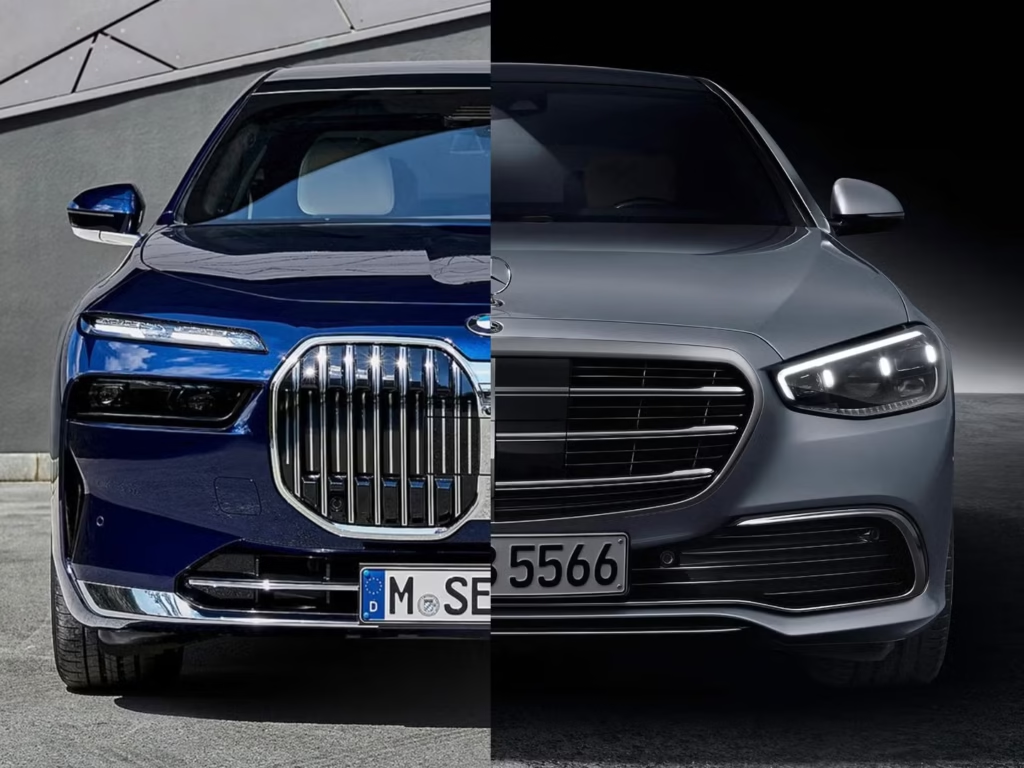
The visual presence of these two titans couldn’t be more distinct. The BMW 7 Series proudly leans into an avant-garde, massive vertical kidney grille design. It commands immediate road presence with split horizontal LED headlights and an optional illuminated front boundary. It looks unapologetically futuristic and monolithic.
In contrast, the refreshed 2026 Mercedes-Benz S-Class steps up its visual volume with a new, larger grille filled with tiny, illuminated three-pointed stars. It features redesigned star-motif headlights and slimmer rear LEDs, keeping its traditional, sweeping, and elongated silhouette. It remains the quintessential template for traditional executive wealth.
Power and Performance: Silky Dinosaurs vs. Hyper-Hybrids
Under the hood, the bmw vs mercedes rivalry takes two distinct mechanical paths. BMW offers a masterful trio of engines, starting with the legendary B58 inline-six in the 740i, climbing to the 750e plug-in hybrid, and topping out with the monstrous 536-horsepower twin-turbo V8 in the 760i xDrive. Every variant delivers a sharp, engaging throttle response paired with a standard adaptive air suspension.
Mercedes-Benz has heavily reworked its powertrain lineup for 2026, leaning hard into high-efficiency electrification. While the baseline S 500 utilizes a smooth, mild-hybrid inline-six, the star of the show is the expanded plug-in hybrid lineup. The new hybrid frameworks deliver up to 100 kilometers (around 62 miles) of pure electric range in specific configurations, providing a dead-silent, zero-emission urban glide.
Interior Tech: A Clash of Screen Philosophies
Step inside either cabin, and you are stepping into a multi-million dollar tech laboratory. The dashboard layouts show two radically different approaches to digital luxury.
BMW pairs a seamless, hovering dual-screen curved panel up front with its intuitive iDrive 8.5 operating system. It keeps things clean, minimalist, and deeply driver-oriented.
Mercedes fires back by trickling down its massive, glass-covered Hyperscreen architecture into the 2026 S-Class. The passenger gets their own dedicated display area, which features advanced light control tech to automatically blur the content from the driver’s line of sight to prevent distraction.
The Rear Cabin Experience: Cinema vs. Corporate Lounge
If you plan to spend your time in the back row, this is where your decision will be made instantly.
BMW vs Mercedes ultimate party trick remains its optional 31.3-inch, 8K Theater Screen that automatically drops down from the ceiling. Paired with integrated door-panel touchscreens and an optional 40-speaker Bowers & Wilkins Diamond surround sound system, the rear of the 7 Series instantly transforms into a fully immersive private cinema.
The updated S-Class chooses to double down on the mobile executive workspace. It offers an updated four-seat configuration featuring a permanent center console, complete with an independent, smartphone-like handheld controller. Passengers can seamlessly join video conferences on the go via interior cameras, reclining on plush ottoman seats with integrated footrests and active neck-warming cushions.
Head-to-Head Specification Comparison
| Feature / Spec | 2026 BMW 7 Series (760i / 750e) | 2026 Mercedes-Benz S-Class (S 580 / S 580e) |
| Base Starting Price | Approx. $99,300 | Approx. $119,500 |
| Top ICE/PHEV Power | 536 hp (V8) / 483 hp (PHEV) | 496 hp (V8) / 503 hp (PHEV) |
| Transmission | 8-Speed ZF Automatic | 9G-TRONIC Automatic |
| Max Rear Display | 31.3-inch Drop-Down Theater Screen | Dual Front-Seat Mounted Screens |
| Ride Character | Balanced, Controlled, Sport-Leaning | Ultra-Soft, Cushioned, Gliding |
| Trunk Space | 19 Cubic Feet | 12.9 to 13.8 Cubic Feet |
Financial Considerations and Long-Term Value
When playing in the six-figure luxury arena, asset depreciation is a very real factor. Historically, both the S-Class and the 7 Series experience sharp residual value drops over the first three to five years of ownership.
BMW includes a highly competitive three-year or 36,000-mile complimentary maintenance program, which helps mitigate early operating costs. Mercedes demands a higher upfront price premium, starting closer to $119,500, but it counteracts this with its historically stronger cultural status, often retaining slightly better residual demand on the secondary market.
Conclusion: Which Flagship Wins in 2026?
Declaring an absolute winner in this heavyweight bout depends entirely on what you want out of your vehicle asset.
The BMW 7 Series takes the crown for tech forwardness, cargo capacity, and value. Starting at a lower price point than the Mercedes, it provides a superior rear-seat entertainment layout and an engaging driving dynamic for owners who enjoy sitting behind the wheel themselves. It is a bold, modern choice.
The Mercedes S-Class 2026 retains its historic throne as the ultimate symbol of traditional luxury and professional chauffeuring. With its extensive 2026 facelift, the inclusion of the stunning Hyperscreen, and an outstanding plug-in hybrid electric range, it remains the most comfortable, relaxing, and software-connected lounge on wheels.
Frequently Asked Questions (FAQ)
Which flagship sedan has the better autonomous driving technology in 2026?
Both brands offer incredible semi-autonomous assistance packages. BMW’s Driving Assistance Professional package allows for hands-free highway cruising and automatic lane changes.
Is the BMW 7 Series or the Mercedes S-Class more reliable long-term?
At this tier of engineering, both vehicles feature incredibly complex mechanical, hybrid, and software systems that require strict, expensive maintenance. BMW’s inline-six engine variants have shown excellent structural reliability over the years, while Mercedes’ mechanical components are highly robust. Buying or leasing within the warranty window is highly recommended for both models.
How does the cargo space compare between the 7 Series and the S-Class?
The BMW 7 Series wins the utility battle decisively with a massive 19 cubic feet of trunk space across its standard lineup. Because of its complex rear seating mechanisms and hybrid battery packaging, the Mercedes S-Class offers a smaller trunk capacity, typically hovering around 13 cubic feet, which can make fitting multiple large suitcases a bit tight.
Can you completely turn off the passenger screen in the Mercedes S-Class?
Yes. If you find the new dashboard display setup too distracting or if you don’t have a front-seat passenger, the MBUX system allows you to completely dim or turn off the passenger-side glass screen.
Which model offers a better plug-in hybrid (PHEV) variant?
For 2026, Mercedes-Benz holds a slight edge in pure electrification efficiency. The S 580e and the newly introduced global variants offer up to 100 kilometers of pure electric range, allowing for extensive zero-emissions driving.