The electric truck market has reached full maturity. Buyers no longer have to settle for flashy prototypes or low-range compliance vehicles. If you are shopping for the best electric truck 2026, the focus has shifted entirely from novel tech features to real-world utility: heavy-duty towing capacity, advanced payload flexibility, and maximum highway range.
If you are trying to find the best ev pickup, three primary heavyweights dominate the conversation: the Rivian R1T, the Chevrolet Silverado EV, and the Tesla Cybertruck. Choosing between these platforms requires evaluating how each brand approaches structural utility, charging efficiency, and power distribution. This comprehensive electric pickup 2026 guide will break down the numbers to help you choose the right zero-emission platform for your lifestyle.
1. Chevrolet Silverado EV: The Long-Distance Heavyweight
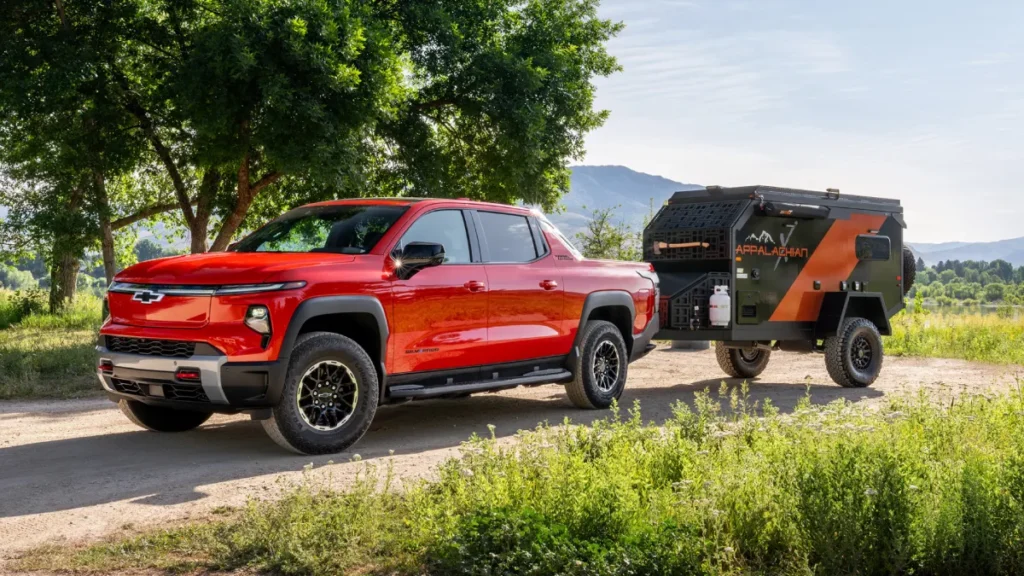
Chevrolet built the Silverado EV on General Motors’ dedicated Ultium battery architecture. This ground-up design approach avoids the common packaging compromises foqund when converting traditional internal combustion frames into electric vehicles.
Range, Battery, and Charging Metrics
The standout metric for the Silverado EV is its monumental highway endurance. When equipped with the massive 205-kWh Max Range battery pack, it achieves an EPA-estimated maximum range of up to 493 miles on a single charge.
To manage this massive cell capacity, Chevrolet uses a high-voltage system that supports 300 kW DC fast charging. At a compatible public charging station, you can replenish roughly 100 miles of highway range in 10 minutes, making long-distance interstate transit highly viable.
Work and On-Board Utility
Maximum towing capacity scales up to an impressive 12,500 pounds on specific work-oriented configurations. The standard payload capacity tops out around 2,350 pounds depending on your chosen trim tier. Chevrolet’s own official Silverado EV announcement confirms these figures come from the ground-up Ultium platform designed specifically for heavy-duty electric hauling.
For remote job sites or emergency home backup, the Silverado EV functions as an active mobile power grid. Its on-board power export system provides up to 10.2 kW of energy distributed across eight distinct outlets, including a dedicated 240-volt high-draw connection in the truck bed.
Tailgate and Midgate Versatility
The signature engineering asset of this truck is the Multi-Flex Midgate. When you fold the rear passenger row down, the structural back wall of the cab drops completely flat. This structural adjustment transforms the standard 5-foot-11-inch bed into a fully enclosed, weather-protected loading floor extending over 9 feet in length.
2. Rivian R1T: The High-Performance Adventurer
The Rivian R1T targets a distinct market sector, blending daily premium drive dynamics with elite off-road capability. Rather than mimicking traditional full-size work truck dimensions, its slightly more compact footprint makes it highly maneuverable on tight off-road trails and crowded urban environments.
Powertrain and Trail Innovation
The R1T lineup offers massive mechanical diversity, spanning from a 533-horsepower Dual-Motor baseline up to an elite Quad-Motor configuration. The updated Quad-Motor system pushes out a mind-boggling 1,025 horsepower and 1,198 lb-ft of torque, launching this utility vehicle from 0 to 60 mph in a blistering 2.5 seconds.
Its standard independent air suspension provides up to 14.9 inches of ground clearance on demand. Combined with an advanced torque-vectoring setup that manages power to each wheel individually, the R1T achieves a class-leading 43.1-inch water-fording depth.
Range and Real-World Towing
When analyzing the rivian r1t vs silverado ev, battery packaging varies wildly. The R1T Max Pack battery delivers a highly competitive EPA-estimated 420 miles of range.
Towing capacity tops out at 11,000 pounds. However, continuous trailering will impact your efficiency. Heavy highway test pulls indicate that dragging a tall, dual-axle camper can cut your overall range by more than 50 percent, a critical factor for long-haul buyers.
The Enclosed Gear Tunnel
The R1T’s most celebrated design innovation is its transverse Gear Tunnel. This 11-cubic-foot, weather-sealed cargo tube runs directly through the width of the truck body behind the rear passenger doors. The dual outer doors drop down to act as steps that hold up to 400 pounds, providing easy access to roof racks or the 4-foot-6-inch composite bed.
3. Tesla Cybertruck: The Low-Maintenance Disrupter
Tesla’s approach to the utility market skips traditional construction metrics entirely, focusing heavily on raw material structural resilience and advanced electronic system integration.
Exoskeleton Architecture and Bed Design
The Cybertruck body panels are stamped from an ultra-hard, cold-rolled stainless steel exoskeleton. Because this raw metal skin acts as the primary structural element, the truck completely deletes traditional internal frame components and exterior paint layers. The body is highly dent-proof and scratch-resistant, allowing it to take heavy abuse on active job sites without cosmetic degradation.
The rear vault features a standard 6-foot bed equipped with a motorized, lockable tonneau cover. It delivers a robust 2,500-pound maximum payload capacity, giving it an edge for hauling heavy raw materials.
Steer-by-Wire and 48V Low-Voltage Loops
When looking at a cybertruck vs rivian matchup, Tesla’s core advantages lie in its underlying electrical architecture:
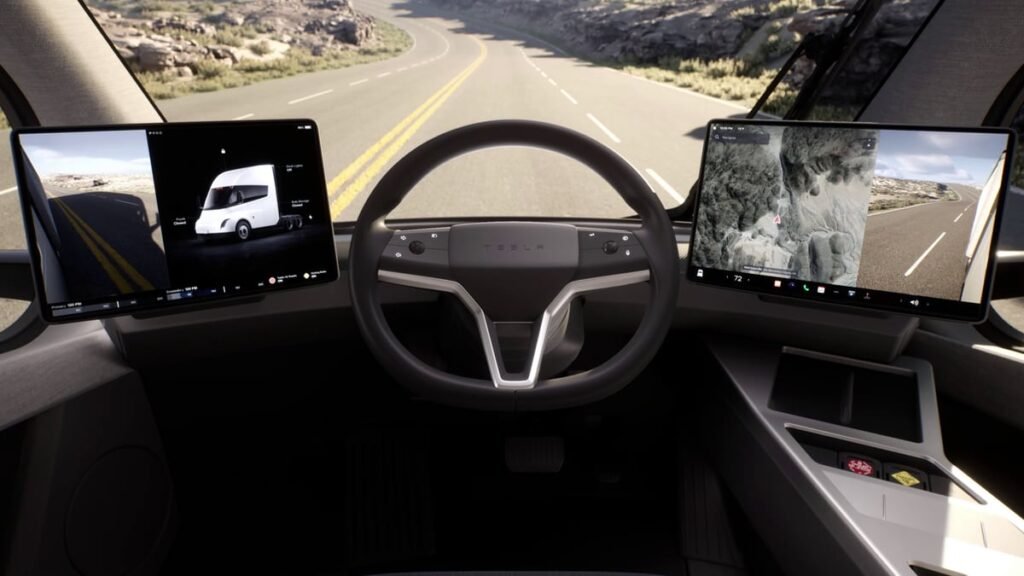
Steer-by-Wire Control: There is no physical steering column linking the yoke steering wheel to the front axle. Electronic actuators turn the wheels using redundant computing inputs. Integrated with automatic four-wheel steering, the truck requires minimal steering input at low speeds, granting a full-size pickup the tight turning radius of a compact car.
48-Volt Architecture: Moving past the century-old 12-volt standard, the Cybertruck runs its accessories on a high-efficiency 48-volt loop. This drop in current allows Tesla to utilize ultra-thin internal wiring harnesses, cutting down on vehicle weight and increasing computing reliability.
Range and Charging Limitations
The All-Wheel Drive Cybertruck offers an EPA-estimated 325 miles of range, making it the lowest-range option among these three competitors. It uses a 123-kWh structural battery pack that pulls up to 250 kW at high-speed charging stalls, recovering roughly 130 miles of range in 15 minutes under optimal thermal conditions.
Side-by-Side Electric Truck Comparison
To see exactly how these top-tier options map out against each other, review this data-driven performance breakdown:
| Technical Metrics | Chevrolet Silverado EV (Max Range) | Rivian R1T (Max Pack) | Tesla Cybertruck (AWD) |
| Max Towing Capacity | 12,500 lbs | 11,000 lbs | 11,000 lbs |
| EPA Max Range | 478 – 493 miles | 420 miles | 325 miles |
| Battery Pack Size | 205 kWh | 149 kWh | 123 kWh |
| Payload Capacity | 1,400 – 2,350 lbs | 1,764 lbs | 2,500 lbs |
| Standard Bed Length | 5’11” (Expands to 9’+) | 4’6″ | 6’0″ |
| Power Export Limit | 10.2 kW (8 Outlets) | 1.5 kW (Multiple Outlets) | 11.5 kW (5 Outlets) |
| Base Starting MSRP | $57,990 | $74,885 | $72,235 |
The Verdict: Matching Your Workflow to the Right Truck
Every buyer has unique priorities when conducting an electric truck comparison. Finding the perfect fit requires aligning your driving profile with each vehicle’s engineering focus.
Choose the Chevrolet Silverado EV if your primary needs center around long-distance highway hauling, maximizing bed length flexibility, and commercial fleet duties. Its near-500-mile range provides an unmatched safety cushion when trailering heavy loads over long distances.
Choose the Rivian R1T if you want an agile lifestyle vehicle that balances sports-car performance with elite off-road trail characteristics. The integrated Gear Tunnel and superior ground clearance make it a phenomenal pick for weekend overlanding adventures.
Choose the Tesla Cybertruck if you prioritize low-maintenance structural durability, ultra-modern tech integration, and easy city maneuverability. Its scratch-resistant steel skin and advanced steer-by-wire system excel in high-traffic urban areas and harsh job sites.
The Highway Takeaway: The modern pickup landscape proves that zero-emission driving doesn’t mean compromising on utility. Stay tuned to turboocruiser for deep-dive instrumented tests, real-world highway range data, and full breakdown maintenance guides as we track these electric workhorses across the year.
Frequently Asked Questions
Which model wins the rivian r1t vs silverado ev towing battle?
The Chevrolet Silverado EV wins on raw capacity, offering a maximum tow rating of up to 12,500 pounds compared to the Rivian R1T’s 11,000-pound limit.
What happens to an electric pickup 2026 range when pulling a trailer?
Towing a heavy, non-aerodynamic load typically reduces an EV truck’s total highway range by 45 to 55 percent depending on speed, headwind conditions, and terrain gradients.
In a cybertruck vs rivian matchup, which vehicle handles tight spaces better?
The Tesla Cybertruck has an advantage in tight parking lots due to its standard rear-wheel steering and steer-by-wire system, which drastically tightens its overall turning radius.
What is the most affordable truck tier listed in this electric truck comparison?
The Chevrolet Silverado EV Work Truck (WT) line offers the lowest starting entry point, with base commercial fleet configurations beginning at an MSRP of $57,990.