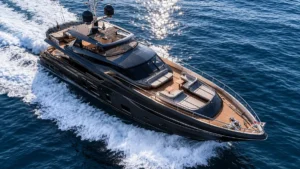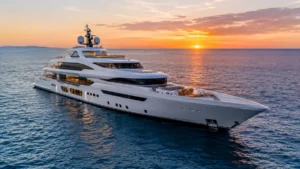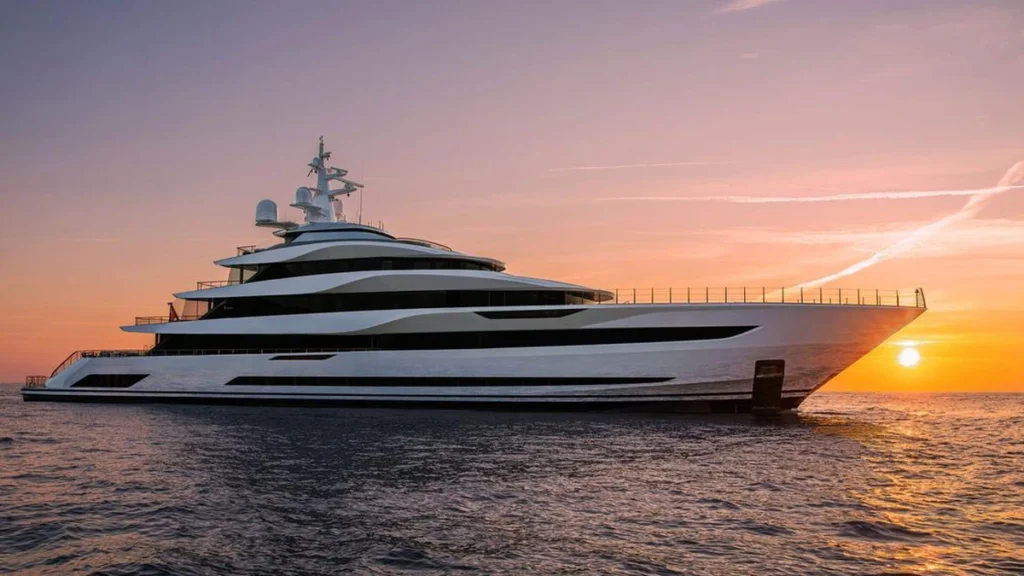
A 200-foot yacht is a large luxury vessel that offers extensive living space, private guest accommodation, and facilities for long-distance travel. Measuring approximately 60.96 metres, it can include several decks, spacious suites, entertainment areas, swimming pools, and dedicated crew facilities. However, its exact design and equipment depend on the builder and owner’s requirements.
The price of a 200-foot yacht depends on its age, construction, equipment, condition, and level of customisation. Ownership also involves significant annual expenses, including crew salaries, fuel, insurance, maintenance, and berthing fees.
This guide explores 200-foot yacht specifications, interiors, performance, prices, charter options, and operating costs. It also examines real yachts to show how vessels of similar lengths can have different features and capabilities.
What Is a 200-Foot Yacht?
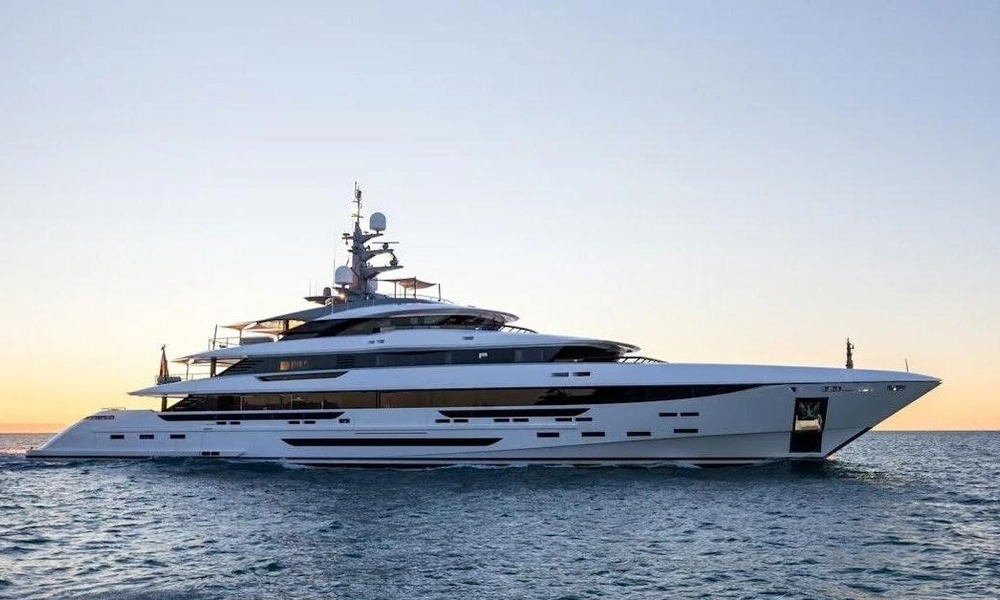
A 200-foot yacht is a large pleasure vessel measuring approximately 60.96 metres in length. Yachts around this size are generally considered superyachts and are designed to provide extensive accommodation, professional onboard services, and comfortable travel.
They can be built for private ownership, luxury charter, or long-distance exploration. Some focus on entertainment and spacious living areas, while others prioritise fuel capacity, storage, and the ability to travel to remote destinations.
A 200-foot yacht does not follow one standard design. Its layout, performance, and accommodation depend on its intended purpose.
200 feet in different measurements:
| Measurement | Equivalent |
|---|---|
| Feet | 200 ft |
| Metres | 60.96 m |
| Inches | 2,400 |
| Yards | 66.67 |
200-Foot Yacht Specifications
The specifications of a 200-foot yacht vary according to its hull design, engines, displacement, and equipment. Buyers should examine more than length when comparing different vessels.
| Specification | Meaning |
|---|---|
| Length overall (LOA) | Total length from bow to stern |
| Beam | Maximum width of the yacht |
| Draft | Depth of the yacht below the waterline |
| Gross tonnage (GT) | Measurement of enclosed internal volume |
| Hull material | Material used to construct the hull |
| Engine power | Power produced by the main engines |
| Cruising speed | Speed used during normal travel |
| Maximum speed | Highest published operating speed |
| Fuel capacity | Amount of fuel the yacht can carry |
| Range | Distance the yacht can travel under stated conditions |
| Guest capacity | Number of guests accommodated or permitted |
| Crew capacity | Number of crew members accommodated |
Gross tonnage is an important specification, but it does not measure the yacht’s weight. It measures enclosed internal volume. Two yachts measuring approximately 200 feet can have very different gross tonnage because of their designs and internal layouts.
What Does a 200-Foot Yacht Look Like?
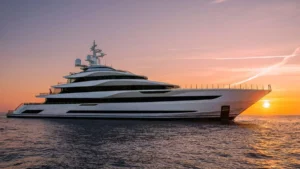
A 200-foot yacht usually has multiple decks and a large exterior profile. Its design provides separate areas for navigation, guest accommodation, dining, entertainment, and outdoor activities.
Common exterior areas include:
- Main deck: Often contains the main salon, dining room, and guest facilities.
- Upper deck: Provides additional lounges and outdoor seating.
- Sun deck: Offers space for sunbathing, relaxation, and outdoor dining.
- Swimming platform: Provides access to the sea and water activities.
- Beach club: Creates a relaxing space close to the water.
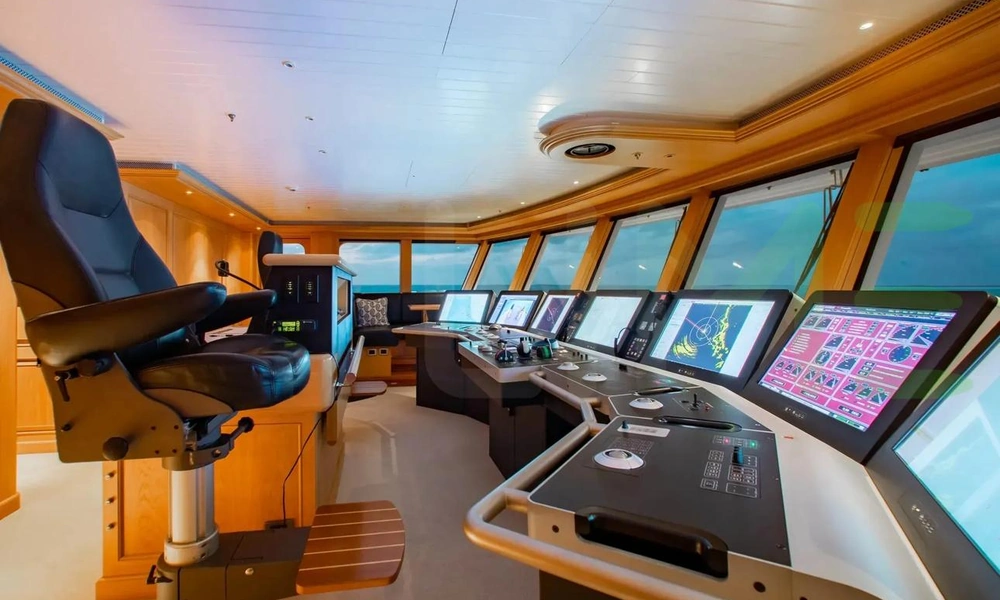
- Bridge deck: Houses navigation equipment and the wheelhouse.
Some yachts also include swimming pools, helipads, Jacuzzis, and tender garages. These facilities depend on the individual design and are not standard on every 200-foot yacht.
Inside a 200-Foot Yacht: Interior and Luxury Features
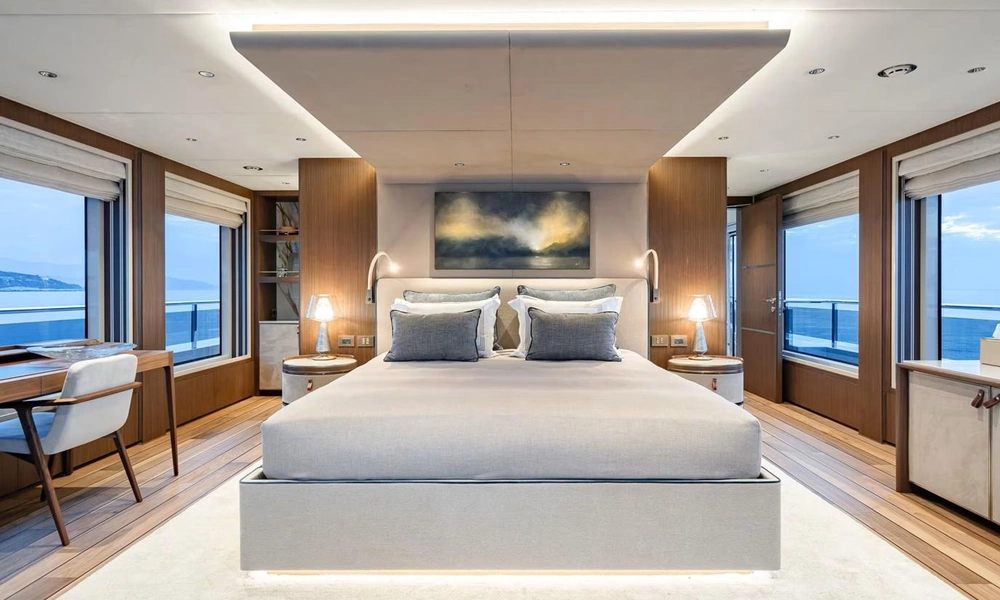
The interior of a 200-foot yacht is designed to provide comfort and privacy for guests during extended journeys. Its layout can include private suites, entertainment rooms, dining spaces, and dedicated crew facilities.
Common interior features include:
Master suite: The owner’s private accommodation may include a bedroom, bathroom, dressing room, and separate lounge.
Guest cabins: These provide sleeping areas for family members and visitors. The number of cabins depends on the yacht’s layout.
Main salon: A spacious indoor living area for relaxing, socialising, and entertaining.
Dining room: A dedicated space for formal meals and group dining.
Cinema room: Some yachts have private movie rooms with large screens and comfortable seating.
Gym and wellness facilities: Depending on the design, these may include exercise equipment, a sauna, massage facilities, or a spa.
Galley: The professional kitchen supports meal preparation for guests and crew.
Crew areas: Separate cabins, workspaces, and service areas allow the crew to manage daily operations.
Interior quality depends on the materials, furniture, lighting, and design selected by the owner. Custom-built yachts can have very different layouts even when they share similar dimensions.
How Many People Can a 200-Foot Yacht Accommodate?
The number of people a 200-foot yacht can accommodate depends on its cabin layout, certification, and intended use. Many luxury charter yachts are arranged for up to 12 overnight guests, but some vessels have higher capacities.
For example, the NAVIX60 from Leapher Shipbuilding has seven guest cabins. Its official specifications distinguish between a maximum of 14 guests and 12 sleeping guests.
This difference matters because the number of people a yacht can carry and the number it can accommodate overnight are not always the same.
| Accommodation | Purpose |
|---|---|
| Owner’s suite | Private accommodation for the owner |
| VIP cabin | Higher-level guest accommodation |
| Guest cabin | Sleeping space for visitors |
| Crew cabin | Separate accommodation for staff |
| Captain’s cabin | Accommodation for the captain |
Buyers should always check the individual yacht’s accommodation plan and applicable passenger limits instead of estimating capacity from length alone.
How Many Crew Members Does a 200-Foot Yacht Need?
A yacht of this size requires a professional crew to manage navigation, engineering, maintenance, hospitality, and safety.
The exact number depends on the vessel’s systems, guest capacity, operating schedule, and service level.
Common crew positions include:
- Captain: Manages navigation, vessel operations, and overall safety.
- Chief engineer: Oversees engines, generators, electrical systems, and technical equipment.
- Deck crew: Handles exterior maintenance, anchoring, and tender operations.
- Chef: Prepares meals for guests and crew.
- Interior crew: Manages housekeeping, dining, and guest services.
- Additional specialists: May include security personnel, wellness staff, and other professionals.
For comparison, Makh I, a 61-metre yacht built by Royal Hakvoort in 2024, accommodates 18 crew members. The NAVIX60 has a published maximum crew capacity of 17.
These examples show why crew requirements should be checked against each yacht’s specifications rather than assumed to be identical.
How Fast Can a 200-Foot Yacht Go?
The speed of a 200-foot yacht depends on its engine power, hull design, displacement, and operating conditions.
Some yachts are designed for higher speeds, while others focus on fuel efficiency and long-distance cruising.
Two important speed measurements are:
- Cruising speed: The speed used during normal journeys.
- Maximum speed: The highest speed the yacht can achieve under suitable conditions.
For example, Makh I has a published maximum speed of 15.3 knots and a cruising speed of approximately 13 knots. The NAVIX60 has a maximum speed of 12 knots and a cruising speed of 10 knots.
| Yacht | Cruising speed | Maximum speed |
|---|---|---|
| Makh I | 13 knots | 15.3 knots |
| NAVIX60 | 10 knots | 12 knots |
The comparison shows that yachts of similar lengths can have different performance targets. Buyers should compare published figures alongside engine specifications, hull design, and fuel consumption.
How Far Can a 200-Foot Yacht Travel?
The cruising range of a 200-foot yacht depends on its fuel capacity, engine efficiency, cruising speed, and hull design.
Explorer yachts are often designed for longer journeys and may carry larger fuel supplies. Other yachts may prioritise speed, entertainment facilities, or shorter regional trips.
The NAVIX60 provides a useful example. Leapher Shipbuilding publishes a range of up to 9,000 nautical miles at its stated cruising speed of 10 knots. Its published maximum speed is 12 knots, with a range of 5,800 nautical miles at that speed.
Range figures must always be considered alongside their stated operating conditions. Actual distance can change with weather, sea conditions, loading, and engine use.
How Much Does a 200-Foot Yacht Cost?
The price of a 200-foot yacht depends on its builder, construction year, condition, equipment, and level of customisation. A newly built custom yacht can have a very different price from an older pre-owned vessel.
There is no single verified market price for every yacht of this size. Some brokers publish asking prices, while others provide prices only after a direct enquiry.
For example, the 60.5-metre NAVIX60 has appeared on the brokerage market with its price listed as available on request. Makh I, measuring 61 metres, is not currently listed for sale according to SuperYacht Times.
The following factors influence the 200 foot yacht price:
- Builder and shipyard reputation.
- Year of construction.
- Hull and superstructure materials.
- Engine and propulsion systems.
- Interior design and equipment.
- Guest accommodation and onboard facilities.
- Maintenance and refit history.
- Current market demand.
New vs. Used 200-Foot Yacht Prices
| Factor | New yacht | Used yacht |
|---|---|---|
| Purchase price | Depends on construction and customisation | Depends on age and condition |
| Design | More opportunity for customisation | Existing layout |
| Technology | Selected equipment can be new | May require upgrades |
| Maintenance history | New operating record | Requires detailed review |
| Delivery | Construction can take years | Depends on market availability |
| Refitting | Usually not required immediately | May need repairs or upgrades |
Buyers should compare actual brokerage listings for yachts with similar lengths, gross tonnage, construction quality, and equipment. An asking price is not necessarily the final sale price.
How Much Does It Cost to Maintain a 200-Foot Yacht?
Buying a 200-foot yacht is only the beginning of its financial commitment. Owners must also budget for crew salaries, fuel, maintenance, insurance, berthing, and professional management.
Christie Yachts provides an indicative annual operating budget of approximately €4 million to €5 million for a 60-metre motor yacht with around 14 crew members and a dual-season operating schedule.
Since 200 feet is approximately 60.96 metres, this provides a useful industry reference for a yacht of similar length. However, it is not a guaranteed budget for every vessel.
| Expense | What it covers |
|---|---|
| Crew salaries | Wages, benefits, training, and travel |
| Fuel | Main engines and generators |
| Maintenance | Routine servicing and repairs |
| Insurance | Hull, machinery, and liability coverage |
| Berthing | Marina and port charges |
| Yacht management | Administrative and operational support |
| Supplies | Food, cleaning products, and daily necessities |
| Refit work | Major repairs and equipment upgrades |
The annual budget changes according to how frequently the yacht operates, where it travels, how many crew members it employs, and the condition of its systems.
Major refits, financing, depreciation, and other exceptional expenses may also sit outside an ordinary annual operating budget. Owners should therefore prepare a yacht-specific financial plan before purchasing.
Can You Charter a 200-Foot Yacht?
Yes. Some 200-foot yachts are available for private charter. Chartering allows guests to enjoy luxury accommodation, professional crew services, and onboard facilities without purchasing the vessel.
For example, TOP FIVE II is a 61-metre motor yacht built by Royal Hakvoort in 2021. It accommodates up to 12 guests and has seven listed guest cabins.
Northrop & Johnson publishes the following 2026 charter rates:
| Season | Weekly charter rate |
|---|---|
| Summer low season | $600,000 |
| Summer high season | $650,000 |
| Winter low season | $600,000 |
| Winter high season | $650,000 |
Other brokers have published lower starting rates for the same yacht, illustrating why charter prices should be checked against the actual dates and booking terms.
These rates are not necessarily the total charter expense. Additional costs can include:
- Fuel for the yacht and tenders.
- Guest food and beverages.
- Marina and port charges.
- Taxes and local fees.
- Special guest requests.
- Crew gratuities, where customary.
An Advance Provisioning Allowance (APA) is an additional payment used to cover agreed running expenses during the charter. Northrop & Johnson explains that these expenses commonly require an allowance of around 35–40% of the weekly charter rate, depending on the itinerary and guests’ requirements.
Before booking, confirm the available dates, guest capacity, included services, additional expenses, and cancellation terms.
What Should You Check Before Buying a 200-Foot Yacht?
Buying a large yacht requires more than checking its appearance and asking price. Buyers should arrange a professional inspection and review the vessel’s technical, financial, and legal records.
Important checks include:
- Hull condition: Examine the hull for damage, corrosion, and previous repairs.
- Engine condition: Review engine hours, service records, and inspection reports.
- Maintenance history: Check routine servicing and previous repair work.
- Classification records: Review applicable classification and survey documents.
- Ownership documents: Confirm legal ownership and check for registered claims or restrictions.
- Safety equipment: Check required safety systems and inspection dates.
- Insurance: Confirm available coverage and policy conditions.
- Operating budget: Review crew expenses, fuel use, insurance, and maintenance.
- Refit requirements: Identify repairs or upgrades that may be needed.
- Registration and compliance: Check flag registration and the regulations that apply to the yacht’s intended use.
An independent marine surveyor, yacht lawyer, and experienced technical adviser can help identify problems before the purchase is completed.
New vs. Used 200-Foot Yachts: Which Is Better?
Both options have advantages. The right choice depends on the buyer’s budget, preferred design, delivery timeline, and willingness to manage maintenance or construction.
| Comparison | New 200-foot yacht | Used 200-foot yacht |
|---|---|---|
| Design | More opportunity for customisation | Existing design |
| Technology | New equipment can be selected | Depends on upgrades |
| Purchase price | Generally higher for comparable custom builds | Varies with age and condition |
| Delivery | Can take several years | Depends on availability |
| Maintenance | New equipment and systems | Depends on service history |
| Personalisation | Greater during design | May require renovation |
A new yacht may suit buyers who want a custom layout and selected equipment. A used yacht may be more suitable for buyers who prefer an existing vessel, provided it passes a detailed inspection.
Popular 200-Foot Yachts and Real-World Examples
Real yacht examples help explain how vessels of similar lengths can have different specifications, accommodation, and performance.
Makh I
Makh I is a 61-metre motor yacht built by Royal Hakvoort in 2024. It measures approximately 200 feet and has a steel hull with an aluminium superstructure.
Its published specifications include:
- Length: 61 metres (200 ft 2 in).
- Gross tonnage: 1,268 GT.
- Guest capacity: 12.
- Crew capacity: 18.
- Cruising speed: approximately 13 knots.
- Maximum speed: 15.3 knots.
Makh I also features a large beach club and several luxury facilities. It is not currently listed for sale on SuperYacht Times.
NAVIX60
The NAVIX60 is an explorer yacht from Leapher Shipbuilding. Its length of 60.5 metres makes it approximately 198 feet 6 inches, slightly shorter than 200 feet.
Its official specifications include:
- Length: 60.5 metres (198 ft 6 in).
- Beam: 12.8 metres.
- Gross tonnage: 1,753 GT.
- Maximum speed: 12 knots.
- Cruising speed: 10 knots.
- Range: up to 9,000 nautical miles at 10 knots.
- Maximum guest capacity: 14.
- Sleeping guest capacity: 12.
- Guest cabins: 7.
- Maximum crew capacity: 17.
Comparison of Both Yachts
| Specification | Makh I | NAVIX60 |
|---|---|---|
| Length | 61 m | 60.5 m |
| Approximate length | 200 ft 2 in | 198 ft 6 in |
| Gross tonnage | 1,268 GT | 1,753 GT |
| Cruising speed | 13 knots | 10 knots |
| Maximum speed | 15.3 knots | 12 knots |
| Guest capacity | 12 | 14 maximum |
| Sleeping guests | 12 | 12 |
| Maximum crew | 18 | 17 |
These examples demonstrate that similar-length yachts can have different internal volumes, guest arrangements, and performance targets. The NAVIX60, for example, has a higher gross tonnage despite being slightly shorter than Makh I.
Conclusion
A 200-foot yacht offers extensive accommodation, luxury facilities, and the potential for long-distance cruising. However, yachts of this size can differ greatly in their design, speed, range, guest capacity, and internal volume.
The purchase price is only one part of ownership. Crew salaries, fuel, insurance, maintenance, berthing, and major refits also require careful financial planning.
Before choosing a 200-foot luxury yacht, buyers should compare real specifications, review maintenance records, and arrange professional inspections. Understanding both the purchase commitment and long-term operating expenses helps buyers make a more informed decision.
Frequently Asked Questions About 200-Foot Yachts
Is a 200-foot yacht big enough to cross the Atlantic?
A 200-foot yacht can be designed for ocean crossings, but its length alone does not confirm its suitability. Range, fuel capacity, hull design, safety equipment, weather conditions, and technical condition all matter.
Does a 200-foot yacht need a helipad?
No. A helipad is an optional feature. Some yachts have a dedicated landing area, while others use their deck space for pools, lounges, or other facilities.
Can a 200-foot yacht enter every marina?
No. Marina access depends on berth length, water depth, beam, draft, and local restrictions. Owners should confirm that a marina can accommodate their specific yacht before arrival.
Can a 200-foot yacht operate with a smaller crew?
Crew requirements depend on the yacht’s systems, operation, guest services, and applicable regulations. Reducing crew numbers without considering safety and workload can create operational problems.
Is a 200-foot yacht suitable for year-round living?
It can provide facilities for extended stays, but suitability depends on its layout, storage, technical systems, crew arrangements, and access to maintenance and supplies.
Does a longer yacht always have a better cruising range?
No. Range depends on fuel capacity, cruising speed, engine efficiency, hull design, and operating conditions. A slightly shorter explorer yacht may travel farther than a longer yacht designed for higher speeds.
What is more important when comparing two 200-foot yachts: length or gross tonnage?
Both measurements are useful, but they describe different things. Length measures the yacht from end to end, while gross tonnage measures enclosed internal volume. Buyers should examine both along with the layout and technical specifications.
How long does it take to build a 200-foot yacht?
Construction time depends on the builder, design complexity, equipment, customisation, and production schedule. A custom yacht can take several years from design approval to delivery. Buyers should request a project timeline directly from the shipyard.
Is a 200-foot yacht expensive to insure?
Insurance costs depend on the yacht’s value, age, cruising area, operating history, safety systems, and coverage requirements. Buyers should request an individual insurance quotation rather than rely on a fixed percentage.