Private aviation represents the pinnacle of convenience, speed, and luxury. Yet, in an era increasingly defined by climate consciousness, it also carries a heavy burden. Private jets are often criticized as the ultimate symbol of carbon extravagance, producing significantly more carbon dioxide ($CO_2$) per passenger mile than commercial airliners. This stark environmental reality has forced the business aviation sector to undergo a massive shift.
Enter sustainable aviation fuel private jets rely on as the primary hope for a cleaner future. Commonly known as SAF, this alternative fuel promises to dramatically slash aviation carbon footprints without requiring aircraft owners to swap out their multi-million dollar turbine engines. But can sustainable aviation fuel private jets use actually deliver on the promise of green private aviation? Or is it simply an expensive marketing shield for the ultra-wealthy? Let’s take an honest, data-driven look at the science, the economics, and the future of flying eco-consciously.
What Exactly is Sustainable Aviation Fuel (SAF)?
To understand if a saf private jet can truly be eco-friendly, we first need to define what SAF is—and what it isn’t.
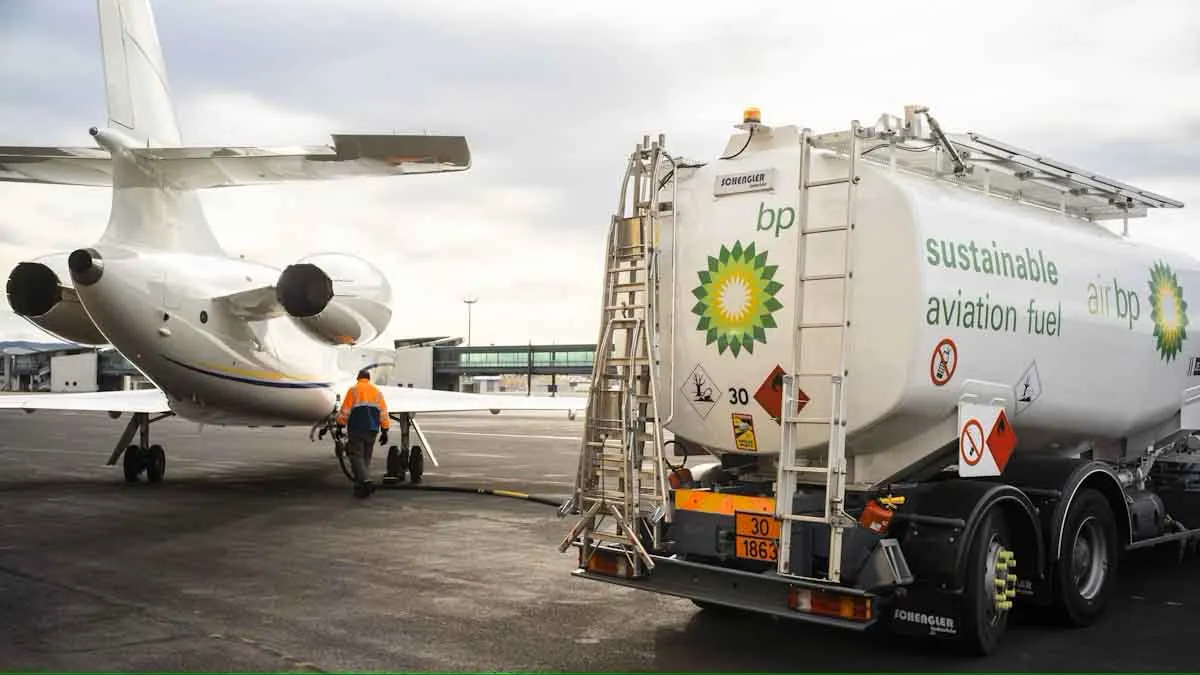
Sustainable Aviation Fuel is a liquid biofuel used in commercial and business aviation. Unlike conventional fossil-based Jet-A, SAF is synthesized from non-fossil raw materials, known as feedstocks. These feedstocks typically include:
Used cooking oil (UCO) and animal fats (tallows).
Agricultural residues and municipal solid waste.
Purpose-grown energy crops that do not compete with food production.
Synthetic e-fuels (Power-to-Liquid or PtL), which are manufactured by capturing carbon dioxide directly from the atmosphere and combining it with green hydrogen.
The brilliant thing about SAF is that it is a “drop-in” fuel. This means its chemical structure is virtually identical to conventional fossil jet fuel. As a result, operators can pump it directly into existing airport fuel networks and aircraft fuel tanks without modifying the jet’s fuel lines, combustors, or turbofan blades.
Can It Truly Be Carbon Neutral?
The short answer is no, but it is incredibly close. SAF does not eliminate tailpipe emissions. When a jet burns SAF at 41,000 feet, it still releases $CO_2$, water vapor, and nitrous oxides into the atmosphere.
However, SAF’s environmental value lies in its lifecycle emissions.
Because the organic matter used to create SAF absorbed $CO_2$ from the atmosphere during its lifetime, burning it does not introduce “new” carbon into the biosphere. When you factor in the energy required to harvest, transport, and refine these feedstocks, high-integrity SAF can reduce net lifecycle greenhouse gas emissions by up to 80% compared to conventional kerosene.
The Economic Reality: The Substantial SAF Cost Premium
If SAF is chemically compatible and dramatically reduces emissions, why isn’t every private jet on Earth running on it today? The answer boils down to the classic economic hurdle: the saf cost premium.
The cost to produce SAF is structurally higher than refining fossil crude oil. Stripping oxygen from complex bio-feedstocks requires massive amounts of energy and hydrogen. As a result, the saf cost is currently 2x to 5x higher than conventional Jet-A.
According to market data, while conventional jet fuel might hover around $4.00 to $6.50 per gallon depending on the airport and region, SAF can easily trade at $8.80 to over $12.00 per gallon. For an ultra-long-range jet lifting 3,000 gallons of fuel for an intercontinental trip, choosing 100% SAF would add an astronomical $15,000 to $20,000 premium to a single flight.
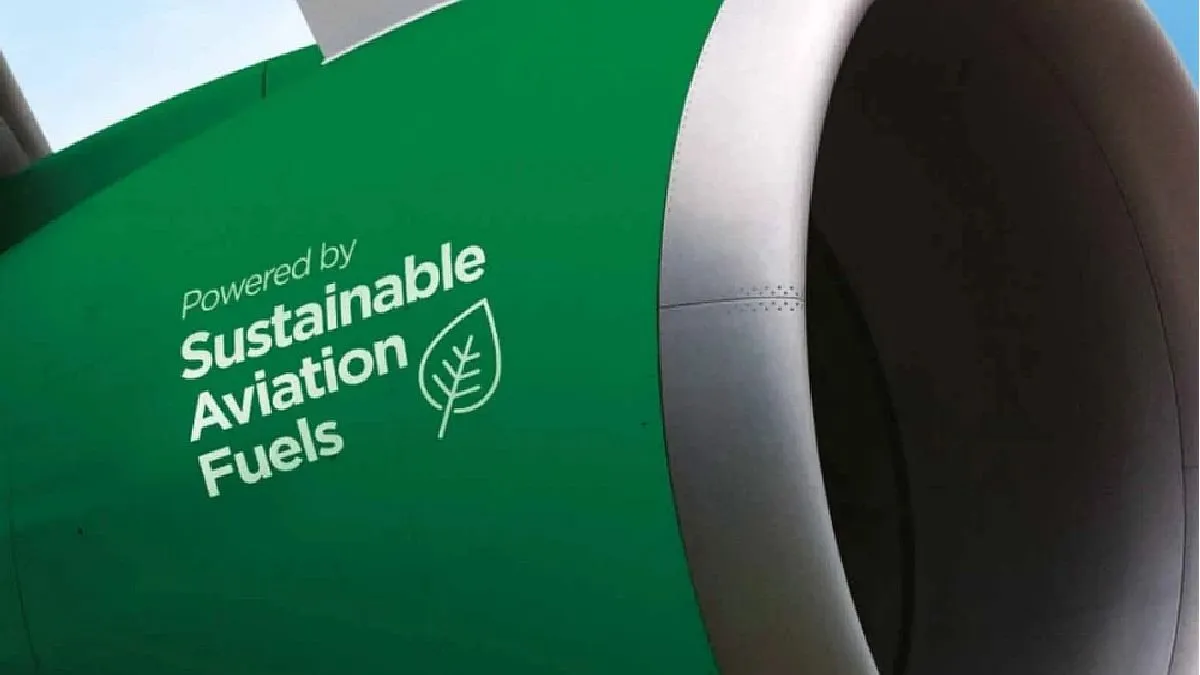
In 2026, IATA estimates global SAF production will reach roughly 2.4 million tonnes, which accounts for just 0.8% of total global aviation fuel demand. Because supply is so concentrated, most airports do not have physical SAF in their underground tanks.
To bypass this logistics bottleneck, the industry has adopted a system called “Book and Claim.”
How Book & Claim Works: You buy SAF for your flight at an airport that doesn’t physically have it. Your premium pays for a corresponding amount of SAF to be pumped into a jet at an airport where the fuel is physically available (like LAX or London Luton). You “claim” the carbon reduction credit, while the physical fuel is used nearby, eliminating the carbon footprint of shipping heavy liquid fuel across the globe.
The Technology Roadmap to Green Private Aviation
The path to fully decarbonizing business aviation relies on a series of critical technological milestones. Major aircraft manufacturers are actively pushing boundaries to move past the current regulatory limit of 50% SAF blends.
Jet Carbon Offsets: Real Solution or Greenwashing?
Because physical SAF remains scarce and expensive, many operators turn to a jet carbon offset to neutralize their environmental impact. Carbon offsetting involves purchasing credits that fund environmental projects elsewhere such as planting trees, capturing methane from landfills, or investing in wind farms.
While a jet carbon offset program is better than doing nothing, it has faced intense scrutiny. Critics point out that offsetting does not stop emissions from being released at high altitudes. Additionally, many cheap forestry offsets have failed to deliver their promised long-term carbon capture.
In 2026, the trend has shifted toward “high-integrity carbon removal” rather than simple avoidance offsets. Eco-conscious flyers, including those booking through private jet charter services, are pairing high-quality offsets with a physical SAF purchase to achieve a more defensible climate claim.
Top Eco Private Jet 2026 Models Leading the Charge
If you want to minimize your environmental footprint while flying private, your choice of aircraft matters immensely. The most efficient eco private jet 2026 fleet selections combine highly aerodynamic wing designs, lightweight composite structures, and next-generation engines optimized for low fuel burn and full SAF compatibility.
1. Dassault Falcon 8X / 10X
Dassault Aviation has long been famous for its tri-jet configuration (on models like the 8X) and advanced aerodynamics inspired by military fighter jets. The upcoming Falcon 10X features ultra-efficient carbon-fiber wings and Rolls-Royce Pearl 10X engines designed to be fully compatible with 100% SAF. Historically, Falcon jets burn up to 20% to 30% less fuel than competing aircraft in their weight class.

2. Bombardier Global 8000
Entering the charter fleets as a flagship ultra-long-range leader, the Global 8000 utilizes Bombardier’s “Smooth Flĕx Wing” technology. This flexible wing design acts like a shock absorber, dramatically reducing aerodynamic drag by up to 30%. Powered by GE Passport engines, it provides exceptional fuel economy and is fully compatible with SAF, a milestone we cover in more depth in our review of the Bombardier Global 8000, the fastest civil jet since Concorde.
3. Embraer Phenom 300E
For regional flights where heavy jets are unnecessary, the Phenom 300E remains the king of light jet efficiency. It burns a fraction of the fuel of midsize or heavy jets, making it the best-selling light jet in its class the cleanest way to complete short domestic hops under 1,000 miles.
The Verdict: Can Private Flying Ever Truly Be Green?
So, can private jets ever actually be green?
If “green” means having absolutely zero impact on the Earth, the answer is no. Even a jet running on 100% SAF still requires energy to manufacture, produces high-altitude contrails that trap heat, and relies on a global supply chain.
However, if “green” means reducing the net climate impact of private flight to a level comparable to or lower than commercial travel, the answer is a cautious yes, but only if the industry scales up SAF production. If we can transition the global fuel supply from fossil Jet-A to 100% synthetic e-fuels powered by solar energy and direct air capture, we can enjoy the speed and convenience of private flight with a clear conscience.
Until that day comes, the responsibility lies with operators and charter clients to absorb the saf cost premium, support the Book and Claim ecosystem, and fly only when the mission truly demands it. for more information of privates jets visit Turboocruiser.
Frequently Asked Questions
Is Sustainable Aviation Fuel physically different from normal jet fuel?
No, SAF is a “drop-in” fuel that is chemically identical to conventional fossil-based Jet-A, allowing it to be used without any engine modifications.
Why is SAF so expensive compared to traditional fuel?
SAF is expensive because bio-feedstocks are limited and the chemical process to strip oxygen from organic matter requires massive amounts of costly green energy.
What is the Book and Claim system for private jet charters?
Book and Claim allows you to pay for SAF at your departure airport, and that fuel is physically uploaded to a jet at a different location where SAF is actively stocked.
How much carbon can a private jet offset actually neutralize?
A high-integrity carbon removal offset can neutralize 100% of the emissions on paper, but it is always more effective to reduce direct emissions using SAF.
Can older private jet models fly on Sustainable Aviation Fuel?
Yes, older engines can fly on SAF because it is mixed up to a 50% blend with conventional jet fuel, though manufacturers are working to certify 100% unblended use.