
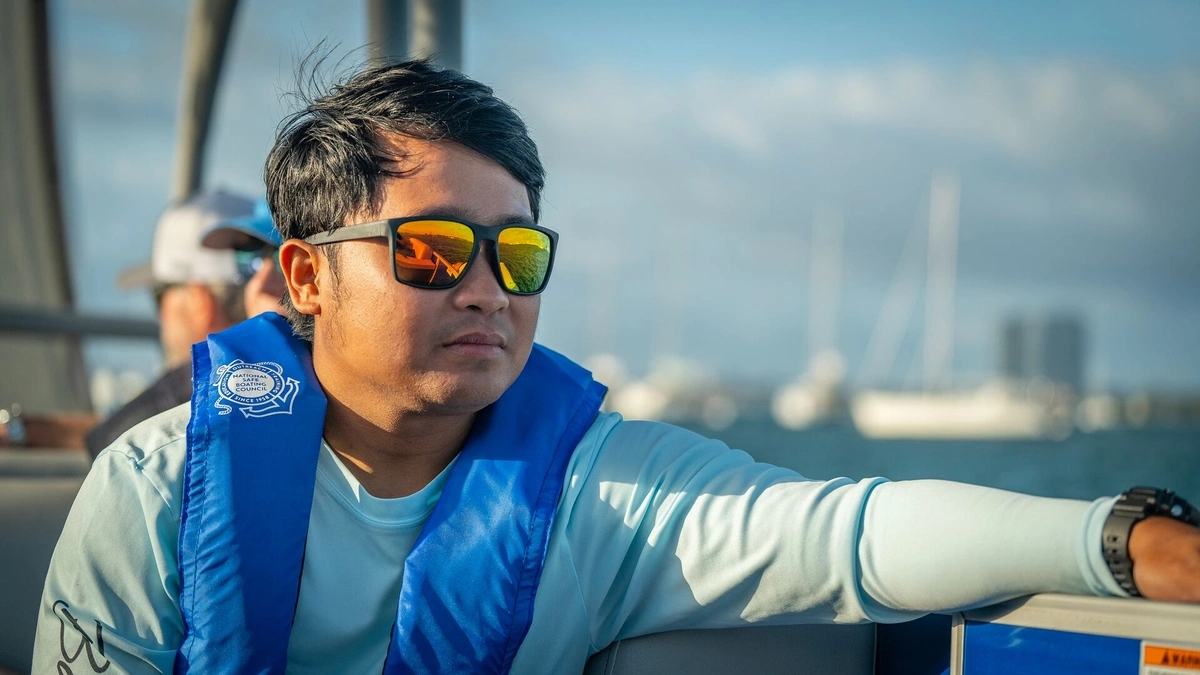
Finding the right life jacket boat gear stands out as the single most critical safety decision you can make before stepping off the dock. Whether you run a high-speed center console offshore, sail across coastal bays, or enjoy a relaxed weekend on a pontoon with your family, bringing a proper boat life jacket onboard saves lives. In fact, federal regulations mandate that every vessel must carry at least one properly fitted, Coast Guard-approved wearable personal flotation device (PFD) for every person on board.
Ultimately, selecting the best life jacket for boating comes down to understanding the main life jacket types, matching the vest to your specific water environment, and securing a snug, comfortable fit.
Why Choosing the Right PFD for Boating Matters
A PFD for boating serves as essential marine safety equipment. Year after year, recreational boating accident statistics show that most drowning victims were not wearing a flotation device when they entered the water. Sudden boat collisions, unexpected rogue waves, equipment failure, or even a slippery deck can instantly toss even strong swimmers into open water.
Fortunately, modern designs have evolved far beyond the stiff, uncomfortable orange foam collars of the past. Today’s options feature soft neoprene fabrics, lightweight profiles, breathable mesh backs, and flexible cuts. Consequently, these updates allow you to steer, cast a fishing line, or relax comfortably all day without feeling restricted.
The Evolution of Water Safety Gear
Personal flotation devices carry a long, fascinating history. Centuries ago, sailors relied on crude wooden planks, cork blocks, or air-filled animal bladders to stay afloat during shipwrecks. However, by the mid-19th century, cork-filled life waistcoats became standard equipment on ocean-going rescue vessels.
Later, during the early 20th century, manufacturers turned to kapok, a natural plant fiber harvested from tropical trees. This material quickly became the standard stuffing for life vests due to its high buoyancy and resistance to water absorption.
19th Century: Relied on heavy cork and wooden blocks, which provided strong floatation but felt extremely rigid and heavy on sailors.
Mid-20th Century: Transitioned to kapok tree fibers, offering a lightweight alternative that packed well into vest chambers.
Late 20th Century: Adopted closed-cell synthetic foams like polyethylene, creating durable and UV-resistant safety gear.
Modern Era: Combines ergonomic contoured foams with high-tech CO₂ automatic inflation systems for ultra-slim comfort.
As technology advanced, synthetic closed-cell foams, alongside high-tech inflatable CO₂ systems, transformed modern safety gear. As a result, current materials maximize floating performance while giving active boaters complete freedom of movement.
Understanding USCG Life Jacket Types and Buoyancy Ratings
The U.S. Coast Guard (USCG) organizes personal flotation devices into traditional legacy types (Type I through V) and modern harmonized level ratings (Level 70, Level 100, Level 150). Therefore, knowing these distinctions helps you pick the right vest for your environment.
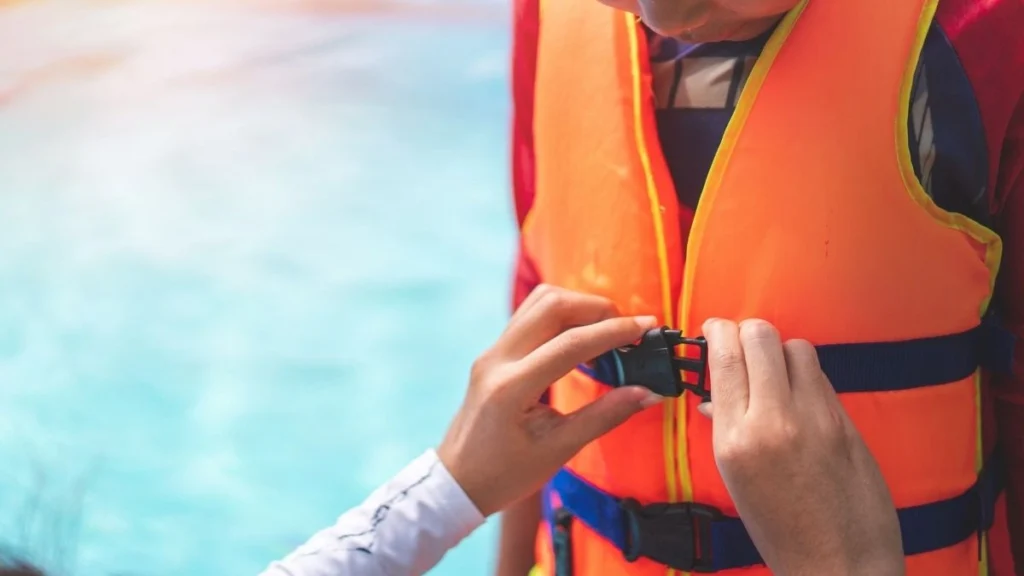
Type I (Level 150): Offshore Life Jackets
Best For: Open ocean waters, rough seas, commercial charters, remote locations, or offshore passages where rescue teams may face delays.
Key Feature: Delivers the highest inherent buoyancy (at least 22 lbs for adults). Additionally, the design actively turns most unconscious wearers face-up in rough water to clear their airways.
Type II (Level 100): Near-Shore Buoyant Vests
Best For: Calm inland lakes, wide rivers, and coastal bays where quick rescue remains likely.
Key Feature: Delivers roughly 15.5 lbs of adult buoyancy. Moreover, this style offers a slimmer profile than Type I offshore vests and can turn some unconscious wearers face-up in flat water.
Type III (Level 70): Flotation Aids
Best For: Water skiing, wakeboarding, tubing, kayaking, stand-up paddleboarding, and general motorboating.
Key Feature: Represents the most comfortable boat life jacket style for active movement. Although it offers 15.5 lbs of buoyancy, it will not turn an unconscious wearer face-up; thus, wearers must tilt their heads back to keep their faces out of the water.
Type IV: Throwable Devices
Best For: Mandatory secondary emergency equipment on boats measuring 16 feet and longer.
Key Feature: Includes ring buoys and square seat cushions built for crew members to toss to a person in distress. In short, these function as backup safety tools rather than wearable vests.
Type V: Special-Use Devices
Best For: Specific activity needs like commercial deck work, kayaking, windsurfing, or specialized belt-pack inflatables.
Key Feature: Requires continuous wear while underway to meet legal vessel carriage rules.
Inherent Foam vs Inflatable Life Jackets
When choosing the best life jacket for boating, you will generally decide between solid foam construction and inflatable CO₂ cartridge systems. Naturally, both designs offer distinct advantages and trade-offs.
| Feature | Inherent Foam PFD | Inflatable PFD |
| Buoyancy | Immediate upon entering water | Delayed (Requires manual pull or water immersion) |
| Comfort & Profile | Bulkier, can retain body heat | Slim, lightweight, highly breathable |
| Maintenance | Zero maintenance (needs visual checks) | Requires periodic CO₂ cylinder checks & rearming |
| Age Limits | Approved for all ages | Restricted to wearers 16 years and older |
| High Impact Use | Safe for PWCs & watersports | Prohibited on PWCs or towed sports |
How Inflatable Vests Work: Manual vs Automatic
If you select an inflatable PFD, understanding the two main activation mechanisms on the market helps you make a confident choice.
Manual Activation (Pull-Cord)
Manual inflatable vests feature a cord handle hanging near your hip. First, a firm downward yank pierces an internal CO₂ cylinder, which immediately fills the air chambers. Kayakers and sailors often prefer this style because heavy sea spray will not accidentally trigger the mechanism.
Automatic Activation (Water-Sensing)
Automatic inflatable jackets use specialized bobbin mechanisms or hydrostatic pressure valves to deploy.
Dissolving Bobbin: A small paper capsule dissolves quickly when submerged in water, thereby releasing a spring-loaded pin that punctures the gas cylinder.
Hydrostatic Pressure Valve (MA1): The trigger responds to water pressure rather than surface moisture. Specifically, the system fires only when submerged past roughly 4 inches of depth, which prevents accidental inflation during rainstorms or heavy spray.
How to Size a Life Jacket Correctly
A life jacket boat setup protects you only when it fits correctly. After all, an oversized vest will slide up past your chin and slip over your head when you step into deep water.
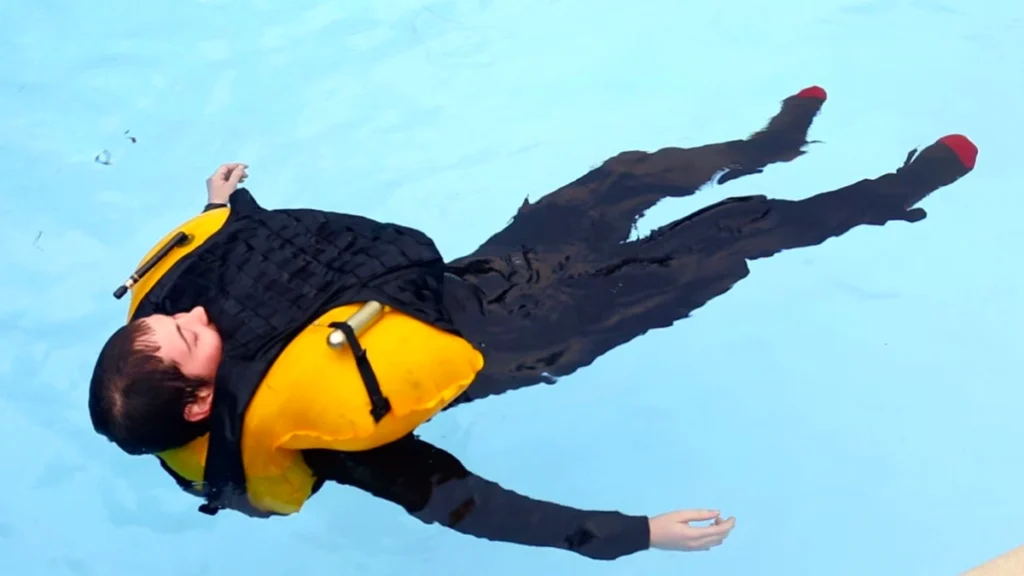
Adult Sizing Procedure
Unlike everyday clothing, adult PFDs rely on chest measurement rather than overall weight.
Measure your chest around its widest point using a flexible tape measure.
Put the jacket on over your typical boating clothes and secure all zippers, straps, and buckles.
Next, ask a friend to pull upward firmly on the vest shoulder straps while you stand straight.
If the jacket slides past your nose or chin, tighten the side straps or choose a smaller size.
Infant and Child Sizing Rules
In contrast to adult sizes, children’s PFDs depend strictly on body weight rather than chest measurements:
Infant PFD: Built for babies under 30 lbs, these models include a padded head support collar to float the child face-up and a sturdy crotch strap to prevent slipping.
Child PFD: Built for kids weighing 30 to 50 lbs, featuring targeted foam placement and a mandatory security crotch strap.
Youth PFD: Built for youth weighing 50 to 90 lbs, offering active sports mobility while maintaining high flotation safety.
Note: Federal law mandates that children under 13 must wear an approved life jacket while on an open deck on any vessel underway.
Specialty Boating Vests: Matching Vests to Activities
Matching your gear to your specific boating routine ensures lasting comfort and reliable gear performance.
Fishing PFDs
Fishing vests feature handy extras for anglers. For example, they offer multi-pocket chest panels for tackle storage, attachment loops for tools, and mesh back panels designed to clear high-back boat seats.
Watersports Neoprene Vests
Snug neoprene jackets work best for wakeboarding, tubing, and Jet Skis. Because neoprene stretches, it moves naturally with your body, cushions hard impacts against the water, and provides extra warmth on cooler days.
Offshore Sailing Vests
Offshore sailors often choose heavy-duty inflatable vests equipped with built-in safety harnesses. For instance, these designs feature stainless-steel D-rings so crew members can clip tethers directly to deck jacklines during night watches or rough weather.
Essential Care and Maintenance Tips
To keep your PFD for boating working safely, practice these simple maintenance habits:
Inspect Annually: Check carefully for frayed webbing, torn stitching, rusted zippers, or crushed foam panels.
Store Correctly: Store vests in a dry, shaded compartment away from direct sunlight, gas fumes, and engine heat.
Rinse After Saltwater Use: Always wash off salt, mud, or lake debris with fresh water after every trip, then air dry completely.
Never Modify Gear: Remember that cutting straps or trimming foam destroys structural buoyancy and voids Coast Guard approval.
Final Thoughts
Investing in the best life jacket for boating keeps everyone on board safe while enjoying open waters. By matching your vest to your activity, picking the right life jacket types, and maintaining a snug fit, you can set sail with total confidence. For more boating safety tips, vessel reviews, and transport guides, check out our latest articles at turboocruiser.
Frequently Asked Questions
What type of life jacket does a recreatilife jacket boat
onal boat require?
Federal rules require one USCG-approved wearable life jacket (Type I, II, III, or V) per person on board. Additionally, vessels measuring 16 feet and longer must carry at least one throwable Type IV device on deck.
Can adults wear inflatable life jackets for all water activities?
No, inflatable life jackets carry approval only for adults 16 and older. Furthermore, authorities strictly prohibit inflatables during high-impact sports like riding personal watercraft (Jet Skis) or towed watersports.
How do I check if a life jacket has USCG approval?
To check approval, look inside the back panel of the life jacket. Approved vests feature a permanent printed label showing the USCG Approval Number, sizing specs, and performance ratings.
How long does a foam life jacket stay usable?
With proper storage and care, quality foam life jackets usually last 5 to 10 years. However, if the inner foam hardens, absorbs water, or breaks down, you must replace the jacket immediately.
Pingback: Carolina Beach Jet Ski Rentals: Prices, Spots & Guide