
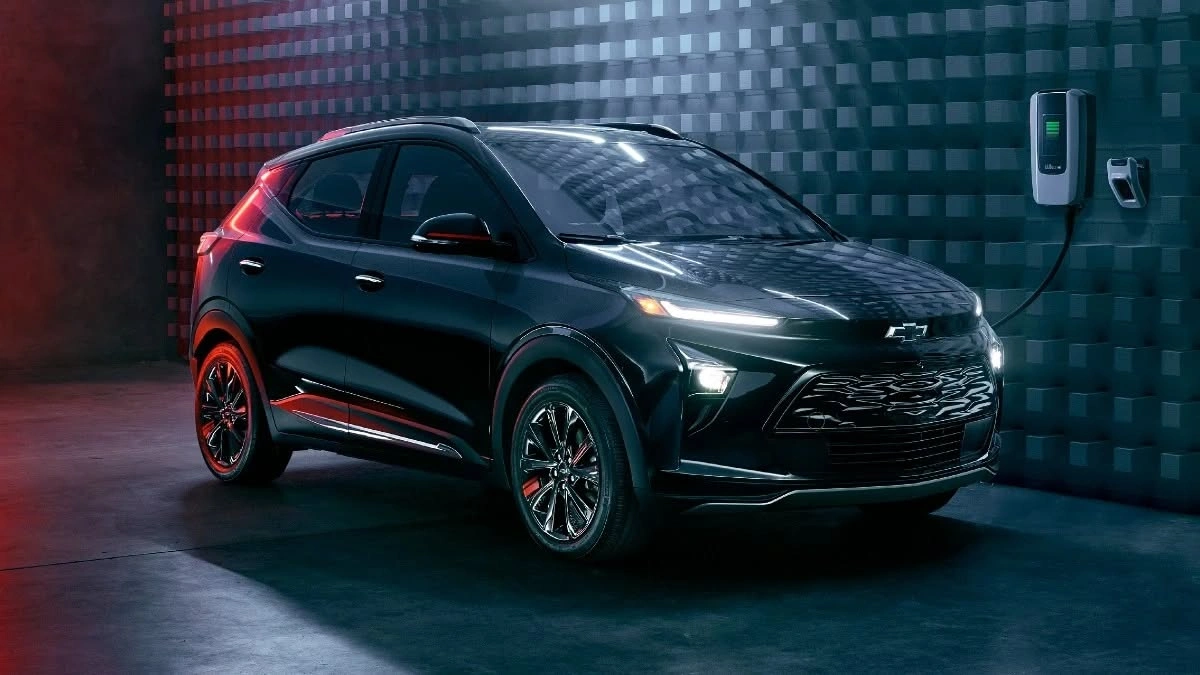
General Motors has fully committed to an all-electric future, and the Chevrolet electric cars lineup stands directly at the forefront of this massive automotive transition. By leveraging General Motors’ modular Ultium battery architecture, Chevrolet has engineered a diverse roster of zero-emission vehicles. Consequently, their lineup caters to budget-conscious commuters, busy families, performance enthusiasts, and hard-working truck owners alike.
Whether you are looking for an affordable daily commuter or a massive commercial towing workhorse, understanding each Chevrolet EV model’s distinct capabilities helps you make an informed investment. Below, we provide an extensive, in-depth breakdown of every modern Chevy electric vehicle. We cover Chevy EV price points, estimated driving distance, fast-charging capabilities, and essential tech features. As a result, this guide will help you decide which electric vehicle matches your driving lifestyle.
Brand Overview & General Motors’ Electric Vision
Chevrolet’s transition into electric mobility is not just an experiment; rather, it represents a complete evolution of their core product catalog. Modern car buyers demand long battery range, fast charging, high structural safety, and reasonable price tags. Therefore, Chevrolet designed its entire electric vehicle lineup around zero-emission driving without sacrificing practical capability.
Instead of converting legacy gas-powered chassis into retrofitted electric cars, Chevrolet built its current generation of EVs from the ground up. By utilizing shared platform engineering, they can scale production rapidly while maintaining high standards for interior space, safety tech, and power delivery.
Furthermore, Chevrolet has prioritized charging accessibility across North America. Consequently, drivers no longer have to worry about isolated charging networks. With native integration of fast-charging ports and adapter compatibility, operating a Chevrolet EV for long-distance road trips is more practical than ever before.
The Core Platform: GM Ultium Technology
The foundation behind modern chevrolet electric cars is General Motors’ proprietary Ultium platform. This flexible battery and motor architecture allows Chevrolet to build everything from compact crossovers to heavy-duty pickups on a unified structural system.
1. Modular Battery Architecture
Ultium cells feature large-format pouch designs that can be stacked vertically or horizontally inside the battery pack:
Space Optimization: Flat battery placement creates low vehicle centers of gravity while maximizing cabin floor space for legroom.
Scalable Cell Capacity: Smaller commuters like the Bolt EV use compact pack configurations, whereas heavy-duty trucks like the Silverado EV utilize double-stacked battery packs for extreme range.
Advanced Chemistry: Reduced cobalt usage lowers raw material costs while maintaining high energy density and durable thermal regulation.
2. Flexible Powertrain Configurations
The Ultium drive platform supports front-wheel drive (FWD), rear-wheel drive (RWD), and dual-motor all-wheel drive (AWD) layouts. Thus, Chevrolet can tune each vehicle for maximum range, heavy towing, or high-speed performance depending on consumer demand.
2026 Chevrolet EV Lineup at a Glance
Before examining each vehicle in detail, here is a clear performance comparison across the complete Chevy electric vehicles roster:
| Model | Body Style | Base Starting MSRP | Max Estimated Range | Max Horsepower |
| Chevrolet Bolt EV | Compact Crossover | $28,995 | Up to 262 miles | 210 hp |
| Chevrolet Equinox EV | Compact SUV | $36,795 | Up to 319 miles | 300 hp |
| Chevrolet Blazer EV | Midsize SUV | $44,700 | Up to 312 miles | 615 hp (SS) |
| Chevrolet Silverado EV | Full-Size Pickup | $55,895 | Up to 493 miles | 760 hp |
Detailed Breakdown of 2026 Chevy EV Models
1. Chevrolet Bolt EV: The Accessible Entry Point
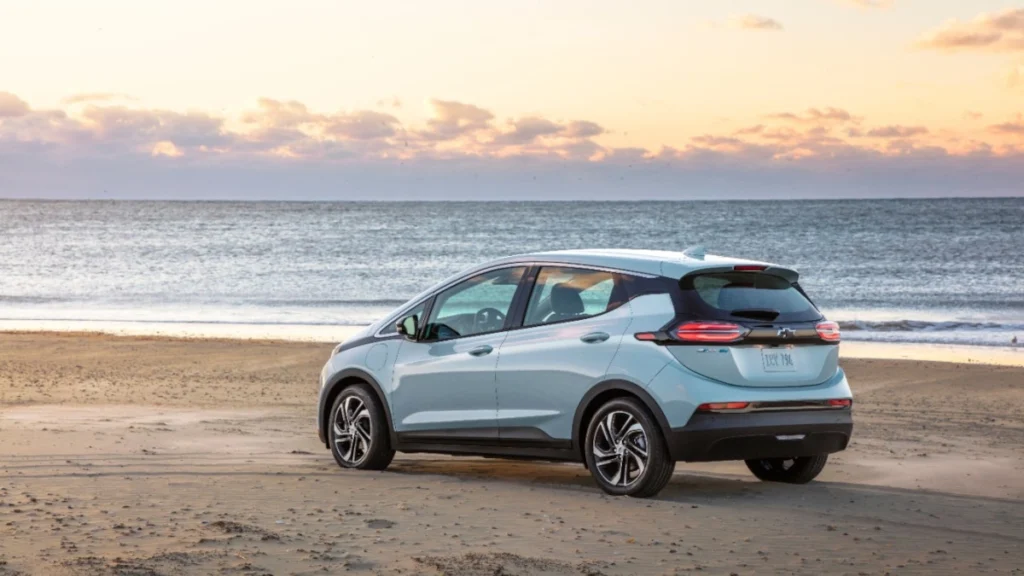
The redesigned Bolt returns as the most accessible Chevrolet EV on the market. Re-engineered on GM’s modern Ultium platform, this compact crossover resolves legacy fast-charging limitations while keeping entry costs remarkably low for first-time electric car buyers.
Pricing & Trim Levels
Base LT Trim: Starts at approximately $28,995, offering exceptional value for urban commuters.
Premium 2LT Trim: Adds leather-appointed seating, ambient interior lighting, and enhanced driver assistance tools for roughly $32,500.
Driving Distance & Charging Capabilities
Chevy EV Range: Delivers up to an EPA-estimated 262 miles on a full charge under standard driving conditions.
Charging Speeds: Equipped with standard NACS fast-charging capabilities. As a result, it supports DC fast charging up to 150 kW, allowing owners to replenish 10% to 80% battery capacity in roughly 25 minutes.
Performance & Interior Features
Powered by a single-motor FWD setup, the Bolt EV produces 210 horsepower and 169 lb-ft of instant torque. Inside, passengers enjoy an 11.3-inch central touchscreen, standard wireless Apple CarPlay and Android Auto, and a comprehensive Chevy Safety Assist suite.
2. Chevrolet Equinox EV: The Practical Everyday SUV
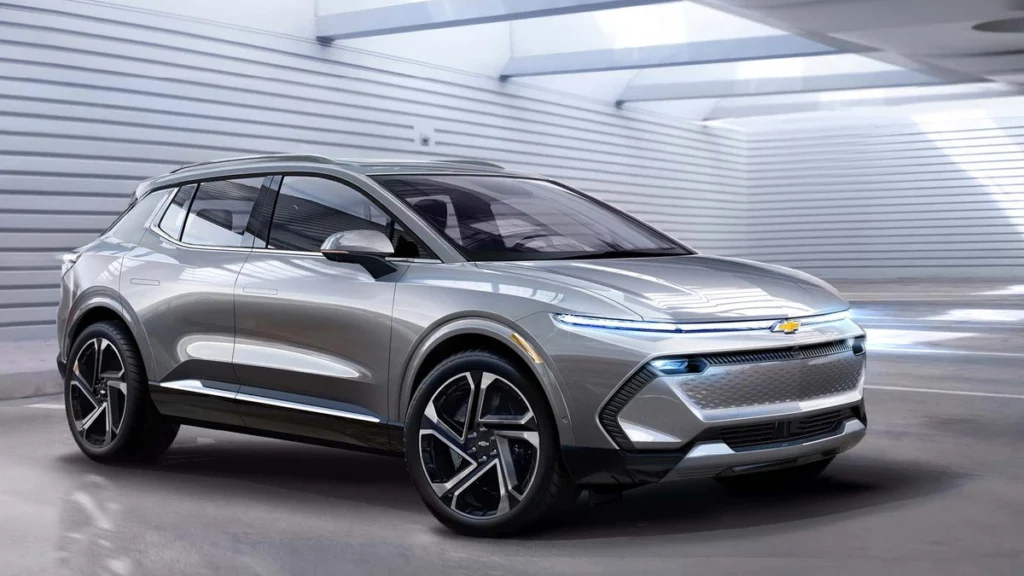
Positioned as a mainstream family crossover, the Equinox EV delivers impressive daily utility, sharp modern styling, and class-leading driving distance for its price tier.
Pricing & Trim Levels
Chevy EV Price: Starts at $36,795 for the entry FWD LT model, extending up to $44,000 for fully loaded RS trims featuring sporty exterior accents.
Driving Distance & Charging Capabilities
Chevy EV Range: Achieves up to an EPA-estimated 319 miles in FWD configuration and up to 307 miles in dual-motor AWD variants.
Charging Speeds: Accepts DC fast-charging rates up to 150 kW. Consequently, drivers can add approximately 70 miles of range in just 10 minutes at compatible public stations.
Performance & Interior Features
FWD single-motor models produce 220 horsepower, while dual-motor eAWD versions boost output to 300 horsepower for confident foul-weather traction. The interior highlights a massive 17.7-inch diagonal central infotainment display with Google Built-In, up to 57.2 cubic feet of maximum cargo space, and available Super Cruise hands-free driving tech.
3. Chevrolet Blazer EV: Sporty Performance & Style
For drivers who demand bold exterior styling, aggressive acceleration, and extra passenger room, the midsize Blazer EV bridges the gap between daily family transport and high-output performance SUV.
Pricing & Trim Levels
Chevy EV Price: Opens at $44,700 for LT models, reaching over $60,000 for the flagship high-performance SS (Super Sport) edition.
Driving Distance & Charging Capabilities
Chevy EV Range: Provides up to 312 miles on FWD LT and RS models, while the high-output Blazer EV SS delivers roughly 303 miles of total range.
Charging Speeds: Supports 190 kW DC fast charging, adding up to 78 miles of driving range in 10 minutes under optimal conditions.
Performance & Interior Features
While standard trims offer engaging daily driving dynamics, the performance-focused Blazer EV SS features a dual-motor AWD system generating a staggering 615 horsepower and 650 lb-ft of torque. When operating in “Wide Open Watts” (WOW) mode, it launches from 0 to 60 mph in under 3.5 seconds. Interior features include sport-tuned suspension, contrast stitching, and customizable ambient cabin lighting.
4. Chevrolet Silverado EV: Uncompromised Truck Utility
Built ground-up as a heavy-duty electric pickup, the Silverado EV combines massive battery storage with extreme towing capabilities. Therefore, it serves as an ideal solution for both commercial job sites and long-distance recreational trips.
Pricing & Trim Levels
Chevy EV Price: Starts at $55,895 for commercial Work Truck (WT) fleet configurations, scaling up past $95,000 for luxurious RST First Edition consumer models.
Driving Distance & Charging Capabilities
Chevy EV Range: Offers between 286 miles on standard fleet battery packs up to an extraordinary GM-estimated 493 miles on Max Range configurations.
Charging Speeds: Features industry-leading 350 kW DC fast-charging architecture, enabling drivers to add 100 miles of range in roughly 10 minutes.
Performance & Interior Features
Top-tier Silverado EV models output up to 760 horsepower and over 775 lb-ft of torque. Thus, the truck handles up to 12,500 pounds of maximum towing capacity and 1,800 pounds of payload. Utility highlights include an expansive front “eTrunk” lockable storage compartment, a Multi-Flex Midgate that expands the truck bed length into the cabin, and onboard power outlets for job site tools.
Core Technologies Across Chevrolet Electric Cars
What unites all modern chevrolet electric cars is General Motors’ shared technology ecosystem. These built-in systems elevate everyday driving convenience and safety:
1. Super Cruise Hands-Free Driving
Available across most trim levels, Super Cruise represents industry-leading driver assistance. By utilizing precision LiDAR map data, GPS tracking, and real-time cameras, drivers can enjoy hands-free highway driving across hundreds of thousands of miles of mapped highways in North America.
2. Google Built-In Infotainment Systems
Replacing traditional static navigation systems, Chevrolet embeds native Google Maps, Google Assistant, and Google Play into its large central touchscreens:
Route Planning: Automatically calculates EV charging stops along your route based on live battery levels and traffic.
Preconditioning: Preheats or cools the battery pack automatically as you approach a fast charger to maximize charging speed.
3. PowerBase Bidirectional Charging
Vehicles like the Silverado EV feature onboard off-board power export systems:
Job Site Utility: Provides up to 10.2 kW of available power via multiple 120V and 240V outlets to run heavy power tools or camping gear.
Home Backup Power: Paired with proper home energy management hardware, the vehicle’s battery pack can supply emergency electrical power to a residence during power grid blackouts.
Real-World Ownership: Charging & Maintenance Costs
Switching from traditional internal combustion engine (ICE) cars to Chevy electric vehicles brings significant operational changes. Understanding these factors helps buyers estimate total cost of ownership.
Home vs. Public Charging
Level 1 (120V Standard Outlet): Adds 3 to 5 miles of range per hour. Best suited for emergency backup or short daily drives.
Level 2 (240V Dedicated Outlet): Adds 25 to 35 miles of range per hour. Installing a 240V home charger allows owners to recharge their EV fully overnight during off-peak electricity hours.
Level 3 (DC Fast Charging): Designed for highway road trips, bringing battery levels from low to 80% in under 30 minutes.
Reduced Maintenance Requirements
Because electric cars eliminate combustion engines, multi-gear transmissions, and complex exhaust systems, routine servicing costs drop dramatically:
No Oil Changes: Eliminates frequent engine oil and filter swaps.
Reduced Brake Wear: Regenerative braking uses the electric motor to slow the car down, capturing energy and drastically extending brake pad lifespan.
Fewer Moving Parts: No spark plugs, timing belts, fuel injectors, or mufflers to replace over time.
Pros & Cons Breakdown
Pros
Broad Range of Price Points: Offers accessible entry-level options starting under $30k alongside premium heavy-duty trucks.
Class-Leading Battery Distance: The Silverado EV’s 493-mile range leads the consumer electric truck segment.
Advanced Driver Assistance: Super Cruise technology delivers smooth, hands-free highway navigation.
Fast-Charging Convenience: Native access to widespread DC fast-charging networks eliminates range anxiety.
Cons
Weight Considerations: Large Ultium battery packs make full-size models like the Silverado EV exceptionally heavy.
Home Charger Installation Costs: Upgrading home electrical panels for Level 2 charging requires upfront installation expenses.
Final Verdict: Is a Chevrolet EV Right for You?
The lineup of chevrolet electric cars demonstrates that zero-emission driving no longer requires compromising on practical variety, driving range, or budget constraints. From the wallet-friendly Bolt EV compact crossover to the work-ready Silverado EV pickup, Chevrolet provides an electric powertrain tailored to virtually every driving need.
For further automotive reviews, EV buyer guides, and high-performance transport analyses, explore our latest articles and updates on turboocruiser.
Frequently Asked Questions
1. What is the cheapest Chevrolet EV available?
The Chevrolet Bolt EV is the most affordable Chevy electric vehicle, starting at a base MSRP of $28,995. The Equinox EV follows closely behind as an accessible compact crossover starting at $36,795.
2. Which Chevy EV offers the longest battery range?
The Chevrolet Silverado EV Max Range leads the entire lineup with a GM-estimated driving range of up to 493 miles on a single charge. Among SUV models, the Equinox EV FWD provides the longest distance at an EPA-estimated 319 miles.
3. How long does it take to charge Chevrolet electric cars?
Charging times depend on charger output. On a Level 2 (240V) home station, most Chevy EVs charge fully overnight in 8 to 10 hours. On public DC Fast Chargers, vehicles like the Equinox EV can add 70 miles of range in 10 minutes, while the Silverado EV adds 100 miles in 10 minutes.
4. Do Chevrolet electric vehicles qualify for federal tax credits?
Most Chevrolet EVs manufactured with Ultium battery architecture qualify for federal clean vehicle tax incentives (up to $7,500 in the United States), provided vehicle price caps and individual buyer income limits are satisfied.
5. Can I use Tesla Superchargers with a Chevy EV?
Yes, modern chevrolet electric cars feature native NACS port designs or GM-approved NACS adapters. As a result, owners enjoy seamless access to over 15,000 Tesla Supercharger stalls across North America.