
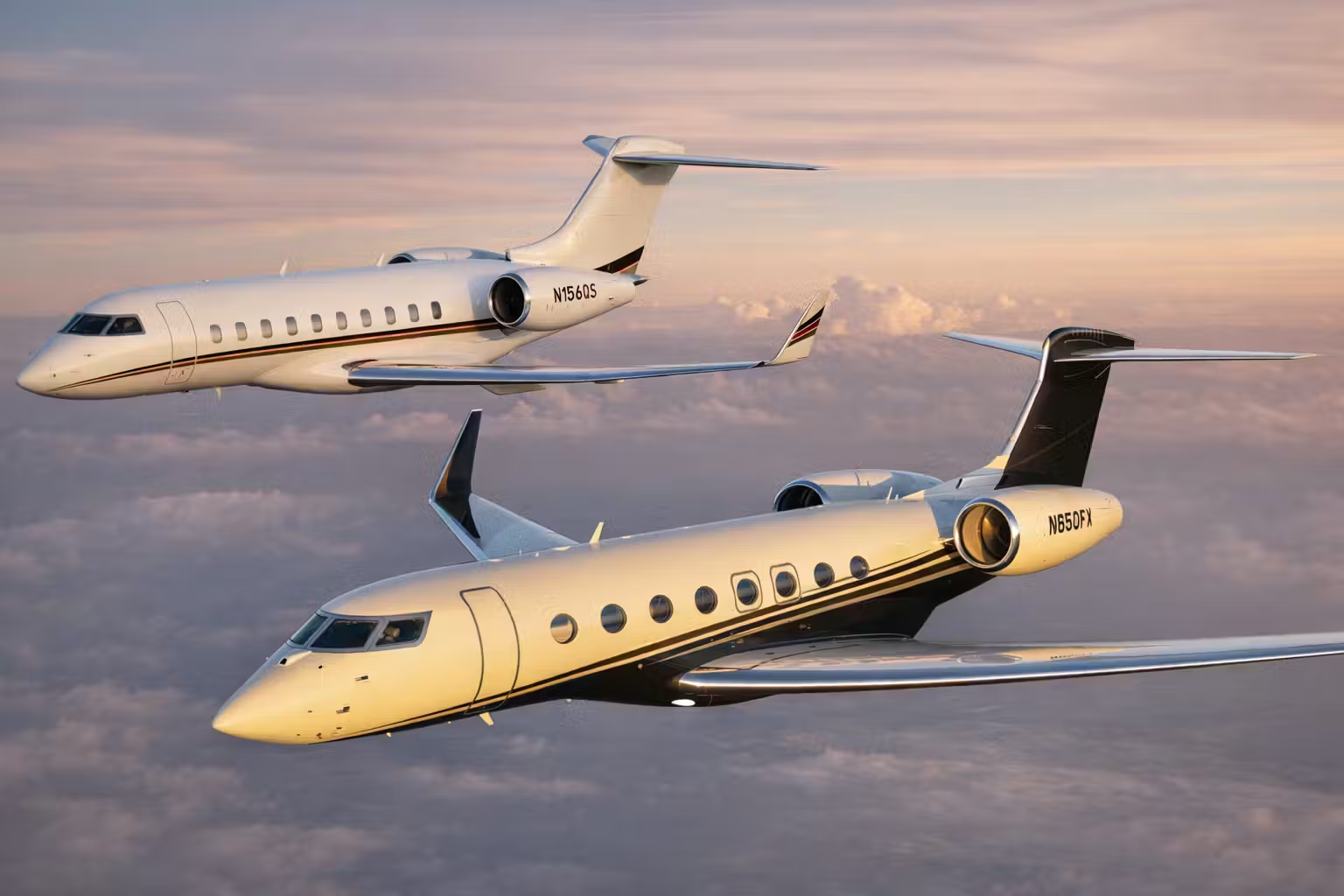
There is a moment in private aviation where the novelty wears off and the math takes over. For most frequent flyers, that moment happens right around the 50-hours-per-year mark. You realize that booking on-demand charters is becoming a logistical headache, but buying a whole $30 million Gulfstream makes absolutely no financial sense.
Welcome to the world of fractional jet ownership 2026 models.
As we navigate the current luxury travel market, the landscape has shifted. The post-pandemic frenzy has calmed down, and providers are now competing on structural stability, fleet consistency, and financial transparency. If you are looking to secure your piece of a fleet on turboocruiser.com, you are likely looking at three titans: NetJets, Wheels Up, and VistaJet.
Choosing between a private jet membership 2026 program, a fractional share, or a jet card can alter your travel experience entirely. Let’s break down the data to see where your money belongs.
The Core Concept: Share vs. Lease vs. Membership
Before we compare the brands, let’s simplify the terminology for any students or newcomers to the aviation space.
Fractional Ownership: You buy an actual equity share of a specific aircraft (e.g., a $1/16$ share of a Challenger 350). This gives you a set number of flight hours per year (usually 50 hours per share).
Jet Cards: You prepay for a block of hours (typically 25 or 50 hours) at a fixed hourly rate. You don’t own any asset; you are buying time.
Memberships: You pay an annual or monthly fee just to access a fleet, and then you pay for each flight as you go.
1. NetJets: The Undisputed Heavyweight
NetJets is the oldest and largest fractional aviation company in the world. Backed by Warren Buffett’s Berkshire Hathaway, their pitch in 2026 is simple: absolute financial stability and unmatched global scale.
The Fractional Structure
When you enter a fractional ownership comparison involving NetJets, you are looking at a highly structured 5-year commitment. You buy into a specific aircraft type, and NetJets guarantees that a plane from that class (or higher) will be on your tarmac with as little as 4 to 10 hours’ notice.
Pros and Cons of NetJets in 2026
The Fleet: Over 800 aircraft globally. If your assigned plane has a mechanical issue in Chicago, NetJets can ferry a replacement in from a nearby airport almost immediately.
Financial Peace of Mind: Because they are backed by Berkshire Hathaway, there is zero risk of the company going under with your deposit.
The Downside: They are the most expensive player in the market. The acquisition costs are high, and their “peak day” restrictions can be tight during holidays.
2. Wheels Up: The Flexible Challenger
Wheels Up completely disrupted the market by focusing on a asset-light private jet membership 2026 model rather than traditional ownership. Following significant restructuring and backing from Delta Air Lines, Wheels Up has pivoted in 2026 to focus heavily on corporate travel and regional flyers.
The King of Turboprops and Mid-Size Jets
Wheels Up made its name with the King Air 350i—a twin-engine turboprop that is incredibly efficient for short hops (like New York to Nantucket or Miami to the Bahamas).
The Delta Connection
The biggest selling point for Wheels Up in 2026 is its deep integration with Delta Air Lines. Members can earn Delta SkyMiles on private flights and seamlessly connect from a private regional flight to an international commercial first-class flight.
Who it is for: The flyer who mostly travels short-to-medium distances and wants the flexibility of a membership without committing millions in upfront capital for an asset share.
3. VistaJet: The Global Floating Fleet
VistaJet takes a radically different approach to private aviation. They do not offer traditional fractional ownership. Instead, they pioneered the “Program”, a subscription model that offers the benefits of a fractional share without the asset risk.
The “Silver and Red” Standard
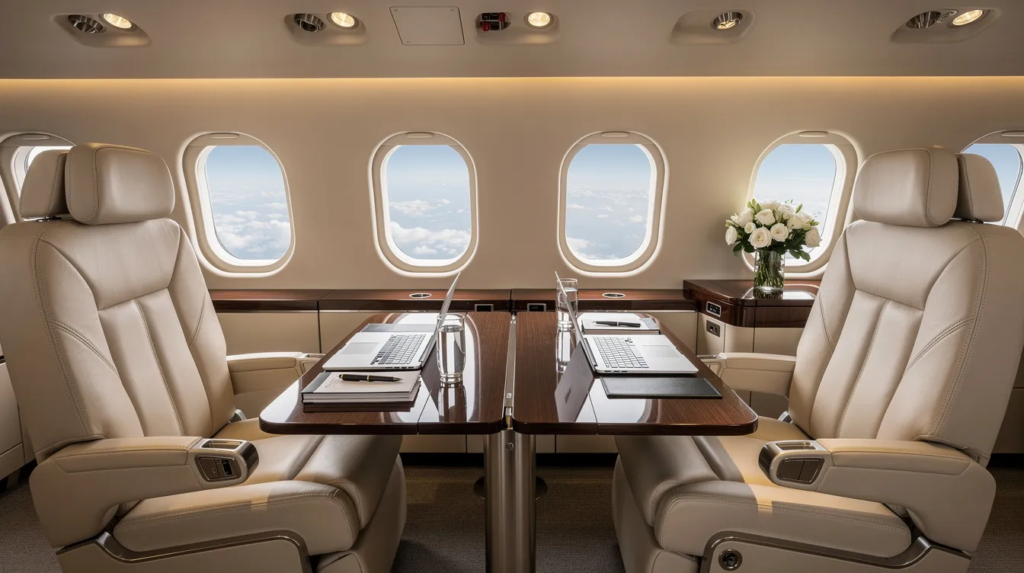
Every single plane in VistaJet’s global fleet looks identical. They own the entire fleet of Bombardier Globals and Challengers, finished in their signature silver paint with a red stripe. The interior features the exact same leather, the exact same scent, and the exact same curation of wine.
True Global Coverage
Unlike NetJets, which operates through regional entities (NetJets US, NetJets Europe), VistaJet operates a “floating fleet.” Their planes move around the world constantly. If you fly from London to Singapore, you aren’t paying “repositioning fees” to send the plane home.
The Best Jet Card Program Alternative: For ultra-long-range flyers who need to cross continents frequently, VistaJet’s hourly subscription model is often considered the gold standard in 2026.
Head-to-Head Comparison: NetJets vs. Wheels Up vs. VistaJet
| Feature | NetJets | Wheels Up | VistaJet |
| Primary Model | Traditional Fractional Ownership | Membership & Jet Cards | Subscription / Floating Fleet |
| Upfront Capital | High (Asset purchase required) | Low (Annual membership fee) | None (Commit to annual hours) |
| Fleet Strengths | Phenom 300, Citation Latitude | King Air 350i, Citation Excel | Challenger 350, Global 7500 |
| Minimum Commitment | Typically 50 Hours/Year | 25 Hours (Jet Card) | 50 Hours/Year |
| Best For | Ultra-wealthy individuals & corps | Regional travelers & Delta fans | International, ultra-long-range |
Analyzing the Financials: What Does It Actually Cost?
To truly understand fractional jet ownership 2026 pricing, we have to look past the marketing brochures. Private aviation costs are broken into four distinct pillars:
1. The Capital Outlay
This is the purchase price of your fraction. For a $1/16$ share of a light jet (about 50 hours of flying), you might pay anywhere from $500,000 to $1 million upfront. Wheels Up and VistaJet bypass this step entirely.
2. Monthly Management Fees (MMF)
If you own a fractional share, you pay a fixed monthly fee to cover the “overhead.” This pays for pilot salaries, hangar space, insurance, and administrative costs. This fee is paid whether you fly 0 hours or 50 hours that month.
3. Occupied Hourly Rate (OHR)
This is what you pay when the wheels are actually off the ground. It covers fuel, landing fees, and catering. In 2026, standard hourly rates hover around:
Turboprops: $4,500 – $6,000 per hour
Light Jets: $6,500 – $8,500 per hour
Large Cabin/Global Jets: $12,000 – $20,000+ per hour
How to Choose Your Program in 2026
If you are trying to decide which route to take, follow this simple checklist based on your actual travel patterns:
Choose NetJets If:
You want the absolute safety net of the world’s largest fleet.
You want to own a depreciable asset for tax advantages (like Section 179 bonus depreciation).
Your travel is mostly domestic or within Europe, and you want guaranteed availability even on peak holidays.
Choose Wheels Up If:
Your typical flights are under 2 hours long.
You want to avoid the massive upfront capital investment of fractional ownership.
You value commercial airline perks and want to leverage the Delta network.
Choose VistaJet If:
You regularly fly flights longer than 5 hours (transatlantic or transpacific).
You demand total consistency—you want the exact same cabin experience every single time you board.
You want to avoid the logistical nightmare of calculating repositioning fees across international borders.
Conclusion: The Horizon of 2026 Private Flight
private jet membership 2026 is no longer just a luxury luxury statement; it is a time-management tool. The choice between NetJets, Wheels Up, and VistaJet isn’t about which plane is prettier—it’s about matching your specific geographic footprint and hour requirements to the right operational model.
At turboocruiser.com, we recommend conducting a thorough “mission profile analysis” before signing any aviation contract. Look at your last 24 months of travel. Where did you go? Who rode with you? How much luggage did you carry? The answers to those questions will point you directly to the right provider. Safe flying!
Frequently Asked Questions (FAQ)
1. Is fractional jet ownership worth it in 2026?
It depends entirely on your hours. If you fly less than 25 hours a year, stick to on-demand charter. If you fly between 25 and 50 hours, look into a best jet card program or membership. If you fly more than 50 hours consistently, fractional ownership or a dedicated subscription becomes financially viable.
2. Can you sell your fractional jet share back?
Yes. Most traditional fractional contracts (like NetJets) include a “buy-back” provision. After the minimum term (usually 3 years), the operator will buy your share back based on the current fair market value of the aircraft, minus a remarketing fee.
3. What happens if my fractional plane is broken?
This is the main benefit of fractional programs over whole ownership. If your specific tail number is down for maintenance, the provider is contractually obligated to provide an identical or upgraded aircraft from their fleet at no extra charge to you.
4. Are catering and Wi-Fi included in the hourly rates?
For elite programs like VistaJet, high-end catering and global high-speed Wi-Fi are typically included. For standard jet cards or lower-tier memberships, catering may be billed as an extra charge based on what you order.
5. How do peak days affect my private jet membership 2026 plans?
Peak days are high-demand travel dates (like the Super Bowl, Thanksgiving, or New Year’s Eve). During these days, providers can increase the notice time required to get a plane, increase hourly rates, or restrict access altogether depending on your contract level. Always read the fine print regarding peak days!
Pingback: Jet Card Programs Comparison 2026: Wheels Up vs Sentient