
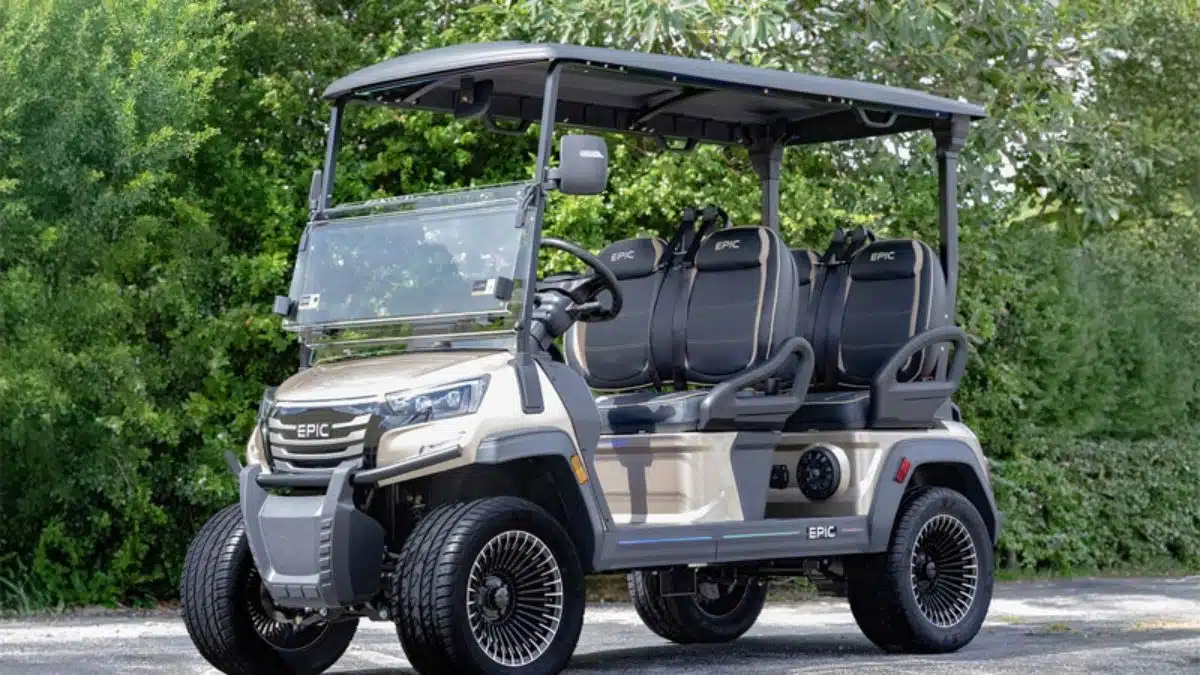
Personal electric transportation has transformed significantly over the past decade. Modern club car electric carts are no longer confined to 18-hole golf courses. Today, they serve as primary neighborhood electric vehicles (NEVs), resort shuttles, utility workhorses, and family cruisers in planned communities across the country.
If you are looking for an electric golf cart that combines automotive-grade engineering with long-term durability, Club Car remains a leading choice. In this comprehensive 2026 buying guide, we analyze top models, review updated club car prices, compare battery systems, and explain everything you need to know before making a purchase.
Why Choose a Club Car Electric Golf Cart?
When analyzing independent golf cart reviews, Club Car consistently earns top ratings for construction quality, passenger comfort, and safety features. Investing in a club car golf cart offers distinct advantages over budget or unbranded import options.
Signature AlumiCore Aircraft-Grade Frame
Unlike many competitors that build vehicles on painted steel frames prone to rust and structural decay, Club Car uses its proprietary AlumiCore chassis. This ladder-style aluminum frame is completely rust-proof and lightweight. It provides superior corrosion resistance in humid climates, coastal beach towns, and wet storage environments.
Industry-Leading Lithium-Ion Technology
Club Car offers High Performance (HP) Lithium-Ion battery options equipped with an advanced Battery Management System (BMS). The system is sealed inside a heavy-duty casing to protect against water, dust, and temperature shifts. Lithium batteries charge up to 40% faster than flooded lead-acid alternatives, require zero water refills, and maintain maximum power delivery even when climbing steep hills.
Strong Resale Value Retention
Because Club Car maintains a nationwide network of authorized dealers and easily accessible replacement parts, their vehicles retain exceptional secondary market value. Reselling or trading in a well-maintained Club Car yields significantly higher returns compared to non-branded off-market builds.
Complete Breakdown of 2026 Club Car Models
Club Car offers a diverse lineup tailored to specific lifestyle and commercial needs. Here is a close look at their primary models for 2026.

1. Club Car Onward Series (Personal & Family Mobility)
The Onward series is Club Car’s flagship Personal Transportation Vehicle (PTV). It comes in 2-passenger, 4-passenger, and lifted 4-passenger configurations. Built with sleek automotive styling, customizable body colors, and premium seating options, the Onward is designed for daily neighborhood driving.
Key Features: Standard LED headlights with accent running lights, self-adjusting rear brakes, automotive-grade paint finish, and heavy-duty rear flip seats that convert into flat cargo beds.
Performance: Maximum speed up to 19 mph driven by a 375A AC motor controller producing up to 29 peak horsepower on HP Lithium builds.
Best For: Families and neighborhood commuters seeking a street-legal, highly customizable vehicle.
2. Club Car Tempo (Course Operations & Entry-Level Commuting)
The Tempo serves as the cornerstone for golf course fleets and entry-level personal ownership. Known for its tight turning radius and efficient power management, the Tempo delivers smooth, quiet performance on and off the fairway.
Key Features: Independent front leaf-spring suspension with dual hydraulic shocks, self-compensating rack-and-pinion steering, and durable molded-in color shells.
Performance: 48-volt DC or AC electric drivetrain delivering dependable power between 5 mph and 15 mph.
Best For: Traditional golfers and budget-conscious buyers seeking simple, durable transportation.
3. Club Car CRU (Street-Legal Neighborhood Vehicle)
The CRU is a specialized Low-Speed Vehicle (LSV) engineered specifically for neighborhood road transit. Featuring open-air styling, flexible seating layouts, and full street-legal compliance out of the factory, it bridges the gap between a golf cart and a traditional automobile.
Key Features: Center-table seating layout, 3-point seatbelts, automotive glass windshield with wiper, rear view camera, and integrated audio controls.
Performance: Top speed of 25 mph driven by a high-output AC electric powertrain.
Best For: Urban commuters and resort residents living in 35 mph or lower road zones.
4. Club Car Carryall Series (Commercial & Utility Work)
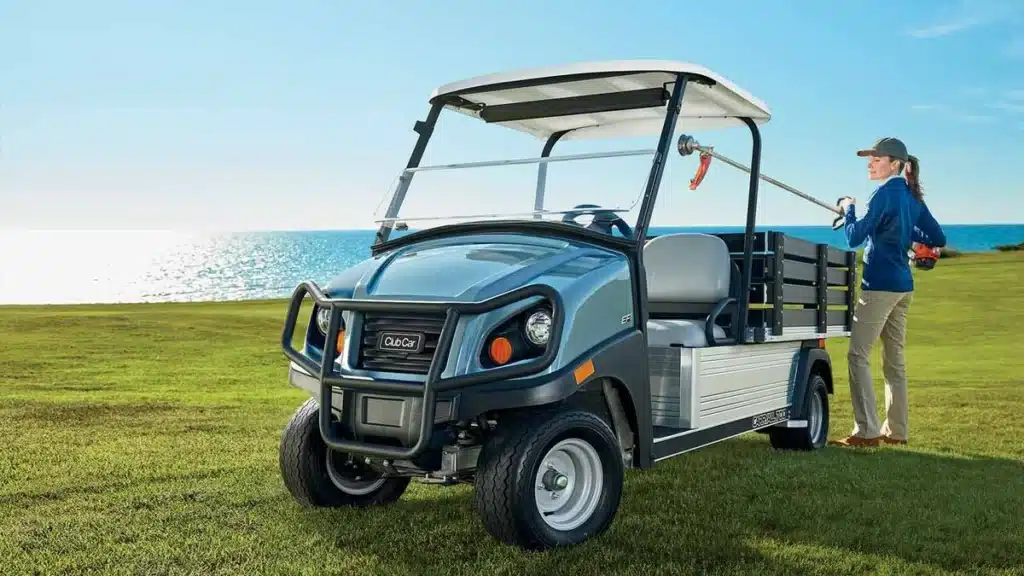
When heavy hauling takes priority, the Carryall utility line provides rugged aluminum cargo beds, high payload capacities, and specialized towing capabilities.
Key Features: Heavy-duty suspension packages, hydraulic disc brakes, rugged poly or aluminum beds, and commercial-grade trailer hitches.
Best For: Property managers, landscaping crews, industrial facilities, and farm operations.
2026 Club Car Prices Breakdown
Understanding club car prices requires evaluating frame sizes, battery configurations, trim packages, and factory accessories. The table below outlines realistic estimated pricing across popular 2026 configurations:
| Model & Configuration | Battery & Powertrain Option | Estimated Base Price (USD) | Average Range Per Charge | Primary Ideal Use |
| Tempo Electric | 48V Flooded Lead-Acid | $7,995 – $9,500 | 20 – 30 Miles | Golf courses & quiet community driving |
| Onward 2-Passenger | HP Lithium-Ion (3.1 kWh) | $11,500 – $13,000 | 25 – 40 Miles | Golfing & light daily local errands |
| Onward 4-Passenger | Standard 48V Lead-Acid | $10,500 – $12,000 | 15 – 35 Miles | Family transport & casual resort travel |
| Onward 4-Passenger HP | High-Performance Lithium | $12,500 – $14,500 | 30 – 55 Miles | High-speed daily street commutes |
| Onward 4-Pass Lifted | Extended Range XR Lithium | $14,000 – $16,500 | 35 – 50 Miles | Off-road trails, rough terrain & beach towns |
| Club Car CRU LSV | Commercial Lithium Pack | $23,000 – $27,000 | 30 – 45 Miles | Full street-legal urban commuting |
| Carryall 500 Utility | Heavy-Duty 48V Electric | $13,500 – $16,000 | 20 – 35 Miles | Cargo hauling & facility maintenance |
Battery Comparison: Lead-Acid vs. Lithium-Ion
Choosing the right power system directly impacts your vehicle’s total performance, routine maintenance schedule, and ownership costs over time.
| Feature / Metric | Flooded Lead-Acid Batteries | High-Performance Lithium-Ion |
| Upfront Purchase Cost | Lower initial price point | $1,500 to $3,000 initial premium |
| Routine Maintenance | Requires monthly water refills & terminal cleaning | Zero routine maintenance required |
| Total Vehicle Weight | Heavy (adds approx. 300+ lbs to chassis) | Lightweight (improves speed & reduces tire wear) |
| Charging Speed | 8 to 12 hours for full charge | 3 to 5 hours for full charge |
| Power Output Curve | Voltage drops as battery drains | Consistent acceleration until fully depleted |
| Expected Lifespan | 3 to 5 years with careful upkeep | 8 to 12 years with integrated BMS protection |
Deep Dive into Battery Economics
While lead-acid options lower the sticker price when browsing club car electric carts, lithium technology saves money over a six-year ownership window. Lead-acid batteries require periodic replacement sets that cost between $1,200 and $1,800 every few years. Furthermore, lithium systems do not emit gases during charging, allowing safe storage inside enclosed residential garages.
Essential Buyer Checklist for 2026
Before finalizing your order for a new or pre-owned club car golf cart, follow this practical step-by-step buyer checklist.
1. Evaluate Local Street-Legal (LSV / PTV) Laws
Different municipalities enforce specific equipment regulations for personal transportation vehicles:
Personal Transportation Vehicle (PTV): Typically capped at 19 mph. Requires headlights, taillights, brake lights, and a horn for use on designated neighborhood roads.
Low-Speed Vehicle (LSV): Capable of 25 mph. Requires a 17-digit VIN, license plate, turn signals, seatbelts, side mirrors, and an automotive safety glass windshield.
2. Choose the Right Suspension Setup
If you plan to drive primarily on paved streets or golf courses, the standard non-lifted suspension offers easier step-in height and a smoother ride. If you navigate dirt trails, gravel roads, or elevated curbs, choose a factory-lifted model with 6.4 inches of ground clearance and heavy-duty all-terrain tires.
3. Factor in Popular Factory Accessories
Customizing your cart adds personal style and practical convenience:
All-Weather Enclosures: Protects passengers from sudden rain and winter winds.
Underbody LED Lighting: Enhances night visibility and adds visual flair.
Soundbars & Audio Systems: Bluetooth-connected speakers integrated directly into the canopy roof.
Fold-Down Rear Seats: Transforms passenger seating into an open cargo bed for cooler bags, groceries, or golf clubs.
Maintenance Routine for Maximum Battery and Cart Life
To keep your electric golf cart operating efficiently for years to come, establish a regular upkeep routine based on these simple best practices.
Monthly Upkeep Tasks
Check tire pressure levels and inflate to recommended PSI specs to maximize battery range.
Inspect battery terminals for corrosion or loose connections.
Wash the aluminum chassis with fresh water, especially after driving near salt water or muddy trails.
If using lead-acid batteries, inspect cell water levels and top off with distilled water only after fully charging.
Seasonal & Annual Tasks
Check brake shoe wear and adjust cables as needed.
Inspect front-end suspension bushings and lubricate steering joints.
Store the vehicle in a dry, covered environment with the charger connected if using a smart trickle charger system.
Final Thoughts on Club Car Electric Carts in 2026
Choosing one of the modern club car electric carts provides an exceptional mix of personal freedom, low operating costs, and long-term mechanical reliability. From the versatile Onward family cruiser to the street-legal CRU, Club Car continues to lead the personal transportation industry. By selecting the right battery platform and suspension options for your daily driving habits, you can enjoy years of smooth, quiet mobility. To explore more in-depth vehicle reviews, specifications comparisons, and transportation guides, visit turboocruiser.com.
Frequently Asked Questions
How far can a Club Car electric cart drive on a single charge?
Driving range depends on battery chemistry, passenger load, and terrain incline. Standard lead-acid setups generally provide 20 to 30 miles per charge. High-Performance Lithium-Ion models deliver between 35 and 55 miles of continuous range under normal driving conditions.
What is the maximum speed of a Club Car electric cart?
Standard fleet models engineered for golf courses run between 12 mph and 15 mph. Personal Transportation Vehicles like the Onward HP series are factory-tuned to reach 19 mph. Street-legal Low-Speed Vehicles like the Club Car CRU can reach up to 25 mph.
Can I charge my electric golf cart using a standard home outlet?
Yes. Modern Club Car chargers come equipped with standard 110V/120V electrical plugs. You can simply plug the charger into any standard grounded household wall outlet.
Is a lithium battery upgrade worth the higher price?
For most owners, yes. Lithium batteries eliminate messy water refills, charge significantly faster, reduce vehicle weight, accelerate quicker, and last up to three times longer than traditional lead-acid batteries.
How much does it cost to replace a Club Car battery pack?
Replacing a traditional 48-volt set of lead-acid batteries costs between $1,200 and $1,800 including installation. Upgrading or replacing an OEM lithium battery module generally costs between $3,000 and $4,500 depending on total energy capacity.