
Finding the perfect balance between timeless maritime heritage and low-maintenance modern engineering can be a challenge for boating enthusiasts. Traditional wooden dinghies offer unmatched aesthetic charm, but they often require endless hours of sanding, varnishing, and structural maintenance.
The adama model ships 11.5 ft composite whitehall dinghy offers an elegant solution. Combining the classic 19th-century “wineglass” transom hull with modern composite materials and teak accents, this Whitehall boat delivers classic lines alongside modern durability.
In this comprehensive guide, we examine the design features, performance capabilities, estimated pricing, and essential buying tips for this composite dinghy.
What is a Whitehall Boat?
Originating in New York Harbor during the early 1800s, the Whitehall dinghy was designed for watermen who needed a fast, steady craft to transport passengers and cargo. Its hallmark traits include a straight stem, rounded bilges, a long tracking keel, and a distinctive wineglass transom.
Modern versions preserve these historical lines while incorporating advanced materials like fiberglass, foam cores, and synthetic decks to create versatile small boats for rowing, sailing, or light motoring.
Key Features & Specifications of the 11.5-Ft Composite Model
The 11.5-ft model built with teak accents blends practical usability with high-end craftsmanship. Here is a detailed look into its core physical specifications, structural engineering, and standard accessories.
Hull Geometry and Physical Dimensions
The hull dimensions are carefully calibrated to optimize both water displacement and human-powered efficiency:
Overall Length: 11.5 feet (141.7 inches / 360 cm)
Beam Width: 49.2 inches (125 cm)
Overall Height: 19.7 inches (50 cm)
Transom Dimensions: 15.75 inches in height by 62.99 inches in length
Dry Hull Weight: 176 pounds (80 kg)
Passenger & Load Capacity: Rated safely for 3 to 4 adults
Outboard Power Rating: Supports up to a 5 HP small motor
Composite Sandwich Construction
The primary strength of the adama model ships 11.5 ft composite whitehall dinghy lies in its double composite hull layup. Sandwiched between the inner and outer composite layers is a dense foam core. This structural approach achieves two major goals:
Structural Rigidity: It resists flex under heavy oar strokes or motor acceleration without adding massive physical bulk.
Reserve Buoyancy: The sealed foam core provides intrinsic flotation reserve, ensuring the vessel remains unsinkable even if swamped by heavy surface chop.
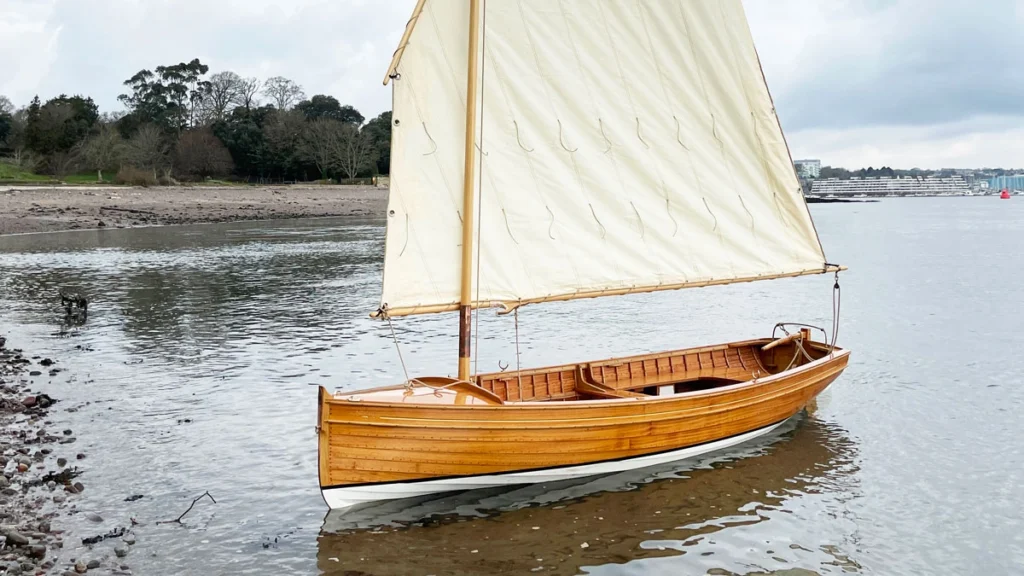
Teak Accents and EVA Interior Finishes
While the underwater profile relies on high-tech composites, the gunwales are trimmed in solid, weather-varnished teakwood. Teak is naturally rich in natural oils, making it uniquely resistant to rot, fungal decay, and saltwater exposure.
Inside the cockpit, the floor incorporates engineered EVA faux-wood decking. This synthetic material delivers a traditional marine aesthetic while offering soft cushioning for bare feet, UV resistance, and slip-resistant traction when wet.
Standard Included Accessories
Unlike many bare-hull builders that sell essential hardware separately, this model arrives with a complete rowing kit:
Ironwood Oars: Two 78.74-inch (2-meter) rowing oars crafted from dense ironwood for rigid, efficient strokes.
Comfort-Optimized Seating: Ergonomically proportioned transverse thwarts designed to support proper rowing posture and lower the overall center of gravity.
Transportation Trolley: An included launch trolley that simplifies moving the 176-pound hull across beaches, boat ramps, or storage sheds.
Technical Specifications & Price Comparison
To evaluate where this composite vessel sits within the broader small boats market, review its specifications alongside typical market price ranges.
| Metric / Parameter | Adama Composite 11.5-Ft Whitehall | Traditional Handcrafted Wooden Whitehall | Standard Aluminum / Plastic Rowboat |
| Hull Material | Double composite with foam core & teak trim | Solid planked cedar, oak, or mahogany | Molded polyethylene or riveted aluminum |
| Maintenance Level | Minimal (occasional wash & cover protection) | High (annual sanding, varnish, & seam sealing) | Low to moderate (susceptible to denting/UV embrittlement) |
| Rowing Efficiency | Excellent (long tracking keel & fine entry) | Exceptional (classic original displacement hull) | Poor to fair (flat bottoms create high drag & wind drift) |
| Reserve Safety | Unsinkable foam-core buoyancy | Dependent on secondary air tanks | Basic air chambers or foam inserts |
| Est. Price Range | $4,500 – $6,500 USD (retail listing dependent) | $12,000 – $25,000+ USD (custom yard build) | $1,500 – $3,500 USD (mass-production grade) |
Note: All pricing metrics are estimates based on general retail data, shipping parameters, and regional marine outfitters.
Performance: Rowing, Motoring, and Handling
A displacement hull profile behaves very differently than flat-bottomed jon boats or inflatable tenders. Understanding how the composite dinghy handles under various propulsion methods ensures you get the most out of your time on the water.
1. Superior Rowing Efficiency
The primary advantage of a true Whitehall boat is its ease of rowability. The sharp, plumb bow cuts through small waves rather than slamming over them. As the water moves past the rounded bilges, the long keel keeps the boat tracking in a straight line.
Because the vessel resists sideways leeway, rowers expend less energy correcting their heading, even when crossing windy bays or tidal channels. The included 2-meter ironwood oars provide the correct leverage ratio to propel the 176-pound hull smoothly with minimal arm strain.
2. Outboard Motor Integration
While designed primarily for rowing, the reinforced transom can accommodate gas or electric outboard motors rated up to 5 HP.
Electric Outboards (Torqeedo, ePropulsion): A 1 kW to 3 kW electric motor provides virtually silent cruising. This setup is ideal for peaceful morning lake tours, birdwatching, or navigating electric-only reservoirs.
Gas Outboards (2.5 HP to 5 HP): A lightweight 4-stroke gas engine pushes the hull to its theoretical displacement hull speed (around 5 to 6 knots) using very little fuel.
3. Stability and Weight Distribution
With a 49.2-inch beam, the boat offers great initial stability when boarding or stepping onto the EVA floor. As the boat leans in chop, the flared topsides generate secondary stability, preventing sudden tipping.
The low thwart placement keeps the center of gravity near the waterline. This design allows three to four adults to travel comfortably without compromising safety margin.
Practical Applications: How to Use Your Whitehall
The versatility of the adama model ships 11.5 ft composite whitehall dinghy makes it suitable for a wide range of water activities.
Yacht Tender Duties
For owners of classic motor yachts or cruising sailboats, this vessel serves as a stylish shore tender. Its teak accents complement high-end yachts, while its durable composite construction stands up to bumpier dock landings better than delicate all-wood craft.
Coastal Exploration and Fitness Rowing
Low-impact rowing is one of the best full-body workouts available. Rowing a traditional displacement hull engages the legs, core, back, and arms without the harsh joint impacts associated with running. The tracking hull allows fitness rowers to maintain a steady tempo over multi-mile coastal workouts.
Casual Family Recreation and Fishing
Thanks to its stable beam and slip-resistant EVA flooring, the dinghy makes a reliable platform for casual lake fishing, evening sunset cruises, or picnics on secluded islands.

Maintenance and Care for Long-Term Durability
Composite materials drastically cut down on seasonal labor, but routine preventative care preserves the shipshape appearance of your vessel for decades.
Rinsing After Saltwater Use: Wash down the hull, ironwood oars, rowlocks, and teak gunwales with fresh water after every ocean trip to prevent salt crystal buildup.
Maintaining the Teak Trim: The teak gunwales are factory-coated with a protective outdoor varnish. Inspect the wood annually for high-wear areas and apply a light coat of marine-grade teak sealer or varnish to keep the grain sealed against moisture.
Caring for the EVA Decking: Clean the faux-wood interior using soft brushes and mild boat soap. Avoid harsh bleach-based chemicals that could break down the synthetic EVA foam bonding layers over time.
Proper Storage Practices: Store the dinghy on its launching trolley under a breathable, UV-resistant boat cover. If storing upside-down on sawhorses, support the hull beneath internal bulkhead locations to prevent point-pressure hull deformation.
4 Essential Tips Before You Buy
Purchasing a specialized traditional craft requires considering logistics, storage, and accessories before placing an order.
1. Confirm Transport and Launching Setup
At 176 pounds, the hull can be moved across hard surfaces by two adults or a single person using the included launch trolley. However, if you plan to transport it on a vehicle roof rack, verify your vehicle’s dynamic roof weight rating. For frequent highway trips, a lightweight, single-axle trailer with carpeted bunks provides the safest transport platform.
2. Verify Overall Storage Clearance
With an overall length of 141.7 inches (approx. 11.8 feet) and a width of 49.2 inches, this boat fits inside most standard residential garages. Measure your storage space to account for the additional length added by the launch trolley or trailer tongue.
3. Consider Marine Environment Conditions
If you plan to use the boat in areas with big tides or steep waves, purchase extra mooring lines, fenders, and a small folding anchor (such as a 3.5 lb grapple anchor with chain lead). These tools keep your boat secure when anchoring near rocky beaches or shell-covered shores.
4. Review Freight Shipping Requirements
Specialty craft of this size ship as oversized freight. Clarify with your supplier whether delivery includes liftgate residential drop-off or if pickup at a regional freight terminal is required.
Conclusion
The adama model ships 11.5 ft composite whitehall dinghy captures the timeless grace of classic 19th-century rowing craft while leveraging modern, low-maintenance composite engineering. Whether used as a luxury yacht tender, a peaceful lake rowboat, or a small coastal fishing craft, this Whitehall boat delivers impressive stability, effortless tracking, and long-lasting durability.
For more detailed boat reviews, marine engineering breakdowns, and high-end nautical lifestyle guides, explore our latest coverage at turboocruiser.
Frequently Asked Questions
Is the 11.5-ft composite Whitehall dinghy suitable for beginners?
Yes. The long keel makes keeping the boat on a straight course simple for novice rowers. Furthermore, its unsinkable foam-core hull provides built-in safety reserves for new boaters.
Can I leave a composite Whitehall dinghy in the water permanently?
While the composite hull and teak gunwales resist rot and water damage, keeping the boat covered out of the water when not in use prevents marine growth on the underwater hull and protects the finishes from sunlight.
What is the main advantage of a composite hull over pure wood?
A composite hull delivers the timeless lines of a historical wooden vessel without the risk of drying out, plank splitting, leaking seams, or demanding seasonal hull sealing.
Does the boat come with oars included?
Yes. The adama model ships 11.5 ft composite whitehall dinghy comes equipped with two 2-meter (78.74-inch) ironwood oars designed specifically for the vessel’s rowlock geometry.