Have you ever noticed how the conversation around electric vehicles has shifted? A few years ago, everyone was obsessed with maximum driving range, but today, luxury buyers are asking a different question: How fast can I get back on the road? As premium automakers push the limits of power delivery, an advanced 800 volt architecture ev platform has emerged as the definitive hallmark of a true luxury electric vehicle.
So, why 800v matters in the premium automotive space? At its core, implementing high-voltage internal layouts allows a premium vehicle to handle immense electrical power while generating less heat, effectively cutting charging times in half compared to older configurations. While mainstream electric models still rely heavily on legacy engineering, premium manufacturers are deploying next-generation engineering to power the fastest charging cars 2026 has to offer, turning a standard battery replenishment into a brief, sub-20-minute pit stop. On elite automotive review hubs like Turboocruiser, this technical shift is recognized as the ultimate line separating entry-level compliance cars from cutting-edge luxury cruisers.
The Engineering Breakdown: 800v vs 400v EV
To understand why luxury brands are spending millions to re-engineer their powertrains, we have to look at basic electrical physics. Total power output is calculated by multiplying voltage by current ($P = V \times I$). If you want to dump a massive amount of energy into an electric car’s battery pack quickly, you either have to crank up the amperage (current) or increase the voltage.
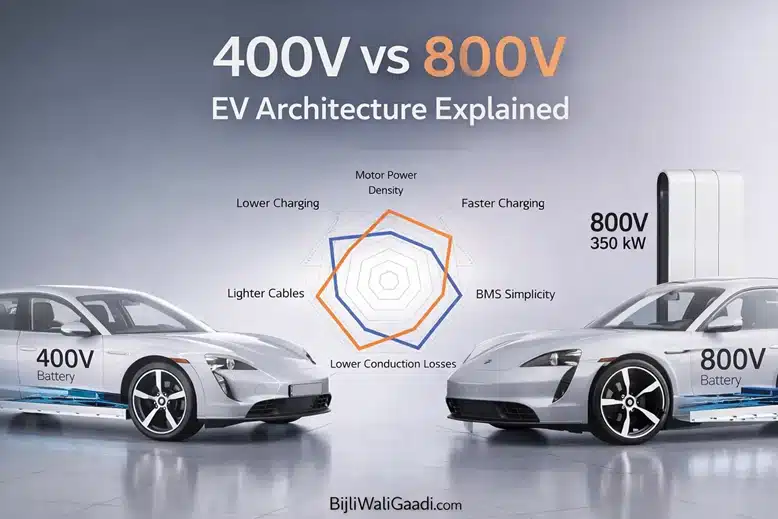
When evaluating an 800v vs 400v ev system, legacy vehicles running on older 400-volt setups are severely bottlenecked by heat. High amperage requires incredibly thick, heavy copper wiring to prevent the cables from overheating under load. By doubling the systemic pressure to 800 volts, automotive engineers can cut the electrical current in half while delivering the exact same amount of total power, or double the power without increasing the thermal signature.
Overcoming the Thermal Bottleneck
Managing heat is the holy grail of high-performance electric vehicle development. When a battery pack gets too hot during a fast-charging session, the onboard vehicle software forces the system to throttle charging speeds to prevent permanent cell degradation.
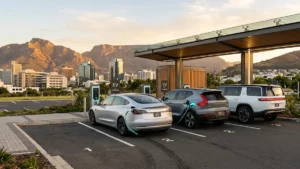
This thermal restriction explains why older platforms experience a sharp drop in charging performance after just a few minutes of plug-in time. High-voltage platforms bypass this constraint completely. By running cooler at a hardware level, a premium ev charging architecture can maintain its peak intake speeds across a significantly wider percentage of the total charging cycle, ensuring you get consistent, blazing-fast performance every time you park at an ultra-fast highway dispenser.
Market Landscape: The 2026 Elite Charging Hierarchy
As the industry matures, the gap between high-voltage engineering and legacy platforms has created a clear hierarchy in the luxury market. True premium ownership is no longer measured solely by leather stitching or air suspension; it is dictated by electrical throughput capability.
The comparison table below outlines the comprehensive market landscape for high-speed premium vehicles, detailing the fastest charging cars 2026 has brought to public roads.
| Vehicle Model | Peak Charging Power (kW) | Architecture Type | Real-World Charging Window (10% to 80%) | Platform Highlight |
| BMW iX3 (Neue Klasse) | 400 kW | 800-Volt | ~15 – 18 minutes | High-density cylindrical cell layout |
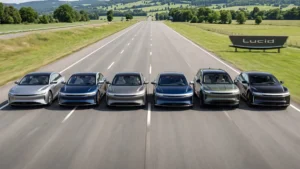
| Lucid Gravity SUV | 400 kW | 900-Volt Ultra | ~16 – 19 minutes | Ultra-compact high-efficiency drive unit |
| Lotus Emeya Hyper-GT | 400 kW | 800-Volt | ~14 minutes | Active thermal liquid cell management |
| Mercedes-Benz CLA Electric | 320 kW | 800-Volt | ~22 minutes | Advanced 2-speed efficiency gearbox |
| Porsche Taycan / Macan EV | 320 kW | 800-Volt | ~18 minutes | High-sustained performance charging curve |
| Hyundai IONIQ 6 / 9 | 350 kW | 800-Volt | ~18 minutes | Highly accessible mass-market E-GMP framework |
As clearly demonstrated by this active 800 volt cars list, peak intake values below 200 kW are quickly becoming obsolete in the high-end luxury tier. The latest platforms from BMW and Lucid show that high-voltage engineering allows massive family SUVs and executive sedans to recover over 200 miles of driving range in roughly ten minutes. This rapid energy transfer effectively bridges the final convenience gap between traditional combustion engine refueling and electric car ownership, a core metric heavily tracked by the core editorial team at Turboocruiser.
Real-World Benefits of Advanced EV Charging Architecture
The practical implications of upgrading to a high-voltage powertrain extend far beyond saving a few minutes at a rest stop. Because the internal components experience less electrical resistance, the entire vehicle operates with greater native efficiency.

Smaller, lighter high-voltage cables reduce the overall curb weight of the chassis, which directly translates into sharper handling characteristics and improved driving range. Furthermore, less heat generation means the vehicle requires smaller, less complex cooling loops, freeing up valuable interior cabin space and front trunk cargo capacity for a more luxurious passenger experience using this native ev charging architecture.
Step-by-Step: Managing a High-Voltage Fast Charge
To fully extract the benefits of a premium high-voltage vehicle, the charging process relies on an interconnected ecosystem of intelligent software and advanced hardware working in perfect harmony.
Route Planning and Thermal Prep: Software Pre-Conditioning. The onboard navigation system detects an upcoming 350kW+ DC fast charger along your route. The vehicle automatically activates its thermal management system to warm or cool the battery pack to its absolute optimal temperature before arrival.
Digital Communication and Safety Check: Hardware Handshake. Upon plugging in the liquid-cooled charging cable, the vehicle’s electronic control unit establishes a secure digital link with the dispenser to verify voltage limits, isolation resistance, and battery state-of-health.
High-Current Current Injection: Maximum Energy Intake. The charger feeds high-voltage direct current (DC) directly into the battery pack, hitting peak speeds up to 400 kW while minimizing energy transformation losses.
Sustained Curve Management: Adaptive Tapering. As the battery cells approach 80% capacity, the internal battery management system gently curtails the incoming power flow to protect the delicate internal chemistry from over-voltage stress.
The Compatibility Factor: When pulling up to an older 400-volt fast-charging station, an 800-volt vehicle must use an onboard DC-DC booster to artificially ramp up the station’s voltage, proving why investing in native high-voltage highway infrastructure is absolutely critical for future-proofing the market.
Why High Voltage is the Indispensable Foundation of Hyper-EVs
When you look past the basic convenience of fast charging, it becomes clear that high-voltage architecture is the essential foundation for next-generation automotive performance. Luxury automakers are discovering that they cannot build true hyper-performance vehicles using low-voltage setups.

Unlocking Massive Dynamic Power
High-performance electric motors require immense energy delivery to achieve instant, track-ready acceleration. By implementing a native 800 volt architecture ev setup, engineers can feed massive bursts of energy to multi-motor layouts without melting the vehicle’s internal wiring harness.
This uninhibited power delivery allows modern luxury cruisers to maintain blistering acceleration speeds repeatedly without experiencing thermal performance drops, satisfying the demanding expectations of premium car enthusiasts.
Superior Regenerative Braking
The performance advantages of high voltage work in both directions. During high-speed track driving or heavy deceleration down mountain passes, a high-voltage system can recapture kinetic energy at a much higher rate through regenerative braking, pumping immense power back into the battery cells instantly without overwhelming the electrical system.
Final Thoughts on High-Voltage Electric Performance
The transition to high-voltage engineering represents a major leap forward in making premium electric vehicles fully practical for effortless long-distance travel. By slashing charging times, reducing thermal overhead, and cutting structural vehicle weight, high-voltage architecture has firmly established itself as the non-negotiable benchmark for true automotive luxury. To understand why 800v matters across ongoing track reports and future EV performance evaluations, look out for the upcoming grand touring deep dives over at Turboocruiser.
Frequently Asked Questions
What is the primary difference when comparing an 800v vs 400v EV?
An 800-volt vehicle can accept significantly higher charging speeds (often up to 350-400 kW) while producing less heat than a 400-volt vehicle, which is typically capped around 150-250 kW due to current limits and thermal buildup.
Are all public fast chargers compatible with vehicles on the 800 volt cars list?
Yes, modern high-voltage vehicles are backward compatible with older 400-volt charging infrastructure. However, to achieve their true peak charging speeds, they must be plugged into high-output 350 kW or 400 kW DC fast chargers.
Why do vehicles taper their charging speeds down after reaching 80% capacity?
As lithium-ion battery cells fill up, the internal resistance increases significantly. To prevent permanent chemical degradation, overheating, and lithium plating, the vehicle’s internal software intentionally reduces incoming power for the final 20% of the charge cycle.
Does owning an 800-volt vehicle require special charging equipment installed at home?
No, home charging utilizes alternating current (AC) through standard Level 1 or Level 2 chargers. The vehicle’s onboard charger seamlessly converts this incoming AC power to feed the high-voltage battery pack, meaning your residential charging setup remains exactly the same.