
Forget the tangled mess of USB-C cables and the frantic search for a port while merging onto the highway. By 2026, wireless charging luxury cars 2026 has shifted from a “nice-to-have” gimmick to a cornerstone of the premium cabin experience. But here’s the thing: not all chargers are created equal. Some turn your phone into a pocket-sized heater, while others barely keep the battery percentage from dropping while you run wireless CarPlay and Spotify simultaneously.
At turboocruiser.com, we’ve spent the last few months testing the newest flagships to see who has actually solved the “slow charge” problem. From the magnetic precision of the new Qi2 standards to revolutionary external EV charging pads, here is the deep-dive state of play for 2026.
The Tech Shift: Qi2 and Magnetic Alignment
The biggest frustration with older in-car wireless charging was alignment. You’d hit a speed bump, your phone would slide half an inch, and the charging would stop. You’d spend the next three miles blindly reaching into the center console trying to “find the sweet spot” again.
In 2026, luxury brands have largely adopted the Qi2 standard. Think of this as the “democratization of MagSafe.” It uses a ring of magnets to “snap” your phone into the perfect spot every time. This doesn’t just stop the sliding; it increases efficiency by reducing heat and allowing for 15W fast charging, which was previously locked away for most users.
Wireless Charging Evolution (2024 vs. 2026)
| Feature | Standard Qi (Pre-2025) | Qi2 / Magnetic Standard (2026) |
| Charging Speed | 5W – 7.5W (Typical) | 15W – 25W (Advanced) |
| Heat Management | Passive / Poor | Active Cryo-Cooling |
| Stability | Phone slides on turns | Locked via Magnetic Ring |
| Efficiency | ~60-70% | ~85-90% |
| Interference | Frequent “Object Detected” errors | Smart Handshaking Protocols |
Which Luxury Brand Does It Best?
We’ve looked at the heavy hitters to see who is actually innovating and who is just checking a box.
1. Mercedes-Benz: The King of Active Cooling
Mercedes recognized early that heat is the enemy of the best wireless charger car experience. When a phone gets hot, its internal software throttles the charging speed to 2.5W to save the battery.
In the 2026 S-Class and EQS, the charging pad isn’t just a piece of plastic; it is a tech-heavy dock featuring Active Cryo-Cooling. Tiny, near-silent vents blow chilled air across the back of your phone. This allows the device to maintain peak 15W charging speeds even during a three-hour road trip using high-drain apps like Waze.
2. BMW: The “Digital Wallet” Integration
BMW has moved toward a vertical “cradle” design in many of its 2026 models, including the new iX and 7 Series. By tilting the phone slightly toward the driver, it stays visible for FaceID unlocks while being clamped in place. It’s arguably the most secure setup for spirited driving through winding roads; your phone simply isn’t going anywhere.
3. Tesla: Simple, Fast, and Double
Tesla remains the benchmark for utility. Their dual-pad setup allows both the driver and passenger to hit 15W speeds simultaneously. While they haven’t adopted a “magnetic snap” yet, their high-friction Alcantara pads are surprisingly good at keeping devices from wandering. Furthermore, Tesla’s software integration allows you to see the charging status of your phone directly on the 15-inch main display.
4. Range Rover: Seamless Minimalism
Range Rover has opted for a “floating” center console design where the charger is hidden under a sleek wood or carbon fiber sliding panel. They use a triple-coil system, meaning the “sweet spot” is much larger than in a standard charger. Even if you toss your phone in haphazardly, it’s going to find a connection.
Beyond the Phone: Luxury EV Charging
While we love a charged phone, the real luxury EV charging news for 2026 is Inductive Vehicle Charging.
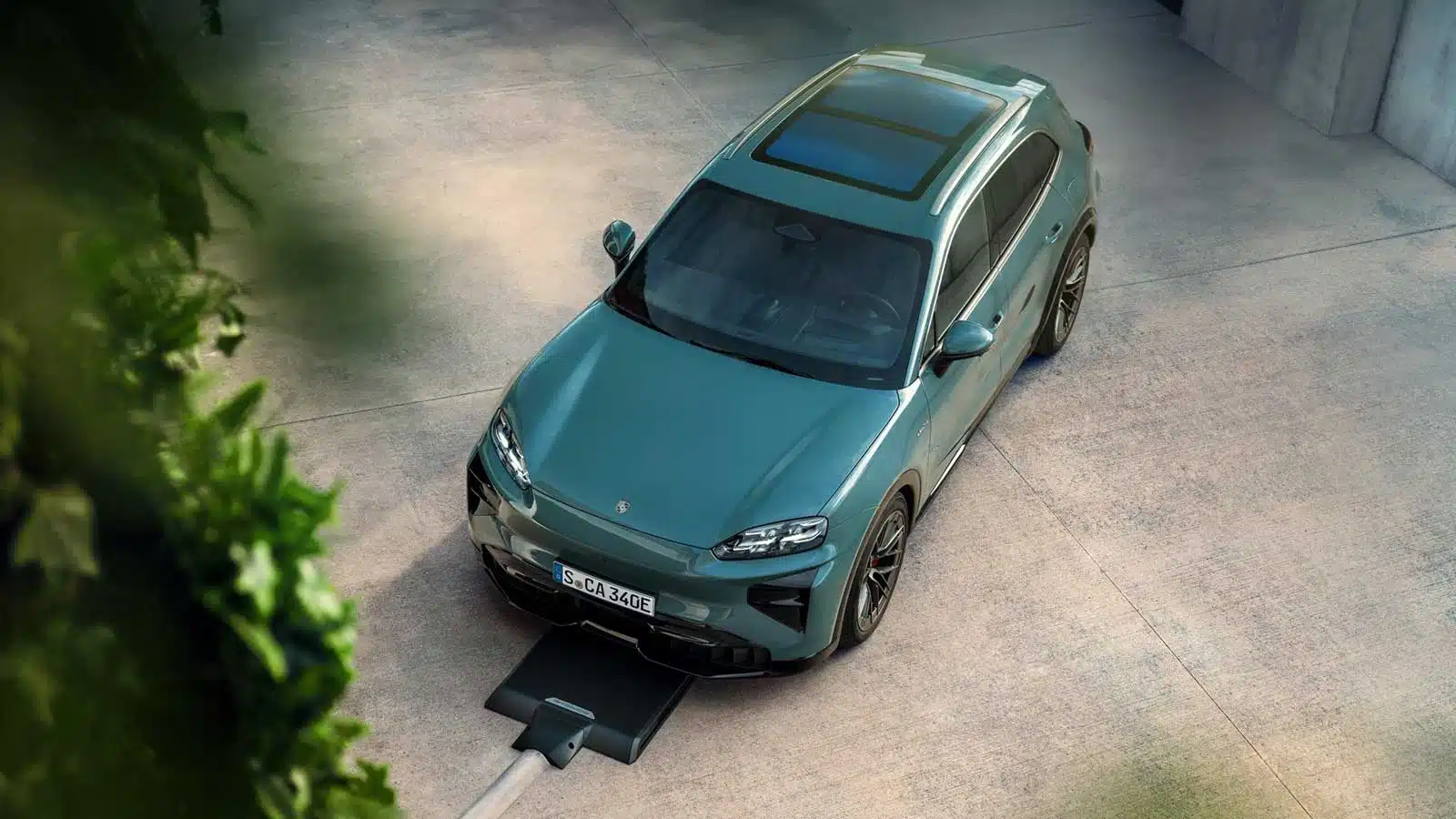
Porsche has led the charge (pun intended) with the 2026 Cayenne EV and Taycan updates. You no longer need to wrestle with a heavy, dirty, frozen cable in your garage during the winter. You simply park over a factory-installed floor pad.
11-kW Output: Matches the speed of a standard Level 2 home plug, meaning a full charge overnight is guaranteed.
90% Efficiency: Porsche claims the energy loss through the air gap is now negligible compared to a physical cable.
Automated Alignment: The car uses its air suspension to lower itself toward the pad, minimizing the distance and optimizing the magnetic resonance for the fastest possible energy transfer.
Why Your Current Charger Might Feel “Broken”
If you’ve recently moved into a 2026 model and your phone isn’t charging as fast as advertised, it’s likely one of these three real-world hurdles:
Case Thickness: Even with luxury EV charging tech for phones, a case thicker than 3mm or one with a metal plate for a magnetic mount can kill the induction.
Camera Bump Interference: Newer iPhones and Pixels have massive camera housings. If the camera bump “lifts” the phone off the pad, the air gap becomes too large. This is why magnetic alignment (Qi2) is so vital this year—it pulls the phone flush against the charger.
Software Throttling: If your car cabin is at 80°F (27°C) and you’re running a GPS app, your phone will stop the charge at 80% to protect the battery. This is a safety feature, not a charger fault.
Conclusion: The TurbooCruiser Verdict
If you’re shopping for a vehicle where tech convenience is a priority, Mercedes-Benz currently holds the crown for phone charging due to their superior thermal management. Being able to charge at full speed while the phone stays cool to the touch is a game-changer.
However, for the ultimate “future” feel, the Porsche inductive ground-pad system is the gold standard for wireless charging luxury cars 2026. Cable-free living is finally here, and it’s faster, safer, and cooler (literally) than ever before.
Frequently Asked Questions (FAQ)
Does wireless charging work with all phones in a 2026 luxury car?
Most 2026 luxury cars support the universal Qi and Qi2 standards. If your phone was made after 2020, it likely has wireless capabilities, but you’ll need a Qi2-compatible device (like iPhone 15+ or newer Androids) to get the full 15W fast-charging speeds.
Can I install a wireless EV charger in my existing garage?
Yes. Companies like WiTricity and InductEV offer aftermarket pads. However, for the seamless 2026 Porsche or BMW systems, the “receiver” must be built into the car’s underbody at the factory. It is much harder to retrofit than it is to buy it pre-installed.
Is wireless charging slower than using a USB-C cable?
Generally, yes. A high-speed USB-C cable in a luxury car can deliver 30W-60W (enough to charge a laptop), while in-car wireless charging currently caps out around 15W. However, for daily commuting and maintaining a battery while using CarPlay, 15W is more than enough.
Will wireless charging ruin my phone’s battery?
Not anymore. 2026 systems use advanced “handshaking” software that communicates with your phone to prevent overcharging. The modern systems also prioritize heat management—which was the main cause of battery degradation in older, first-gen wireless chargers.
Why does my phone get hot on the charging pad?
Wireless charging generates heat through induction as energy moves through the air. If your car doesn’t have “active cooling” (built-in fans), that heat stays trapped between the phone and the pad. This is why we recommend luxury brands that prioritize ventilation in the center console.
Can I charge my phone wirelessly and use a data cable at the same time?
You can, but it is not recommended. Most phones will prioritize the cable for both data and power. Using both simultaneously can cause excessive heat without actually speeding up the charge time.