
Imagine skipping the morning traffic jam by simply lifting off from your driveway and flying over the city. It sounds like a scene from a science fiction movie — but in 2026, flying cars are no longer just fantasy. They are being tested, certified, and in some cases, already preparing for commercial launch.
So, are flying cars 2026 actually happening? The short answer is: yes — but with important context. While you won’t see them on every street corner just yet, real companies are conducting real flights, getting real certifications, and targeting real launch dates this year. Here’s everything you need to know.
What Exactly Are Flying Cars?
The term “flying car” covers a range of vehicles. Some are hybrid road-and-air vehicles that drive like a car and then take off from a runway. Others are electric aircraft designed purely for short urban flights — these are often called eVTOLs (Electric Vertical Takeoff and Landing vehicles).
Both types are part of a broader movement called urban air mobility (UAM) — a system designed to move people through cities using low-altitude aircraft instead of congested roads.
Think of it less like a traditional car with wings and more like a new kind of transport layer built above the city.
The Flying Cars Making Headlines in 2026
Joby Aviation’s S4, The Air Taxi Pioneer
Joby Aviation’s S4 eVTOL is designed to carry one pilot and four passengers, cruising at speeds up to 200 miles per hour with a range of around 100 miles. The company has been one of the most aggressive in pursuing FAA certification, and it has secured agreements with Dubai’s Roads and Transport Authority to begin commercial operations in 2026.
That’s not a concept. That’s a scheduled launch.
Archer Aviation’s Midnight, Coming to Texas
The FAA selected eight proposals for a pilot program testing eVTOL aircraft across 26 states, including Texas, and Archer Aviation was among the companies chosen. Archer plans to begin the first steps toward launching its Midnight aircraft by summer 2026.
The Midnight is an electric vertical takeoff aircraft built for urban air taxi routes — short, efficient hops between city locations.
Klein Vision AirCar, The Road-and-Sky Hybrid
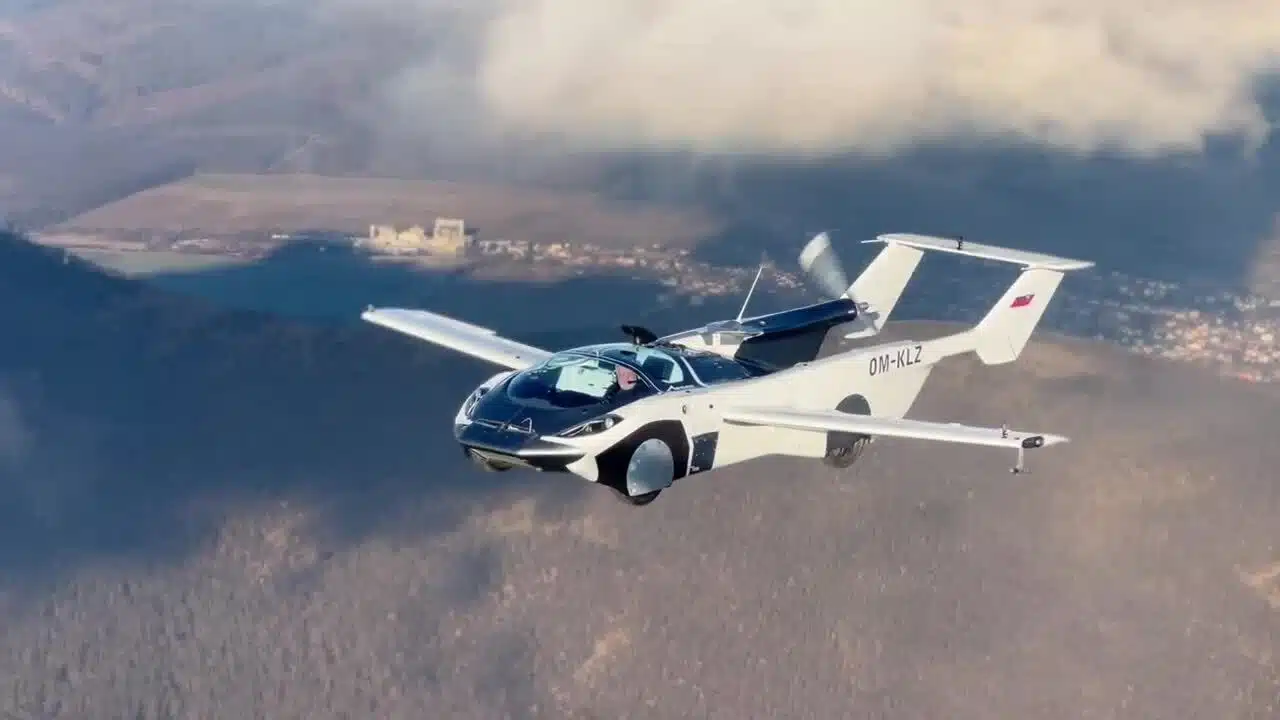
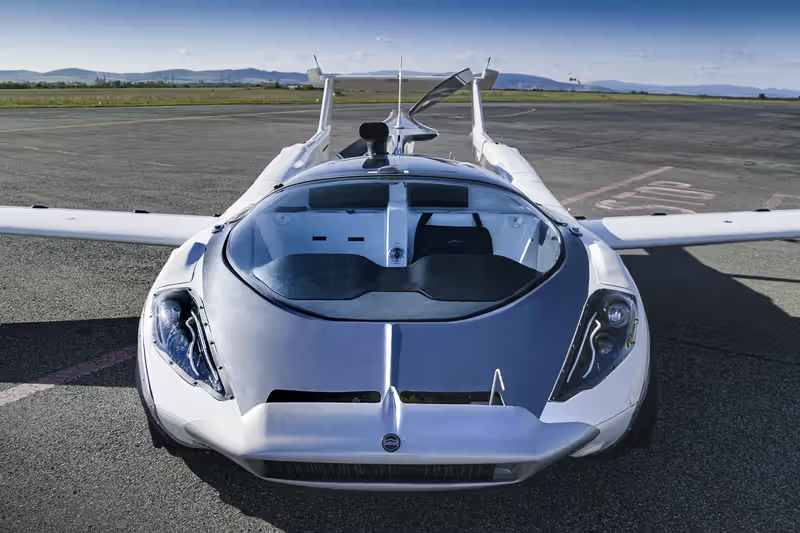
Slovak company Klein Vision revealed the final prototype of its AirCar with a firm plan to launch it on the market in early 2026, priced between $800,000 and $1 million.
The AirCar transforms from car to aircraft in just 80 seconds through a fully automated process, requiring no manual intervention from the driver. After more than 500 takeoffs and 170 flight hours, it has been certified by the Slovak Transport Authority.
It has a ground range of nearly 500 miles and an air range of approximately 620 miles — making it genuinely useful for intercity travel, not just short hops.
XPENG AEROHT, The Chinese Challenger
XPENG’s Land Aircraft Carrier is a two-part system combining a large electric SUV with a detachable, human-piloted eVTOL drone stored in the rear. When air travel is needed, the drone deploys from the vehicle and takes off vertically.
XPENG showcased the system at CES 2025 and in public flight demonstrations, signaling real progress toward its 2026 launch goal.
How Big Is the Flying Car Market in 2026?
The numbers here are significant. The global flying cars market is projected to grow from an estimated $117.4 million in 2025 to around $1.39 billion by 2033, driven by a compound annual growth rate of approximately 36.3%.
That kind of growth reflects serious investor confidence — not just tech hype.
Key players currently shaping the market include Joby Aviation, Airbus, Archer Aviation, Volcopter, and several regional innovators across Asia and Europe. These are not garage startups. These are well-funded, heavily tested companies working closely with aviation regulators.
The Role of Urban Air Mobility and Air Taxis
Urban air mobility is the framework being built around flying vehicles. Instead of traditional airports, the infrastructure uses “vertiports” — compact landing and takeoff hubs built on rooftops, parking structures, or open ground.
These eVTOL aircraft operate between vertiports, making it possible to move passengers efficiently within dense urban areas where traditional runways are impractical.
Air taxis are the commercial service layer on top of this infrastructure. You book a ride, walk to a nearby vertiport, and fly across the city in minutes. Developers pitch eVTOL air taxis as far cheaper to operate than traditional helicopters — which makes the economics more viable for regular urban commuters, not just the ultra-wealthy.
NASA has also introduced a simulation platform designed to safely integrate electric air taxis and drones into congested urban airspace, targeting operational readiness by 2026. That’s a major signal: even government agencies are actively engineering the traffic management layer that flying vehicles will need.
What Are the Biggest Challenges Still Ahead?
It would be dishonest to paint a picture that’s all smooth skies. Based on available data, there are real obstacles that could slow widespread adoption.
Regulatory Approval
Getting FAA or EASA (European Aviation Safety Agency) certification is an exhaustive, years-long process. While several eVTOL developers are deep into regulatory certification, advanced air mobility has not yet been fully commercialized at scale. Some analysts estimate full mass-market certification could still be several years away.
Infrastructure Gaps
Vertiport development must comply with zoning and environmental rules. Noise limits and space constraints can delay urban air mobility expansion in dense cities. Building a vertiport network is not quick or cheap — cities need to plan for it the same way they planned for highways and subway lines decades ago.
Battery Limitations
Current limitations in battery weight and energy storage affect how far and efficiently eVTOL aircraft can travel. This is why most current models are designed for short urban routes rather than long-distance travel. Companies like Joby Aviation and Archer Aviation are actively working on improving battery performance, but it remains a key technical challenge.
Legislative Roadblocks
Several U.S. states have enacted vertiport regulations that could unintentionally block privately financed public-use vertiports, creating barriers to development. Lawmakers and the industry are still working through these conflicts in 2026.
Public Acceptance
Residents in many cities have raised valid concerns about noise pollution, privacy from low-altitude flights, and safety risks. These are not small issues — they require genuine engagement, not just PR campaigns.
Future Mobility Trends to Watch in 2026 and Beyond
Future mobility trends point toward a layered transport system: ground vehicles for short distances, rail for medium distances, and aerial mobility for time-sensitive urban and intercity routes.
Key trends to watch right now include:
Autonomous eVTOLs: Boeing’s subsidiary Wisk Aero is developing fully electric autonomous air vehicles focused on enhanced AI navigation systems for urban passenger transport.
Regional expansion in Asia: Companies like EHang have commenced commercial operations in Southeast Asia, signaling growing regional adoption. Japan’s SkyDrive Inc. also achieved major milestones in testing its SD-05 flying car in 2025.
Emergency and cargo use cases: eVTOL technology is being actively evaluated for emergency medical response and cargo delivery, not just passenger transport. This widens the commercial opportunity significantly.
These aren’t fringe developments. They represent a broad ecosystem taking shape across multiple industries simultaneously.
Should You Be Excited or Skeptical?
Both, honestly.
The progress is real and measurable. Test flights are happening. Certifications are advancing. Launch dates are being announced. The market is growing faster than most industries.
But the gap between “available for purchase” and “part of everyday life” is wide. Based on available data, most analysts estimate that widespread, affordable urban air mobility is still roughly 5 to 10 years from becoming part of daily commuting for the average person.
In 2026, what you can realistically expect is the launch of early commercial air taxi routes in select cities, the first certified hybrid road-air vehicles available to buyers with substantial budgets, and a regulatory framework that is slowly becoming clearer.
That’s still remarkable progress. It’s just not the full Jetsons future — yet.
Conclusion
Flying cars 2026 marks a genuine turning point in transportation history. Companies like Joby Aviation, Archer Aviation, and Klein Vision are not just making promises — they are conducting flights, earning certifications, and setting commercial launch dates.
The infrastructure of urban air mobility is being built. Air taxis are moving from concept to pilot programs in real cities. Future mobility trends are pointing clearly toward a sky-based layer of transportation woven into how cities function.
The dream is becoming real. Not all at once, and not without obstacles — but the direction is unmistakable.
At turboocruiser.com, we will keep tracking every major development in the world of flying vehicles, air mobility, and the future of transportation. Stay tuned — because the skies are about to get a lot busier.
Frequently Asked Questions (FAQs)
Q1: Are flying cars available to buy in 2026?
Yes, in limited form. Klein Vision’s AirCar is targeting a 2026 market launch priced between $800,000 and $1 million. Most other flying vehicles are in testing or early commercial phases and are not yet available to the general public.
Q2: What is the difference between a flying car and an air taxi?
A flying car is a personal vehicle capable of both road driving and flight. An air taxi is an eVTOL aircraft used as a commercial passenger service — similar to a rideshare, but in the air. You don’t own it; you book a ride.
Q3: Are flying cars safe?
Current prototypes are built with redundancy systems, meaning if one motor fails, others keep the aircraft airborne. However, widespread safety standards are still being developed by regulators like the FAA. Safety certification is one of the biggest requirements before full commercialization.
Q4: How much does a flying car cost?
Prices vary widely. Hybrid road-air vehicles like the Klein Vision AirCar are estimated at $800,000 to $1 million. eVTOL air taxi services, once launched commercially, are expected to be priced similarly to a premium rideshare service per trip.
Q5: When will flying cars be common for everyday use?
Based on available data and current development timelines, widespread everyday use is estimated to be 5 to 10 years away. Early commercial services in select cities are expected within the next 1 to 3 years, but mass adoption depends on regulatory approval, infrastructure development, and affordability improvements.