Modern vehicles have evolved into intelligent, connected systems that enhance safety, convenience, and efficiency through advanced technologies. Features like ADAS, adaptive cruise control, AI-powered voice assistants, and predictive maintenance are transforming everyday driving into a smarter, more automated experience. With innovations such as over-the-air updates, smartphone integration, and real-time navigation, cars now continuously improve and adapt to driver behavior. As these technologies become more accessible across all price ranges, smart car features are no longer a luxury but a standard expectation in the automotive industry.
You get into your car, it recognizes your face, adjusts your seat and mirrors, loads your favorite playlist, and suggests the fastest route to work — all before you even touch the steering wheel. This is not a luxury experience anymore. This is what smart car features look like in today’s modern vehicles.
The automotive world has changed dramatically. Cars are no longer just machines with engines and wheels. They are intelligent, connected, and increasingly capable of thinking ahead of the driver. Whether you are buying a new vehicle or simply want to understand what the technology buzz is about, this guide breaks down the 10 smart car features that are genuinely defining the modern driving experience.
The global smart car market is estimated to reach $111.8 billion in 2026, growing at a steady rate of around 17% annually. That kind of growth tells you everything — this technology is not a passing trend.
What Makes a Car “Smart”?
A smart car is a vehicle equipped with intelligent systems that go beyond basic driving. It connects to the internet, communicates with other devices, analyzes data in real time, and adapts to both the driver and the environment.
Advanced car technology at this level includes sensors, cameras, artificial intelligence, cloud connectivity, and software that can be updated remotely — just like your smartphone. The result is a vehicle that becomes more capable over time, not just at the moment you buy it.
10 Smart Car Features That Define Modern Vehicles
1. Advanced Driver Assistance Systems (ADAS)
ADAS is the foundation of modern vehicle safety and one of the most important smart car features available today. It is a collection of technologies designed to reduce human error on the road.
This includes automatic emergency braking, lane departure warnings, blind spot monitoring, and adaptive cruise control. The system uses sensors and cameras to continuously scan the road and react faster than any human driver could.
Studies show that over 50% of consumers now rank safety technology as a top factor in their vehicle purchase decision. ADAS is no longer optional — it is expected.
2. Adaptive Cruise Control
Traditional cruise control holds a fixed speed. Adaptive cruise control is smarter — it automatically adjusts your speed based on the vehicle ahead of you, maintaining a safe following distance without any driver input.
In heavy highway traffic, this feature reduces driver fatigue significantly. Some advanced versions can bring the vehicle to a complete stop and resume driving automatically in stop-and-go traffic.
This is one of the clearest examples of AI car features working in real time to make everyday driving safer and less stressful.
3. Over-the-Air (OTA) Software Updates
This is one of the most underrated smart car features in modern vehicles. Instead of visiting a dealership for system upgrades, your car receives software updates wirelessly — just like your phone.
OTA updates can improve performance, add new features, fix bugs, and even enhance safety systems after you have already purchased the vehicle. Tesla pioneered this approach, and now nearly every major automaker has adopted it.
Nearly 75% of consumers now prioritize smart integrations like OTA updates when choosing a vehicle. Owning a smart car today means owning a vehicle that keeps getting better with time.
4. Smartphone Integration — Apple CarPlay and Android Auto
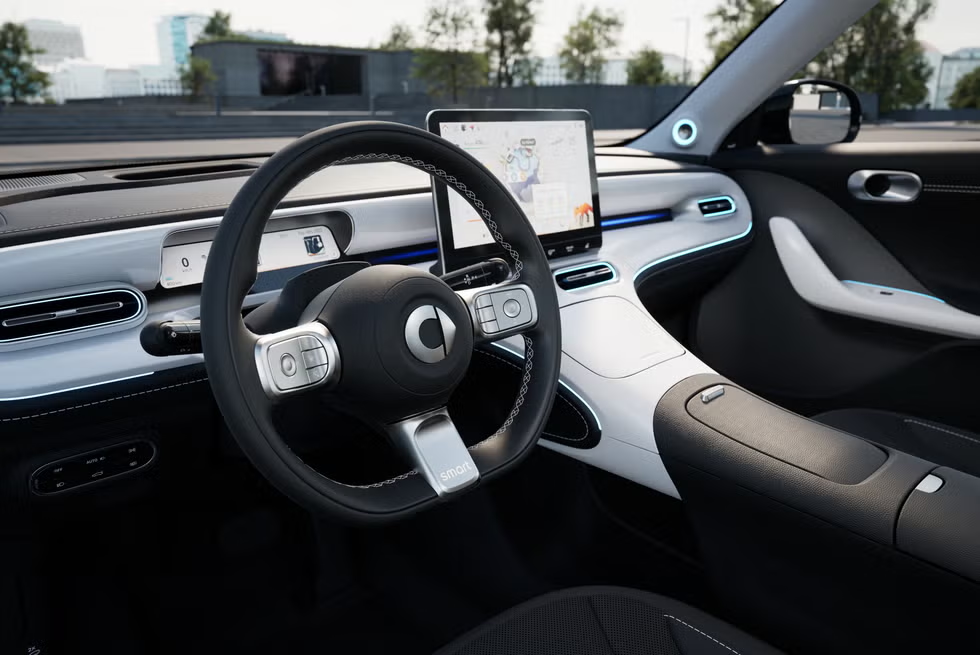
Seamless smartphone connection has become one of the most in-demand smart car features among buyers. Apple CarPlay and Android Auto allow drivers to mirror their phone interface directly onto the car’s display screen.
Navigation, calls, messages, music, and apps are all accessible from the dashboard without picking up your phone. Apple CarPlay users are projected to surpass 61 million by 2026, and nearly 98% of new cars now support one or both platforms.
Some vehicles now offer wireless versions of both systems — no cable needed. You simply get in and the connection happens automatically.
5. Voice Control and AI Assistants
Modern AI car features have made voice control genuinely useful. Older voice systems required memorized commands and often got them wrong. Today’s AI-powered assistants understand natural language.
You can say things like “find me a coffee shop on the way home” or “lower the temperature by two degrees” and the car understands and responds. Google Assistant, Amazon Alexa, and brand-specific AI systems are now deeply integrated into vehicle platforms.
At CES 2026, major automakers including BMW, Mercedes-Benz, and Hyundai demonstrated AI car features that analyze driver behavior, adapt to preferences, and even monitor alertness levels in real time.
6. Connected Vehicle Technology and V2X Communication
Connected vehicles are cars that communicate not just with your phone, but with the world around them. Vehicle-to-Everything (V2X) communication allows a car to exchange data with other vehicles, traffic signals, road infrastructure, and even pedestrians.
This technology can warn you about a red light ahead, alert you to a car braking suddenly around a corner you cannot see, or notify you about road hazards reported by other vehicles nearby.
The global connected car market is projected to grow from around $97 billion in 2024 to nearly $390 billion by 2034. Connected vehicles are not the future — they are already on the road today.
7. Predictive Navigation and Real-Time Traffic Intelligence
Navigation has evolved far beyond turn-by-turn directions. Smart navigation systems today use real-time traffic data, weather conditions, your calendar, and even your personal habits to predict where you are going and find the best route before you ask.
If you have a meeting scheduled and traffic ahead is building up, the system can alert you to leave earlier or suggest an alternative route automatically. Some systems learn your weekly patterns and begin loading your most common routes without any input.
This is advanced car technology that works quietly in the background, saving time without you even noticing it.
8. Automatic Parking Assist and Self-Parking
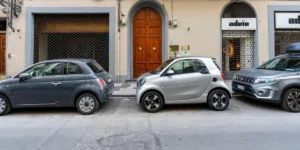
Parking in tight urban spaces is one of the most stressful parts of driving. Smart parking systems use sensors and cameras to detect available spaces and guide the steering automatically while the driver controls only the accelerator and brake.
More advanced versions — available in several premium models today — allow the car to park itself completely with no driver input at all. Some systems even allow remote parking, where you step out of the car and park it using your smartphone from outside the vehicle.
This is a perfect example of smart car features making city driving less frustrating.

9. Driver Monitoring and Fatigue Detection
One of the most important but least talked-about AI car features is driver monitoring. Using interior cameras and sensors, modern vehicles can detect when a driver is drowsy, distracted, or not looking at the road.
If the system detects signs of fatigue — like reduced steering input, slower reaction time, or eye movement patterns — it alerts the driver with visual and audio warnings. Some systems can even suggest pulling over for a rest.
This technology directly addresses one of the leading causes of road accidents globally. It is a smart feature that works silently in the background and could genuinely save lives.
10. Remote Diagnostics and Predictive Maintenance
Traditional car maintenance worked on a schedule — you changed the oil every few thousand miles whether it needed it or not. Smart vehicles now monitor their own health in real time and tell you exactly when something actually needs attention.
Remote diagnostics allow the car’s system to detect issues early, send alerts to your phone, and in some cases notify the dealership automatically. Connected vehicles can even schedule a service appointment on your behalf.
Fleet operators and logistics companies rely heavily on this technology to reduce downtime and keep vehicles running efficiently. For everyday drivers, it means fewer unexpected breakdowns and smarter spending on maintenance.
Why Smart Car Features Matter Beyond Convenience
It is easy to think of these features as luxury additions. But the reality is that smart car features are increasingly about safety, efficiency, and reducing the environmental impact of driving.
Advanced car technology like predictive maintenance reduces waste. AI-powered navigation reduces fuel consumption by finding more efficient routes. Driver monitoring systems prevent accidents. Connected vehicles can reduce urban traffic congestion by optimizing how cars move through cities collectively.
These features are not just making individual drives better — they are reshaping how entire cities move.
Are Smart Car Features Available in Budget Vehicles Too?
Absolutely — and this is one of the most important shifts happening in the automotive industry right now.
A few years ago, most smart car features were exclusive to premium brands. Today, brands like Hyundai, Kia, Toyota, and even many budget-friendly models are shipping with ADAS, smartphone integration, and connected vehicle capabilities as standard features.
By 2026, an estimated 470 million connected vehicles are expected to be in operation worldwide. That number includes far more everyday family cars than it does luxury vehicles.
What to Look for When Buying a Smart Car
If you are in the market for a new vehicle, here are the core smart car features worth prioritizing based on value and real-world usefulness:
ADAS package including automatic emergency braking and lane assist should be non-negotiable for safety. OTA update capability ensures your car stays current without dealership visits. Smartphone integration through CarPlay or Android Auto is essential for daily usability. A voice-controlled AI assistant reduces distraction while driving. Predictive maintenance alerts save money and prevent unexpected breakdowns.
Not every car needs every feature on this list. But understanding what is available helps you make a smarter purchase decision.
Conclusion
Smart car features are not science fiction. They are sitting in driveways and on showroom floors right now, making driving safer, more efficient, and genuinely more enjoyable.
From AI car features that monitor your alertness to connected vehicles that communicate with traffic infrastructure, advanced car technology has transformed what it means to own and drive a car. The 10 features covered in this post represent the clearest examples of this transformation in action.
The shift is happening fast. The global smart car market is on track to nearly double by 2027, and every new model year brings more of this technology into mainstream, affordable vehicles.
At turboocruiser.com, we break down the latest in automotive technology so you can make informed decisions about the vehicles you drive. Whether you are a car enthusiast or just looking for the safest, most efficient ride for your family — understanding smart car technology is the first step.
Frequently Asked Questions (FAQs)
Q1: What are the most important smart car features to look for in 2026?
The most valuable features based on safety and daily usability are ADAS (Advanced Driver Assistance Systems), adaptive cruise control, OTA software updates, smartphone integration, and predictive maintenance alerts. These offer the best combination of safety, convenience, and long-term value.
Q2: Do smart car features make driving safer?
Yes. Features like automatic emergency braking, lane departure warnings, blind spot monitoring, and driver fatigue detection directly reduce the risk of accidents. Over 50% of car buyers now rank safety technology as a top purchase priority.
Q3: Are connected vehicles expensive to maintain?
Not necessarily. Connected vehicles with remote diagnostics and predictive maintenance often cost less to maintain over time because problems are caught early and unnecessary service visits are reduced.
Q4: Can I add smart features to an older car?
Some features like Apple CarPlay and Android Auto can be added through aftermarket infotainment systems. However, more advanced features like ADAS, OTA updates, and V2X communication are built into the vehicle’s core hardware and cannot be retrofitted.
Q5: How does AI make modern cars smarter?
AI in modern vehicles processes data from cameras, sensors, and external sources in real time. It powers features like voice recognition, predictive navigation, driver monitoring, adaptive cruise control, and personalized vehicle settings — all of which improve with continued use as the system learns driver habits and preferences.