Key Takeaways
Zero traffic light waiting on empty roads
Real-time road hazard alerts directly to dashboard
Massive reduction in urban traffic collisions
Connected car tech transforming everyday commutes
Ever found yourself sitting at a red light on a completely dead street at 2:00 AM? It makes you wonder why our roads aren’t smarter yet. Well, vehicle to everything technology is finally fixing that frustration. It is a system that allows your car to talk directly to traffic lights, nearby pedestrians, and other vehicles. At turboocruiser, we look at how this shift turns stressful city gridlock into a smooth, connected drive.
Vehicle to Everything (V2X) technology lets connected cars talk to traffic lights, roads, and other vehicles in real time. By sharing instant data on speed and hazards, vehicle to everything technology cuts down traffic jams, prevents crashes, and makes city driving effortless. It turns static roads into active, intelligent networks for smoother commutes every day.
What Is Vehicle to Everything Technology Anyway?
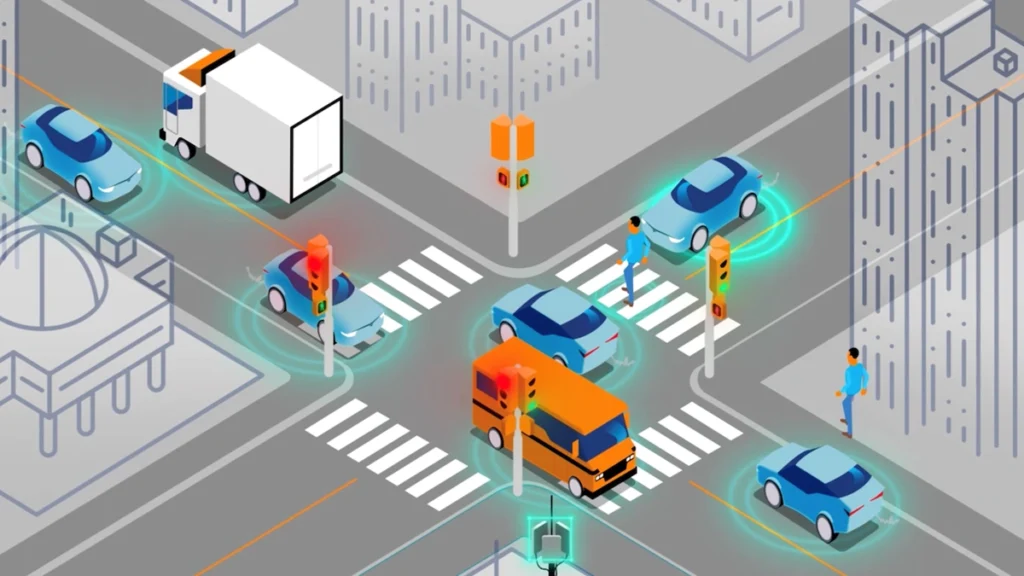
Think of it as giving your car a high-speed group chat with everything around it. Instead of relying only on your eyes or cameras, your car constantly exchanges wireless signals with the urban environment. It forms the backbone of connected car technology 2026 models use to predict problems before you even see them. The system breaks down into four main communication channels that work together seamlessly.
Vehicle-to-Vehicle allows surrounding cars to share exact position and speed data constantly. Vehicle-to-Infrastructure connects your car to street hardware like traffic lights, speed signs, and toll gantries. Vehicle-to-Pedestrian pairs with mobile devices to spot walkers and cyclists in dark or hidden areas. Vehicle-to-Network ties your vehicle into broader cloud traffic monitoring servers for long-range routing.
The Magic Behind V2V and V2I
Vehicle-to-Vehicle (V2V) lets cars share speed and braking data instantly. If a car three vehicles ahead slams on its brakes, your dashboard alerts you immediately. This happens long before your own eyes can see the brake lights flash through the windshields ahead. Vehicle-to-Infrastructure (V2I) links your ride directly to the road itself.
It tells you the exact speed to drive to catch green lights all the way home. Imagine never having to come to a complete stop on your regular evening drive back from work. It turns every green light into a planned, coordinated handoff between your car and the street hardware.
Say Goodbye to Endless City Traffic Jams
We have all wasted precious hours stuck in bumper-to-bumper city traffic. Traditional traffic lights operate on rigid, pre-set timers regardless of actual road conditions. They stay red even when no cross traffic is coming from any side of the street. With smart traffic systems, signals adapt dynamically to the actual flow of cars in real time. Instead of guessing, the city infrastructure responds to real cars on the road second by second.
Old traffic systems use fixed timers or simple underground wire loops that only know a car is waiting. Smart traffic systems analyze total vehicle volume from all directions to adjust green lights instantly. Old systems react slowly after backups have already backed up for blocks. Smart systems predict incoming packs of vehicles and adjust timing miles before gridlock forms. Emergency vehicles used to rely entirely on sirens while hoping drivers would pull over safely.
Now, smart networks flip all lights to green for ambulances while turning competing lights red automatically.
How Smart Signals Clear the Road
Imagine approaching an intersection with no cross traffic present. Smart traffic systems detect your approach and switch the light to green instantly. This prevents unnecessary stops and keeps engine idling to an absolute minimum. Tests on V2X communication cars show huge drops in daily rush-hour congestion across major metropolitan areas.
When traffic flows continuously, city air quality improves right along with driver sanity. You spend less time staring at tailpipes and more time actually arriving at your destination. It is a complete overhaul of how urban spaces manage the sheer volume of daily commuters.
Making City Streets Significantly Safer for Everyone
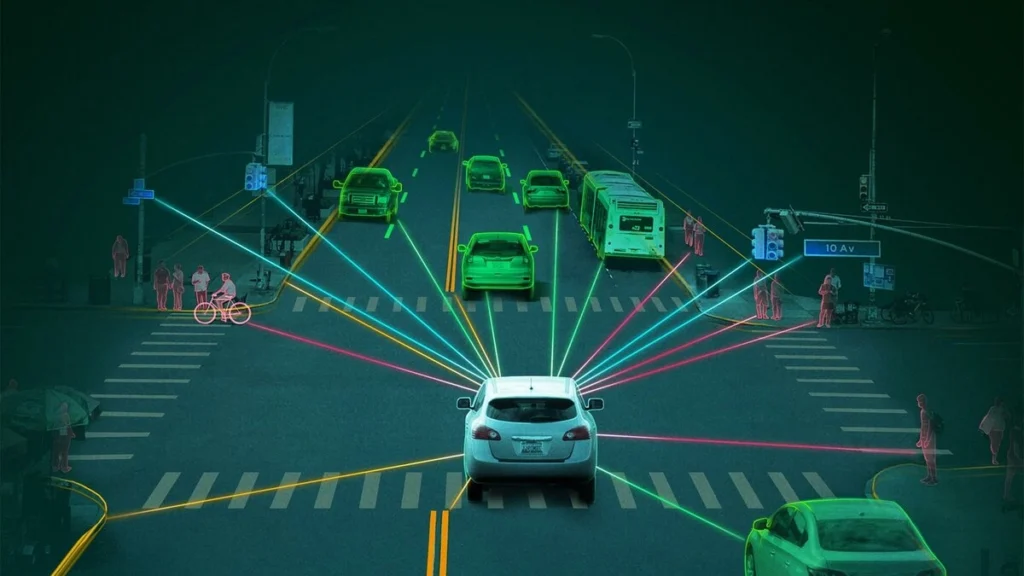
Road safety often comes down to reaction times and physical visibility. Blind spots, rainy weather, and large delivery trucks make city driving unpredictable. Vehicle to everything technology gives your car a virtual 360-degree radar that sees through solid obstacles.
It can warn you about a speeding driver hidden behind a large building around a blind corner. That advance warning buys you crucial extra seconds to avoid a severe intersection collision.
Protecting Drivers and Walkers Alike
Cross-Traffic Warnings: Alerts you to cars running red lights at blind intersections before you enter.
Pedestrian Detection: Warns you if a walker steps off the curb behind a parked van at night.
Work Zone Alerts: Gives early notice of lane closures long before you reach the traffic cones.
Emergency Vehicle Prioritization: Clears a path for ambulances automatically to save critical minutes.
Every single one of these alerts works in pitch black darkness, dense fog, or torrential rain. Sensors like optical cameras can be blinded by glare or dirt, but radio signals pass right through. That redundancy ensures your vehicle remains aware of surroundings under all weather conditions.
It creates a persistent safety net around your car every time you back out of your driveway.
How Connected Cars Talk to Each Other in Real Time
Cars do not just broadcast random data into the airwaves without organization. They send secure, anonymized messages up to ten times every single second. This short-range communication creates a dynamic network among V2X communication cars on the highway. As you drive down a crowded avenue, your car maintains active contact with dozens of nearby vehicles.
They continuously exchange speed, heading, braking status, and steering wheel angles. If a vehicle ahead stability control system kicks on due to black ice, every car behind receives a warning. Your car can begin softening throttle response before your tires even touch the slick patch.
Why Speed Matters in V2X
Human reaction time sits around one full second in typical city driving conditions. At 35 miles per hour, your car travels over fifty feet during that single second of human delay. V2X networks share critical safety warnings in just a few milliseconds over airwaves. That massive speed difference gives your automatic braking system time to act before an impact happens.
Our team at turboocruiser tracks how these rapid response times prevent common rear-end collisions entirely. When cars can react in milliseconds, sudden chain-reaction pileups become a thing of the past. The road environment transforms from a collection of isolated drivers into a synchronized swarm.
The Role of 5G and Cloud Networks in 2026
You might ask how all this data moves without crippling network slowdowns or dropped connections. The widespread adoption of connected car technology 2026 standards relies heavily on direct short-range radios paired with cellular 5G. Direct Cellular-V2X provides immediate safety alerts directly between devices without going through cell towers.
It operates with ultra-low latency between one and five milliseconds for split-second decisions. It requires no active internet connection and works even if mobile network coverage fails completely. 5G Cloud Networks handle long-range traffic updates, weather conditions, and macro-route adjustments. They operate with low latency between ten and thirty milliseconds to keep map systems current. They rely on standard cellular coverage to feed broad city updates down to your navigation display.
Direct Communication vs Cloud Data
Immediate safety threats use direct device-to-device radio signals on dedicated wireless bands. That means your car warns you about a sudden stop even if mobile cell service drops completely out. Meanwhile, broad traffic updates and route changes stream continuously through high-speed 5G networks. This dual-layer design keeps V2X communication cars safe, informed, and connected under any conditions.
If the cloud network experiences an outage, your local safety alerts keep working without interruption. Your car remains fully protected against immediate collision risks regardless of cell tower status. It combines the stability of local radios with the massive intelligence of modern cloud computing.
Real-World Benefits You Will Feel on Your Daily Commute
What does all this high-tech capability mean for your everyday trip to work or the grocery store? It means less time staring at red tail lamps and far less money spent on gas every month. Smooth driving profiles lower fuel consumption and keep brake pads from wearing out prematurely.
When you aren’t constantly slamming on brakes and accelerating hard, your entire car lasts longer. Tire wear decreases, engine stress drops, and routine maintenance intervals stretch further apart.
Saving Time, Gas, and Peace of Mind
Smooth traffic flow reduces constant stopping and starting on crowded urban streets. That saves you real money at the pump while cutting down tailpipe emissions significantly in neighborhoods. Plus, knowing smart traffic systems are monitoring intersections makes city driving far less stressful overall. You arrive at your destination feeling calm rather than exhausted from aggressive traffic battles.
Commuting changes from a high-stress endurance test into a predictable, quiet part of your day. Cities get cleaner air and faster transport times without having to widen existing roads. It maximizes the efficiency of the asphalt lanes we already have in place today.
Transforming Public Transit and Delivery Logistics
Private passenger cars are not the only vehicles benefiting from this massive technological upgrade. City buses equipped with V2X can request signal extensions to stay precisely on daily schedule. When a bus runs late, traffic lights hold green slightly longer to let it clear congested intersections. This makes public transportation far more reliable, encouraging more people to leave private cars home.
Delivery fleets also gain massive advantages through coordinated route optimization across downtown cores. Delivery vans can coordinate drop-off points and parking availability in real time with city systems. Instead of circling blocks looking for loading zones, drivers navigate straight to open spots. That drastically reduces unnecessary urban miles driven by heavy commercial vehicles every single day. Fewer commercial trucks idling on side streets means clearer lanes for everyone else sharing the road.
The Environmental Impact of Connected Driving
Vehicle emissions spike dramatically during stop-and-go acceleration cycles in heavy urban traffic. When cars maintain steady cruising speeds, combustion engines and battery systems operate at peak efficiency. By smoothing out traffic pulses across entire street grids, fuel consumption drops significantly. Estimates suggest connected infrastructure can lower overall urban transportation carbon footprints substantially. Electric vehicles benefit immensely too, extending battery range by minimizing energy-draining stop-starts.
Regenerative braking helps, but maintaining steady motion always consumes less battery energy than stopping completely. Connected cars can even plan energy usage based on upcoming elevation changes and signal patterns. Your EV can heat or cool its cabin during optimal power windows based on traffic flow ahead. It turns energy management into an active, predictive system that maximizes every kilowatt-hour.
What Hurdles Are Delaying Full V2X Adoption?
If this system is so great, why isn’t every single vehicle using it on every street today? Upgrading millions of older cars and aging municipal infrastructures takes time and considerable funding. Automakers and governments also had to agree on universal wireless standards to ensure total cross-brand compatibility.
A Ford must be able to talk to a Toyota, a Tesla, and a municipal traffic light without language barriers. Achieving that level of industry cooperation required years of international policy negotiations and engineering testing.
Privacy and Cybersecurity Priorities
Security remains a top priority for developers building connected car technology 2026 platforms. Engineers use heavy hardware encryption and randomized security keys to prevent tracking your vehicle. Your car sends safety data without attaching your name, license plate, or personal account identification. Based on available data, these security protocols keep your personal drive private while sharing essential metrics.
Hackers cannot broadcast fake emergency messages because every signal requires cryptographic verification. Municipal networks isolate traffic control channels from public internet connections to prevent unauthorized tampering. These multi-layered defenses ensure that bad actors cannot disrupt city traffic flow or access personal driving logs.
The Intersection of V2X and Autonomous Vehicles
While V2X improves human driving immensely, it is also the missing key for fully autonomous cars. Self-driving vehicles currently rely heavily on onboard cameras, radar, and expensive LiDAR units. However, sensors cannot see through heavy fog, blinding snowstorms, or around large delivery vehicles. Vehicle to everything technology acts as a long-range electronic sensor that fills those critical visual blind spots.
It gives autonomous driving computers access to data from miles down the road instantaneously. Instead of reacting to a stopping car when its camera sees it, the autonomous car knows the instant braking begins. This allows self-driving fleets to travel closer together safely, dramatically increasing lane capacity on highways. Human drivers and fully autonomous vehicles can share the same city lanes without friction or safety risks. V2X provides the common communication layer that lets human intelligence and artificial intelligence mix safely.
What to Expect When You Upgrade Your Next Car
Are you planning to buy a new vehicle in the next few years? You will likely see vehicle to everything technology listed prominently on the safety feature sheet. At turboocruiser, we recommend checking if your next car supports basic C-V2X features natively. Many modern automakers include hardware modules as standard equipment on basic trim levels now.
Retrofit options are also entering the market for older cars through aftermarket dash systems and plug-in dongles. Even simple smartphone applications are beginning to interface with municipal V2I infrastructure in select cities. This allows older vehicles to receive basic traffic light timing alerts on their dashboard mounts.
The Road Ahead for City Streets
As more drivers adopt connected vehicles, the network effect grows dramatically stronger across urban hubs. Even having twenty percent of cars on the road connected creates noticeable traffic flow improvements for everyone. Unconnected vehicles simply follow the smooth flow established by the connected majority ahead of them.
City driving is transforming from a chaotic daily chore into a coordinated, stress-free transportation experience. We are moving away from isolated cars competing for street space toward an integrated urban mobility network. The frustrating days of sitting alone at empty red lights will soon be a distant memory for city drivers.
Frequently Asked Questions
What is vehicle to everything technology in simple words?
It is wireless tech that lets cars talk to other vehicles, traffic lights, and roads to stop crashes and ease traffic.
Do V2X communication cars track my personal location data?
No, systems generally use anonymized signals to share safety data without saving your personal identity or route history.
Will smart traffic systems work with older gas cars?
Yes, cities install roadside units that manage overall traffic flow, helping all vehicles move much faster.
How does connected car technology 2026 help during bad weather?
It warns your car about slick roads, fog, or hidden hazards ahead before your eyes can clearly see them.