
The movement of ultra-luxury megayachts through contested global waterways has shifted from private leisure into high-stakes international politics. Navigating a russian superyacht strait of hormuz transit involves a complex mix of maritime law, naval blockades, and diplomatic maneuvering.
When multi-million-dollar vessels pass through this narrow maritime choke point, they highlight how global sanctions and regional conflicts alter traditional luxury cruising routes. While commercial seafarers often face operational delays and strict blockades in the region, select high-profile luxury vessels have successfully negotiated safe transit between Gulf ports.
In this detailed report, we examine the navigational risks, legal challenges surrounding yacht sanctions, and the strategic shift toward middle east yacht routes for high-net-worth vessel owners.
The Strategic Importance of the Strait of Hormuz
The Strait of Hormuz is one of the most critical maritime choke points on Earth, connecting the Persian Gulf to the Gulf of Oman and the broader Indian Ocean.
Roughly 21 miles wide at its narrowest point, this waterway handles approximately one-fifth of the world’s petroleum supply. Consequently, any disruption to strait of hormuz shipping creates immediate ripples across global energy markets and international security networks.
For private luxury vessels, navigating this region requires balancing physical navigation security against shifting geopolitical alliances.
Why Superyachts Transited to the Middle East
Historically, European destinations like the French Riviera, Monaco, and the Italian coast were the primary summer hubs for high-end luxury yachts.
However, enforcement of Western asset freezes following global political shifts forced many owners to seek alternative harbors. United Arab Emirates ports like Dubai and Ras al-Khaimah emerged as prime safe havens due to their neutral foreign policy stance and robust maritime infrastructure.
As a result, captains frequently plot transits through the Gulf of Oman to reach long-term repair yards, deep-water marinas, or safe anchorage grounds in the Indian Ocean.
Choke Point Vulnerabilities
Navigating narrow straits exposes large vessels to heightened physical and electronic monitoring.
Unlike the open ocean, vessels in the strait must follow designated traffic separation schemes that bring them close to territorial waters.
For a russian superyacht, passing through these waters requires constant communication with local port authorities, active coastal radar tracking, and strict adherence to international transit passage protocols.
Sanctions, Ownership and Legal Frameworks
The global regulatory landscape for private vessels has grown increasingly restrictive over recent years.
Understanding how luxury vessels continue operating requires analyzing the mechanisms of yacht sanctions and maritime registry rules.
The Impact of Western Yacht Sanctions
Following international regulatory campaigns, Western governments targeted high-value assets belonging to designated individuals.
Authorities in nations such as Italy, France, Spain, and the United States seized numerous luxury vessels worth billions of dollars. These enforcement actions effectively closed off traditional Mediterranean and North American cruising grounds to restricted owners.
Consequently, owners turned toward jurisdictions that do not enforce unilateral Western sanctions, transforming regional Gulf waters into a primary operational zone.
Flagging, Ownership Entities, and Compliance
To maintain international sailing rights, ship owners employ complex corporate structures and international flagging options.
Many luxury vessels transition their registration from traditional offshore flag states like the Cayman Islands or Marshall Islands to national registries such as the Russian flag or neutral regional options.
Corporate Holding Companies: Vessels are frequently held by holding entities registered in specialized business zones.
Flag State Rights: Sailing under a recognized national flag guarantees specific diplomatic protections under the United Nations Convention on the Law of the Sea (UNCLOS).
AIS Tracking Protocols: Captains must evaluate whether broadcasting Automatic Identification System (AIS) data enhances safety or increases local surveillance risks.
Operational Risks During Hormuz Transits
Navigating a russian superyacht strait of hormuz route involves overcoming severe operational and security hurdles.
The waterway is heavily patrolled by regional navies, international maritime coalitions, and coast guard forces.
Physical Security and Military Standoffs
The presence of military warships, patrol craft, and uncrewed aerial systems makes the Strait of Hormuz a high-stress environment for civilian mariners.
Commercial container ships and oil tankers regularly experience GPS spoofing, radio interference, and forced boarding actions during periods of elevated international tension.
For private vessels, operating near active military blockades risks accidental misidentification or interception by foreign naval forces.
Insurance and Logistics Challenges
Securing maritime insurance for high-value vessels operating in designated war-risk areas is exceptionally difficult.
Standard maritime underwriters often restrict coverage or charge prohibitively high premiums for transits through the Persian Gulf.
Furthermore, accessing specialized fuel, spare parts, and certified technician support requires coordination with specialized local maritime agencies that operate outside Western banking networks.
Case Study: The Passage of the Superyacht Nord
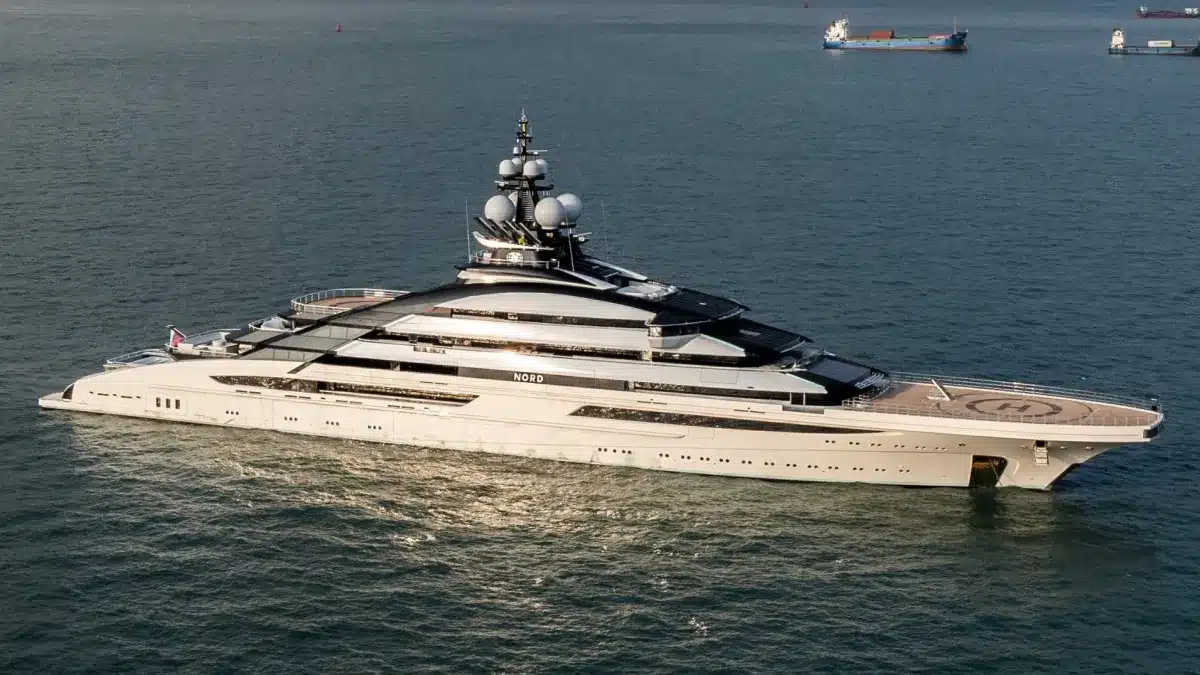
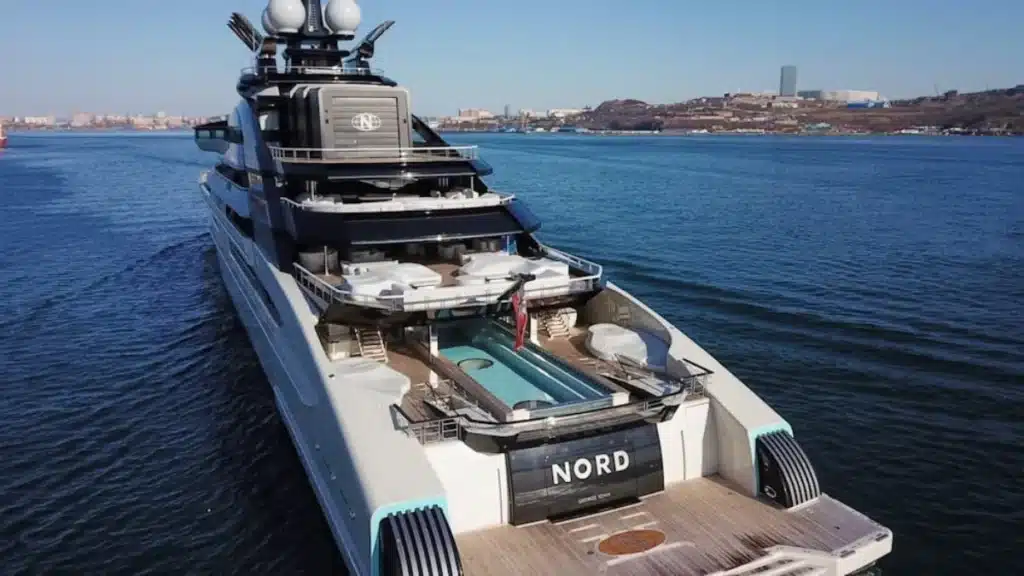
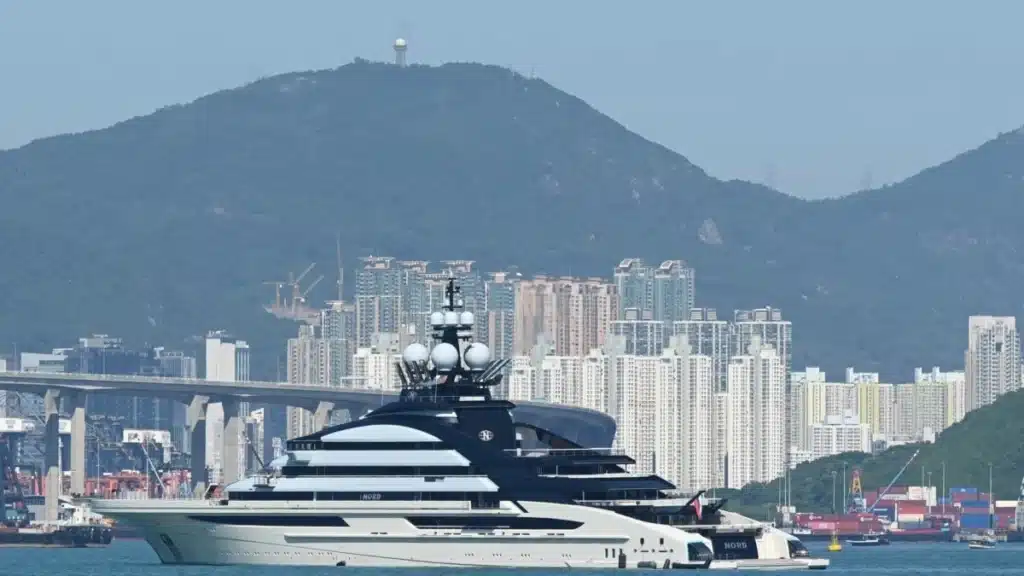
A clear example of luxury vessel navigation in contested waters occurred when the 142-meter (465-foot) vessel Nord successfully cleared the waterway.
Estimated to be worth over $500 million, the vessel stands among the largest luxury yachts in the world, complete with multiple helipads, customized interior spaces, and specialized operational capabilities.
Route Breakdown and Navigation Timeline
Based on maritime tracking data, Nord departed a Dubai marina and headed east toward the entrance of the Persian Gulf.
The vessel completed its passage through the narrow choke point during a period when broader commercial traffic was heavily restricted due to military blockades and diplomatic standoffs.
After clearing the waterway without interference, the vessel anchored safely in Muscat, Oman, demonstrating how diplomatic neutrality facilitates passage.
Diplomatic Alignment and Unhindered Transit
The unhindered passage of a major russian superyacht highlighted the importance of geopolitical relations in international waters.
Because Russia maintains open diplomatic and trade channels with both regional powers and neighboring coastal states, the vessel operated under recognized civilian transit rights.
Neither coastal patrols nor international blockading forces interfered with the passage, showing how state-level diplomacy protects private assets at sea.
Regional Comparison: Global Yacht Safe Havens
To understand how middle east yacht routes compare to traditional luxury maritime hubs, consider the structural distinctions below:
| Destination / Hub | Primary Sanctions Risk Level | Accessibility for Russian Vessels | Typical Operational Use Case |
| Western Mediterranean (France, Italy, Monaco) | High (Active Asset Seizures) | Severely Restricted | Traditional Summer Cruising & Charter Operations |
| United Arab Emirates (Dubai, Ras al-Khaimah) | Low (Neutral Regulatory Stance) | High (Open Anchorage & Berthing) | Winter Mooring, Refit & Financial Hub |
| Oman (Muscat, Salalah) | Low (Neutral Maritime Transit) | High (Peaceful Passage Clearance) | Strategic Stopover for Indian Ocean Crossing |
| Maldives / Seychelles | Low to Moderate | High (Seasonal Anchorage) | Island Cruising & Remote Anchorage |
| Russian Far East (Vladivostok) | None (Domestic Jurisdiction) | Unrestricted | Safe Homeporting & Long-term Layup |
The Geopolitical Future of Middle East Yachting
The broader impact of these maritime shifts reaches far beyond individual ship captains and wealthy owners.
The concentration of luxury vessels in the Persian Gulf and Gulf of Oman is reframing regional maritime infrastructure and marine services.
Expansion of Gulf Maritime Infrastructure
To accommodate large superyachts relocated from Europe, Gulf nations are investing heavily in deep-water marina facilities, specialized shipyards, and high-security maritime zones.
Dubai and neighboring emirates have expanded berths capable of supporting vessels over 100 meters long with high-capacity electrical shore power and private provisioning services.
This expanding infrastructure solidifies the region as a permanent alternative to traditional European cruising grounds.
Shifting Legal Precedents for International Waters
The peaceful transit of private vessels through heavily blockaded maritime routes creates noteworthy legal precedents.
It reinforces the principle of innocent transit passage under maritime law, even when owners face individual administrative sanctions in specific foreign jurisdictions.
As long as neutral coastal nations honor international maritime conventions, private vessels can navigate strategic choke points without triggering military intervention.
Conclusion
The successful navigation of a russian superyacht strait of hormuz route highlights how modern luxury shipping intersects with international politics. As enforcement of yacht sanctions continues to reshape traditional cruising grounds, vessel owners increasingly rely on middle east yacht routes and neutral diplomatic channels to maintain mobility.
While physical and electronic security challenges along strait of hormuz shipping lanes remain elevated, strong regional infrastructure and legal protections ensure the Gulf remains a strategic hub for high-value maritime assets.
For more authoritative maritime analysis, vehicle tech reviews, and transportation insights, visit us at turboocruiser.com.
Frequently Asked Questions (FAQs)
Why do Russian superyachts operate in the Middle East?
Many vessel owners relocated their assets to the Middle East because nations like the United Arab Emirates offer neutral regulatory environments and do not enforce unilateral Western asset seizures.
Is it legal for sanctioned yachts to navigate the Strait of Hormuz?
Yes, under international maritime law, civilian vessels enjoy the right of transit passage through international straits as long as they adhere to peaceful navigation standards and local coastal requirements.
How do global sanctions affect superyacht maintenance?
Sanctions restrict access to Western shipyards, specialized parts, and certified technician support, forcing owners to rely on alternative repair facilities in non-sanctioning jurisdictions.
What risks do vessels face during Strait of Hormuz shipping transits?
Vessels face risks including electronic signal interference, active naval blockades, heightened military surveillance, and potential operational delays caused by regional security standoffs.