
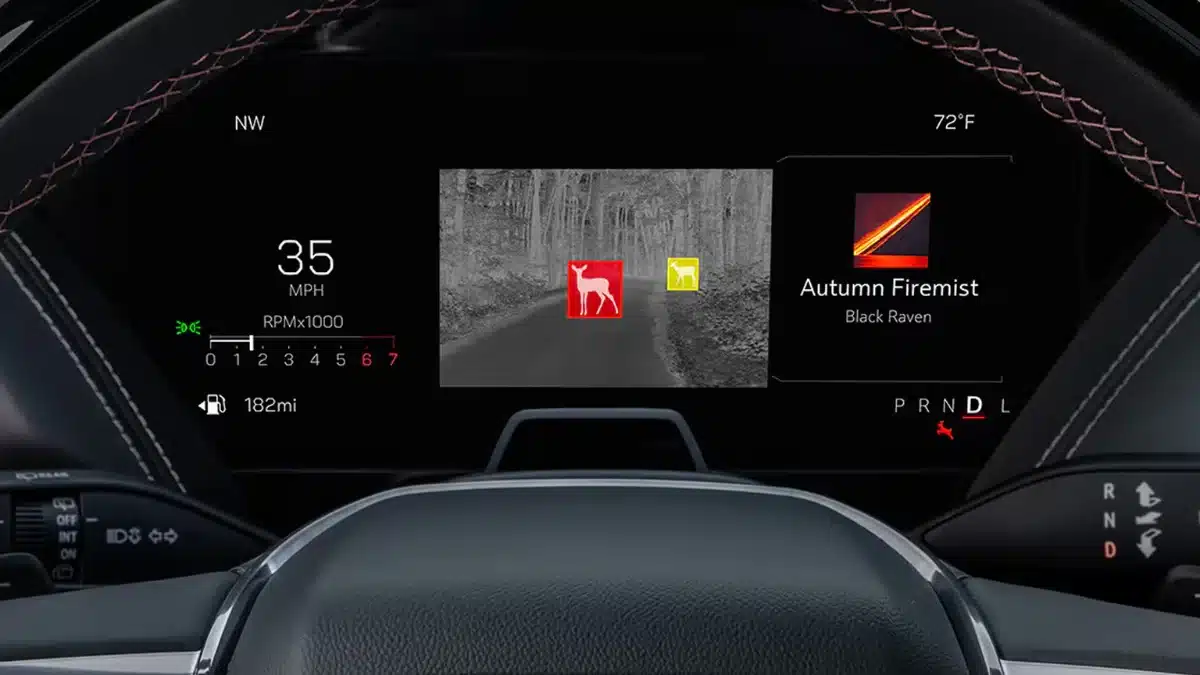
Night vision technology in cars uses infrared sensors to spot pedestrians and animals beyond headlight range, then warns the driver or brakes automatically. In 2026 it appears mostly on luxury models like the Cadillac Escalade IQ, BMW 7-Series, and Mercedes S-Class, usually as a premium option. Adoption is rising as NHTSA’s FMVSS 127 rule will require nighttime pedestrian braking on new vehicles by 2029.
Imagine a deer steps onto a dark highway. Your headlights catch it at 250 feet. At 60 mph, that gives you about three seconds. Night vision technology in cars 2026 hands you those seconds back, and this year it does more than warn you, it can hit the brakes for you. The reason is simple: most fatal pedestrian crashes happen after dark, with 77% of them in low light, per NHTSA.
At Turboocruiser, we analyze how these sensors perform in real-world conditions. Whether you are navigating rural highways or dimly lit urban streets, understanding the current state of night vision technology cars 2026 helps you decide if this premium investment is necessary for your next vehicle purchase.
What Is Night Vision Technology in Cars 2026 and How Does It Work?
Night vision technology in cars 2026 is a safety system that spots people, animals, and obstacles well past your headlight beam, then warns you before your own eyes could catch them. Instead of visible light, it reads infrared energy, so a dark road stops hiding what matters.
The idea runs on basic physics. Warm bodies give off heat, so people, deer, and a running engine all glow in the infrared range. The camera then turns that heat into a picture. Cold asphalt looks dark, but a deer on the shoulder lights up bright against it, and that gap hands you the extra seconds.
Here is how a typical setup works:
- The sensor sits low in the grille or bumper, scanning the road ahead
- The display sends a live feed to your dashboard or head-up display
- The alert marks a pedestrian with a colored box and a chime, so you can slow down or steer clear
Still, carmakers do not all read the road the same way, and that split decides how far you see.
Passive vs Active Night Vision Technology Cars 2026 Systems
Thermal imaging in 2026 is divided into two main categories: Passive and Active. Passive systems, favored by Audi and BMW, read natural heat signatures from living bodies, offering a range of up to 1,000 feet. In contrast, an active best night vision car system uses invisible IR light to illuminate the road, providing higher image resolution but over a shorter distance. While passive sensors excel in spotting “warm” hazards like deer, active systems provide a clearer picture of the overall road environment, including non-thermal obstacles.
| Feature | Passive (Far-Infrared) | Active (Near-Infrared) |
|---|---|---|
| How it works | Reads natural body and engine heat | Emits IR light, reads the reflection |
| Range | Up to about 1,000 ft (300 m) | Shorter, roughly half of passive |
| Image quality | Grainy but high contrast on people | Brighter, more detail |
| Weak spot | Struggles in warm weather | Struggles in rain, fog, snow |
| Used by | BMW, Audi, Cadillac, Volkswagen | Mercedes-Benz (historically) |
Most luxury brands now favor passive thermal, and the logic is sound. A person or an animal pops against a cool background far more clearly than against a beam of reflected light. Spotting living hazards is the entire reason the feature exists.
What Is New for Night Vision Technology Cars 2026
This is where 2026 splits hard from every older guide on the topic. For years the technology just drew a picture on your dash and left the rest to you. Now it reaches into the braking system.
At CES 2026 in January, Teledyne FLIR launched a thermal camera called Tura, which it bills as the first one built to the ASIL-B automotive safety standard. The name reads like alphabet soup, but it carries real weight. That rating is the clearance suppliers need before they can wire thermal vision into automatic braking.
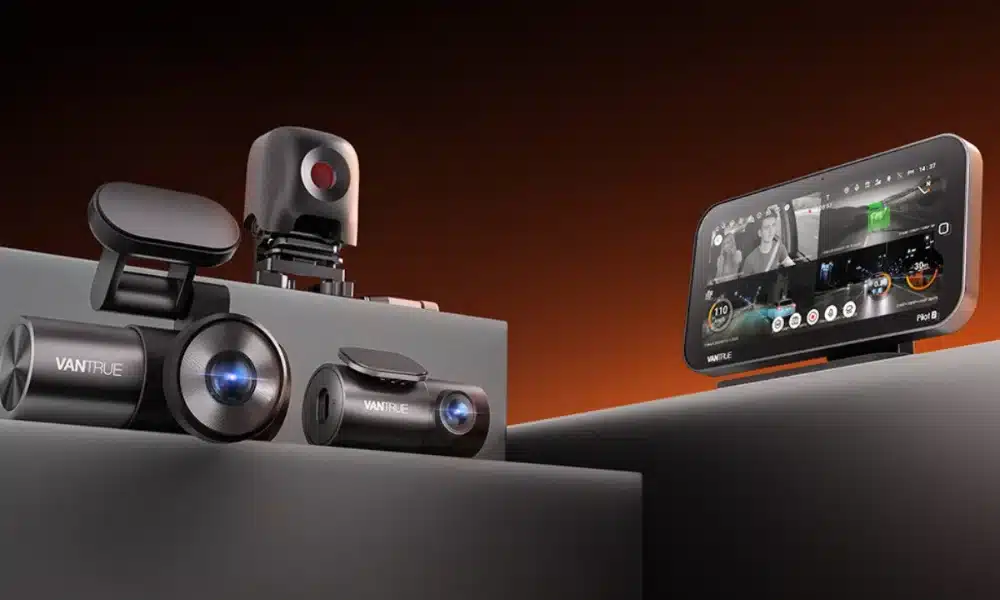
Teledyne FLIR teamed up with Valeo on it, and the pair is building systems meant to brake on their own at night, not just sound an alarm. Gentex rolled out its own thermal cameras at the same show, chasing the same goal: catch the heat, then stop the car.
So the change is not hype. Night vision is turning into an active safety system rather than a screen you glance at. And one regulation is dragging the whole industry in that direction.
How the NHTSA FMVSS 127 Rule Drives Night Assist System Adoption
Back in 2024, NHTSA finalized a rule named FMVSS 127. It pulls three things together for every new car and light truck by September 1, 2029:
- Automatic emergency braking on all new light vehicles
- Pedestrian detection that works day and night, a world first for a braking mandate
- Real safety payoff, with NHTSA estimating at least 360 lives saved and more than 24,000 injuries prevented each year
Here is the snag that caught the carmakers. Ordinary cameras and radar still have trouble pinning a person in darkness at higher speeds. Thermal sensing closes that exact gap, so a night assist system built on infrared is fast becoming the most affordable path to passing the test.
Still, the rule is not locked in. A couple of things keep 2029 from being a sure thing:
- Automaker groups have fought the mandate openly
- The deadline has run into legal and political friction
So treat 2029 as the current target, not a settled fact.
Best Night Vision Car System Options in 2026
If you are shopping right now, you want two answers: which cars actually have it, and which ones do it well. Night vision stays mostly a high-trim feature, so the shortlist tracks your budget closely.
Luxury Car Safety Tech: Which Brands Lead
The biggest change in 2026 is the connection between thermal cameras and the vehicle’s Braking Control Unit. Earlier models only displayed an alert on the dashboard; however, new luxury car safety tech now allows the car to intervene. New sensors, such as the Teledyne FLIR Tura, meet the ASIL-B safety standards, meaning the vehicle can now autonomously brake at night when a pedestrian is detected, significantly reducing the margin for human error in low-visibility scenarios. The table maps the main 2026 choices:
| Model | System type | Detection range | Standout feature | Cost guide |
|---|---|---|---|---|
| Cadillac Escalade IQ | Thermal (passive) | Beyond headlights | Heat-map on dash display | Top-trim feature |
| BMW 7-Series | Passive FIR | ~300 m | Marks people in red, primes brakes | Optional package |
| Mercedes S-Class | Night View Assist Plus | ~160 m | Spotlights the detected person | Optional |
| Audi A8 / A7 / A6 | Passive thermal | ~300 m | Alerts in the digital cockpit | ~$2,500 option on A6 |
| Rolls-Royce / Bentley | Passive (Autoliv-based) | ~300 m | Standard on flagship models | Included |
One word of caution before you sign anything: check the exact trim. Night vision often hides inside a premium package, and the base version of the very same car may leave it out. So read the build sheet, not just the badge on the trunk.
Night Vision vs Adaptive Headlights vs Lidar
Plenty of buyers tangle these three together, and the mix-up can cost real money. They solve different problems, and only one of them truly sees in the dark.
Night vision reads heat, so it works in total blackness and calls out warm hazards early. Adaptive headlights, sometimes labeled adaptive driving beam, simply aim and shape your light to cut glare for oncoming drivers. They still depend on their own light to do anything.
Lidar maps the scene with laser pulses and feeds the driver-assist and self-driving features, and yes, it sees in the dark too, but its job is feeding the car’s computer, not flashing a warning to your eyes. The Volvo EX90 leans on roof-mounted lidar to flag hazards as far as 250 meters out.
| Technology | What it does | Sees in full dark? | Main job |
|---|---|---|---|
| Night vision (thermal) | Reads heat past your headlights | Yes | Spot pedestrians and animals early |
| Adaptive headlights | Aims and shapes the beam | No, it needs light | Better lighting, less glare |
| Lidar | Laser-maps the surroundings | Yes | Object detection for ADAS |
So if your worry is a deer stepping out before it reaches your lane, night vision is the tool that answers it. The other two earn their keep in their own lanes, and neither one stands in for it.
Is Night Vision Technology in Cars 2026 Worth It?
The honest answer depends on where you drive and how often you drive after dark. The technology is genuinely useful, and it is also not for everybody, and we will not pretend the line is blurry.
It pays off most when you:
- Drive rural or wooded roads where deer and wildlife appear out of nowhere
- Log long miles on unlit highway at night
- Often share dim streets with pedestrians or cyclists
- Want to stay ahead of the coming nighttime braking rules
It makes far less sense when you:
- Mostly drive well-lit city blocks
- Want the lowest sticker and would rather skip a premium package
- Live in a hot climate, where passive thermal contrast drops off
There is also a fair counterargument worth hearing. Some engineers maintain that solid cameras paired with radar already cover night driving for most drivers, and that view is part of why adoption stayed slow and expensive for so long. So weigh your real roads against the cost of the package. For someone living in deer country, the extra seconds can be priceless. For a city commuter, it lands closer to a nice extra.
Aftermarket Night Assist System Options for Any Car
The rapid adoption of the night assist system is largely fueled by the NHTSA FMVSS 127 mandate. By 2029, all new light vehicles must possess pedestrian detection that functions effectively in total darkness. Because traditional cameras and radar struggle with “dark-clothed” pedestrians at high speeds, infrared-based night assist system solutions are becoming the industry’s primary path to regulatory compliance and five-star safety ratings.
Conclusion
If you are evaluating the best night vision car system for your current needs, the choice often depends on how the data is presented to you. Cadillac uses a vibrant heat-map on its massive OLED displays, while Mercedes-Benz utilizes a spotlight function to physically illuminate pedestrians. These differences in user interface can change how quickly a driver reacts to a potential collision in high-stress environments.
Frequently Asked Questions
Which 2026 cars have night vision technology?
Mostly luxury models. The Cadillac Escalade IQ, BMW 7-Series, Mercedes S-Class, and Audi A8, A7, and A6 all offer it, and Rolls-Royce and Bentley flagships include it as standard.
How much does a night vision car system cost?
It usually comes bundled in a premium package. Audi has offered it on the A6 as a roughly $2,500 standalone option, and on most brands it travels along with a higher trim level.
Does night vision work in rain and fog?
Passive thermal handles fog and darkness well, since it reads heat rather than light. Active systems scatter more in heavy rain and snow, so their performance dips.
Is a night assist system the same as adaptive headlights?
No. A night assist system reads heat to catch hazards in the dark. Adaptive headlights only aim and shape your visible light, and they cannot see without it.
Will night vision become standard on every car?
Not on its own, but the NHTSA rule calling for nighttime pedestrian braking by 2029 is nudging thermal sensing into many more cars, assuming the deadline holds.