
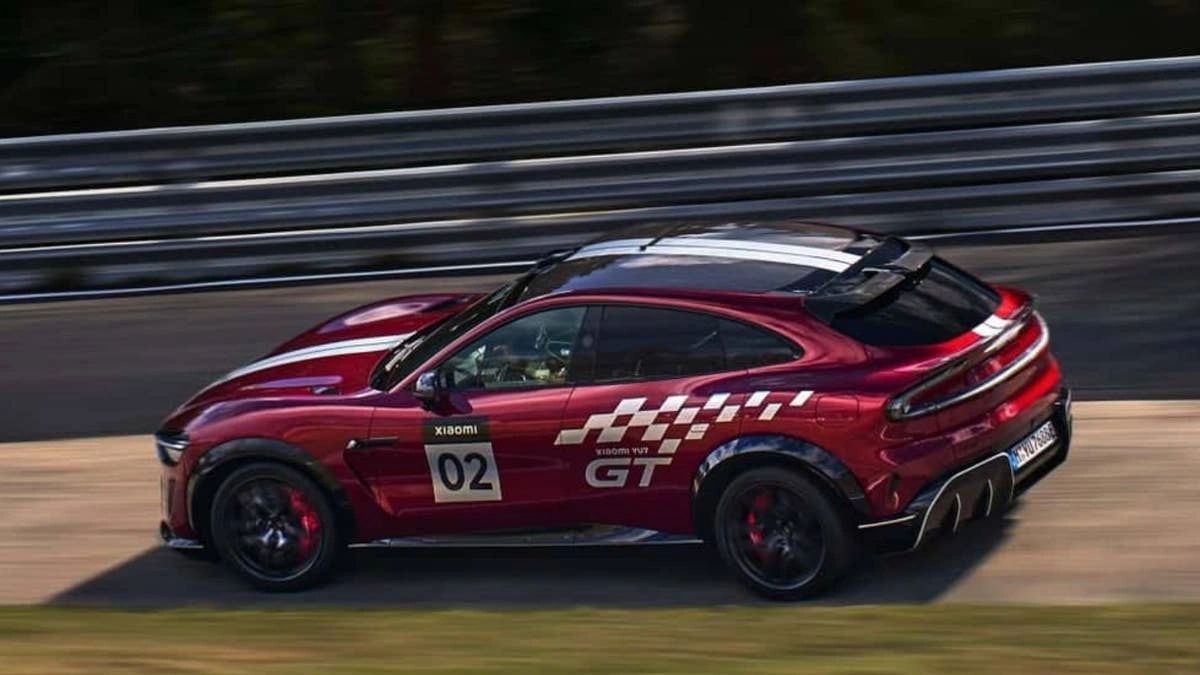
The global automotive landscape has experienced a profound shift. The era when supercar-level acceleration, neck-snapping launches off the line, and 190+ mph top speeds were strictly limited to low-slung, mid-engine exotic sports cars has officially come to an end. Today, the peak of high-end vehicle performance lives within the high performance SUVs segment. Modern luxury manufacturers have successfully engineered multi-ton utility vehicles that effortlessly combine room for five adults, generous rear cargo space, and high towing capacities with massive horsepower figures and advanced all-wheel-drive traction.
Determining what truly makes the fastest SUV requires evaluating two distinct performance criteria: rapid 0–60 mph acceleration and unrestricted top speed. Acceleration showcases instant low-end power delivery, torque distribution, and launch control efficiency. On the other hand, top speed tests aerodynamic engineering, cooling efficiency, and high-gear engine power. Powered by roaring twin-turbocharged V8s, screaming naturally aspirated V12s, or multi-motor electric architectures producing over 1,000 horsepower, these are the fastest SUV 2026 models dominating the industry today. If raw straight-line speed is more your focus, our ranking of the top 10 fastest cars in the world in 2026 covers hypercars pushing these same limits.
1. The Acceleration Leaders: Quickest SUVs Ranked 0–60 MPH
When evaluating quick off-the-line acceleration, pure battery-electric vehicles (BEVs) and performance-focused plug-in hybrids (PHEVs) hold a distinct structural advantage. Electric motors generate instant torque at zero RPM. This eliminates the throttle lag, gear-shifting delays, and spool-up time typical of traditional internal combustion engines. Below is how the quickest SUV models rank based on 0–60 mph sprint times:
1. Porsche Cayenne Turbo Electric
0–60 mph: 2.3 – 2.4 seconds
Top Speed: 162 mph
Horsepower: 1,139 hp
Why It’s a Benchmark: Porsche’s flagship electric Cayenne features dual permanent-magnet synchronous motors fed by a high-capacity 800-volt battery system. With Overboost and Launch Control activated, the powertrain routes 1,139 horsepower and 1,106 lb-ft of torque across all four wheels. This setup achieves a sub-2.5-second 0–60 mph time, setting a record for production utility vehicles. Curious how this compares to Porsche’s non-electric flagship? See our full Porsche Cayenne in 2026 review for the complete lineup breakdown.
2. Rivian R1S (Quad-Motor)
0–60 mph: 2.4 seconds
Top Speed: 130 mph
Horsepower: 1,025 hp
Why It’s a Benchmark: Driven by Rivian’s in-house Ascent powertrain, the Quad-Motor R1S uses dedicated electric motors for every individual wheel. This arrangement allows precise real-time torque vectoring that launches a heavy, three-row luxury off-roader to 60 mph in 2.4 seconds.\
3. Tesla Model X Plaid
0–60 mph: 2.5 seconds
Top Speed: 163 mph
Horsepower: 1,020 hp
Why It’s a Benchmark: The Model X Plaid uses a tri-motor system with carbon-sleeved rotors to maintain peak power through high RPMs. Delivering 1,020 horsepower, it comfortably seats up to seven passengers while recording sub-10-second quarter-mile times.
4. Lotus Eletre R
0–60 mph: 2.8 seconds
Top Speed: 165 mph
Horsepower: 905 hp
Why It’s a Benchmark: Lotus integrated its track-focused chassis dynamics into a full-sized electric hyper-SUV. The top-tier Eletre R includes a two-speed transmission on the rear axle, improving low-speed acceleration while supporting strong top-end pulling power.
5. Ferrari Purosangue
0–60 mph: 2.9 seconds
Top Speed: 193 mph
Horsepower: 715 hp
Why It’s a Benchmark: Powered by a mid-front-mounted 6.5-liter naturally aspirated V12, the Purosangue avoids turbochargers or heavy hybrid batteries entirely. It pairs classic mechanical engine sound with modern all-wheel-drive traction to hit 60 mph in under 3.0 seconds.
2. Speed & Power Matrix: 2026 Performance Breakdown
Comparing pure electric models, hybrid configurations, and traditional combustion engines shows clear trade-offs between low-speed launch power and high-speed top-end performance. The table below lists baseline specifications across the world’s most capable performance SUVs:
| Model | Powertrain Architecture | Total Horsepower | Torque Output | 0–60 mph Time | Claimed Top Speed | Est. Starting Price |
| Porsche Cayenne Turbo EV | Dual-Motor Electric | 1,139 hp | 1,106 lb-ft | 2.4 sec | 162 mph | $163,000 |
| Rivian R1S Quad-Motor | Quad-Motor Electric | 1,025 hp | 1,198 lb-ft | 2.4 sec | 130 mph | $131,800 |
| Tesla Model X Plaid | Tri-Motor Electric | 1,020 hp | 1,050 lb-ft | 2.5 sec | 163 mph | $106,630 |
| Lotus Eletre R | Dual-Motor Electric | 905 hp | 726 lb-ft | 2.8 sec | 165 mph | $232,900 |
| Porsche Cayenne Turbo GT | 4.0L Twin-Turbo V8 | 650 hp | 626 lb-ft | 2.9 sec | 189 mph | $208,150 |
| Ferrari Purosangue | 6.5L Naturally Aspirated V12 | 715 hp | 528 lb-ft | 2.9 sec | 193 mph | $433,686 |
| Aston Martin DBX707 | 4.0L Twin-Turbo V8 | 697 hp | 664 lb-ft | 3.1 sec | 193 mph | $245,000 |
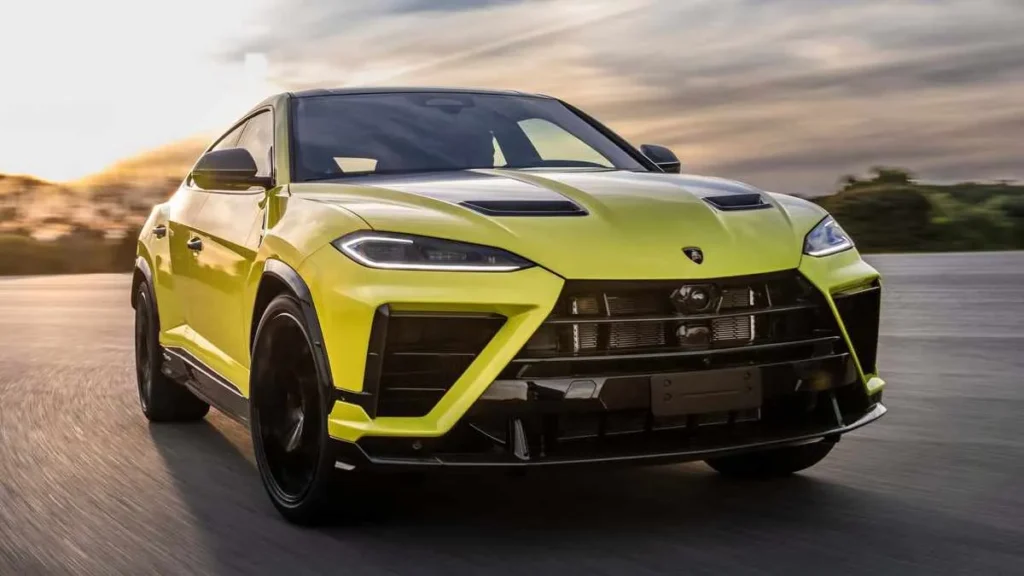
| Lamborghini Urus SE | 4.0L V8 Plug-in Hybrid | 789 hp | 701 lb-ft | 3.3 sec | 194 mph | $258,000 |
| Audi RS Q8 Performance | 4.0L Twin-Turbo V8 | 631 hp | 627 lb-ft | 3.4 sec | 190 mph | $136,000 |
| BMW X5 M Competition | 4.0L V8 Mild-Hybrid | 617 hp | 553 lb-ft | 3.7 sec | 177 mph | $124,800 |
| Dodge Durango SRT Hellcat | 6.2L Supercharged V8 | 710 hp | 645 lb-ft | 3.5 sec | 180 mph | $103,285 |
3. Top Speed Kings: ICE & Hybrid Super-SUVs
While pure electric models hold an advantage in 0–60 acceleration tests, internal combustion engines and plug-in hybrid systems dominate sustained top speed runs. Electric vehicles often restrict maximum velocities to protect battery thermals and avoid extreme power drain. Gasoline-powered models rely on multi-speed transmissions to continue accelerating well past 180 mph.
Lamborghini Urus SE
The fastest luxury SUV overall by top speed is the hybrid-powered Lamborghini Urus SE. Lamborghini paired its 4.0-liter twin-turbo V8 with a 189-hp electric motor housed directly within the 8-speed torque-converter automatic transmission. Combined, the hybrid system outputs 789 horsepower and 701 lb-ft of torque. This allows the Urus SE to reach a top speed of 194 mph while also offering short distances of pure electric driving.
Aston Martin DBX707
The DBX707 utilizes a Mercedes-AMG sourced 4.0-liter twin-turbocharged V8, fine-tuned by Aston Martin engineers in Gaydon. Combined with a wet-clutch 9-speed transmission, it produces 697 horsepower and 664 lb-ft of torque. The wet-clutch setup provides faster gear changes and handles aggressive launch starts, propelling the SUV to a 193 mph top speed.
Ferrari Purosangue
The Purosangue acts as Ferrari’s first-ever four-door production vehicle. It uses a front-mid-mounted 6.5-liter V12 paired with a 8-speed dual-clutch transmission mounted at the rear transaxle. This mechanical layout balances overall vehicle weight distribution near 49:51 front-to-rear. The engine revs up to an 8,250 RPM redline, pushing the Purosangue to a 193 mph top speed.
Porsche Cayenne Turbo GT
Engineered specifically for track agility, the non-hybrid Cayenne Turbo GT uses a 650-hp twin-turbo V8. It features lowered adaptive air suspension, active anti-roll stabilization, rear-axle steering, and large carbon-ceramic brakes. The Turbo GT holds official lap records across major test tracks, proving that high-riding utility vehicles can deliver genuine sports car cornering speeds.
4. Engineering 1,000+ HP High-Performance SUVs
Designing vehicles that weigh between 5,000 and 6,500 pounds to handle high speeds safely requires advanced chassis engineering, thermal regulation, and electronic driver aids:
Advanced Torque Vectoring
Handling massive power outputs requires intelligent torque management. Mechanical limited-slip rear differentials and multi-motor electric vectoring compute road grip hundreds of times per second. By overdriving the outside rear wheel during high-speed cornering, these systems help rotate the heavy vehicle, reducing understeer.
48-Volt Active Anti-Roll Stabilization
Traditional mechanical sway bars compromise between ride comfort and flat cornering response. Modern performance SUVs use active 48-volt anti-roll bars. Small electric motors located in the center of the split sway bars apply counter-torsion during heavy cornering. This keeps the body level through sharp turns while decoupling on straight roads to maintain a smooth ride. This engineering approach reflects broader trends tracked by SAE International, the leading global standards body for automotive and mobility engineering.
High-Capacity Carbon-Ceramic Brakes
Stopping heavy, high-speed vehicles creates extreme thermal stress. High-performance models typically use carbon-ceramic brake rotors measuring between 16.5 and 17.3 inches in diameter, paired with 10-piston front calipers. Carbon-ceramic materials withstand operating temperatures above 1,800°F without suffering brake fade, while simultaneously reducing unsprung weight at each wheel.
Adaptive Multi-Chamber Air Suspensions
To balance high-speed stability with comfortable everyday driving, manufacturers rely on adaptive multi-chamber air suspensions. At elevated speeds, these systems automatically lower the vehicle’s ride height by 0.8 to 1.5 inches. Lowering the ride height reduces the underbody frontal surface area, limits lift, and lowers the center of gravity.
5. Daily Usability, Towing, and Practicality
A major reason buyers choose a fastest luxury SUV over a traditional supercar is everyday functional versatility. Unlike low-riding supercars that struggle with steep driveways, speed bumps, and limited cabin space, high-performance SUVs preserve practical usability:
Cargo Space: Vehicles like the Aston Martin DBX707, Porsche Cayenne EV, and Rivian R1S offer between 22 and 88 cubic feet of storage space behind the front seats, easily handling luggage, sports equipment, or groceries.
All-Weather Capability: Standard variable all-wheel-drive systems, dedicated snow/mud driving modes, and adjustable ride heights enable these performance vehicles to operate comfortably in heavy rain, snow, or light off-road conditions.
Towing Capacities: While mid-engine sports cars cannot tow, models like the Porsche Cayenne Electric and Rivian R1S feature maximum towing ratings up to 7,700 pounds, making them capable of pulling boats, travel trailers, or race cars.
Conclusion
The high-performance SUV market in 2026 demonstrates incredible mechanical and electrical engineering progress. Enthusiasts no longer need to sacrifice family practicality, cargo volume, or all-weather traction to experience sub-3-second acceleration and top speeds near 200 mph.
Whether you prefer the silent, instantaneous response of a 1,100+ horsepower electric crossover or the rich exhaust note and top-end pulling power of a twin-turbo V8 or naturally aspirated V12, modern performance SUVs provide an unprecedented mix of speed, technology, and everyday usability. For more detailed performance comparisons, track testing results, and luxury vehicle reviews, visit turboocruiser.
Frequently Asked Questions
What is the fastest SUV in 2026 by top speed?
The Lamborghini Urus SE holds the highest top speed title for production SUVs at 194 mph. It is followed closely by the Aston Martin DBX707, Ferrari Purosangue, and Bentley Bentayga Speed, which all feature top speeds of 193 mph.
Which SUV has the fastest 0–60 mph acceleration time?
The Porsche Cayenne Turbo Electric leads production SUVs with a 0–60 mph launch time of 2.3 to 2.4 seconds. The Rivian R1S Quad-Motor follows closely at 2.4 seconds, while the Tesla Model X Plaid reaches 60 mph in 2.5 seconds.
Are electric SUVs faster than gasoline performance SUVs?
Electric SUVs generally accelerate faster from 0 to 60 mph due to instant electric torque delivery. However, gasoline and hybrid super-SUVs generally achieve higher top speeds (190+ mph compared to 130–165 mph) and sustain high performance longer without battery overheating risks.
How long do carbon-ceramic brakes last on high-performance SUVs?
Under normal street driving conditions, carbon-ceramic brake rotors can last between 60,000 and 100,000 miles. However, aggressive track use or frequent high-speed heavy braking will increase wear, requiring earlier replacement.