

The best sleeper cars 2026 have to offer showcase a major shift in the luxury automotive market. Traditionally, premium performance depended on cylinder count, engine displacement, and vehicle weight. Today, software integration, advanced electrification, and innovative engineering are redefining driving performance.
Three distinct technologies now shape the premium segment: refined internal combustion engines (ICE) with mild-hybrid systems, high-performance battery electric vehicles (BEVs), and efficient turbo-hybrid sedans. Exploring the Audi S8, Volvo EX30 Twin Motor Performance, and Toyota Crown Platinum reveals the engineering breakthroughs behind these understated performance cars.
1. Audi S8: Engineering Behind Best Sleeper Cars 2026
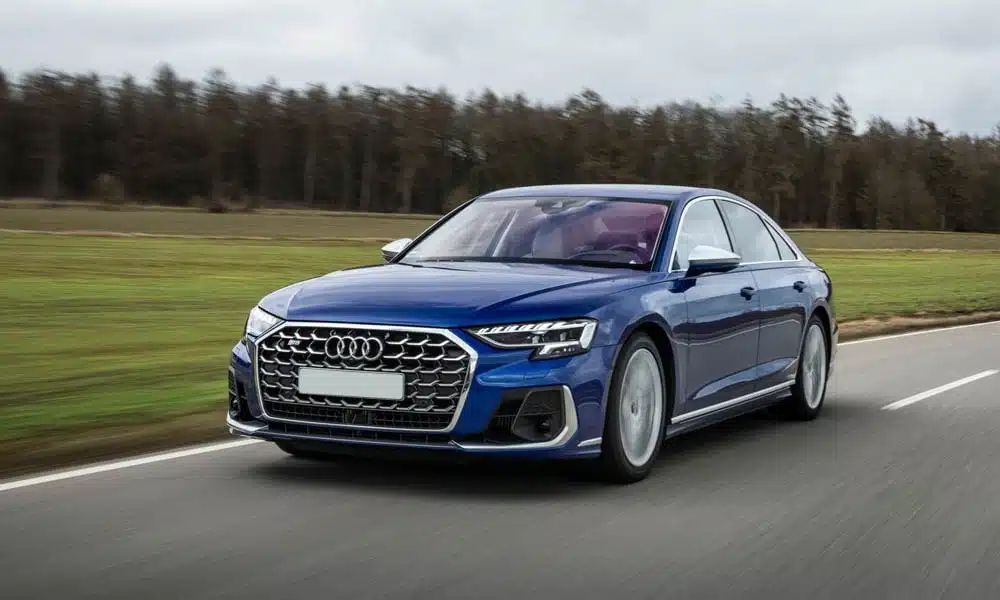
For decades, the full-size flagship luxury sedan served as the canvas for mechanical innovation. In this space, the Audi S8 stands as a bastion of high-performance internal combustion. It easily ranks among the best sleeper cars 2026 enthusiasts can buy for supercar acceleration disguised as a quiet executive sedan.
If you are weighing long-term ownership, it is worth checking whether Audis are reliable before committing to this flagship. At its core lies a twin-turbocharged 4.0-liter V8 engine. This motor pairs with a 48-volt mild-hybrid (MHEV) system to generate 563 horsepower and 590 lb-ft of torque.
V8 Engine Layout Best Sleeper Cars 2026
What makes this specific V8 engine remarkable is its hot-inside-V configuration. Specifically, designers placed the twin turbochargers directly within the cylinder banks rather than outside the block. Because of this layout, Audi drastically shortened the exhaust gas path to the turbines. This smart design choice effectively eliminates turbo lag.
As a result, the engine delivers the instantaneous, linear throttle response typically associated with naturally aspirated engines. Furthermore, the 48-volt mild-hybrid setup acts as an invisible supporting player. This system operates an alternator-starter that smooths cylinder deactivation. Therefore, the car transitions seamlessly into a fuel-saving four-cylinder mode during relaxed highway cruising.
Predictive Active Suspension and Dynamic Steering
Controlling a 5,126-pound luxury vessel through tight corners requires engineering genius. This pursuit of precision is also driving shifts like steer-by-wire technology, which is replacing traditional mechanical steering columns across the industry.
To solve this problem, Audi utilizes two foundational technologies:
Predictive Active Suspension: A forward-facing camera scans the road surface up to 15 times per second. When the camera detects a pothole, electromechanical actuators load or unload each wheel. Consequently, the suspension neutralizes the impact before the tires touch the bump.
Dynamic All-Wheel Steering: At low speeds, the system turns the rear wheels up to 5 degrees in the opposite direction of the front wheels. This action shrinks the turning radius down to that of a compact luxury hatchback. Conversely, at high speeds, the rear wheels turn in the exact same direction as the front wheels to deliver rock-solid highway stability.
Additionally, Audi’s iconic quattro all-wheel-drive system complements this chassis wizardry. The manufacturer upgraded this setup with a standard sport differential. By actively splitting torque between the rear wheels via torque vectoring, the system pushes the vehicle’s nose directly into apexes. Thus, it mitigates the understeer found in large, nose-heavy luxury cruisers.
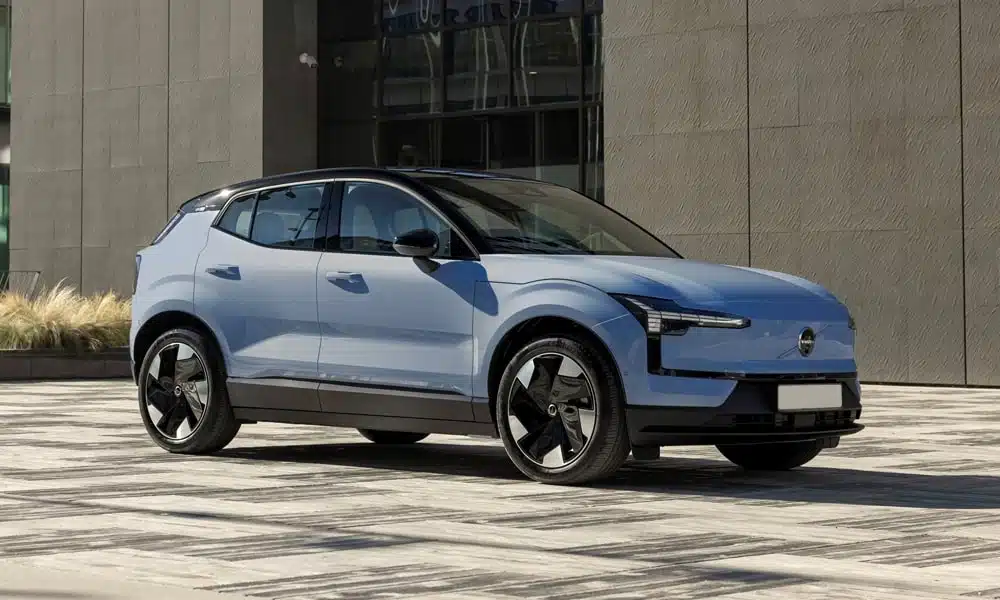
On the opposite end of the luxury spectrum sits the Volvo EX30 Twin Motor Performance. This vehicle represents an entirely new breed of premium automobile. It acts as a compact, eco-conscious, hyper-minimalist urban crossover. Yet, it can comfortably humiliate exotic supercars in a straight line, earning a prime spot among the best sleeper cars 2026 has brought to market.
The Best Sleeper Cars 2026 Power-to-Weight Phenomenon
Volvo placed a 200-kW electric motor on the rear axle and an additional motor on the front axle. Through this method, the brand squeezed 422 horsepower and 400 lb-ft of torque into a tiny footprint. In fact, this vehicle is significantly smaller than a standard compact sedan. Because electric motors deliver 100% of their available torque at zero RPM, the EX30 rockets from 0 to 60 mph in a blinding 3.4 seconds.
However, the real magic of the EX30 lies in its physical packaging. In a traditional high-performance internal combustion vehicle, a heavy engine block sits high in the chassis, creating a top-heavy pivot point. In contrast, Volvo integrated the 69-kWh lithium-ion battery pack flat into the floor between the axles.
Therefore, this placement lowers the center of gravity to a degree that traditional ICE vehicles cannot replicate. As a result, this compact crossover remains flat and stable during aggressive directional changes.
Battery Thermal Management and Charging Architecture
Operating a premium BEV requires more than raw speed. A vehicle requires a highly sophisticated thermal management system to sustain peak performance. This is closely tied to advances in next-gen EV battery technology, which is pushing charging speeds and thermal efficiency further. The EX30’s architecture supports DC fast charging up to 153 kW. Because of this high capability, the battery can jump from 10% to 80% capacity in just 28 minutes.
To achieve this consistency, the vehicle uses a predictive pre-conditioning loop. When a driver selects a high-speed charging station via Google Maps, the vehicle automatically adjusts the battery temperature en route. It heats or cools the battery chemistry to its thermodynamic sweet spot. Consequently, this prevents thermal throttling upon arrival, ensuring the battery accepts maximum electrical current immediately without cell degradation.
3. Toyota Crown Platinum: Hybrid Innovation
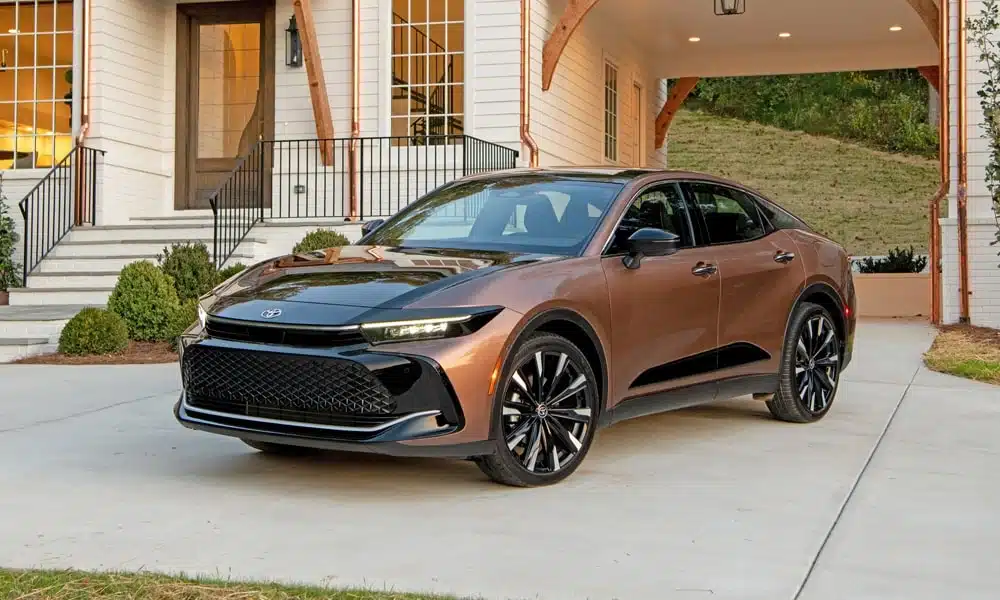
Many buyers demand the immediate torque of an electric vehicle alongside the long-range flexibility of an internal combustion engine. For these drivers, the Toyota Crown Platinum stands out as an exceptional option. It breaks away from traditional vehicle segments entirely, presenting an elevated fastback silhouette built on the rigid TNGA-K platform.
Its crowning achievement is the Hybrid MAX powertrain, making it a surprisingly potent contender among the best sleeper cars 2026 buyers consider for understated daily driving.
The Best Sleeper Cars 2026 Hybrid MAX System
Traditional hybrid powertrains are engineered almost exclusively for fuel economy. Usually, they rely on electronically controlled continuously variable transmissions (eCVTs) that prioritize efficiency over engagement.
The Hybrid MAX system completely flips this script. It pairs a high-torque 2.4-liter turbocharged four-cylinder engine with a sophisticated front-mounted electric motor and a 6-speed automatic transmission. Furthermore, a separate, independent, high-output electric motor sits on the rear axle, known as the “eAxle” system. This design creates a full-time electronic all-wheel-drive layout.
Therefore, the car actively adjusts its front-to-rear power split based on real-time traction variables. When accelerating hard from a dead stop, the rear electric motor deploys massive torque instantly, creating a rear-biased launching dynamic.
Acceleration Dynamics and Dual-Benefit Performance
Because the engine is turbocharged and paired with a 6-speed automatic transmission instead of an eCVT, the Crown Platinum delivers crisp, stepped gear shifts that connect the driver directly to the powertrain. Meanwhile, the electric motors step in instantly to fill the momentary power drops during gear changes, resulting in a seamless wave of acceleration.
Thus, the system produces a combined 340 horsepower and 400 lb-ft of torque. It sprints to 60 mph in 5.7 seconds, yet it still returns an exceptional EPA-estimated 30 combined MPG. Therefore, it stands as a flawless mechanical compromise for the modern era.
Comparative Performance: Features of the Best Sleeper Cars 2026
When evaluating these three automotive heavyweights side by side, it becomes entirely clear that the premium market is no longer a one-size-fits-all ecosystem. Instead, manufacturers tailor their flagship engineering layouts to align with fundamentally distinct consumer priorities.
Real-World Handling and Adaptive Chassis Setup
The Audi S8 wins the ride comfort and chassis control battle outright, though it relies on a high part count to do so. Its predictive active suspension, active anti-roll bars, and dynamic four-wheel steering allow a massive sedan to handle like a nimble sports car.
Conversely, the Volvo EX30 takes a vastly different path by bypassing complex hydraulic and air suspension setups entirely. Instead, it leans into the natural handling advantages provided by its battery placement. By dropping its mass down low, the EX30 achieves superb body control through basic physics rather than expensive mechanical components.
Meanwhile, the Toyota Crown Platinum occupies a fascinating middle ground. It implements an Adaptive Variable Suspension (AVS) system that actively alters damping rates on the fly. Furthermore, it pairs this tech with its own variant of dynamic rear steering, giving it a commanding ride height that irons out road imperfections while remaining agile in corners.
The Verdict on the Best Sleeper Cars 2026 Market Standard
The modern luxury market offers something for every driver. The Audi S8 delivers traditional performance and refined comfort, while the Volvo EX30 Twin Motor Performance combines compact design with instant electric acceleration. The Toyota Crown Platinum bridges both worlds with turbocharged power and hybrid efficiency.
For buyers exploring the best sleeper cars 2026 has to offer, these models prove that true performance is about engineering, not flashy styling. Visit turboocruiser for more luxury car reviews and performance guides.
Frequently Asked Questions
Why are these models the best sleeper cars of 2026?
These vehicles combine unassuming, understated exterior designs with extraordinary performance capabilities ranging from 340 to 563 horsepower, allowing them to match or outpace traditional sports cars without drawing unnecessary attention.
How does the Audi S8 predictive suspension work?
The system utilizes a forward-facing camera to scan the road up to 15 times per second. When it spots an upcoming pothole, electromechanical actuators instantly adjust each individual wheel to neutralize the impact before the tires ever touch the bump.
How fast does the Volvo EX30 Twin Motor charge?
The compact electric SUV supports DC fast charging speeds up to 153 kW. Consequently, the lithium-ion battery can jump from 10% to 80% capacity in approximately 28 minutes when utilizing a high-speed charging station.
What is the advantage of the Toyota Hybrid MAX system?
Unlike traditional hybrids that prioritize fuel economy using slower eCVT transmissions, the Hybrid MAX setup pairs a turbocharged engine with a 6-speed automatic transmission. This combination deploys immediate torque to eliminate power drops during gear shifts.
Do electric vehicles have a better center of gravity than ICE cars?
Yes. Because electric vehicles place their heavy battery packs flat into the floor between the axles, they achieve a significantly lower center of gravity. This structural layout keeps the vehicle flatter and more agile during rapid cornering maneuvers.
Why do luxury car manufacturers use dynamic all-wheel steering?
Dynamic all-wheel steering improves low-speed maneuverability by turning the rear wheels in the opposite direction of the front wheels to shrink the turning radius. Conversely, it turns all four wheels in the same direction at high speeds to maximize lane-changing stability.