Drivers are asking a critical question: are evs worth it in 2026?
With changes in the automotive market, fluctuating fuel prices, and major shifts in tax incentives, the math behind buying a vehicle has changed. You might be wondering if making the switch to an electric vehicle (EV) will actually save you money, or if a traditional internal combustion engine (ICE) or hybrid vehicle remains the smarter financial choice. The direct answer based on the latest 2026 automotive market data is clear: Yes, EVs are worth it for most drivers in 2026, but only if you have access to regular home charging.
If you primarily charge at home, an electric car will save you an estimated $1,200 to $2,300 per year across fuel and maintenance compared to a gas vehicle. However, if you rely entirely on public fast-charging networks, high highway electricity rates can quickly eat away at those savings. To help you decide what fits your budget, let us break down the real ev vs gas cost dynamics, map out the true electric car ownership cost, and see how the numbers stack up this year.
The Upfront Cost: Price Parity is Finally Arriving
For years, the biggest barrier to buying an electric vehicle was the premium price tag. In 2026, the initial purchase price gap has narrowed significantly. Thanks to cheaper battery manufacturing processes and increased competition among automakers, new EV prices are closer than ever to their gas counterparts.
Furthermore, the used car market offers an incredible loophole for budget-conscious buyers. Early-generation EVs have experienced steep depreciation, meaning you can find a highly capable used electric car with plenty of battery life for under $20,000.
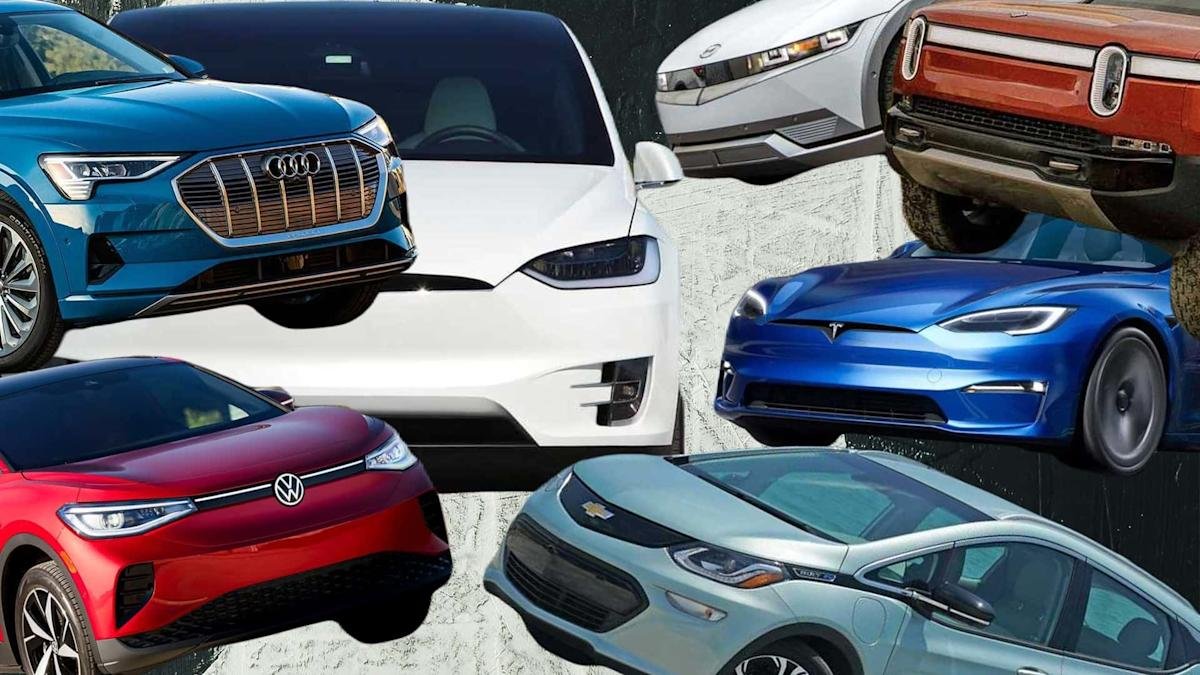
When looking at the ev cost of ownership, the initial purchase price is just the first step. To understand if is an ev worth it for your specific lifestyle, we need to analyze the day-to-day operating expenses. If you’re exploring what’s currently on the market, our breakdown of the wide range of electric car models now available covers options across every price tier — new and used.
Fuel vs. Electricity: The Everyday Savings
The most immediate difference you notice when switching to an electric vehicle is how much you spend to keep it moving.
Geopolitical tensions have pushed national average gas prices up around the $3.94 to $4.16 per gallon mark. Meanwhile, residential electricity rates sit at a national average of roughly 17 to 19 cents per kilowatt-hour (kWh).
To see how this plays out in the real world, consider a standard driver covering 15,000 miles per year. A gas-powered sedan averaging 30 miles per gallon (MPG) will require about 500 gallons of fuel annually. At $4.00 per gallon, that translates to a yearly fuel bill of $2,000.
An efficient EV that delivers about 3.5 miles per kWh will require roughly 4,285 kWh of electricity to cover that same distance. If you charge at home at 18 cents per kWh, your total annual fueling cost is only about $770. That is a direct annual savings of over $1,200.
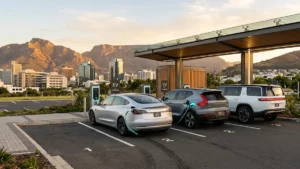
However, public charging changes the math. Commercial DC fast chargers frequently charge between 45 and 70 cents per kWh. If you rely solely on these stations, your annual charging cost could climb past $2,000, eliminating the fuel advantage over an efficient hybrid or gas vehicle. Understanding how EV charging technology works in 2026 can help you plan a smarter mix of home and public charging, keeping your costs closer to the lower end of that range.
Maintenance: The Hidden Advantage of Fewer Moving Parts
Many shoppers look closely at fuel prices but completely forget about scheduled maintenance. This is where the long-term ev savings calculator truly swings in favor of electric power.
A traditional internal combustion engine is incredibly complex. It relies on thousands of moving parts, all requiring regular lubrication, cooling, and tuning to prevent catastrophic failure. Electric vehicles replace that entire complex ecosystem with a simple electric motor and a single-speed transmission.
Because of this simplicity, EV owners completely avoid:
Routine oil changes and oil filter replacements
Spark plug and ignition coil replacements
Timing belt and serpentine belt replacements
Transmission fluid flushes
Furthermore, electric cars utilize regenerative braking. When you lift your foot off the accelerator, the electric motor reverses to slow the vehicle down, capturing that kinetic energy to recharge the battery. This process takes the physical burden off your mechanical brakes, allowing brake pads and rotors to last up to two or three times longer than they would on a standard gas car.
According to comprehensive data from the Department of Energy, maintenance costs for an electric vehicle average about 4 cents per mile, compared to roughly 10 cents per mile for a traditional gas vehicle. Over 15,000 miles of annual driving, that saves you an estimated $900 every single year in shop visits alone. For a side-by-side look at what both powertrains actually need over time, see our complete car maintenance checklist.
The Complete Cost of Ownership Breakdown
To get a true picture of the market, we must look at all expenses combined. Below is an estimated cost comparison between a brand-new mid-sized gas vehicle and an equivalent mid-sized electric vehicle over a five-year ownership period, assuming 15,000 miles driven annually with 80% home charging.
Five-Year Ownership Cost Comparison
| Expense Category | Gas Vehicle (30 MPG Average) | Electric Vehicle (80% Home / 20% Public) |
| Average Purchase Price | $35,000 | $39,000 |
| 5-Year Fuel / Electricity Cost | $10,000 | $4,800 |
| 5-Year Routine Maintenance | $7,500 | $3,000 |
| 5-Year Insurance Premiums | $8,500 | $9,800 |
| 5-Year Total Estimated Cost | $61,000 | $56,600 |
While the electric vehicle might demand a higher initial purchase price, the dramatic savings on fuel and maintenance allow the average buyer to reach a clear break-even point within three to four years of ownership. Past that point, the electric vehicle represents pure monthly savings back into your wallet.
Two Factors that Can Negate Your Savings
Although the general math favors electric cars, they are not the perfect choice for every individual. Two major variables can quickly shift the financial advantage back to gas or traditional hybrid models.
1. High Insurance Rates
Insurance companies base their premiums on how much it costs to repair or replace a vehicle after an accident. Because electric vehicles feature advanced sensor suites, complex battery packs, and specialized aluminum structures, structural repairs can be notably expensive. On average, you can expect to pay about 10% to 15% more annually to insure an EV compared to an equivalent gas model. Always call your insurance provider for a direct quote before finalizing your vehicle purchase.
2. Rapid Initial Depreciation
If you are someone who likes to buy a brand-new car and sell it two years later, a new EV might not be the best investment. Rapid technological upgrades, changing battery chemistries, and aggressive manufacturer price drops mean new EVs lose their value quickly in the first 24 months. However, if you plan to hold onto your vehicle for five to ten years, this initial drop in resale value will not impact your daily budget.
The Verdict: Who Should Buy What?
When we weigh all the variables, the choice between electric and gas ultimately comes down to your living situation and your daily driving habits.
An EV is absolutely worth it if:
You own a home or rent a property with dedicated garage charging access.
Your daily commute falls within the 30 to 100-mile range, allowing you to maximize low-cost home utility rates.
You plan to keep the vehicle for at least four years to fully offset the upfront cost through lower operating expenses.
A gas or hybrid vehicle is still the better choice if:
You live in an apartment complex or rely entirely on street parking without access to overnight plug points.
Your job requires frequent, long-distance interstate travel where you must constantly pay premium public fast-charging rates.
You reside in a region with exceptionally high electricity rates and historically low local gas prices.
Conclusion
Determining if are evs worth it in 2026 requires looking past the flashy marketing and analyzing the hard operational data. For the vast majority of suburban homeowners and daily commuters, the combination of significantly lower fueling costs and reduced mechanical maintenance makes the modern electric vehicle a highly rewarding financial investment over the long haul.
If you want to keep up with the latest automotive breakthroughs, in-depth vehicle breakdowns, and practical ownership guides, make sure to check out our deep dives over at turboocruiser to stay ahead of the curve.
Frequently Asked Questions
Do EV batteries need to be replaced often?
No. Modern EV batteries are engineered to last the entire functional lifespan of the vehicle. Most manufacturers provide a federally mandated warranty covering the battery pack for 8 years or 100,000 miles, ensuring long-term reliability.
How much do you actually save on maintenance each year?
The average driver saves roughly $800 to $1,000 annually on routine maintenance by driving an EV. Because there are no spark plugs, oil changes, or complex transmission components, your time spent at the mechanic drops drastically.
Is public fast charging more expensive than gas?
Yes, it can be. If you rely exclusively on premium highway DC fast chargers, the cost per mile can equal or sometimes exceed the cost of fueling an efficient hybrid vehicle. EVs provide the best financial returns when charged overnight at residential rates.